CyberKnife para tumor cerebral en Italia: clínicas verificadas y sus precios


Revisado médicamente por
Fahad Mawlood
Cómo funciona
¿Cuál es el precio de CyberKnife para tumor cerebral en Italia? Descubra ahora
El CyberKnife para tumores cerebrales en Italia suele costar entre $7,500 y $11,500. El precio final depende de la complejidad del tumor, el número de sesiones de tratamiento y la ubicación de la clínica. En los EE. El tratamiento generalmente incluye la planificación de radioterapia, la creación de una máscara de inmovilización y la administración automatizada de la dosis.
- Consultas con especialistas: Por lo general, oscilan entre $500 y $550 para la planificación preliminar del tratamiento.
- Diagnósticos auxiliares: Las resonancias magnéticas estándar en Milán cuestan aproximadamente $500 por área.
- Variación de la técnica: La radiocirugía estereotáctica en los principales institutos de investigación (IRCCS) a menudo conlleva un costo adicional.
- Centros urbanos: Milán y Cotignola sirven como los principales destinos para la radiocirugía robótica.
Perspectiva del experto de Bookimed: Elegir un centro acreditado por IRCCS como San Raffaele o San Donato garantiza una atención de alto valor. Estos centros con sede en Milán atienden a más de 300,000 pacientes al año y cuentan con el estatus de Mejores Hospitales del Mundo según Newsweek. Si bien los casos complejos pueden costar aproximadamente $41,150, los pacientes se benefician de tecnología pionera. Esta experiencia basada en el volumen proporciona un equilibrio confiable entre la inversión y la precisión clínica en neurooncología.
Descubra las mejores clínicas de CyberKnife para tumor cerebral en Italia: 2 opciones verificadas y Precios




Descripción general de CyberKnife para tumor cerebral en Italia
- CyberKnife - de $7,500Esta terapia es una opción no invasiva que utiliza radiación precisa para el tratamiento de tumores cancerosos y no cancerosos.
- CyberKnife para tumor cerebral - de $7,500Esta terapia se dirige a los tumores cerebrales con altas dosis de radiación, preservando el tejido sano y ofreciendo menos dolor y tiempo de recuperación.
- CyberKnife para el cáncer de próstata - de $9,000El procedimiento usa radiación precisa para destruir el cáncer de próstata, mejorando las tasas de supervivencia con efectos secundarios mínimos.
- CyberKnife para el cáncer de pulmón - de $7,500Esta terapia utiliza radiación dirigida para destruir las células de cáncer de pulmón sin cirugía, lo que ofrece efectos secundarios y tiempo de inactividad mínimos.
Día 1
- Llegada al país y traslado al hotel.
- Descansar y adaptarse al nuevo entorno.
Dia 2
- Traslado del hotel a la clínica.
- Consulte con un radiólogo sobre el procedimiento CyberKnife.
- Someterse a las pruebas médicas necesarias.
Día 3
- Revise los resultados de la prueba con un radiólogo.
- Planifique el tratamiento con CyberKnife.
Día 4
- Someterse a CyberKnife para el procedimiento de tumor cerebral.
- No se necesita anestesia para este procedimiento.
- El procedimiento dura alrededor de 1-2 horas.
Dia 5
- Consulta postoperatoria con un radiólogo.
- Traslado de la clínica al hotel.
día 6
- Descansar y recuperarse en un hotel.
Día 7
- Salida del hotel y traslado al aeropuerto.
- Salida del país.
Semanas 1-2
- Recupérate en casa, sigue las indicaciones post-operatorias del médico.
Semana 3
- Regreso al trabajo y actividades ligeras.
Semana 4
- Regreso a las actividades regulares y deportivas.
Tenga en cuenta que este es un plan general y cada caso es individual.
- Depósito de Bookimed: 200 $ o 200 €.
- Depósito de la clínica: Pague un porcentaje fijo por adelantado.
Historias en video de pacientes de Bookimed
Reseñas
Todas las reseñasCompartir contenido
 Olena Sikoza
Datos сlave sobre CyberKnife para tumor cerebral
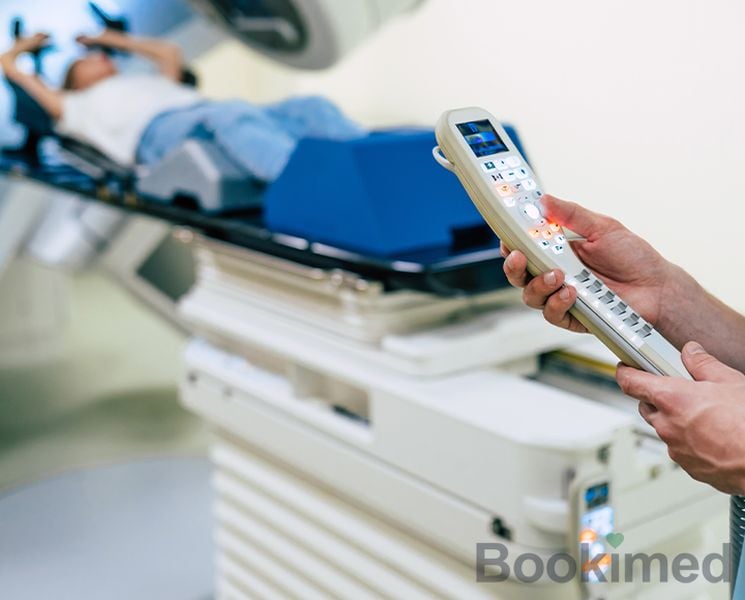
CyberKnife para tumores cerebrales
Este tratamiento no invasivo utiliza radioterapia de precisión para tratar tumores cerebrales con gran exactitud.
Preguntas frecuentes sobre CyberKnife para tumor cerebral en Italia
¿Es seguro el CyberKnife para tratar tumores cerebrales y cuáles son los riesgos principales?
CyberKnife es un sistema de radiocirugía robótica seguro y no invasivo para tratar tumores cerebrales. Administra radiación de alta dosis con precisión submilimétrica, protegiendo el tejido sano. Aprobado por la FDA desde 1999, no conlleva riesgo de infección quirúrgica, sangrado o fuga de líquido cefalorraquídeo durante el procedimiento.
- Precisión del tratamiento: El seguimiento robótico mantiene una precisión submilimétrica sin usar marcos de cabeza invasivos atornillados.
- Efectos secundarios comunes: Los pacientes suelen experimentar fatiga leve, dolores de cabeza o náuseas que desaparecen en 14 días.
- Riesgos a largo plazo: La necrosis por radiación ocurre en el 1% al 5% de los casos, lo que potencialmente requiere imágenes de seguimiento.
- Seguridad neurológica: La administración dirigida reduce el riesgo de cambios cognitivos en comparación con la radiación cerebral total estándar.
Perspectiva de expertos de Bookimed: Los hospitales de investigación italianos como San Raffaele utilizan la acreditación IRCCS para unir la atención clínica con la investigación avanzada. Las estadísticas muestran una tasa de control tumoral del 95% para lesiones menores de 3 cm. Los pacientes a menudo eligen Milán por su alta densidad de instalaciones clasificadas por Newsweek que manejan eficazmente la inflamación post-tratamiento con esteroides.
<¿Qué tan efectivo es el CyberKnife para los tumores cerebrales en comparación con la cirugía convencional?
CyberKnife ofrece tasas de control tumoral del 90% o más, igualando a la cirugía convencional para muchas lesiones intracraneales. Esta radiocirugía no invasiva proporciona tasas de éxito a 5 años del 93-94% para tumores benignos como los meningiomas. Es el estándar de oro para tumores profundos o previamente inoperables de menos de 3 cm.
- Control tumoral: Mantiene tasas de control local del 85-95% durante 5 años para lesiones benignas.
- Tasas de supervivencia: Proporciona hasta un 97% de supervivencia a largo plazo para condiciones específicas como el neuroma acústico.
- Invasividad: No requiere incisiones, apertura del cráneo ni anestesia general durante el procedimiento ambulatorio.
- Tamaño ideal: Más efectivo para tumores de tamaño pequeño a mediano donde no es necesaria una descompresión inmediata.
Perspectiva del experto de Bookimed: Los hospitales de investigación italianos como San Raffaele cuentan con la acreditación IRCCS, que une la atención clínica y la investigación avanzada. Nuestros datos indican que estos centros a menudo prefieren CyberKnife para casos complejos cerca del tronco encefálico. Estas instalaciones especializadas realizan más de 50,000 operaciones al año, asegurando una alta precisión para objetivos de radiocirugía submilimétricos.
Consenso de los pacientes: Los pacientes informan una redu
¿Soy un buen candidato para CyberKnife, o cuándo sigue siendo necesaria la cirugía abierta?
CyberKnife es ideal para pacientes con tumores cerebrales bien definidos de menos de 3 cm, como meningiomas o neuromas acústicos. Este sistema robótico no invasivo evita la anestesia general y los riesgos de infección. La cirugía abierta sigue siendo necesaria para tumores de más de 4 cm que causan efecto de masa o requieren una biopsia de tejido.
- Tamaño del tumor: CyberKnife apunta a lesiones pequeñas, mientras que la cirugía maneja masas que superan los 4 cm.
- Urgencia neurológica: La cirugía proporciona descompresión inmediata para tumores que ejercen una presión cerebral peligrosa.
- Tiempo de recuperación: Los pacientes se someten a 1–5 sesiones ambulatorias en lugar de una recuperación quirúrgica de 6 semanas.
- Necesidad diagnóstica: La cirugía abierta es necesaria cuando una biopsia física es esencial.
Perspectiva del experto de Bookimed: Los centros italianos como San Raffaele realizan más de 52,000 operaciones anuales, combinando precisión robótica con profundidad quirúrgica. Aunque CyberKnife es de alta tecnología, el 20–30% de ciertos gliomas de bajo grado pueden volver a crecer porque la masa no se elimina físicamente. Elegir un hospital orientado a la investigación como San Raffaele garantiza el acceso a revisiones multidisciplinarias que priorizan el control tumoral a largo plazo sobre simplemente evitar un escaneo.
¿Cuánto dura todo el proceso de CyberKnife y cuál es el cronograma de recuperación?
El proceso de CyberKnife para tumores cerebrales implica un cronograma de tres fases que abarca de 1 a 2 semanas para la preparación y el tratamiento. Los pacientes generalmente se someten a 1 a 5 sesiones ambulatorias no invasivas, y la mayoría regresa a sus actividades normales dentro de 1 a 3 días después de finalizar.
- Fase de planificación: Los médicos realizan tomografías computarizadas y resonancias magnéticas para el mapeo 3D del tumor durante 1 semana.
- Frecuencia del tratamiento: Los pacientes reciben de 1 a 5 sesiones, cada una con una duración de 30 a 90 minutos.
- Recuperación inmediata: Las sesiones ambulatorias no requieren anestesia, lo que permite a los pacientes conducir a casa el mismo día.
- Cronograma posterior al tratamiento: Puede ocurrir fatiga leve o dolores de cabeza, pero generalmente se resuelven en 1 a 2 semanas.
Perspectiva del experto de Bookimed: Los hospitales de investigación italianos como San Raffaele y San Donato utilizan protocolos estandarizados donde todo el proceso a menudo cabe en 5 días hábiles. Si bien el cronograma médico es rápido, programar la simulación y el ajuste de la máscara un lunes generalmente garantiza que el tratamiento se complete el viernes. Esta eficiencia es la razón por la que Italia sigue siendo uno de los 10 principales destinos mundiales para casos complejos de neurooncología.
¿Cómo elijo un centro CyberKnife certificado en Italia y verifico las credenciales de mi médico?
Para elegir un centro CyberKnife certificado en Italia, verifique a su médico a través del registro nacional FNOMCeO y priorice las instalaciones con acreditación ministerial IRCCS. Confirme que el centro aparece en el localizador oficial de Accuray y asegúrese de que el equipo médico siga los protocolos de los comités multidisciplinarios de tumores.
- Verificación del médico: Busque en el registro oficial de FNOMCeO para confirmar la licencia y la especialización en radioterapia.
- Acreditación de élite: Seleccione clínicas con estatus IRCCS, lo que indica la excelencia en investigación del Ministerio de Salud.
- Estándares de las instalaciones: Elija hospitales acreditados por la JCI como San Raffaele para obtener altos estándares de seguridad global.
- Señal de calidad: Utilice el localizador de Accuray para confirmar que la clínica utiliza tecnología robótica genuina.
Perspectiva de expertos de Bookimed: Los centros italianos como San Raffaele y San Donato realizan más de 50.000 operaciones al año. Este alto volumen a menudo se correlaciona con mejores resultados en radiocirugía compleja. Al elegir, priorice las clínicas con estatus IRCCS, ya que reciben fondos gubernamentales específicos para la investigación oncológica avanzada.
Consenso de los pacientes: Los pacientes recomiendan verificar las auditorías del OIEA
¿Tendré que viajar mucho tiempo o quedarme en Italia durante semanas?
El tratamiento con CyberKnife para tumores cerebrales en Italia es un procedimiento ambulatorio. La mayoría de los pacientes completan la terapia en 1 a 5 sesiones durante una semana. Cada sesión no invasiva dura de 30 a 90 minutos. Los pacientes permanecen móviles y generalmente abandonan la clínica el mismo día.
- Estancia hospitalaria: Es un procedimiento ambulatorio que no requiere pasar noches en el hospital.
- Frecuencia del tratamiento: Los pacientes suelen someterse a 1 a 5 sesiones en días consecutivos.
- Tiempo de recuperación: Usted permanece móvil y puede reanudar sus actividades normales el mismo día.
- Estancia total: Planifique de 7 a 14 días para escaneos y planificación.
Opinión del experto de Bookimed: Aunque las sesiones son cortas, los principales hospitales de investigación italianos como San Raffaele requieren de 3 a 7 días para la planificación previa al tratamiento. Los cirujanos utilizan este tiempo para realizar mapeos de resonancia magnética de alta resolución. Reservar una estancia de 14 días garantiza que pueda cubrir tanto la planificación de precisión como las sesiones sin prisas.
Consenso de los pacientes: Los pacientes valoran el enfoque no quirúrgico porque salen caminando el mismo día. Muchos sugieren volar directamente a Milán para minimizar la fatiga entre las sesiones y las citas de
¿Qué sucede el día del tratamiento? ¿Qué debo ponerme y llevar?
El día del tratamiento con CyberKnife en Italia implica una sesión no quirúrgica de 30 a 90 minutos realizada en una sala especializada con un manipulador robótico 6D. Los pacientes permanecen totalmente despiertos y vestidos mientras los sistemas de seguimiento en tiempo real administran radiación precisa al tumor cerebral con una exactitud submilimétrica.
- Elección de ropa: Use ropa deportiva sin metal o pantalones de chándal holgados y una camiseta. Evite todas las cremalleras.
- Reglas de accesorios: Quítese todas las joyas y piercings para evitar interferencias con la imagen robótica avanzada.
- Preparación de la cabeza: No se requiere depilación. Puede usar su champú y productos habituales.
- Artículos esenciales: Traiga identificación, registros médicos, un libro y una botella de agua reutilizable para la espera.
Perspectiva del experto de Bookimed: Aunque las sesiones son rápidas, programar sus tratamientos a primera hora de la mañana durante el período de 1 a 5 días es una decisión inteligente. Nuestros datos muestran que clínicas como San Raffaele manejan grandes volúmenes. Los turnos más tempranos reducen la fatiga acumulativa que los pacientes suelen sentir en la última sesión.
Consenso de los pacientes: Los pacientes informan que la máscara termoplástica se siente cálida al principio, pero se ajusta perfect