Ir a inicio

Cómo funciona

Hemos transformado el proceso de búsqueda de clínicas, haciéndolo simple, rápido y personalizado.
Responda algunas preguntasComplete un breve formulario para contarnos sobre su estado de salud y necesidades médicas.
Obtenga ofertas personalizadas3 clínicas seleccionadas especialmente según sus respuestas le proporcionan planes de tratamiento personalizados y presupuestos.
Elija la mejor opciónCompare ofertas y elija la clínica que más le convenga.
También puede consultar las 6 clínicas a continuación.
820К+ pacientes han recibido asistencia desde 2014
50 países
1,500 clínicas
6K+ reseñas
3K+ médicos calificados

¿Cuál es el precio del diagnóstico y los tratamientos de Destrucción del cuerpo vítreo en España? Descubra ahora

El precio se proporciona bajo petición

Descubra las mejores clínicas de tratamiento de Destrucción del cuerpo vítreo en España: 6 opciones verificadas y Precios

El ranking de clínicas de Bookimed se basa en algoritmos de data science, ofreciendo una comparación confiable, transparente y objetiva. Tiene en cuenta la demanda de pacientes, las puntuaciones de reseñas (positivas y negativas), la frecuencia de actualización de opciones de tratamiento y precios, la rapidez de respuesta y las certificaciones de las clínicas.
Quirónsalud Marbella
4.45 reseñas
Precio a consultar
Más información
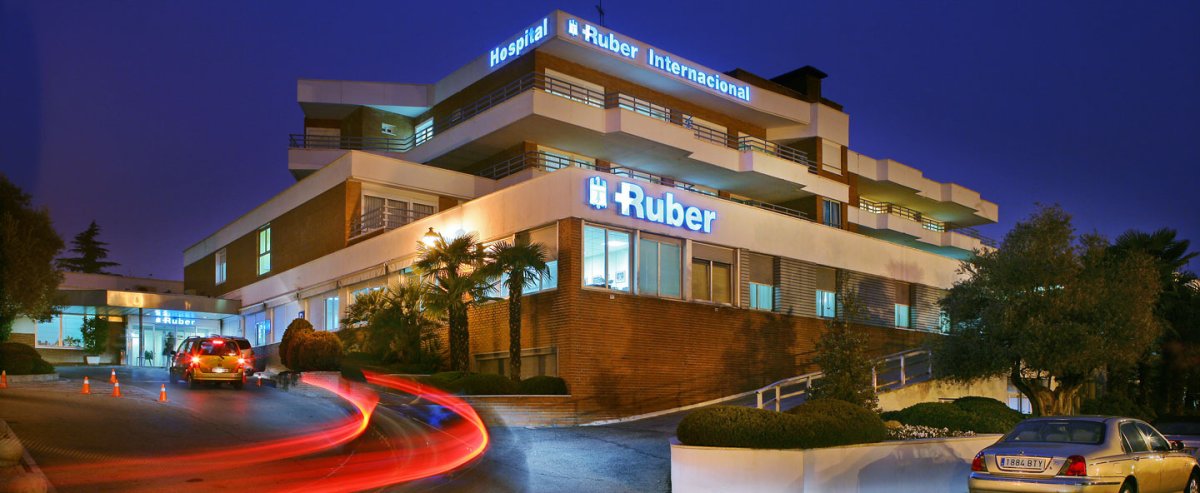
Hospital Ruber Internacional
4.5
Precio a consultar
Más información
Anuncio
Centro Médico Teknon
Clinica Universidad de Navarra (Navarra Hospital)
4.77 reseñas
Precio a consultar
Más información
Hospital HM Nou Delfos
4.65 reseñas
Precio a consultar
Más información

Obtenga una evaluación médica para Destrucción del cuerpo vítreo en España: consulte con doctores experimentados ahora

Ver todos los médicos
verificado

Jordi Mones

26 años de experiencia

Más de 900 tratamientos vitreorretinianos realizados: el Dr. Jordi Mones se especializa en casos complejos en el Centro Médico Teknon.

  • 25 años de experiencia en oftalmología
  • Investigador principal de ensayos clínicos internacionales
  • Experiencia en complicaciones de miopía magna
  • Especialista en retina formado en Harvard
verificado

Ferran Mascaró Zamora

29 años de experiencia

Uno de los principales especialistas en retina y vítreo de España: el Dr. Mascaró Zamora realiza cirugías láser y microinvasivas avanzadas para afecciones del vítreo.

  • Jefe del Departamento de Órbita y Oculoplastia del Centro Médico Teknon
  • Especializado en cirugía vitreorretiniana, cirugía orbitaria y oculoplastia
  • Publicar 2 artículos originales y coautor de 3 libros de oftalmología
  • Miembro de la Sociedad Española de Cirugía Plástica Ocular y Orbitaria
verificado

Nabil Ragaei Kamel

38 años de experiencia

Realiza más de 3.600 cirugías oculares al año: el Dr. Kamel dirige el departamento de oftalmología de Quirónsalud Marbella con técnicas 100% láser.

  • 35 años de experiencia en cirugías oculares
  • Pionero en implantes de lentes intraoculares multifocales tóricas en España
  • Galardonado como Médico del Año en Oftalmología
  • Miembro de sociedades europeas e internacionales de cirugía refractiva
  • Experto en procedimientos con láser excimer, incluidos PRK y LASIK
verificado

Carlos Vergés Roger

76 años de experiencia

El Dr. Vergés ha realizado más de 1.100 tratamientos en oftalmología y dirige el Departamento de Oftalmología Avanzada del Hospital Universitario Dexeus.

  • Doctorado en Biología por la Universidad de Harvard con enfoque en los mecanismos de la visión
  • Ganador del Premio Nacional de Investigación por su trabajo pionero sobre la secreción lagrimal
  • Director del Servicio de Oftalmología con un equipo quirúrgico de alta calidad
  • Miembro de la International Society of Refractive Surgery y de la American Academy of Ophthalmology

Compartir contenido

Historias en video de pacientes de Bookimed

Dayana
Combiné mis vacaciones en Antalya con un chequeo médico.
Procedimiento: Chequeo femenino
Igor
¡Fue genial! Traslados, alojamiento, tratamiento, todo incluido.
Procedimiento: Implante dental
Clínica: WestDent Clinic
Marina
Bookimed se encargó de todo. No tuve que preocuparme por nada.
Procedimiento: Chequeo femenino
Actualizado: 12/09/2024
Escrito por
Olena Sikoza
Olena Sikoza
Сopywriter en español
Copywriter médica certificada responsable del contenido en español de Bookimed. Más de 7 años de experiencia en redacción sobre salud y turismo médico, con formación académica en edición científica y desarrollo de contenidos.
Fahad Mawlood
Editor médico y Científico de datos
Médico general. Ganador de 4 premios científicos. Sirvió en Asia Occidental. Es el ex jefe del equipo médico que soporta a pacientes de habla árabe. Ahora es responsable del procesamiento de datos y la precisión del contenido médico.
Fahad Mawlood Linkedin
Esta página puede incluir información relacionada con diversas afecciones médicas, tratamientos y servicios de salud disponibles en diferentes países. Tenga en cuenta que el contenido se proporciona sólo con fines informativos y no debe interpretarse como asesoramiento médico o orientación. Por favor consulte con su médico o con un profesional médico calificado antes de comenzar o cambiar el tratamiento médico.

Preguntas frecuentes sobre el tratamiento de Destrucción del cuerpo vítreo en España

Estas preguntas frecuentes provienen de pacientes reales que buscan atención médica a través de Bookimed. Las respuestas son proporcionadas por coordinadores médicos experimentados y representantes autorizados de las clínicas.

What exactly is vitreous body destruction, and what are my treatment options in Spain?

Vitreous body destruction occurs when the eye gel liquefies and separates from the retina. This creates collagen clumps seen as floaters or flashes. Specialized Spanish clinics offer laser vitreolysis to break up clumps or micro-invasive vitrectomies to replace the degraded gel with clear solution.

  • Laser vitreolysis: YAG lasers target large floaters to break them into microscopic particles.
  • Micro-invasive vitrectomy: Surgeons remove the vitreous gel through microscopic incisions for severe cases.
  • Diagnostic monitoring: Specialists use optical coherence tomography to track structural changes in the gel.
  • Retinal screening: Evaluations prioritize ruling out retinal tears before pursuing elective surgical treatments.

Bookimed Expert Insight: While many general ophthalmologists suggest observation, choosing a high-volume surgeon like Dr. Nabil Ragaei Kamel can provide more options. He performs over 3,600 surgeries annually at Quirónsalud Marbella. This high volume often leads to better mastery of small-gauge vitrectomy techniques for complex floaters. JCI-accredited centers like Centro Médico Teknon also ensure international safety standards for these delicate retinal procedures.

Patient Consensus: Patients note that floaters can seriously impact daily activities like reading or driving. They emphasize finding a specialist who takes these quality-of-life concerns seriously rather than just suggesting adaptation.

How safe is vitrectomy in Spain, and what are the major sight-threatening risks?

Vitrectomy in Spain is highly safe with success rates between 85% and 95%. Facilities like Centro Médico Teknon maintain Joint Commission International accreditation and use 27-gauge sutureless systems. While rare, major risks include retinal detachment in 1% to 5% of cases and severe infection.

  • Success rates: Spanish centers report 85% to 95% anatomical and visual success.
  • Infection risk: Endophthalmitis occurs rarely, affecting 0.03% to 0.14% of surgical cases.
  • Retinal stability: Post-operative retinal detachment occurs in 1% to 5% of patients.
  • Pressure management: Intraocular pressure spikes occur in 15% of patients post-surgery.
  • Surgical systems: Surgeons utilize 25-gauge and 27-gauge technology to avoid using stitches.

Bookimed Expert Insight: Patient volume is a primary indicator of safety in Spanish ophthalmology. Dr. Nabil Ragaei Kamel at Quirónsalud Marbella performs over 3,600 surgeries annually. High-volume specialists often achieve better outcomes because they refine techniques for complex maneuvers like membrane peeling. Clinica Universidad de Navarra was the first in Spain to receive JCI accreditation. It now serves 140,000 patients yearly. This massive clinical experience ensures that even rare complications are managed with established protocols.

Patient Consensus: Patients emphasize that vitrectomy is a major procedure and warn that vision may actually worsen before it improves during the recovery phase. Those receiving a gas bubble highlight the absolute necessity of following strict head-positioning rules and avoiding all air travel.

Who is a good candidate for floater removal in Spain, and do tourists require extra tests?

Candidates for floater removal in Spain must have persistent, stable floaters affecting vision for at least 3 months. Ideal patients are typically over 45 or have had cataract surgery. While tourists follow standard diagnostic protocols, clinics often compress evaluations into a single visit using advanced optical coherence tomography.

  • Visual impact: Symptoms must interfere with activities like reading, driving, or screen use.
  • Specific pathology: Dense, well-defined floaters like Weiss rings are preferred over microscopic specks.
  • Eye health: Patients must have a healthy retina without tears or active glaucoma.
  • Anatomical clearance: Floaters must sit at least 3mm from the lens and retina.

Bookimed Expert Insight: Spain ranks 5th globally for medical requests on our platform, largely due to high-volume centers like Quirónsalud Marbella. Dr. Nabil Ragaei Kamel at this clinic performs over 3,600 surgeries annually. This high procedural volume suggests that Spanish specialists specialize in efficient, all-laser techniques that favor quicker recovery for international patients.

Patient Consensus: Patients note that same-day surgery is rarely possible and emphasize bringing prior medical records to speed up the process. It is also important to have a local ophthalmologist ready at home for follow-up monitoring after traveling.

How experienced are the retina specialists, and which international accreditations should I look for?

Spanish retina specialists are highly experienced surgeons completing 10 years of medical and surgical training. Top experts like Dr. Jordi Mones possess specialized vitreoretinal fellowships. Essential accreditations include Joint Commission International (JCI) for clinics and Fellow of the European Board of Ophthalmology (FEBO) for surgeons.

  • Vitreoretinal fellowship: Advanced 2-year specialized surgical training beyond general ophthalmology residency.
  • Doctoral credentials: Leading specialists often hold Ph.D. degrees from prestigious institutions like Harvard.
  • JCI accreditation: The gold standard ensuring hospitals maintain global surgical safety and quality.
  • Professional memberships: Look for affiliations with the Macula Society or International Council of Ophthalmology.

Bookimed Expert Insight: Patient volume is a major quality indicator in Spain. For example, Dr. Nabil Ragaei Kamel at Quirónsalud Marbella performs over 3,600 surgeries annually. High-volume specialists often have better outcomes because they handle a vast range of complex vitreoretinal presentations every year.

Patient Consensus: Patients emphasize finding a dedicated subspecialist rather than a general surgeon. They note that transparency about potential risks and a surgeon's willingness to answer technical questions are vital trust signals.

What is the typical recovery and travel timeline after vitrectomy or laser for a medical tourist?

Recovery and travel timelines depend on the procedure and use of intraocular tamponades. Retinal laser treatments allow travel within 3 to 7 days. Standard vitrectomy usually requires 7 to 14 days in Spain. If a gas bubble is used, air travel is strictly prohibited for 1 to 3 months.

  • Laser stay: Expect to stay 2 to 7 days for mandatory retinal stability checks.
  • Vitrectomy stay: Plan for 7 to 14 days in-country to monitor intraocular pressure.
  • Gas bubble restriction: No flying for 4 to 12 weeks until the gas dissolves completely.
  • Vision stabilization: Sight typically clears within 4 to 8 weeks after the procedure.

Bookimed Expert Insight: Spain ranks 5th globally for medical tourism on our platform, with clinics like Centro Médico Teknon and Quirónsalud Marbella holding JCI accreditation. Data shows top surgeons like Dr. Nabil Ragaei Kamel perform over 3,600 surgeries annually. This high volume often leads to more efficient postoperative monitoring protocols. While standard timelines exist, these high-capacity centers frequently schedule follow-ups within 48 hours to expedite safe travel clearance for international patients.

Patient Consensus: Patients emphasize that laser recovery feels local and fast, but vitrectomy requires serious downtime. Most travelers warn to confirm if a bubble will be used before booking any return flights.

Will vitrectomy leave a visible scar, and can I wear contact lenses after surgery?

Vitrectomy leaves no visible cosmetic scars because surgeons use microscopic incisions roughly 0.5 to 1 mm wide. These tiny openings in the sclera usually heal without stitches. Patients can typically return to wearing contact lenses once the eye surface stabilizes, often within 2 to 6 weeks.

  • Incision size: Surgeons use 23, 25, or 27-gauge instruments that require no external sutures.
  • Healing appearance: Post-operative redness from subconjunctival bleeding usually fades completely within 4 weeks.
  • Contact lens delay: Lenses must be avoided initially to prevent infection and permit medicated drops.
  • Vision stabilization: A new contact lens fitting is necessary because surgery may alter corneal shape.

Bookimed Expert Insight: Spanish centers like Quirónsalud Marbella handle high surgical volumes, with specialists like Dr. Nabil Ragaei Kamel performing over 3,600 annual procedures. Data shows that high-volume surgeons often use sutureless techniques that significantly reduce post-operative irritation. This expertise helps patients return to contact lenses faster than at lower-volume clinics. Always confirm your specific eye surface health during the first follow-up before resuming lens wear.

Patient Consensus: Patients note that temporary redness and blurry vision are more noticeable than any surgical marks. Many emphasize following the drop schedule strictly before asking to wear contacts again.

Are the best retina hospitals in Spain concentrated in Madrid or are there equally strong options in other cities?

Elite retina hospitals are distributed between Madrid and Barcelona, with major centers also located in Pamplona and Marbella. These cities house JCI-accredited facilities specializing in vitreoretinal surgery. Barcelona is a global leader in eye care, while Madrid offers the highest concentration of referral centers.

  • Barcelona expertise: Centro Médico Teknon features Harvard-trained specialists like Dr. Jordi Monés for macular conditions.
  • Madrid infrastructure: Hospital Ruber Internacional provides advanced diagnostics including 3-Tesla MRI for complex retinal cases.
  • Regional leaders: Clinica Universidad de Navarra in Pamplona holds prestigious Joint Commission International accreditation.
  • Southern options: Quirónsalud Marbella offers specialized vitrectomy services for international patients in coastal Spain.

Bookimed Expert Insight: While Madrid has more specialists, Barcelona clinics like Teknon often lead in research for degenerative diseases. Data shows clinics in tourist hubs like Marbella handle high patient volumes, with Dr. Nabil Ragaei Kamel performing 3,600+ surgeries yearly. Choosing a high-volume specialist in these cities ensures more experience than a general surgeon in the capital.

Patient Consensus: Patients note that choosing a doctor who specifically handles vitreoretinal cases is more important than the city itself. They suggest verifying if a hospital has a dedicated retina unit rather than just general eye services.

Pedir una consulta gratis

Seleccione la mejor manera de contactarle