El costo de la terapia con células madre para la epilepsia en Tailandia suele oscilar de _price_from_ a _price_to_. Los precios pueden variar según la clínica, la experiencia del equipo médico, el tipo y origen de las células madre utilizadas y la complejidad del caso del paciente. En Estados Unidos, el costo promedio es _price_compare_us_average_. Esto significa que la terapia con células madre para la epilepsia en Tailandia puede ser aproximadamente un _price_percent_discount_% menos costosa que en EE. UU.
Las clínicas tailandesas generalmente incluyen la consulta inicial, análisis de sangre preoperatorios, medicación postoperatoria, consultas de seguimiento, instrucciones de cuidado, comidas durante las visitas a la clínica y soporte al paciente las 24 horas. En EE. UU., el precio indicado suele cubrir solo el procedimiento, mientras que las pruebas preoperatorias, los seguimientos y el cuidado posterior se facturan por separado. Siempre confirmar qué está incluido con la clínica elegida.
Bookimed no añade cargos adicionales a los precios de Terapia con células madre para la epilepsia. Las tarifas proceden de las listas de precios oficiales de las clínicas. Pagará directamente en la clínica por su Terapia con células madre para la epilepsia a su llegada al país.
Bookimed está comprometido con su seguridad. Solo trabajamos con las clínicas que mantienen altos estándares internacionales en Terapia con células madre para la epilepsia y tienen las licencias necesarias para atender a pacientes internacionales en todo el mundo.
Bookimed ofrece asistencia experta gratuita. Un coordinador médico personal le apoya antes, durante y después del tratamiento, resolviendo cualquier problema. Nunca estará solo en su viaje médico de Terapia con células madre para la epilepsia.
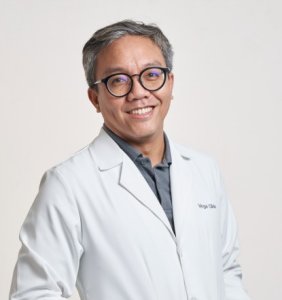
El Dr. Thongthaisin se especializa en medicina regenerativa, incluida la terapia con células madre para la epilepsia, en Vega Clinic, parte del grupo de hospitales privados más grande de Tailandia.
Stem cell therapy for epilepsy is legally available in Thailand. Authorised medical professionals must perform it in licensed facilities. The Thai FDA and Ministry of Public Health regulate these treatments. Clinics often use mesenchymal stem cells (MSCs) under strict ethical and laboratory standards.
Bookimed Expert Insight: Thailand has over 150 clinics offering regenerative treatments. However, neurological cases require specific laboratory partnerships. Leading centres often collaborate with the Thailand Institute of Scientific and Technological Research. This helps cell quality meet international ISO 17025:2017 standards for safety and potency.
Patient Consensus: Patients recommend checking if treatments are marketed as regenerative medicine or standard care. They suggest getting the exact laboratory accreditation and regulator status in writing before travelling.
Stem cell therapy for epilepsy is a secondary treatment. It does not replace anti-epileptic medication. Therapy in Thailand focuses on reducing seizure frequency and brain inflammation. Patients must continue all prescribed drugs until a neurologist confirms a seizure-free period. This period typically lasts 2 to 3 years.
Bookimed Expert Insight: Thai clinics like EDNA Wellness use GMP-certified laboratories and ISO-standard testing for stem cell processing. This focus on laboratory competence helps maintain high cell viability. This is critical when treating complex neurological conditions. While treatments cost from Precio a consultar to Precio a consultar, the focus remains on safety and quality.
Patient Consensus: Patients in Thailand report that regenerative treatments help with symptom management. Most emphasise that these therapies are experimental. They are not a reason to stop prescribed medications.
Success rates for stem cell therapy for epilepsy in Thailand are not yet standardised. This is because the treatment remains experimental. Some Bangkok clinics report lower seizure frequency using mesenchymal stem cells (MSCs). Small studies show over 50% seizure reduction in 80% of participants. Large-scale clinical data is still pending.
Bookimed Expert Insight: Thai clinics like EDNA Wellness report 70–85% success for other regenerative treatments. Patients should note that clinicians like Dr Chollawat Thongthaisin hold American Board of Regenerative Medicine certification. This signifies specialist training for complex neurological cases.
Patient Consensus: Patients find that stem cell therapy suits specific, drug-resistant forms of epilepsy. Most recommend confirming if the treatment is part of a registered trial. They also suggest defining success as reduced seizure frequency.
Stem cell therapy for epilepsy in Thailand is generally well-tolerated. Temporary side effects like mild fever, site bruising, and headaches can occur. Medical centres like EDNA Wellness follow ISO standards and Good Laboratory Practice. These protocols manage safety risks like infection or red blood cell reduction during treatment.
Bookimed Expert Insight: While many search for general stem cell results, safety often depends on laboratory partnerships. EDNA Wellness maintains ISO/IEC 17025:2017 standards, which are critical for cell purity. Patients should prioritise clinics providing documented laboratory certifications over those offering vague regenerative promises.
Patient Consensus: Individuals emphasise the need to confirm cell sources and delivery methods before travelling. They suggest coordinating with Australian neurologists for a safe transition and continued seizure medication management.
Stem cell therapy for epilepsy in Thailand uses mesenchymal stem cells (MSCs) to repair damaged neural tissue. This treatment aims to stabilise electrical activity at the seizure source and reduce brain inflammation. It works through neurogenesis and by producing inhibitory neurotransmitters like GABA.
Bookimed Expert Insight: While many centres advertise general stem cell bags, a key difference in Thailand is laboratory partnership. Leading clinics now partner with the Thailand Institute of Scientific and Technological Research. This confirms stem cells meet rigorous OECD Good Laboratory Practice standards for potency and safety.
Patient Consensus: Patients suggest treating this as a specialised alternative care option for drug-resistant cases in Thailand. They recommend requesting explicit treatment protocols. Patients should also arrange telehealth follow-up with home-based neurologists before departure.
Stem cell therapy is not appropriate for all types of epilepsy in Thailand. Treatment is usually reserved for medically refractory focal epilepsy. It is not suitable for generalised epilepsies, genetic syndromes, or structural brain issues. Global consensus defines these as experimental protocols using mesenchymal stem cells.
Bookimed Expert Insight: Basic stem cell therapy starts from Precio a consultar. Specialised epilepsy protocols range from Precio a consultar to Precio a consultar. High-end Thai clinics verify cell quality through OECD GLP and ISO/IEC 17025:2017 standards. This results in higher purity levels than standard labs.
Patient Consensus: Clinics in Thailand should provide human clinical data for specific epilepsy subtypes. Always have an Australian neurologist review any proposed plan for safe continuity of care.
Patients should not fly or return to work immediately after stem cell therapy. Flying often requires waiting several days or weeks. Returning to work depends on seizure stability and recovery progress. Specialists at EDNA Wellness in Bangkok advise getting medical clearance before travel.
Bookimed Expert Insight: Basic stem cell injections cost from Precio a consultar. Epilepsy-specific protocols in Thailand range from Precio a consultar to Precio a consultar. This price reflects intensive lab processing and neurological monitoring. Patients should prioritise clinics with ISO 9001:2015 certification for higher safety standards.
Patient Consensus: Travellers to Thailand suggest building a local recovery buffer into the schedule. Rushing home is not recommended. Confirming travel safety in writing helps manage seizure risks and post-procedure fatigue.