Queratectomía fotorrefractiva en Italia: clínicas verificadas y sus precios


Revisado médicamente por
Fahad Mawlood
¿Cuál es el precio de Queratectomía fotorrefractiva en Italia? Descubra ahora
Photorefractive keratectomy in Italy typically costs from $1,500 to $2,700. The final price depends on the specific technique, clinic location, and surgeon experience. Most Italian quotes include the surgical procedure and initial diagnostic assessments.
- Technique used: Advanced transepithelial methods typically add a 15-20% premium over traditional laser approaches.
- Major medical hubs: Prices in cities like Rome, Milan, and Bologna often run higher.
- Regional variations: Clinics in southern regions or smaller towns may offer lower rates.
- Follow-up care: Some clinics bundle post-operative visits while others bill them as separate services.
Bookimed Expert Insight: Choosing established networks like GVM Care & Research provides significant value and safety. Ospedale San Carlo di Nancy in Rome treats 15,000 patients annually with 145 specialists. This high patient volume ensures surgeons maintain peak technical proficiency. Patients benefit from institutional standards across multiple departments. While prices in Rome are higher, the access to multidisciplinary support is superior.
Sus beneficios y garantías con Bookimed
Precios directos
Bookimed no añade cargos adicionales a los precios de Queratectomía fotorrefractiva. Las tarifas proceden de las listas de precios oficiales de las clínicas. Pagará directamente en la clínica por su Queratectomía fotorrefractiva a su llegada al país.
Sólo clínicas y médicos verificados
Bookimed está comprometido con su seguridad. Solo trabajamos con las clínicas que mantienen altos estándares internacionales en Queratectomía fotorrefractiva y tienen las licencias necesarias para atender a pacientes internacionales en todo el mundo.
Asistencia 24/7 gratuita
Bookimed ofrece asistencia experta gratuita. Un coordinador médico personal le apoya antes, durante y después del tratamiento, resolviendo cualquier problema. Nunca estará solo en su viaje médico de Queratectomía fotorrefractiva.

Su coordinador médico personal de Bookimed
- Le apoya en cada etapa
- Ayuda a elegir la clínica y el médico adecuados
- Asegura un acceso rápido y conveniente a la información
Descubra las mejores clínicas de Queratectomía fotorrefractiva en Italia: 2 opciones verificadas y Precios



Descripción general de Queratectomía fotorrefractiva en Italia
- Cirugía ocular LASIK - de $1,700El procedimiento corrige la visión remodelando la córnea con un láser, ofreciendo resultados rápidos, indoloros y permanentes.
- Cirugía ocular ReLEx SMILE - de $3,000La operación corrige los errores de visión mediante un láser, realizando una pequeña incisión, asegurando así una recuperación más rápida.
- Cirugía ocular con láser IntraLase - de $2,400El procedimiento utiliza láseres ultraprecisos para la corrección de la visión, ofreciendo un esculpido altamente detallado de la córnea sin bisturí.
- Queratectomía fotorrefractiva - de $1,500El procedimiento corrige la visión remodelando la córnea, promoviendo una recuperación rápida y resultados duraderos con precisión láser.
- Tratamiento de la distrofia macular - de $1,800Esta terapia tiene como objetivo retrasar la pérdida de la visión, implica ajustes en la dieta, vitaminas y posiblemente inyecciones en el ojo.
- Cirugía ocular con láser - de $1,500Este procedimiento remodela la córnea para mejorar la visión, utilizando láser, un método no invasivo, rápido, indoloro y de rápida recuperación.
- Cirugía ocular LASEK - de $1,800Esta operación remodela la córnea utilizando un láser para mejorar la visión, con un dolor mínimo y una recuperación rápida.
- Láser de femtosegundo - de $1,900Esta terapia utiliza luz pulsante ultrarrápida para dar forma precisa a la córnea, mejorando la visión con la máxima precisión.
Día 1
- Llegada al país e instalación en el alojamiento.
- El traslado al hospital no está incluido.
Dia 2
- Consulta con un oftalmólogo para valoración preoperatoria.
- Someterse a las pruebas médicas necesarias según lo recomendado por el médico.
- Asistencia lingüística proporcionada durante la consulta.
Día 3
- Se lleva a cabo el procedimiento de queratectomía fotorrefractiva.
- El procedimiento dura unos 10-15 minutos por ojo.
- Se utiliza anestesia local durante el procedimiento.
- No se requieren puntos de sutura después de la operación.
Día 4
- Control postoperatorio con oftalmólogo.
- No se requiere permanecer en el hospital después de la operación.
Semana 1
- El período de recuperación comienza en casa.
- Uso regular de gotas para los ojos prescritas.
- Consultas de seguimiento según las instrucciones del médico.
Semana 2-3
- Regreso al trabajo y otras actividades.
- Continuar con la medicación prescrita.
Semana 4
- Revisión final con oftalmólogo.
- Se puede ver el resultado final del procedimiento.
Nota: Esta es una guía general, la recuperación individual puede variar.
- Depósito de Bookimed: 200 $ o 200 €.
- Depósito de la clínica: Pague un porcentaje fijo por adelantado.
Historias en video de pacientes de Bookimed
Reseñas
Todas las reseñasCompartir contenido
 Olena Sikoza
Datos сlave sobre Queratectomía fotorrefractiva
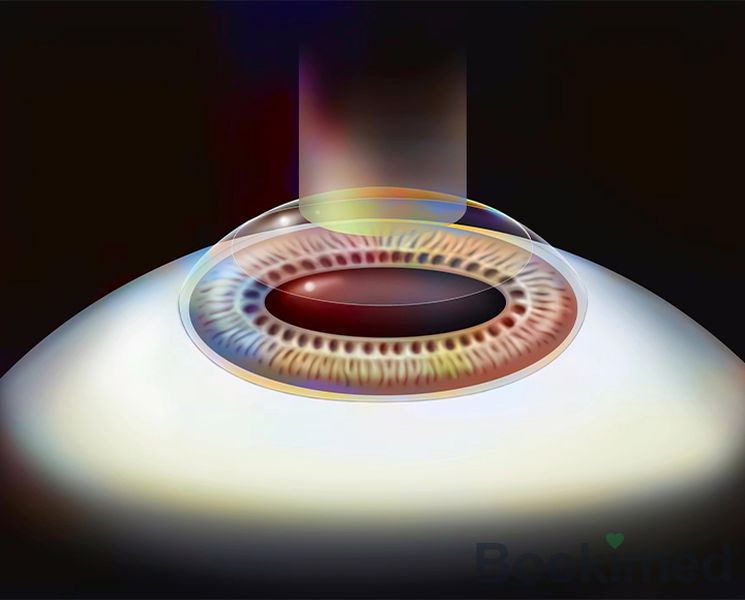
Queratectomía fotorrefractiva
Un tipo de cirugía ocular con láser que remodela la córnea para corregir problemas de visión como la miopía, la hipermetropía y el astigmatismo.
Preguntas frecuentes sobre Queratectomía fotorrefractiva en Italia
¿Es la PRK popular en Italia en comparación con el LASIK?
La PRK sigue siendo excepcionalmente popular en Italia en comparación con otras naciones occidentales. Los cirujanos italianos a menudo prefieren este enfoque basado en la superficie por su alto perfil de seguridad y su larga experiencia local. Aunque el volumen de LASIK está creciendo, la PRK y la LASEK son frecuentemente las técnicas preferidas para aproximadamente 100.000 procedimientos anuales.
- Preferencia del cirujano: Los oftalmólogos italianos priorizan la PRK para evitar complicaciones con el colgajo corneal durante la cirugía.
- Innovación local: La cirugía LASEK fue iniciada por el cirujano italiano Dr. Massimo Camellin en 1998.
- Salud corneal: Los cirujanos recomiendan activamente la PRK para pacientes con córneas delgadas u ojos secos.
- Volumen de procedimientos: Aproximadamente 100.000 procedimientos oculares con láser se realizan en Italia cada año.
Perspectiva de expertos de Bookimed: Las clínicas oftalmológicas italianas como el Ospedale San Carlo di Nancy gestionan volúmenes masivos de pacientes, tratando a menudo a 15.000 personas al año. Este alto rendimiento en la red de centros más pequeños de Italia sostiene el dominio de la PRK. Aunque las clínicas modernas adoptan el Femto-LASIK, la confianza histórica en los tratamientos basados en la superficie sigue siendo un diferenciador clave del mercado.
Consens
¿Cuál es el tiempo de recuperación típico después de una PRK en Italia?
El tiempo de recuperación de la PRK en Italia suele abarcar de 3 a 6 meses para una estabilización completa. Los pacientes generalmente logran una visión funcional en 1 a 2 semanas. La curación inicial requiere que el epitelio superficial vuelva a crecer, lo que hace necesaria una lente de contacto protectora durante los primeros 4 a 7 días después de la cirugía.
- Fase aguda: Los pacientes experimentan sensibilidad a la luz y sensación de arenilla durante los primeros 3 días.
- Retirada del vendaje: Los cirujanos suelen retirar las lentes protectoras después de 4 a 7 días, una vez que se completa la curación de la superficie.
- Visión funcional: La mayoría de los pacientes regresan al trabajo de oficina y a conducir dentro de los 7 a 10 días.
- Periodo de estabilización: La visión alcanza su claridad final y los síntomas de ojo seco generalmente se resuelven para el sexto mes.
Perspectiva del experto de Bookimed: Aunque muchos eligen la PRK por su estabilidad a largo plazo, las primeras 72 horas requieren cuidados intensivos. Clínicas como el Ospedale San Carlo di Nancy brindan apoyo oftalmológico especializado. Los pacientes deben asegurarse de que sus paquetes incluyan las gotas de esteroides específicas necesarias durante todo el primer mes para prevenir la opacidad.
Consenso de los pacientes: Los primeros 3 días a m
¿Está cubierta la PRK por el Servicio Nacional de Salud italiano (SSN)?
El Servicio Nacional de Salud italiano (SSN) generalmente no cubre la PRK para la corrección visual electiva. La cobertura se limita a casos médicamente esenciales, como errores refractivos extremos, intolerancia documentada a las lentes o anisometropía significativa. Los pacientes suelen pagar entre $1,500 y $2,700 en clínicas privadas.
- Necesidad médica: La cobertura requiere miopía extrema, hipermetropía o pérdida de visión por traumatismo.
- Derivación de especialista: Los pacientes deben obtener una derivación específica de un médico de cabecera.
- Variación regional: La elegibilidad y las listas de espera difieren significativamente entre las autoridades sanitarias regionales de Italia.
- Tasas de copago: Los procedimientos aprobados implican una pequeña tasa (ticket) para el paciente.
Opinión de expertos de Bookimed: Aunque muchos centros italianos como el Ospedale San Carlo di Nancy están acreditados por el SSN, funcionan como hospitales locales generales que priorizan la atención de urgencia y esencial. Los datos sugieren que la mayoría de los pacientes de cirugía refractiva eligen la vía privada para evitar la estricta justificación médica exigida por el sistema público. Las clínicas privadas suelen ofrecer un acceso más rápido a tecnología láser avanzada que no siempre está disponible en las unidades públicas
¿Existen precauciones especiales para una cirugía en verano?
La cirugía de queratectomía fotorrefractiva (PRK) en verano requiere precauciones estrictas respecto a la protección UV avanzada, el control del sudor y el control de infecciones. Los pacientes deben priorizar el uso de gafas de sol con bloqueo UV de grado médico y entornos con humedad controlada en Italia para prevenir opacidades o retrasos en la cicatrización corneal causados por la intensa luz solar mediterránea y las altas temperaturas estacionales.
- Protección solar: Use gafas de sol con bloqueo UV al aire libre en todo momento, incluso durante el clima veraniego nublado.
- Restricciones de actividad: Evite nadar en piscinas, océanos y lagos durante al menos 4 semanas.
- Manejo de síntomas: Use lágrimas artificiales sin conservantes con mayor frecuencia para combatir el aire seco del aire acondicionado.
- Estándares de higiene: Evite el ejercicio intenso y los entornos que induzcan sudoración para prevenir la irritación de la superficie ocular.
Perspectiva del experto de Bookimed: Las clínicas italianas como el Ospedale San Carlo di Nancy manejan un alto volumen de pacientes, atendiendo a 14,000 personas anualmente. Los datos sugieren que programar la PRK fuera del pico de calor mediterráneo de mediados de verano simplifica el cuidado postoperatorio. Elegir un hotel con aire acondicionado y evitar el flujo de aire directo ayuda a mantener
¿Qué clínicas son reconocidas por su PRK de alta calidad en Italia?
Italia ofrece PRK de alta calidad en centros prestigiosos como el Hospital San Raffaele de Milán y el Ospedale San Carlo di Nancy en Roma. Estas instalaciones priorizan la precisión a través de estándares de investigación acreditados por el IRCCS. Las mejores clínicas utilizan láseres excimer avanzados para tratar errores refractivos con meticulosos protocolos de atención postoperatoria italianos.
- Hospital San Raffaele: Instalación acreditada por el IRCCS que realiza más de 900 cirugías oculares con láser al año en Milán.
- San Carlo di Nancy: Clínica GVM Care & Research reconocida por el Servicio Nacional de Salud italiano.
- Camo Ophthalmic Center: Atención refractiva de alta precisión fundada por el renombrado Dr. Lucio Buratto.
- Ospedale Santa Maria: Hospital de Bari acreditado por la JCI que ofrece una amplia experiencia quirúrgica y exámenes médicos.
Perspectiva del experto de Bookimed: Las clínicas oftalmológicas italianas a menudo priorizan el volumen quirúrgico como marcador de calidad. El Hospital San Raffaele mantiene una alta tasa de éxito al realizar más de 900 procedimientos anuales. Los pacientes deben apuntar a instalaciones como esta o San Carlo di Nancy, que atienden a más de 14,000 pacientes al año. Un alto volumen generalmente indica un mantenimiento láser más avanzado y una estabilidad de protocolo refinada.
<
¿Cómo se comparan la PRK y el LASIK en el entorno italiano?
En Italia, la queratectomía fotorrefractiva (PRK) sigue siendo ampliamente favorecida por su perfil de seguridad sin colgajo, especialmente para pacientes con córneas delgadas. Aunque los oftalmólogos italianos utilizan frecuentemente la PRK, el LASIK está cada vez más disponible en ciudades como Roma para pacientes que buscan una recuperación visual rápida de 24 horas y una incomodidad mínima.
- Técnica quirúrgica: La PRK remodela la superficie, mientras que el LASIK implica la creación de un colgajo corneal delgado.
- Tiempo de recuperación: La PRK tarda de 1 a 4 semanas en estabilizarse; el LASIK ofrece visión funcional en 48 horas.
- Idoneidad del paciente: Los centros italianos recomiendan la PRK para córneas delgadas o para atletas de alto impacto y ciertas profesiones.
- Costos estimados: Los precios de la PRK en Italia oscilan entre $1,500 y $2,700 por ojo.
Perspectiva del experto de Bookimed: La atención oftalmológica italiana sigue un modelo descentralizado donde hospitales especializados como el Ospedale San Carlo di Nancy manejan grandes volúmenes de pacientes. Aunque el LASIK se comercializa por su conveniencia, muchos cirujanos italianos de primer nivel prefieren la PRK porque preserva mejor la integridad estructural de la córnea que los métodos basados en colgajos. Este enfoque médico conservador prioriza