Angioplastia Arterial Transluminal (PTA) y Stent en España: clínicas verificadas y sus precios


Revisado médicamente por
Fahad Mawlood
¿Cuál es el precio de Angioplastia Arterial Transluminal (PTA) y Stent en España? Descubra ahora
De $22,500. El precio varía según el tipo y la cantidad de stents utilizados, la complejidad de la obstrucción arterial y la ubicación del hospital. UU.
En España, el precio generalmente incluye pruebas preoperatorias, el procedimiento de angioplastia, materiales de stent, estancia hospitalaria, anestesia y atención de seguimiento rutinaria. En EE. UU., los costos a menudo solo incluyen el procedimiento en sí, con facturas separadas para los stents, la anestesia y la atención postoperatoria. Siempre confirmar exactamente qué está incluido con la clínica u hospital elegido.
| España | Turquía | México | |
|---|---|---|---|
| Angioplastia Arterial Transluminal (PTA) y Stent | de $22,500 | de $1,800 | ≈ $10,000 |
Sus beneficios y garantías con Bookimed
Precios directos
Bookimed no añade cargos adicionales a los precios de Angioplastia Arterial Transluminal (PTA) y Stent. Las tarifas proceden de las listas de precios oficiales de las clínicas. Pagará directamente en la clínica por su Angioplastia Arterial Transluminal (PTA) y Stent a su llegada al país.
Sólo clínicas y médicos verificados
Bookimed está comprometido con su seguridad. Solo trabajamos con las clínicas que mantienen altos estándares internacionales en Angioplastia Arterial Transluminal (PTA) y Stent y tienen las licencias necesarias para atender a pacientes internacionales en todo el mundo.
Asistencia 24/7 gratuita
Bookimed ofrece asistencia experta gratuita. Un coordinador médico personal le apoya antes, durante y después del tratamiento, resolviendo cualquier problema. Nunca estará solo en su viaje médico de Angioplastia Arterial Transluminal (PTA) y Stent.

Su coordinador médico personal de Bookimed
- Le apoya en cada etapa
- Ayuda a elegir la clínica y el médico adecuados
- Asegura un acceso rápido y conveniente a la información
Descubra las mejores clínicas de Angioplastia Arterial Transluminal (PTA) y Stent en España: 2 opciones verificadas y Precios





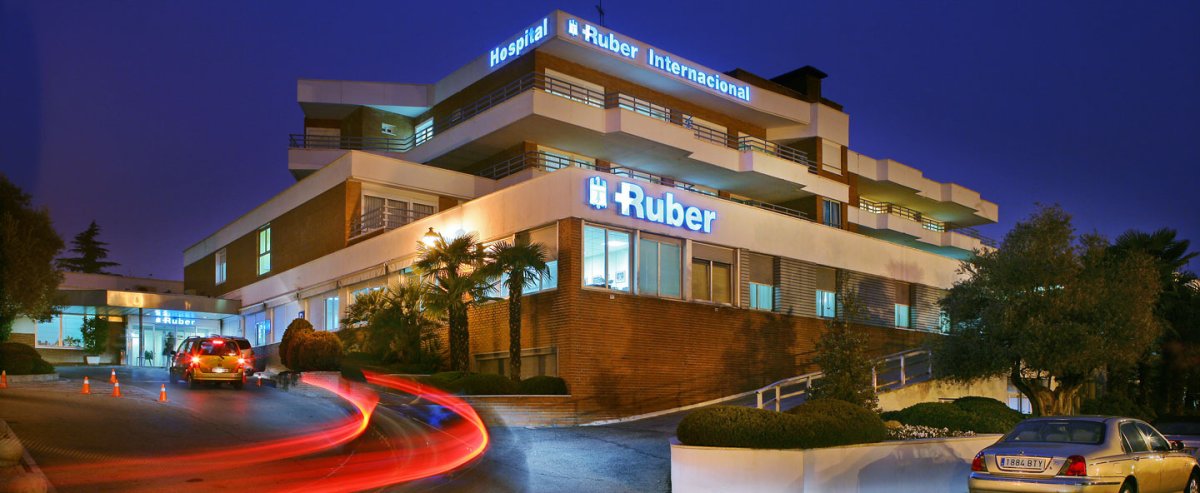

Descripción general de Angioplastia Arterial Transluminal (PTA) y Stent en España
- Stent vascular periférico - de $7,200Este tratamiento abre los vasos estrechos a través de pequeños tubos, lo que ayuda al flujo sanguíneo y reduce el dolor, lo que brinda una recuperación rápida.
- Angioplastia - de $20,200Esta terapia expande las arterias estrechadas, utilizando un globo pequeño y un stent, mejorando el flujo sanguíneo de manera efectiva y segura.
- Angioplastia carotídea y colocación de stent - de $17,100El procedimiento ensancha las arterias estrechadas del cuello mediante el inflado del globo y la colocación de un stent, mitigando el riesgo de accidente cerebrovascular.
- El procedimiento abre las arterias cerebrales estrechadas e inserta un stent para prevenir un accidente cerebrovascular, mejorando el flujo sanguíneo de manera eficiente.
- La operación consiste en dilatar las arterias vertebrales estrechadas y colocar un stent, mejorando el flujo sanguíneo para reducir los riesgos de accidente cerebrovascular.
- Angioplastia Arterial Transluminal (PTA) y Stent - de $22,500Esta terapia ensancha los vasos sanguíneos estrechos usando un globo y coloca un stent para una apertura continua, mejorando el flujo sanguíneo.
- Stent de Disección Arterial - de $6,500Esta terapia consiste en insertar un tubo de malla para abrir una arteria desgarrada, promoviendo un flujo sanguíneo seguro y previniendo complicaciones.
Día 1 - Llegada
- Llegada al hospital y check-in.
- Acomódese en su cámara individual.
- Consulta inicial con un cardiólogo.
Día 2 - Preoperatorio
- Someterse a las pruebas médicas necesarias.
- Complete los análisis de sangre según lo recomendado.
- Consulta preoperatoria con el equipo quirúrgico.
Día 3: PTA y procedimiento de colocación de stent
- Comience el procedimiento bajo anestesia local.
- La angioplastia se realiza a través de una pequeña incisión.
- El stent se inserta después de la angioplastia.
- La duración del procedimiento es de aproximadamente dos horas.
Día 4 - Postoperatorio
- Descanse en su habitación después del procedimiento.
- Controle su condición de cerca.
- Permanezca en el hospital para observación.
Semana 1 - Rehabilitación
- Comience una fisioterapia suave.
- Consultas con un nutricionista para planificar una dieta cardiosaludable.
- Seguimiento cardiólogo para control de progreso.
Semana 2 - Rehabilitación
- Continuar con la fisioterapia.
- Puede volver a trabajar si su trabajo no es físicamente exigente.
- Comience con ejercicios ligeros como caminar.
Semana 6 - Rehabilitación
- Reanudar las actividades habituales.
- Continúe siguiendo una dieta saludable para el corazón.
- Ver el resultado final del procedimiento.
Tenga en cuenta que el proceso puede variar ligeramente para cada paciente dependiendo de las condiciones de salud individuales. Consulta siempre con tu equipo médico para una atención personalizada.
- Depósito de Bookimed: 200 $ o 200 €.
- Depósito de la clínica: Pague un porcentaje fijo por adelantado.
Obtenga una evaluación médica para Angioplastia Arterial Transluminal (PTA) y Stent en España: Elija su especialista entre los mejores en el campo
Ver todos los médicos
José Ángel Cabrera Rodríguez
El Dr. Cabrera dirige el departamento de cardiología en Quironsalud Madrid, pionero en el tratamiento de arritmias con más de 29 años de experiencia.
- Especialista en cardiología intervencionista en la Fundación Jiménez Díaz
- Jefe de Cardiología en varios hospitales de prestigio
- Profesor en la Universidad Europea de Madrid
- Miembro de la Sociedad Europea de Cardiología y de la Heart Rhythm Society
- Revisor publicado en las principales revistas de cardiología

Francisco Javier Alzueta Rodriguez
Cardiólogo líder con experiencia en arritmias cardíacas y procedimientos complejos como ablación por catéter e implantación de marcapasos en Quirónsalud Marbella.
- Autor de más de 100 publicaciones científicas
- Miembro de la Sociedad Europea de Cardiología
- Jefe de la Unidad de Arritmias en la Clínica Puerta de Hierro
- Amplia experiencia docente en la Universidad de Málaga
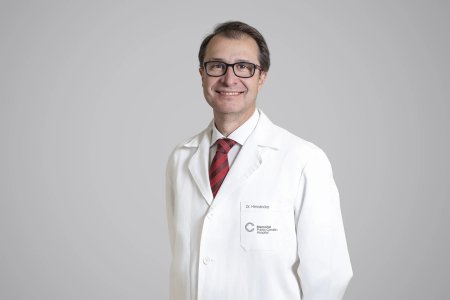
Felipe Hernández Hernández
El Dr. Felipe Hernández Hernández es cardiólogo intervencionista en el Hospital Memorial Publio Cordón de Madrid. Trata afecciones cardíacas como la aterosclerosis y la enfermedad arterial coronaria. El Dr. Hernández Hernández realiza procedimientos mínimamente invasivos, incluyendo la implantación de válvula aórtica transcatéter (TAVI). Ejerce en un centro acreditado por la JCI.
Restaura el flujo sanguíneo mediante la colocación de stents coronarios y angioplastia arterial. Estas técni

Angel Pinto Gonzalez
El Dr. Angel Pinto Gonzalez es cardiólogo intervencionista en el Hospital Universitario HM Montepríncipe de Madrid. Trata la enfermedad de las arterias coronarias, la aterosclerosis y los trastornos de las válvulas cardíacas. El Dr. Pinto Gonzalez realiza la colocación de stents, ablación por radiofrecuencia e instalación de marcapasos. Trabaja en un hospital con acreditación ISO que atiende a 500,000 pacientes anualmente.
- Realiza angioplastia carotídea y colocación de stents para
Historias en video de pacientes de Bookimed
Reseñas
Todas las reseñasCompartir contenido
 Olena Sikoza
Datos сlave sobre Angioplastia Arterial Transluminal (PTA) y Stent
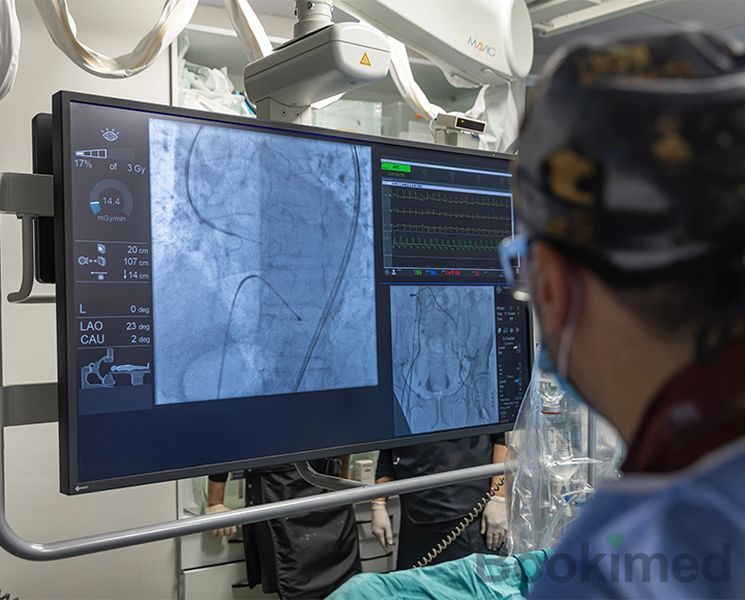
Angioplastia arterial transluminal (ATP) y colocación de stent
Este procedimiento consiste en utilizar un catéter con balón para ensanchar las arterias obstruidas o estrechadas, a menudo seguido de la colocación de un stent para mantener la arteria abierta y restablecer el flujo sanguíneo.
Preguntas frecuentes sobre Angioplastia Arterial Transluminal (PTA) y Stent en España
¿Existen riesgos asociados con la ATP y la colocación de stents?
La angioplastia arterial transluminal y la colocación de stents en España son generalmente seguras, pero conllevan riesgos como daños en los vasos sanguíneos, coágulos de sangre o reestenosis. Las complicaciones graves, como un accidente cerebrovascular o un ataque cardíaco, ocurren en menos del 1% de los casos. La mayoría de los pacientes se recuperan rápidamente bajo el cuidado de especialistas acreditados por la JCI.
- Lesión vascular: Posibilidad de disección, ruptura o espasmos durante la inserción del catéter mínimamente invasivo.
- Riesgos de trombosis: Pueden formarse coágulos de sangre dentro del stent o causar embolización distal.
- Reacción al contraste: Riesgo de daño renal temporal debido al tinte utilizado para el mapeo 3D.
- Complicaciones en el sitio de acceso: Pueden ocurrir sangrados menores, hematomas o pseudoaneurismas en el punto de acceso.
Perspectiva del experto de Bookimed: Los centros cardiovasculares de España ofrecen una ventaja de seguridad gracias a su gran experiencia. Por ejemplo, el Hospital Ruber Internacional trata a 25,000 pacientes anualmente. Elegir clínicas con un alto volumen de casos a menudo se correlaciona con tasas de complicaciones más bajas. Cirujanos como el Dr. Francisco Javier Alzueta Rodriguez también poseen amplias credenciales en el manejo de arritmias complejas y colocación de stents.
<
¿Son eficaces la ATP y la colocación de stents para la enfermedad arterial periférica?
La angioplastia transluminal percutánea (ATP) y la colocación de stents son tratamientos mínimamente invasivos y altamente eficaces para la enfermedad arterial periférica. Estos procedimientos restauran el flujo sanguíneo comprimiendo la placa y colocando un armazón de malla metálica. Este enfoque proporciona una permeabilidad vascular superior a largo plazo en comparación con la angioplastia con balón sola.
- Superioridad del stent: Los stents ofrecen mejores resultados para oclusiones crónicas y lesiones de más de 6 centímetros.
- Tecnología avanzada: Los balones recubiertos de fármacos reducen el recrecimiento del tejido y mejoran significativamente las tasas de éxito a largo plazo.
- Mínimamente invasivo: Los procedimientos utilizan enfoques endovasculares, lo que permite una recuperación más rápida y menos trauma.
- Gestión de la placa: Los cirujanos pueden utilizar la aterectomía para arterias muy calcificadas antes de colocar el stent.
Perspectiva de los expertos de Bookimed: Centros españoles líderes como el Hospital Ruber Internacional y el Centro Médico Teknon integran mapeo 3D avanzado. Esta tecnología permite a los cirujanos navegar por bloqueos arteriales complejos con mayor precisión. Elegir centros acreditados por la JCI en España garantiza el acceso a estas innovaciones endovasculares con ahorros significativos.
C
¿Qué es la angioplastia transluminal percutánea (ATP) y la colocación de stents?
La angioplastia transluminal percutánea (ATP) y la colocación de stents son procedimientos endovasculares mínimamente invasivos que se utilizan para abrir arterias bloqueadas. Un globo guiado por catéter expande los vasos estrechados, mientras que un stent de malla proporciona un andamiaje permanente. Estas técnicas tratan eficazmente la enfermedad arterial periférica y restauran la circulación sin necesidad de una cirugía mayor.
- Procedimiento principal: Los especialistas utilizan fluoroscopia para guiar los catéteres a través de la ingle o la muñeca.
- Inflado del globo: Un pequeño globo comprime la placa contra las paredes de la arteria para mejorar el flujo.
- Función del stent: Los tubos de malla expandibles permanecen permanentemente para evitar que el vaso se vuelva a estrechar.
- Recuperación del paciente: La mayoría de los pacientes regresan a casa en 24 horas debido a los pequeños sitios de punción.
Opinión de expertos de Bookimed: España ocupa un lugar destacado en cardiología compleja, con centros como el Hospital Ruber Internacional entre los 6 mejores a nivel nacional. Mientras que los costos en EE. UU. promedian _price_compare_US_average_, elegir centros acreditados por la JCI en Madrid o Barcelona ofrece ahorros del _price_percent_discount_%. Los mejores especialistas aquí priorizan técnicas combinadas como la angioplastia coro
¿Cómo se realizan la ATP y la colocación de stents?
La angioplastia transluminal percutánea (ATP) y la colocación de stents implican la inserción de un catéter en una arteria bloqueada para restaurar el flujo sanguíneo. Los cirujanos inflan un globo para ensanchar el vaso y, a menudo, colocan un stent de malla permanente para mantener el paso abierto durante este procedimiento mínimamente invasivo.
- Acceso vascular: Los cirujanos insertan un catéter a través de la arteria femoral o radial bajo anestesia local.
- Imagen por contraste: Los médicos inyectan un tinte especial para visualizar los bloqueos mediante guía de fluoroscopia de rayos X en vivo.
- Inflado del globo: Un globo comprime la placa contra las paredes de la arteria durante 15 a 60 segundos.
- Despliegue del stent: Un tubo de malla de alambre permanente se expande para fijar el vaso estrechado en posición abierta.
Perspectiva del experto de Bookimed: Los centros españoles como Centro Médico Teknon u Hospital Ruber Internacional combinan la seguridad acreditada por la JCI con un alto volumen quirúrgico. El Dr. Francisco Javier Alzueta Rodriguez en Quirónsalud Marbella aporta una experiencia especializada de más de 100 publicaciones científicas. Esta alta integración académica y clínica garantiza que los protocolos sigan las últimas directrices de la Sociedad Europea de Cardiología.
Consenso de los pacientes:
¿Cuánto tiempo dura la recuperación después de una PTA y la colocación de un stent?
La recuperación después de una PTA y la colocación de un stent en España generalmente permite una movilidad inmediata en 24–48 horas. La mayoría de los pacientes retoman actividades ligeras en 3–7 días, con un retorno completo a las rutinas normales para el séptimo día, dependiendo del sitio de inserción y la salud general.
- Movilidad inicial: Los pacientes suelen comenzar a caminar dentro de las 24–48 horas posteriores al procedimiento.
- Actividad ligera: Reanude las tareas diarias básicas y el movimiento ligero en 3–7 días.
- Regreso al trabajo: Las personas en buen estado físico pueden regresar al trabajo en 3 días con aprobación médica.
- Restricciones de levantamiento: Evite levantar más de 20 libras (aprox. 9 kg) durante al menos 7 días.
Perspectiva del experto de Bookimed: Elegir clínicas como Centro Médico Teknon o Hospital Ruber Internacional ofrece acceso a técnicas radiales (en el brazo). Nuestros datos muestran que este enfoque generalmente permite una recuperación más rápida que el acceso tradicional por la ingle. Estos centros acreditados por la JCI en España también mantienen un alto volumen de pacientes, lo que garantiza que los cirujanos tengan mucha práctica en estos métodos que optimizan la recuperación.
Consenso de los pacientes: Los pacientes a menudo se sienten listos para reanudar su vida normal
¿Qué arterias pueden tratarse con ATP y colocación de stents?
La angioplastia transluminal percutánea (ATP) y la colocación de stents tratan eficazmente las lesiones ateroscleróticas en las arterias periféricas, renales, carótidas y coronarias. Estos procedimientos mínimamente invasivos restauran el flujo sanguíneo en los sistemas ilíaco, femoral y poplíteo de las extremidades inferiores, así como en las arterias subclavias y braquiales de los brazos.
- Extremidades inferiores: Se dirige a las arterias ilíacas, femorales, poplíteas, tibiales y peroneas para aliviar la claudicación.
- Extremidades superiores: Trata bloqueos en los sistemas arteriales braquiocefálicos, subclavios, axilares y braquiales.
- Órganos vitales: Aborda el estrechamiento de la arteria renal para controlar la presión arterial y preservar la función renal.
- Cerebro y corazón: Gestiona la reestenosis de la arteria carótida y las obstrucciones coronarias mediante cateterismo cardíaco especializado.
Opinión experta de Bookimed: Aunque muchos se centran en la reparación de un solo vaso, los centros españoles como el Hospital Ruber Internacional suelen realizar stents ilíacos bilaterales incluso si los síntomas parecen unilaterales. Este enfoque proporciona una estabilidad estructural superior para la pared arterial. Esta estrategia es común en clínicas de gran volumen acreditadas por la JCI para prevenir futuros desplazamientos de placa
¿Por qué considerar España para procedimientos de PTA y colocación de stents?
España ofrece procedimientos de PTA y colocación de stents de alta calidad en instalaciones acreditadas por la JCI, combinando tecnología cardiovascular avanzada con importantes ahorros financieros. De $22,500. UU.
- Eficiencia de costos: Los procedimientos cuestan entre de $22,500 en España.
- Excelencia clínica: Centros como el Hospital Ruber Internacional se encuentran entre los mejores según Forbes.
- Experiencia especializada: Cirujanos como el Dr. José Ángel Cabrera Rodríguez poseen becas de la Sociedad Europea de Cardiología.
- Tecnología avanzada: Las clínicas utilizan stents liberadores de fármacos y mapeo 3D para casos vasculares complejos.
Opinión del experto de Bookimed: Aunque muchos buscan las grandes capitales, Marbella se ha convertido en un centro cardiovascular. El Dr. Francisco Javier Alzueta Rodríguez en Quirónsalud Marbella ofrece experiencia especializada tanto en colocación de stents como en arritmias. Elegir estos centros costeros especializados a menudo brinda acceso a expertos de primer nivel con menores tiempos de espera para los pacientes.
Con