Angioplastia Arterial Transluminal (PTA) y Stent en Italia: las 4 mejores clínicas y sus precios


Revisado médicamente por
Fahad Mawlood
¿Cuál es el precio de Angioplastia Arterial Transluminal (PTA) y Stent en Italia? Descubra ahora
Sus beneficios y garantías con Bookimed
Precios directos
Bookimed no añade cargos adicionales a los precios de Angioplastia Arterial Transluminal (PTA) y Stent. Las tarifas proceden de las listas de precios oficiales de las clínicas. Pagará directamente en la clínica por su Angioplastia Arterial Transluminal (PTA) y Stent a su llegada al país.
Sólo clínicas y médicos verificados
Bookimed está comprometido con su seguridad. Solo trabajamos con las clínicas que mantienen altos estándares internacionales en Angioplastia Arterial Transluminal (PTA) y Stent y tienen las licencias necesarias para atender a pacientes internacionales en todo el mundo.
Asistencia 24/7 gratuita
Bookimed ofrece asistencia experta gratuita. Un coordinador médico personal le apoya antes, durante y después del tratamiento, resolviendo cualquier problema. Nunca estará solo en su viaje médico de Angioplastia Arterial Transluminal (PTA) y Stent.

Su coordinador médico personal de Bookimed
- Le apoya en cada etapa
- Ayuda a elegir la clínica y el médico adecuados
- Asegura un acceso rápido y conveniente a la información
Descubra las mejores clínicas de Angioplastia Arterial Transluminal (PTA) y Stent en Italia: 4 opciones verificadas y Precios










Ospedale Santa Maria
Prof Giuseppe Speziale



Descripción general de Angioplastia Arterial Transluminal (PTA) y Stent en Italia
- Stent vascular periférico - de $11,000Este tratamiento abre los vasos estrechos a través de pequeños tubos, lo que ayuda al flujo sanguíneo y reduce el dolor, lo que brinda una recuperación rápida.
- Angioplastia - de $4,500Esta terapia expande las arterias estrechadas, utilizando un globo pequeño y un stent, mejorando el flujo sanguíneo de manera efectiva y segura.
- Angioplastia carotídea y colocación de stent - de $11,500El procedimiento ensancha las arterias estrechadas del cuello mediante el inflado del globo y la colocación de un stent, mitigando el riesgo de accidente cerebrovascular.
- El procedimiento abre las arterias cerebrales estrechadas e inserta un stent para prevenir un accidente cerebrovascular, mejorando el flujo sanguíneo de manera eficiente.
- La operación consiste en dilatar las arterias vertebrales estrechadas y colocar un stent, mejorando el flujo sanguíneo para reducir los riesgos de accidente cerebrovascular.
- Angioplastia Arterial Transluminal (PTA) y Stent - de $12,000Esta terapia ensancha los vasos sanguíneos estrechos usando un globo y coloca un stent para una apertura continua, mejorando el flujo sanguíneo.
- Stent de Disección Arterial - de $5,500Esta terapia consiste en insertar un tubo de malla para abrir una arteria desgarrada, promoviendo un flujo sanguíneo seguro y previniendo complicaciones.
Día 1 - Llegada
- Llegada al hospital y check-in.
- Acomódese en su cámara individual.
- Consulta inicial con un cardiólogo.
Día 2 - Preoperatorio
- Someterse a las pruebas médicas necesarias.
- Complete los análisis de sangre según lo recomendado.
- Consulta preoperatoria con el equipo quirúrgico.
Día 3: PTA y procedimiento de colocación de stent
- Comience el procedimiento bajo anestesia local.
- La angioplastia se realiza a través de una pequeña incisión.
- El stent se inserta después de la angioplastia.
- La duración del procedimiento es de aproximadamente dos horas.
Día 4 - Postoperatorio
- Descanse en su habitación después del procedimiento.
- Controle su condición de cerca.
- Permanezca en el hospital para observación.
Semana 1 - Rehabilitación
- Comience una fisioterapia suave.
- Consultas con un nutricionista para planificar una dieta cardiosaludable.
- Seguimiento cardiólogo para control de progreso.
Semana 2 - Rehabilitación
- Continuar con la fisioterapia.
- Puede volver a trabajar si su trabajo no es físicamente exigente.
- Comience con ejercicios ligeros como caminar.
Semana 6 - Rehabilitación
- Reanudar las actividades habituales.
- Continúe siguiendo una dieta saludable para el corazón.
- Ver el resultado final del procedimiento.
Tenga en cuenta que el proceso puede variar ligeramente para cada paciente dependiendo de las condiciones de salud individuales. Consulta siempre con tu equipo médico para una atención personalizada.
- Depósito de Bookimed: 200 $ o 200 €.
- Depósito de la clínica: Pague un porcentaje fijo por adelantado.
Obtenga una evaluación médica para Angioplastia Arterial Transluminal (PTA) y Stent en Italia: Elija su especialista entre los mejores en el campo
Ver todos los médicosProf Giuseppe Speziale
El Prof. Giuseppe Speziale es un destacado cirujano cardíaco especializado en técnicas mínimamente invasivas, con una amplia experiencia en cirugías de válvulas y aorta.
- Director de Cirugía Cardíaca en varios hospitales prestigiosos, incluidos el Anthea Hospital y el Santa Maria Hospital
- Cofundador y presidente del Comité Científico de la Mitral Academy
- Miembro de AATS e ISMICS, lo que destaca su reconocimiento internacional
- Autor de más de 90 publicaciones y coautor de 6 libros sobre cirugía cardíaca
- Galardonado con los 'Top Doctors Awards' en 2021
Historias en video de pacientes de Bookimed
Reseñas
Todas las reseñasCompartir contenido
 Olena Sikoza
Datos сlave sobre Angioplastia Arterial Transluminal (PTA) y Stent
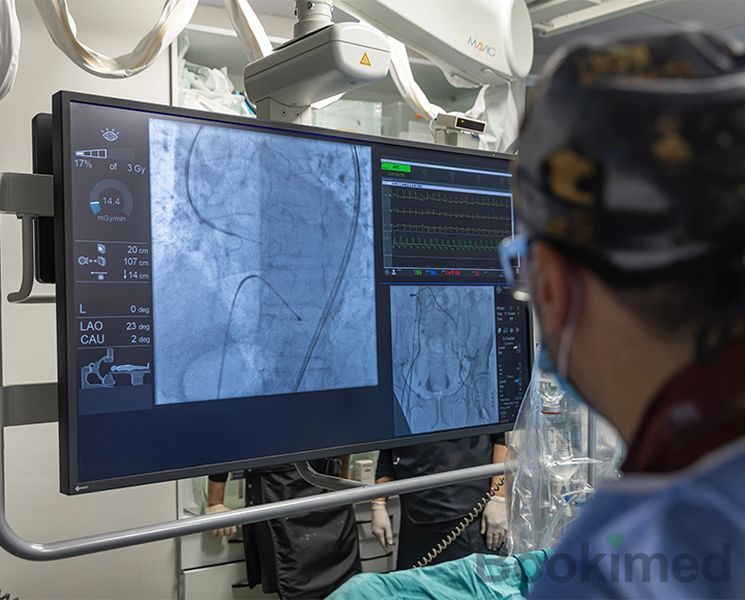
Angioplastia arterial transluminal (ATP) y colocación de stent
Este procedimiento consiste en utilizar un catéter con balón para ensanchar las arterias obstruidas o estrechadas, a menudo seguido de la colocación de un stent para mantener la arteria abierta y restablecer el flujo sanguíneo.
Preguntas frecuentes sobre Angioplastia Arterial Transluminal (PTA) y Stent en Italia
¿Qué hospitales italianos están mejor valorados para la angioplastia arterial transluminal y la colocación de stents?
El San Raffaele de Milán y el Hospital Maria Cecilia de Bolonia son los principales centros de Italia para la angioplastia arterial transluminal y la colocación de stents. Estas instalaciones, acreditadas por la JCI y certificadas por el IRCCS, utilizan laboratorios de cateterismo avanzados para realizar intervenciones vasculares complejas, manteniendo altas tasas de éxito gracias a equipos multidisciplinarios de expertos.
- San Raffaele: Realiza 52.000 operaciones anuales en el marco de un hospital de investigación líder en Europa.
- Hospital Maria Cecilia: Gestiona el 15% de las cirugías cardíacas de Italia, especializándose en enfoques endovasculares avanzados.
- Credenciales de expertos: Cirujanos como el Prof. Giuseppe Speziale lideran la coordinación cardiovascular nacional para grupos privados.
- Centros regionales: El Policlinico Universitario A. Gemelli en Roma está clasificado constantemente entre los mejores del mundo.
Perspectiva del experto de Bookimed: Aunque Milán domina en volumen, el Hospital Maria Cecilia de Bolonia ofrece una ventaja estratégica. Maneja el 15% de las cirugías cardíacas nacionales a pesar de tener menos camas que los gigantes milaneses. Este volumen concentrado de procedimientos a menudo se correlaciona con una mayor competencia quirúrgica en casos complejos de colocación de stents. Si viaja desde el extranjer
¿Cuáles son las principales complicaciones asociadas con la ATP y la colocación de stents?
Las principales complicaciones de la ATP y la colocación de stents incluyen sangrado en el sitio de acceso, disección de vasos y reestenosis. Los riesgos graves como la embolización distal o la trombosis del stent son raros. Los centros italianos especializados utilizan imágenes avanzadas para minimizar estos resultados. La mayoría de los pacientes se someten al procedimiento de forma segura sin problemas a largo plazo.
- Complicaciones de acceso: El sangrado o los hematomas en el sitio de punción ocurren con mayor frecuencia.
- Lesión vascular: La disección arterial o una perforación rara pueden requerir reparación quirúrgica inmediata.
- Eventos embólicos: Los fragmentos de placa pueden viajar aguas abajo, causando potencialmente isquemia localizada.
- Problemas con el stent: La reestenosis o la trombosis pueden estrechar la arteria con el tiempo.
- Sensibilidad al tinte: Los agentes de contraste pueden causar reacciones alérgicas o tensión renal temporal.
Perspectiva de expertos de Bookimed: Los hospitales de investigación italianos como San Raffaele realizan más de 52,000 operaciones anuales. Su alto volumen se correlaciona con tasas de complicaciones más bajas para los procedimientos vasculares. Elegir instalaciones acreditadas por la JCI como el Hospital Maria Cecilia garantiza que los equipos cardíacos multidiscip
¿Es siempre superior la colocación de un stent a la angioplastia con balón solo?
La colocación de un stent no siempre es superior a la angioplastia con balón solo. Aunque los stents proporcionan un andamiaje permanente para evitar el retroceso arterial, la angioplastia con balón suele preferirse para vasos pequeños, espasmos temporales o puntos de flexión como detrás de la rodilla, donde los implantes metálicos pueden fracturarse o causar complicaciones.
- Tamaño del vaso: Los procedimientos con balón son más seguros para arterias pequeñas o ramas laterales de menos de 3 mm.
- Puntos de flexión: Los balones recubiertos de fármacos mantienen la flexibilidad en áreas de gran movimiento como la arteria poplítea.
- Necesidades de medicación: La angioplastia sola requiere una duración más corta de terapia antiplaquetaria doble intensiva.
- Stent de rescate (bail-out): Los cirujanos suelen utilizar stents solo como respaldo si el balón falla.
Opinión de expertos de Bookimed: Los datos de grandes centros italianos como San Raffaele indican un enfoque de "ATP primero" para lesiones cortas y no calcificadas. Limitar los stents a casos complejos o escenarios de rescate reduce significativamente el riesgo de reestenosis intrastent a largo plazo. Esta estrategia conservadora a menudo logra una permeabilidad superior al 80% al año sin dejar metal permanente.
Consenso de los pacientes: Los pacientes con lesiones c
¿Cuánto dura la estancia hospitalaria típica y la recuperación después de una PTA/colocación de stent?
Los pacientes suelen permanecer en un hospital italiano de 0 a 2 noches después de una PTA y la colocación de un stent. Los procedimientos electivos a menudo permiten el alta el mismo día, mientras que los casos complejos o los protocolos de los hospitales públicos requieren de 1 a 2 noches de observación para monitorear los signos vitales y el sitio de inserción.
- Estancia hospitalaria: Espere de 0 a 2 noches dependiendo de la clínica y la complejidad del procedimiento.
- Recuperación inicial: Regreso a actividades diarias ligeras y trabajo de escritorio dentro de 3 a 7 días.
- Actividad física: Evite levantar objetos pesados o realizar ejercicio intenso durante al menos 1 a 2 semanas.
- Curación completa: La recuperación arterial completa suele tardar de 4 a 6 semanas para la mayoría de los pacientes.
Opinión de expertos de Bookimed: Los centros italianos como San Raffaele y el Hospital Maria Cecilia priorizan el acceso radial sobre el femoral. Este enfoque reduce drásticamente el tiempo de inmovilización. Mientras que el acceso por la ingle requiere 6 horas de reposo en cama, los pacientes con acceso por la muñeca a menudo se movilizan en 2 horas. Elegir clínicas privadas en Milán o Roma puede ofrecer un alta más rápida en comparación con los protocolos de los hospitales públicos.
Consenso de los pacientes: Espere al