Terapia de protones para el cáncer de mama en Turquía — reciba 3 opciones de clínicas personalizadas


Revisado médicamente por
Fahad Mawlood
Cómo funciona
¿Cuál es el precio de Terapia de protones para el cáncer de mama en Turquía? Descubra ahora
El costo de la terapia de protones para el cáncer de mama en Turquía suele oscilar desde $28,000 hasta $40,000. El precio depende del centro de tratamiento, la cantidad de sesiones, la tecnología utilizada (como el escaneo con haz de lápiz) y la complejidad del caso oncológico. UU.
En Turquía, el precio generalmente incluye imágenes previas al tratamiento (TC, RM), planificación del tratamiento, todas las sesiones de terapia de protones, supervisión médica rutinaria y visitas de seguimiento. Algunos paquetes también pueden incluir apoyo de intérprete y traslados desde el aeropuerto para pacientes internacionales. En EE. UU., los costos suelen cubrir solo el tratamiento en sí, con facturación separada para imágenes, planificación y atención de seguimiento. Siempre confirmar qué servicios están incluidos con la clínica.
Beneficios clave
¿Por qué elegir Turquía para la terapia de protones en el tratamiento del cáncer de mama?
- Clínicas acreditadas: Turquía alberga hospitales certificados por JCI y centros acreditados por el Ministerio de Salud de Turquía. Esto garantiza altos estándares de atención.
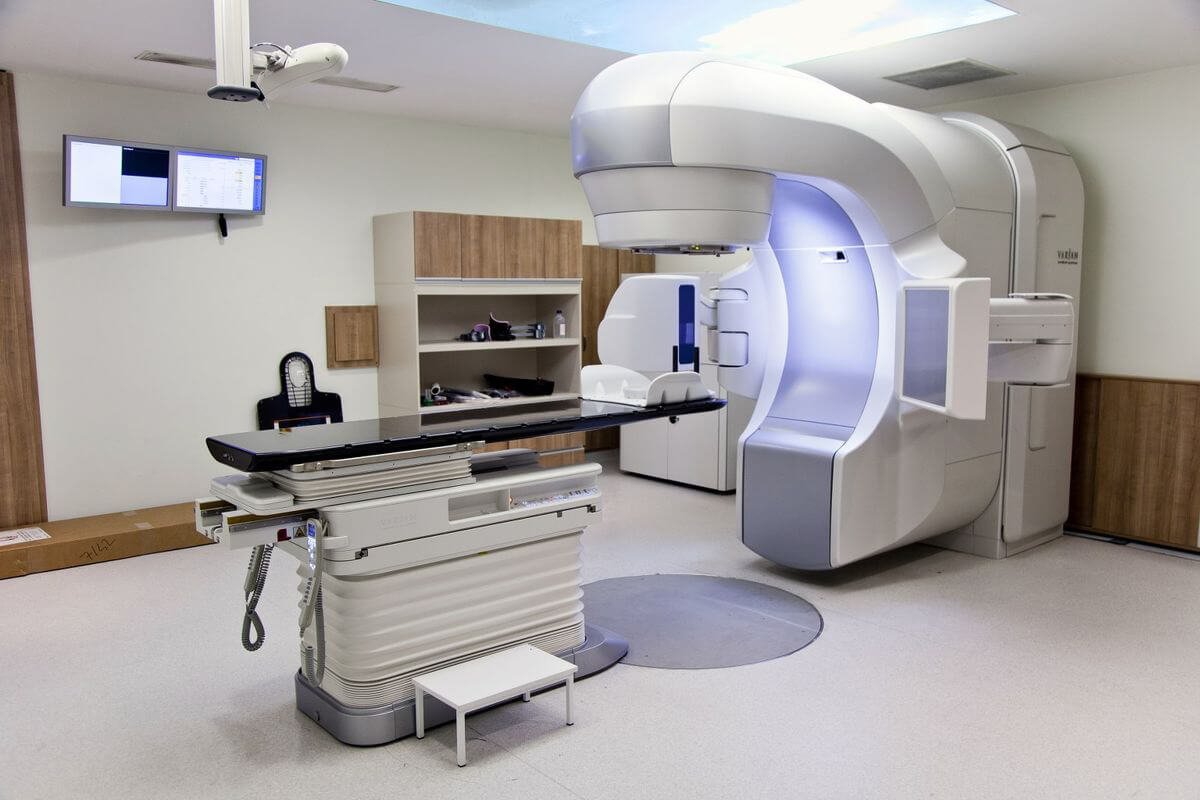
- Últimas tecnologías: Se emplean técnicas como el escaneo con haz de lápiz (PBS) y la terapia de protones con intensidad modulada (IMPT). El sistema Varian ProBeam se utiliza para ofrecer una precisión exacta en el objetivo de los tumores.
- Altas tasas de éxito: La terapia de protones para el cáncer de mama demuestra una tasa de eficacia del 85-90%. Reduce significativamente la exposición a la radiación en los tejidos sanos circundantes .
- Cirujanos expertos: Los oncólogos líderes en Turquía tienen amplia experiencia. Algunos realizan más de 500 procedimientos de terapia de protones al año y poseen certificaciones de juntas internacionales de oncología.
Acceda a soluciones avanzadas de terapia de protones para el cáncer de mama en clínicas de confianza de $28,000.
| España | Turquía | México | |
|---|---|---|---|
| Terapia de protones para el cáncer de mama | de $34,800 | ≈ $28,000 | ≈ $50,000 |
Descubra las mejores clínicas de Terapia de protones para el cáncer de mama en Turquía: 7 opciones verificadas y Precios










Hospital Estophia






Descripción general de Terapia de protones para el cáncer de mama en Turquía
- Terapia con haz de protones - de $25,000Esta terapia trata los tumores con protones de alta energía, dirigidos solo a las células enfermas, sin afectar los tejidos sanos y reduciendo los efectos secundarios.
- Terapia de protones para el cáncer de mama - de $28,000Esta terapia se dirige con precisión a los tumores de mama, reduciendo el daño al tejido sano y minimizando potencialmente los efectos secundarios.
- Terapia de protones para el cáncer de próstata - de $30,000Esta terapia utiliza rayos de protones dirigidos para erradicar las células de cáncer de próstata, preservando el tejido sano y reduciendo los efectos secundarios.
Día 1 - Llegada
- Organizar la transferencia, ya que no está incluido.
- Llegada al alojamiento (no incluido).
- Descansa y prepárate para el día siguiente.
Día 2 - Preoperatorio
- Consulta con un oncólogo especialista.
- Sométete a un hemograma completo con marcadores de cáncer.
- Completa una prueba de proteinograma.
Días 3 a 5 - Terapia de protones
- Someterse a terapia de protones bajo anestesia local.
- Cada sesión dura 1-2 horas.
- Sesiones diarias durante tres días consecutivos.
Día 6 - Postoperatorio
- Permanezca en la clínica para observación.
- Someterse a una consulta post-terapia con el oncólogo.
Día 7 - Salida
- Organizar el traslado de salida (no incluido).
Semanas 1 a 4 - Rehabilitación
- Regreso gradual a las actividades normales.
- Reanudar el trabajo después de 2 semanas.
- Reanude los deportes y otras actividades después de 4 semanas.
Tenga en cuenta que cada caso es individual y el cronograma puede variar según la condición del paciente y la respuesta a la terapia.
- Depósito de Bookimed: 200 $ o 200 €.
- Depósito de la clínica: Pague un porcentaje fijo por adelantado.
Obtenga una evaluación médica para Terapia de protones para el cáncer de mama en Turquía: Elija su especialista entre los mejores en el campo
Ver todos los médicos
Mustafa Solak
El Dr. Mustafa Solak se especializa en el tratamiento del cáncer de mama, con formación de subespecialidad en el Instituto del Cáncer de la Universidad de Hacettepe y experiencia en el MD Anderson Cancer Center.
- Completó su residencia en el Hospital de Enseñanza e Investigación Sisli Etfal
- Formación de subespecialidad en oncología en el Instituto del Cáncer de la Universidad de Hacettepe
- Trabajó en el MD Anderson Cancer Center, líder mundial en atención oncológica
- Trata una amplia gama de cánceres, incluidos los de mama, pulmón y gastrointestinales

Mustafa Serkan Alemdar
El Dr. Alemdar se especializa en oncología médica con enfoque en el tratamiento del cáncer de mama en el complejo hospitalario Medical Park Antalya.
- Certificado por el consejo en oncología médica desde 2018
- Amplia experiencia en medicina interna y oncología
- Trabajó en el Hospital Universitario Akdeniz durante varios años

Abdullah Sakin
El Prof. Dr. Abdullah Sakin es profesor de oncología médica. Trata tumores sólidos, incluidos los de pulmón, mama, gastrointestinales, genitourinarios, ginecológicos, de cabeza y cuello, y melanoma.
Brinda atención personalizada y basada en la evidencia. Sus tratamientos incluyen quimioterapia, terapias dirigidas, inmunoterapia, hormonoterapia y oncología de precisión. Ha publicado más de 200 trabajos científicos y participa en investigación clínica internacional. Este trabajo impulsa

Gul Alco
La Prof. Dra. Gül Alço es oncóloga radioterápica con unos 27 años de experiencia. Trata cánceres de mama, pulmón, próstata, gastrointestinales, ginecológicos, del sistema nervioso central, de cabeza y cuello, de tejidos blandos y óseos con radioterapia.
Su experiencia incluye radioterapia adaptativa y radiocirugía. Emplea técnicas avanzadas de radiación para ofrecer una atención personalizada y basada en la evidencia en un entorno multidisciplinario centrado en el paciente.
Historias en video de pacientes de Bookimed
Reseñas
Todas las reseñasCompartir contenido
 Olena Sikoza
Datos сlave sobre Terapia de protones para el cáncer de mama
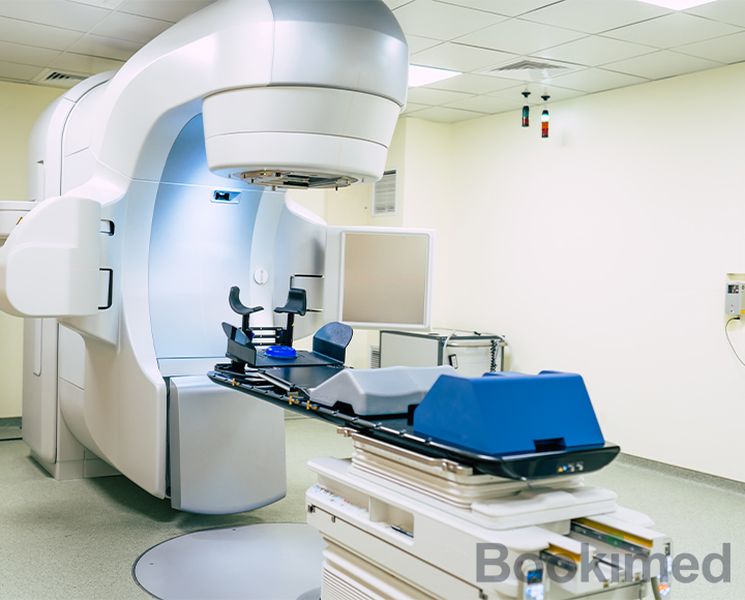
Terapia de protones para el cáncer de mama
La terapia de protones utiliza haces de protones precisos para tratar el cáncer de mama, minimizando el daño al tejido sano circundante.
Preguntas frecuentes sobre Terapia de protones para el cáncer de mama en Turquía
¿Cuáles son los posibles efectos secundarios de la terapia de protones?
La terapia de protones suele causar menos efectos secundarios que la radiación tradicional porque el haz se dirige únicamente al tumor. La mayoría de los pacientes experimentan reacciones cutáneas leves o fatiga que desaparecen entre 1 y 2 meses después del tratamiento. Los riesgos a largo plazo, como cánceres secundarios o daños a órganos, siguen siendo significativamente menores que en la radioterapia estándar.
- Reacciones cutáneas: Se produce un enrojecimiento moderado, picazón o descamación similar a una quemadura solar leve.
- Fatiga: Los pacientes pueden sentirse inusualmente cansados, alcanzando su punto máximo generalmente durante las semanas 2 a 4.
- Protección cardiovascular: Los protones reducen la exposición del corazón a la radiación entre un 50% y un 70% en casos de cáncer de mama.
- Efectos localizados: La pérdida temporal de cabello o el dolor ocurren solo en el área específica tratada.
Perspectiva del experto de Bookimed: Los datos de centros turcos importantes como el Hospital Memorial Şişli sugieren una ventaja estratégica para el cáncer de mama del lado izquierdo. La precisión de la IMPT (terapia de protones de intensidad modulada) crea una caída brusca de la dosis antes de llegar al corazón. Esta ventaja técnica es la razón por la que radiooncólogos especializados como la Prof. Dra. Berrin Pehlivan enfatizan los estudios d
¿Cuánto dura una sesión de terapia de protones?
Una sesión de terapia de protones requiere normalmente de 45 a 60 minutos para la cita completa. Aunque la administración real del haz de protones dura solo de 1 a 5 minutos, la mayor parte de la sesión implica un posicionamiento preciso y una verificación de imágenes en tiempo real para garantizar una precisión submilimétrica.
- Tiempo de posicionamiento: La alineación del paciente mediante moldes personalizados toma de 10 a 20 minutos por visita.
- Verificación por imagen: Las radiografías o tomografías computarizadas confirman la alineación del tumor en 5 a 10 minutos.
- Administración del haz: La exposición real a la radiación es indolora y breve, durando de 1 a 5 minutos.
- Tiempo total en la mesa: La mayoría de los pacientes pasan de 15 a 45 minutos en la mesa de tratamiento.
Perspectiva del experto de Bookimed: Aunque los tiempos de las sesiones están estandarizados, el volumen de la clínica afecta su día. El Medipol Mega University Hospital atiende a más de 1,200 pacientes diariamente, lo que significa que la eficiencia logística es alta, pero llegar 20 minutos antes es esencial para un registro y cambio de ropa sin problemas sin retrasar su turno de tratamiento.
Consenso de los pacientes: Los pacientes enfatizan que permanecer perfectamente inmóvil durante la larga preparación es la parte más desafiante. Espere
¿Qué beneficios para la salud a largo plazo ofrece la terapia de protones?
La terapia de protones proporciona beneficios superiores para la salud a largo plazo al eliminar la dosis de salida de la radiación mediante el efecto del pico de Bragg. Esta precisión protege el corazón y los pulmones de una exposición innecesaria. Reduce significativamente los riesgos de cánceres secundarios, enfermedades cardíacas crónicas y complicaciones pulmonares durante décadas.
- Reducción de cánceres secundarios: Disminuye las probabilidades de desarrollar nuevos tumores en un 58% en comparación con la radiación de rayos X tradicional.
- Protección cardíaca: Reduce la dosis de radiación al corazón en un 70–90%, lo cual es vital especialmente para tumores mamarios del lado izquierdo.
- Tasas de toxicidad: Mantiene la toxicidad cardíaca a 10 años en un 2% frente al 8–15% con la radioterapia convencional.
- Preservación de órganos: Protege los tejidos en desarrollo en pacientes pediátricos para prevenir retrasos en el crecimiento y desequilibrios hormonales.
Perspectiva del experto de Bookimed: Los pacientes menores de 60 años con cáncer de mama del lado izquierdo obtienen el mayor valor a largo plazo de esta tecnología. Los datos muestran que, aunque el procedimiento cuesta entre $28,000 y $40,000 en Turquía, ahorra significativamente en cuidados cardíacos futuros. Centros como el Hospital Memorial Şişli ofrecen en