Adenoma suprarrenal Tratamiento en Alemania — Costos 2026


Revisado médicamente por
Fahad Mawlood
¿Cuál es el precio del diagnóstico y los tratamientos de Adenoma suprarrenal en Alemania? Descubra ahora
Sus beneficios y garantías con Bookimed
Precios directos
Bookimed no añade cargos extra a los precios de los tratamientos de Adenoma suprarrenal. Las tarifas proceden de las listas de precios oficiales de las clínicas. Pagará directamente en la clínica por su tratamiento a su llegada al país.
Sólo clínicas y médicos verificados
Bookimed está comprometido con su seguridad. Solo trabajamos con las clínicas que mantienen altos estándares internacionales en el tratamiento de Adenoma suprarrenal y cuentan con las licencias necesarias para atender a pacientes internacionales en todo el mundo.
Asistencia 24/7 gratuita
Bookimed ofrece asistencia experta gratuita. Un coordinador médico personal le apoya antes, durante y después de su tratamiento, resolviendo cualquier problema. Nunca estará solo en su viaje médico de tratamiento de Adenoma suprarrenal.

Su coordinador médico personal de Bookimed
- Le apoya en cada etapa
- Ayuda a elegir la clínica y el médico adecuados
- Asegura un acceso rápido y conveniente a la información
Descubra las mejores clínicas de tratamiento de Adenoma suprarrenal en Alemania: 5 opciones verificadas y Precios







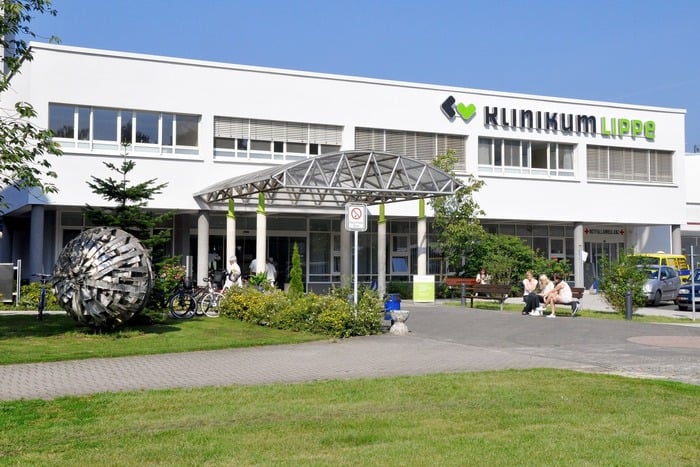
Lippe Lemgo Clinic

Compartir contenido
Historias en video de pacientes de Bookimed
 Olena Sikoza
Preguntas frecuentes sobre el tratamiento de Adenoma suprarrenal en Alemania
¿Cómo deciden los especialistas alemanes si mi adenoma suprarrenal necesita tratamiento o puede ser simplemente monitoreado?
Los especialistas alemanes deciden el manejo del adenoma suprarrenal basándose en la actividad hormonal y los indicadores de riesgo estructural. La evaluación sigue las directrices de la Sociedad Europea de Endocrinología. Los médicos priorizan una densidad en la tomografía computarizada inferior a 10 unidades Hounsfield. El tratamiento solo es necesario para tumores funcionales o aquellos que superan los 4 centímetros.
- Verificación de densidad: Los especialistas miden las unidades Hounsfield para distinguir los lípidos benignos de las masas sospechosas.
- Detección hormonal: Los análisis de sangre verifican el exceso de cortisol, aldosterona y metanefrinas.
- Umbral de tamaño: Los tumores de más de 4 centímetros generalmente requieren extirpación quirúrgica debido al riesgo de malignidad.
- Estado funcional: La producción hormonal activa a menudo conduce a una cirugía laparoscópica a pesar del pequeño tamaño del tumor.
Perspectiva del experto de Bookimed: Las clínicas alemanas como el Complejo Clínico de Renania del Norte-Westfalia y la Clínica Nordwest manejan volúmenes masivos, atendiendo colectivamente a más de 200,000 pacientes al año. Este alto rendimiento garantiza que los equipos multidisciplinarios interpreten con precisión los resultados límite. Los datos muestran que los especialistas alemanes prefieren el monitoreo conservador par
¿Cuáles son las técnicas quirúrgicas preferidas para la adrenalectomía en Alemania y cómo se seleccionan?
Los cirujanos alemanes priorizan las técnicas mínimamente invasivas para la adrenalectomía. El abordaje retroperitoneoscópico posterior (PRA) es la opción principal para tumores de menos de 6 cm. La selección depende del tamaño del tumor, el riesgo de malignidad y el historial quirúrgico previo. La mayoría de los procedimientos ocurren en centros oncológicos acreditados por JCI o certificados por TÜV.
- Retroperitoneoscópico posterior: Accede a la glándula a través de la espalda. Minimiza el riesgo de lesión orgánica.
- Laparoscopia transperitoneal: Preferida para tumores de más de 6 cm. Proporciona un espacio de trabajo más grande.
- Cirugía asistida por robot: Utiliza sistemas como DaVinci para visualización 3D. Ofrece alta precisión.
- Adrenalectomía parcial: Preserva tejido sano. Esto evita la dependencia de por vida de hormonas esteroides.
- Cirugía abierta: Reservada para sospecha de malignidad. Asegura la extirpación completa de la cápsula tumoral.
Perspectiva del experto de Bookimed: Las 10 mejores clínicas, como el Complejo Clínico de Renania del Norte-Westfalia, aprovechan los departamentos robóticos para manejar grandes volúmenes de casos. Si bien muchos hospitales generales ofrecen cirugía laparoscópica, estos centros utilizan sistemas robóticos para casos complejos. Esta tecnología es especialmente útil para
¿Cuál es el riesgo de que mi adenoma suprarrenal benigno se convierta en un cáncer suprarrenal maligno?
El riesgo de que un adenoma suprarrenal benigno se transforme en un cáncer maligno es extremadamente raro. El consenso médico estima este riesgo en menos del 1%. Estos tumores suelen permanecer estables. La mayoría de las masas suprarrenales cancerosas son malignas desde el inicio, en lugar de ser lesiones benignas mutadas.
- Tamaño del tumor: Las masas de menos de 4 cm tienen un riesgo de malignidad cercano al 0%.
- Densidad en imagen: Los adenomas benignos suelen medir menos de 10 unidades Hounsfield en una TC sin contraste.
- Velocidad de crecimiento: Los tumores malignos a menudo aumentan 5 mm o más por año.
- Estado funcional: Los adenomas benignos pueden comenzar a sobreproducir hormonas a pesar de seguir siendo no cancerosos.
Perspectiva del experto de Bookimed: Las clínicas alemanas como el Complejo Clínico de Renania del Norte-Westfalia y la Clínica Nordwest manejan un gran volumen de pacientes. Las grandes redes gestionan hasta 145.000 pacientes al año. Este alto volumen permite a los especialistas alemanes distinguir con precisión los adenomas estables de las masas sospechosas. Los pacientes se benefician de institutos de investigación especializados en Frankfurt que utilizan ultrasonido 3D para un monitoreo preciso.
Consenso de los pacientes: Los pacientes señalan que, aunque los informes de las exploraciones
¿Se puede preservar parte de mi glándula suprarrenal o debe extirparse la glándula completa?
La preservación parcial de la glándula suprarrenal es posible mediante una adrenalectomía con preservación cortical para tumores benignos como los adenomas. Los especialistas alemanes a menudo preservan tejido sano si la masa es pequeña y está situada de forma segura. Los cirujanos suelen intentar dejar el 30 % de la glándula para mantener la producción natural de hormonas.
- Tipo de tumor: La extirpación parcial es primordial para casos no cancerosos de Conn, Cushing o feocromocitoma.
- Masa crítica: Los tumores de más de 4 cm generalmente requieren una extirpación total debido a los riesgos de malignidad.
- Ubicación quirúrgica: El tumor debe poder separarse sin dañar el suministro de sangre principal de la glándula suprarrenal.
- Casos bilaterales: Preservar tejido es vital si ambas glándulas tienen tumores para evitar el uso de esteroides de por vida.
Perspectiva de expertos de Bookimed: Clínicas alemanas como la Clínica Nordwest y el Complejo Clínico de Renania del Norte-Westfalia se centran en la oncología de alto volumen y la cirugía robótica. Nuestros datos muestran que estas grandes asociaciones gestionan hasta 145.000 pacientes al año. Este volumen es crucial porque los cirujanos endocrinos experimentados en dichos centros tienen estadísticamente más probabilidades de ofrecer técnicas complejas de preservación cortical que las instalaciones
¿Cómo es el cronograma típico de recuperación después de una cirugía suprarrenal mínimamente invasiva en Alemania?
La recuperación física después de una cirugía suprarrenal mínimamente invasiva en Alemania suele durar de 1 a 2 semanas. Los pacientes retoman sus actividades diarias rápidamente. La estabilización hormonal completa toma entre 1 y 12 meses. Las clínicas alemanas priorizan una observación cautelosa. La hospitalización suele durar de 1 a 3 noches para monitoreo.
- Estancia hospitalaria: Espere de 1 a 3 noches para el monitoreo de la estabilidad hormonal y de la herida.
- Retorno a la actividad: La mayoría de los pacientes retoman el trabajo de oficina sedentario dentro de los 7 a 14 días.
- Restricciones de levantamiento: Evite levantar pesos superiores a 4,5 kg durante 4 a 6 semanas.
- Curación hormonal: La normalización del cortisol o la aldosterona puede requerir de 6 a 12 meses.
Perspectiva del experto de Bookimed: Los centros de salud alemanes, como el Complejo Clínico de Renania del Norte-Westfalia, manejan volúmenes masivos, tratando a 145.000 pacientes anualmente. Esta alta frecuencia crea un protocolo de seguridad estandarizado para casos suprarrenales. Mientras que algunas clínicas globales presionan por un alta a las 23 horas, los equipos alemanes favorecen una estancia de 48 horas. Esto asegura que la presión arterial y los electrolitos se estabilicen antes de que viaje a casa.
Consenso de los pacientes: Los pa
¿Qué hospitales y cirujanos destacados en Alemania son reconocidos por el tratamiento del adenoma suprarrenal?
Los principales hospitales universitarios alemanes, como los de Wurzburgo y Múnich, son líderes mundiales en el tratamiento del adenoma suprarrenal. Estos centros brindan atención multidisciplinaria y priorizan las técnicas mínimamente invasivas. Cirujanos endocrinos altamente experimentados, incluidos el Dr. Martin Fassnacht y el Dr. Sebastian Melchior, utilizan tecnologías laparoscópicas y robóticas para extirpaciones precisas.
- Cirujanos expertos: El Dr. Martin Fassnacht en Wurzburgo se especializa en neoplasias suprarrenales hormonalmente activas.
- Precisión robótica: El Dr. Sebastian Melchior en Bremen-Mitte realiza adrenalectomías asistidas por robot de última generación.
- Centros de alto volumen: El LMU Klinikum de Múnich gestiona un gran número de casos anuales mediante equipos interdisciplinarios.
- Credenciales de calidad: La Clínica Nordwest cuenta con clasificaciones de Newsweek y Focus por su desempeño médico.
Perspectiva de expertos de Bookimed: La infraestructura médica alemana favorece las grandes redes hospitalarias como la de Renania del Norte-Westfalia, que atiende a 145.000 pacientes al año. Aunque existen clínicas especializadas más pequeñas, estos grandes complejos suelen ofrecer mejores redes de seguridad. Integran departamentos subespecializados de oncología, urología y endocrinología en un mismo sistema. Esto es cruc
¿Por qué los pacientes internacionales eligen Alemania para el tratamiento del adenoma suprarrenal?
Los pacientes internacionales eligen Alemania para el tratamiento del adenoma suprarrenal debido a las técnicas quirúrgicas de alta precisión y al riguroso diagnóstico hormonal. Las clínicas alemanas utilizan accesos retroperitoneoscópicos y robóticos para minimizar la recuperación. Los estándares de facturación regulados garantizan la transparencia de los costos. Las redes endocrinas certificadas por el estado proporcionan revisiones multidisciplinarias de comités de tumores para casos complejos.
- Precisión quirúrgica: Los cirujanos utilizan el acceso retroperitoneal para evitar entrar en la cavidad abdominal.
- Preservación de órganos: Las técnicas de adrenalectomía parcial preservan la producción natural de hormonas y evitan la medicación de por vida.
- Estándares de calidad: Las instalaciones mantienen certificaciones ISO y KTQ para tasas de complicaciones documentadas bajas.
- Precisión diagnóstica: Los minuciosos estudios endocrinos diferencian los tumores con funcionamiento sutil de los adenomas no funcionales.
Perspectiva del experto de Bookimed: La infraestructura sanitaria alemana proporciona una red de seguridad única basada en el volumen para afecciones suprarrenales raras. El complejo clínico de Renania del Norte-Westfalia y la clínica Lippe Lemgo tratan hasta 150.000 pacientes al año. Este enorme volumen ambulatorio permite a los