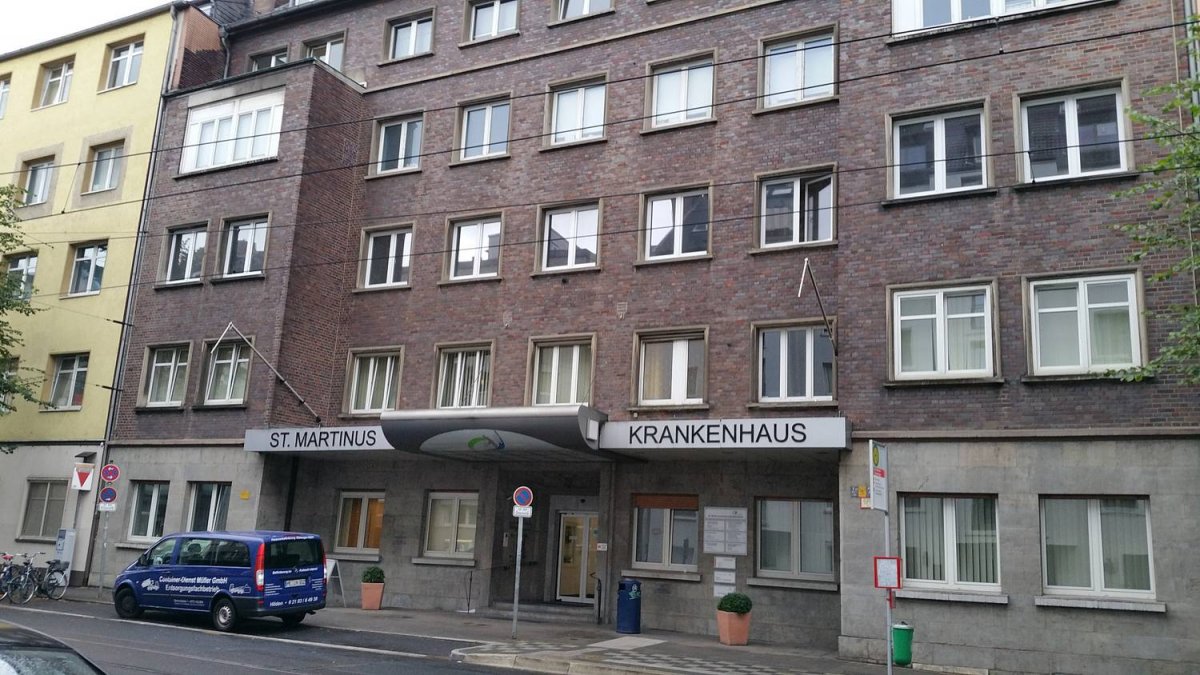
St. Martinus-Krankenhaus Düsseldorf
Alemania, Düsseldorf


Revisado médicamente por
Fahad Mawlood
La cirugía de banda gástrica en Alemania suele costar entre $7,200 y $10,200. El precio final depende del nivel de la clínica, la duración de la estancia hospitalaria y la complejidad del perfil del paciente. En los EE. UU., procedimientos similares cuestan alrededor de $13,000 en promedio. Los pacientes ahorran alrededor de un 33% en comparación con los EE. UU. La mayoría de los paquetes médicos alemanes incluyen la cirugía, la anestesia y un período de hospitalización de 2 a 3 días.
Perspectiva del experto de Bookimed: Elegir una instalación como el St. Martinus-Krankenhaus Düsseldorf ofrece un valor excepcional. Es una de las dos únicas clínicas alemanas acreditadas por la Federación Internacional para la Cirugía de la Obesidad y Trastornos Metabólicos. Si bien los precios en centros de primer nivel como el Hospital Asklepios Barmbek pueden ser más altos, ofrecen una atención calificada con 5 estrellas. Esto garantiza el acceso a departamentos especializados que atienden a 80,000 pacientes anualmente con estándares certificados por la ISO.
| Alemania | España | Estados Unidos | |
|---|---|---|---|
| Banda gástrica | ≈ $7,200 | de $5,600 | ≈ $9,500 |
Bookimed no añade cargos adicionales a los precios de Banda gástrica. Las tarifas proceden de las listas de precios oficiales de las clínicas. Pagará directamente en la clínica por su Banda gástrica a su llegada al país.
Bookimed está comprometido con su seguridad. Solo trabajamos con las clínicas que mantienen altos estándares internacionales en Banda gástrica y tienen las licencias necesarias para atender a pacientes internacionales en todo el mundo.
Bookimed ofrece asistencia experta gratuita. Un coordinador médico personal le apoya antes, durante y después del tratamiento, resolviendo cualquier problema. Nunca estará solo en su viaje médico de Banda gástrica.

Día 1
Dia 2
Día 3
Día 4
Dia 5
Semana 1
Semana 2-4
Semana 5-8
Después de 8 semanas
Tenga en cuenta que cada caso es individual y los plazos pueden variar según las condiciones de salud personales y la tasa de recuperación.
Lo que les gusta a los pacientes:
Lo que no les gusta a los pacientes:
Como plataforma líder mundial de turismo médico, tenemos una gran responsabilidad ante nuestros clientes, tanto pacientes como centros médicos. Toda la información proporcionada en Bookimed.com se basa en la investigación, la previsión y la experiencia y cumple con un alto interés relacionado con el producto y sigue:
Formamos nuestros listados de clínicas y médicos en Alemania con estrictas regulaciones de nuestro sistema inteligente de clasificación automática. El sistema se basa en tarifas de pacientes reales de Bookimed para proporcionar la información más objetiva y transparente sobre las clínicas y los servicios médicos allí.
Nuestro experimentado científico de datos recopila datos a diario, supervisa y optimiza el sistema de clasificación mediante el aprendizaje automático y la inteligencia artificial para garantizar que el sistema de clasificación esté actualizado y proporcione resultados precisos.
Recopilamos las opiniones de los clientes de Bookimed solo después de obtener experiencia médica con la clínica en Alemania, para que todos en la plataforma puedan confiar en el centro que elijan. Nos esforzamos por hacer que el contenido de nuestra plataforma sea lo más útil posible y garantizamos la libertad de expresar opiniones críticas. Así, publicamos críticas positivas y negativas, con el objetivo de ser una fuente para la toma de decisiones informadas para nuestros futuros clientes.
En Bookimed.com puede encontrar opciones y conveniencia para encontrar las mejores soluciones médicas de los principales proveedores de servicios médicos en Alemania en un solo lugar y, a menudo, a precios competitivos. Asegurándose de brindar la información más actualizada, los representantes de la clínica actualizan los CV de los médicos, las capacidades de las clínicas, las fotos de antes y después, los precios, los paquetes y las ofertas especiales en breve. Puede reunirse con el representante de la clínica y verificar la fecha del contenido actualizado en la página de cada clínica para asegurarse de su confiabilidad.
Nuestro blog y artículos de apoyo son creados por autores profesionales con al menos 3 años de experiencia en redacción médica y editados por especialistas médicos con experiencia clínica y de investigación relevante, todos reclutados cuidadosamente para el equipo. Nos esforzamos por mejorar el acceso de los pacientes a la información de salud, haciéndola experta pero fácil de entender. Todas las piezas siguen las Directrices Editoriales de Bookimed.
Estamos hechos de personas y para personas, y ese es nuestro valor fundamental. Es por eso que todos los datos presentados en la plataforma son recopilados, editados, revisados y actualizados regularmente por nuestros pacientes, nuestras clínicas asociadas en Alemania y nuestro equipo, incluido el Consejo Asesor Médico de Bookimed, que consta de médicos de renombre mundial con valor. Experiencia de más de 20 años de práctica y una reputación positiva. Conozca más sobre nosotros y nuestra misión .
En caso de que encuentre algún error o tenga alguna pregunta sobre la información presentada en Bookimed.com, no dude en contactarnos en marketing@bookimed.com .

El Dr. Viktor Alexander Krol dirige el Centro de Tratamiento de la Obesidad certificado en el Hospital Martinus, especializado en procedimientos bariátricos avanzados.

Cirujano jefe del primer centro certificado de cáncer colorrectal en Alemania – El Prof. Schenker dirige el Departamento de Cirugía del Hospital Académico de Solingen.

El Dr. Eljabu cuenta con una triple certificación en Cirugía Plástica y Estética, Cirugía de la Mano y Cirugía de Traumatología, una combinación poco común que garantiza precisión en los procedimientos de banda gástrica.
 Olena Sikoza
El seguro médico legal alemán cubre la cirugía de banda gástrica como último recurso y caso por caso. La aprobación requiere cumplir criterios médicos estrictos, incluido un IMC superior a 40 y el fracaso documentado de terapias conservadoras. La cobertura del seguro privado depende de su contrato de póliza individual específico.
Perspectiva del experto de Bookimed: Aunque la cobertura del seguro es posible, las bandas gástricas son cada vez más raras en Alemania. Los mejores centros, como el St. Martinus-Krankenhaus de Düsseldorf, se centran en gran medida en alternativas mínimamente invasivas. Si solicita la cobertura, utilizar un Centro de Tratamiento de la Obesidad certificado aumenta significativamente las probabilidades de aprobación. Estos centros se especializan en la compleja documentación que requiere el Servicio Médico de
La banda gástrica conlleva riesgos significativos a largo plazo, incluyendo el deslizamiento de la banda, la erosión en la pared estomacal y una tasa de fallo del dispositivo del 35% al 54% en 10 años. Los pacientes experimentan frecuentemente reflujo ácido crónico, dilatación esofágica y fallos mecánicos del puerto que requieren extracción quirúrgica o conversión a bypass.
Perspectiva del experto de Bookimed: Aunque Alemania es líder mundial en cirugía bariátrica, centros modernos como el St. Martinus-Krankenhaus de Düsseldorf priorizan ahora la manga gástrica o el bypass mínimamente invasivos. Los datos muestran que las clínicas realizan cada vez más retiradas de bandas y conversiones porque estas alternativas ofrecen un mantenimiento de peso a largo plazo más predecible sin el alto mantenimiento de un dispositivo extraño.
Consenso de lo
Para calificar para una banda gástrica en Alemania, los pacientes generalmente requieren un Índice de Masa Corporal (IMC) de 40 o más. Las personas con un IMC entre 35 y 39.9 también califican si presentan comorbilidades relacionadas con la obesidad, como diabetes tipo 2, apnea del sueño o enfermedades cardiovasculares.
Perspectiva de expertos de Bookimed: Si bien Alemania establece umbrales de IMC claros, el St. Martinus-Krankenhaus de Düsseldorf es una de las dos únicas clínicas en todo el país con acreditación IFSO. Los datos muestran que los cirujanos aquí a menudo recomiendan la gastrectomía en manga sobre las bandas para pacientes con un IMC de 40+ para garantizar mejores resultados a largo plazo.
Consenso de los pacientes: Los pacientes señalan que cumplir con el umbra
Alemania aplica estrictos requisitos de candidatura médica para los procedimientos de banda gástrica a través de un proceso de evaluación multidisciplinario. Los pacientes deben proporcionar pruebas documentadas de obesidad a largo plazo, intentos previos fallidos de pérdida de peso y someterse a evaluaciones psicológicas y nutricionales obligatorias dentro de centros certificados por la Federación Internacional para la Cirugía de la Obesidad (IFSO).
Perspectiva del experto de Bookimed: Las clínicas alemanas mantienen barreras de entrada más altas que muchos otros centros europeos. Si bien algunas regiones permiten la cirugía basándose únicamente en el IMC, los centros alemanes a menudo requieren primero un programa supervisado de 6 meses. Los datos muestran que clínicas como Nordwes
El procedimiento de banda gástrica es una cirugía laparoscópica en la que se coloca un anillo de silicona alrededor de la parte superior del estómago. Trabajando sin grapas ni cortes, esta técnica restrictiva crea una bolsa de 30 ml que ralentiza la digestión y limita el tamaño de las porciones. Los cirujanos acceden a la cavidad abdominal a través de pequeñas incisiones bajo anestesia general.
Perspectiva del experto de Bookimed: La acreditación importa más que el volumen para este procedimiento específico. El St. Martinus-Krankenhaus Düsseldorf es una de las dos únicas clínicas alemanas reconocidas por la Federación Internacional de Obesidad. Esto refleja su dominio de los protocolos de ajuste a largo plazo necesarios para el éxito de la banda.
Consenso de los pacientes: Muchos pacientes aprecian que no se elimine tejido estomacal, lo que hace que el proceso sea reversible. Sin embargo,
La recuperación implica una breve estancia hospitalaria seguida de un programa de rehabilitación médica obligatorio de 3 semanas llamado Anschlussheilbehandlung. Los pacientes suelen volver a realizar actividades ligeras en el plazo de 1 semana. La legislación alemana garantiza una gestión estructurada del alta a través de los servicios sociales hospitalarios para coordinar todas las necesidades inmediatas de transición clínica y administrativa.
Perspectiva del experto de Bookimed: Mientras que muchos países tratan la banda gástrica como una cirugía ambulatoria, las clínicas alemanas como el St. Martinus-Krankenhaus de Düsseldorf suelen integrar a los pacientes en centros especializados en obesidad. Estos centros están certificados por la Federación Internacional de Cirugía de la Obesidad. Esto significa que su recuperación es gesti
Los cirujanos alemanes se están alejando de la banda gástrica debido a las altas tasas de complicaciones a largo plazo y al fallo frecuente del dispositivo. Los datos modernos indican un descenso drástico del 23,5 por ciento a solo el 0,2 por ciento de los procedimientos bariátricos primarios. Alternativas fiables como la gastrectomía en manga ofrecen resultados metabólicos superiores y menores riesgos de reoperación.
Perspectiva del experto de Bookimed: Mientras que muchas clínicas se alejan de las bandas, centros especializados como el St. Martinus-Krankenhaus de Düsseldorf se centran en la cirugía de revisión. Son uno de los dos únicos centros alemanes acreditados por la Federación Internacional de Obesidad. Esto refleja una tendencia en l
Alemania alberga algunos de los departamentos de neurocirugía más prestigiosos del mundo, liderados por la Charité – Universitätsmedizin Berlin y el Hospital Universitario de Heidelberg. Estos centros destacan en el tratamiento de tumores cerebrales complejos y enfermedades cerebrovasculares. Para maximizar la eficacia de sus procedimientos, utilizan tecnologías de vanguardia como la resonancia magnética intraoperatoria y la neuronavegación asistida por computadora.
Opinión experta de Bookimed: Los datos muestran que elegir centros con un alto volumen quirúrgico suele llevar a recomendaciones de tratamiento más conservadoras. En el Centro Médico Solingen, que atiende a más de 60.000 pacientes al año, los cirujanos suelen sugerir fisioterapia en lugar de cirugía
En Alemania, los procedimientos neuroquirúrgicos de alta complejidad demuestran una seguridad excepcional. Las tasas de éxito en las fusiones espinales alcanzan el 99 %. La tasa de supervivencia en las resecciones de tumores cerebrales primarios es del 97 %. La independencia funcional es alta. Más del 82 % de los pacientes reciben el alta inmediatamente después del tratamiento. Los centros alemanes priorizan la preservación de la función neurológica mediante técnicas modernas de mapeo.
Opinión experta de Bookimed: Cirujanos experimentados como el Dr. Uwe Köhler, de la Clínica Asklepios Altona, realizan más de 2000 cirugías al año. Los datos muestran que estos especialistas mantienen tasas de éxito de hasta el 90 %, incluso en los tumores cerebrales más comp
Las clínicas neuroquirúrgicas alemanas incorporan regularmente instrumentos digitales de alta precisión y visualización en tiempo real a la práctica quirúrgica. Entre las tecnologías clave se encuentra la neuronavegación computarizada para cirugías de cerebro y médula espinal. Instituciones como la Clínica Asklepios Nord utilizan la resonancia magnética intraoperatoria para verificar la extirpación de tumores en tiempo real. Estos sistemas proporcionan a los cirujanos navegación GPS 3D.
Opinión experta de Bookimed: Grandes centros como la Charité – Universitätsmedizin de Berlín realizan más de 4000 procedimientos neuroquirúrgicos al año, lo que crea un entorno rico en datos para p