Apendectomía en Alemania — obtén 3 clínicas con costos


Revisado médicamente por
Fahad Mawlood
¿Cuál es el precio de Apendectomía en Alemania? Descubra ahora
El costo de una apendicectomía en Alemania suele oscilar entre _price_from_ y _price_to_. Los precios pueden variar según la clínica, la experiencia del cirujano, si la cirugía es laparoscópica o abierta, y la complejidad del caso. UU.
Las clínicas alemanas suelen incluir la consulta inicial, análisis de sangre preoperatorios, medicación postoperatoria, visitas de seguimiento, personal que habla inglés, planes de atención personalizados, instrucciones postoperatorias, comidas durante la estancia y soporte al paciente 24/7. En EE. UU., el precio cotizado a menudo cubre solo la cirugía, con facturas separadas para la anestesia, medicamentos, pruebas de laboratorio y seguimientos. Siempre confirmar exactamente qué está incluido en la clínica elegida.
Beneficios clave
¿Por qué los pacientes eligen Alemania para una apendicectomía?
- Clínicas acreditadas: Alemania alberga hospitales certificados por KTQ, que garantizan altos estándares de atención y seguridad para el paciente.
- Últimas tecnologías: Se utilizan técnicas como el método SILS (Cirugía Laparoscópica de Incisión Única) y dispositivos como el Bisturí Armónico. Estas herramientas permiten precisión y ayudan a reducir el tiempo de recuperación.
- Altas tasas de éxito: Los procedimientos de apendicectomía en Alemania tienen una tasa de eficacia del 98%. Son conocidos por sus bajas tasas de complicaciones y tiempos de recuperación rápidos.
- Cirujanos expertos: Los principales cirujanos alemanes a menudo cuentan con certificaciones de la Junta Europea de Cirugía. Realizan más de 500 apendicectomías al año, demostrando su experiencia y pericia.
Acceda a soluciones avanzadas de apendicectomía en clínicas de confianza .
Sus beneficios y garantías con Bookimed
Precios directos
Bookimed no añade cargos adicionales a los precios de Apendectomía. Las tarifas proceden de las listas de precios oficiales de las clínicas. Pagará directamente en la clínica por su Apendectomía a su llegada al país.
Sólo clínicas y médicos verificados
Bookimed está comprometido con su seguridad. Solo trabajamos con las clínicas que mantienen altos estándares internacionales en Apendectomía y tienen las licencias necesarias para atender a pacientes internacionales en todo el mundo.
Asistencia 24/7 gratuita
Bookimed ofrece asistencia experta gratuita. Un coordinador médico personal le apoya antes, durante y después del tratamiento, resolviendo cualquier problema. Nunca estará solo en su viaje médico de Apendectomía.

Su coordinador médico personal de Bookimed
- Le apoya en cada etapa
- Ayuda a elegir la clínica y el médico adecuados
- Asegura un acceso rápido y conveniente a la información
Descubra las mejores clínicas de Apendectomía en Alemania: 4 opciones verificadas y Precios








Descripción general de Apendectomía en Alemania
- Reparación de hernia umbilical - de $8,800La operación corrige un bulto cerca del ombligo, lo que reduce la incomodidad y previene complicaciones peligrosas.
- Resección de estómago - de $19,000El procedimiento consiste en extirpar parte del estómago para tratar afecciones como el cáncer, lo que brinda resultados potencialmente curativos.
- Amputación - de $25,000El procedimiento consiste en extirpar una parte del cuerpo para salvar vidas, aliviar el dolor o abordar el progreso de la enfermedad.
- Cirugía de hernia inguinal - de $10,200El procedimiento trata un bulto en el área de la ingle empujándolo hacia atrás y fortaleciendo la pared abdominal.
- Reparación de hernia de hiato - de $7,200El procedimiento repara las protuberancias del tejido abdominal a través del diafragma, mejorando la digestión y reduciendo las molestias.
- Colecistectomía - de $8,500La operación extirpa la vesícula biliar para tratar cálculos biliares, inflamación o cáncer con menos cicatrices y una recuperación más rápida.
- Cirugía - de $4,500El procedimiento consiste en corregir defectos corporales o enfermedades mediante operaciones manuales, generalmente bajo anestesia.
- Aterectomía - de $9,500El procedimiento elimina la placa en las arterias, mejora el flujo sanguíneo y reduce el riesgo de enfermedades cardíacas con una cirugía mínimamente invasiva.
Día 1 - Llegada
- Traslado del aeropuerto al hotel.
- Descansar y aclimatarse al nuevo entorno.
Día 2 - Preoperatorio
- Traslado del hotel a la clínica.
- Consulta con un cirujano general y anestesiólogo.
- Realice las pruebas médicas necesarias, como análisis de sangre y orina.
- Someterse a una ecografía abdominal o tomografía computarizada si es necesario.
Día 3 - Apendicectomía
- Traslado al quirófano.
- Someterse a anestesia general.
- Se realiza el procedimiento de apendicectomía, generalmente toma de 1 a 2 horas.
- Traslado a la sala de recuperación post-cirugía.
Día 4 a 6 - Post-Operación
- Permanezca en la clínica para observación y recuperación.
- Revisiones regulares para monitorear el progreso.
- Materiales consumibles proporcionados según el requisito.
Semana 1 - Rehabilitación
- Traslado del hospital al hotel.
- Regreso paulatino a las actividades livianas.
- Consulta de seguimiento con el cirujano.
Semana 2 a 4 - Rehabilitación
- Continúe con actividades ligeras.
- Regreso gradual al trabajo y actividades diarias normales.
Semana 5 y posteriores - Rehabilitación
- Vuelta al deporte y otras actividades extenuantes.
- El resultado final se puede ver en la semana 6-8 después de la operación.
Tenga en cuenta que cada caso es individual y el cronograma puede variar según la condición del paciente.
- Depósito de Bookimed: 200 $ o 200 €.
- Depósito de la clínica: Pague un porcentaje fijo por adelantado.
Bookimed, una plataforma líder mundial en turismo médico, se compromete a ayudar a los clientes que buscan una apendicectomía en Alemania ofreciéndoles asistencia experta y soluciones médicas confiables para cada situación. Se utiliza un sistema de clasificación automático inteligente para elaborar listas de clínicas transparentes, mantenidas meticulosamente por un científico de datos que utiliza IA para mayor precisión. La plataforma garantiza la autenticidad al publicar reseñas de pacientes reales después de sus tratamientos. Bookimed ofrece soluciones médicas integrales, con actualizaciones de las clínicas para garantizar la confiabilidad. El contenido sobre la apendicectomía en Alemania, elaborado por autores médicos experimentados y revisado por especialistas, cumple con las pautas editoriales de Bookimed , lo que refleja el compromiso de la plataforma de brindar información de salud clara y de alta calidad. Para obtener más detalles o consultas, no dude en contactarnos en marketing@bookimed.com o obtenga más información sobre nosotros y nuestra misión Acerca de Bookimed .
Obtenga una evaluación médica para Apendectomía en Alemania: Elija su especialista entre los mejores en el campo
Ver todos los médicos
Viktor Alexander Krol
El Dr. Viktor Alexander Krol dirige los departamentos de Gastroenterología y Medicina Interna en el Hospital Martinus, especializándose en tratamientos gastrointestinales avanzados.
- Jefe de Gastroenterología con amplia experiencia en procedimientos de apendicectomía
- Dirige un centro certificado de tratamiento de la obesidad utilizando técnicas quirúrgicas modernas
- Experto en procedimientos endoscópicos y bariátricos para casos complejos
- Proporciona atención integral para trastornos gastrointestinales y metabólicos

Peter Schenker
Cirujano jefe en la Clínica de Solingen – especializado en cirugía gastrointestinal mínimamente invasiva, incluyendo apendicectomías.
- Experto en cirugía oncológica y visceral
- Introdujo técnicas quirúrgicas modernas y métodos de recuperación postoperatoria
- Coordinador del Centro de Cáncer de Páncreas (Oncocert)
- Cirujano jefe del primer centro certificado de cáncer colorrectal en Alemania
Wolfgang Schröder
Historias en video de pacientes de Bookimed
Compartir contenido
 Olena Sikoza
Datos сlave sobre Apendectomía
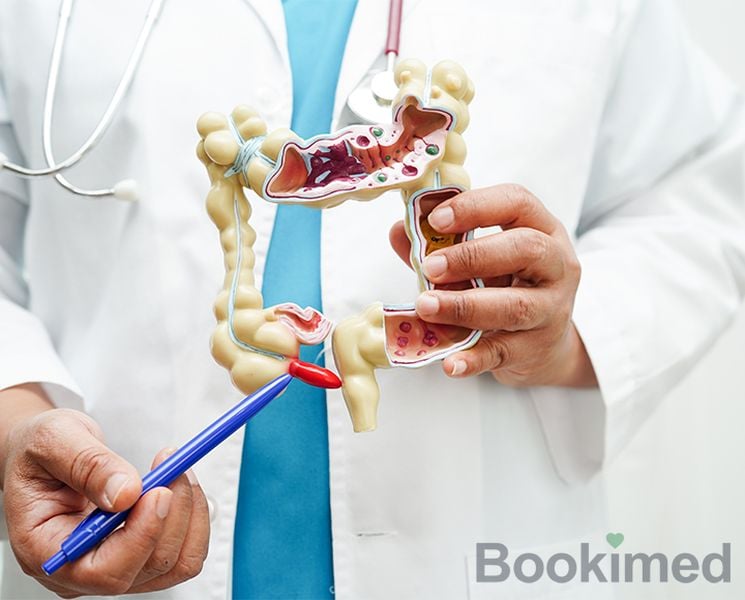
Apendicectomía
Este procedimiento quirúrgico consiste en extirpar el apéndice, normalmente debido a una inflamación o infección.
Preguntas frecuentes sobre Apendectomía en Alemania
¿Cuál es la técnica quirúrgica estándar de oro actual para la apendicectomía en Alemania y qué tan común es?
La apendicectomía laparoscópica es la técnica quirúrgica estándar de oro en Alemania, representando más del 95% de los casos anuales. Este enfoque mínimamente invasivo utiliza 3 pequeñas incisiones y es el estándar tanto para la apendicitis aguda como para la complicada. Los centros médicos alemanes como los de Múnich y Hamburgo ofrecen esta atención de alta precisión a través de departamentos especializados en cirugía visceral.
- Prevalencia del procedimiento: Los cirujanos realizan la extirpación laparoscópica en más del 95% de los casos anuales de apendicitis.
- Metodología quirúrgica: Los cirujanos utilizan laparoscopia asistida por robot o mediante grapadoras en más de tres cuartas partes de estos procedimientos.
- Duración de la hospitalización: La mayoría de los pacientes requieren solo de 1 a 3 días de hospitalización después de la cirugía.
- Estándar clínico: La cirugía abierta sigue siendo una opción de respaldo solo para complicaciones graves o conversiones anatómicas difíciles.
Perspectiva del experto de Bookimed: Aunque la cirugía laparoscópica es universal en Alemania, la elección de la clínica afecta su entorno de recuperación. Centros grandes como el Hospital Universitario Helios de Wuppertal atienden a 150,000 pacientes anualmente, ofreciendo una experiencia clínica masiva. Sin embargo, centros certificados más pequeños como So
¿Cuáles son los riesgos comunes de una apendicectomía en Alemania?
La apendicectomía en Alemania es una cirugía de rutina con una tasa de éxito del 99 %. Aunque es segura, los pacientes pueden enfrentar riesgos como infecciones de heridas, abscesos intraabdominales o peritonitis, especialmente si el apéndice se ha perforado. Las clínicas alemanas mitigan estos riesgos mediante técnicas laparoscópicas y estrictos protocolos de seguridad certificados por TÜV e ISO.
- Riesgo de infección: Enrojecimiento o hinchazón de la herida, especialmente probable si el apéndice estalló antes de la intervención quirúrgica.
- Absceso interno: Pequeño riesgo de acumulación de líquido en el abdomen que requiere drenaje o antibióticos.
- Complicaciones de la anestesia: Problemas de la anestesia general como náuseas o mareos ocurren en el 1-2 % de los casos.
- Obstrucción intestinal: Pueden desarrollarse bloqueos intestinales raros o adherencias durante la fase de recuperación a largo plazo.
- Lesión de órganos: Bajo riesgo de daño accidental a las estructuras abdominales cercanas durante el procedimiento.
Perspectiva del experto de Bookimed: Los centros médicos alemanes como el Hospital Universitario Helios Wuppertal y la Clínica Nordwest diferencian el riesgo según la edad. Los datos muestran que los niños de 1 a 12 años obtienen mejores resultados en departamentos de cirugía pediátrica dedicados. Los ado
¿Cuánto tiempo permaneceré en el hospital después de una apendicectomía laparoscópica sin complicaciones en Alemania?
Las estancias hospitalarias estándar para una apendicectomía laparoscópica sin complicaciones en Alemania oscilan entre 1 y 2 días. La mayoría de los pacientes se someten al procedimiento de rutina y permanecen bajo observación durante la noche. Los cirujanos generalmente le dan el alta una vez que usted puede tolerar líquidos, controlar el dolor con medicamentos orales y caminar de forma independiente.
- Estancia rutinaria: La mayoría de los pacientes permanecen 1 noche para monitorear complicaciones postquirúrgicas inmediatas.
- Criterios de alta: Los médicos requieren signos vitales normales, micción exitosa y una función gastrointestinal estable.
- Mínimamente invasivo: Las técnicas laparoscópicas en centros como la Clínica Nordwest reducen significativamente el tiempo de recuperación obligatorio.
- Protocolo de observación: Los hospitales alemanes priorizan una breve vigilancia hospitalaria sobre el alta el mismo día por motivos de seguridad.
Perspectiva del experto de Bookimed: Si bien las tendencias globales se inclinan hacia la cirugía ambulatoria, las clínicas alemanas a menudo prefieren un período de observación de 24 horas. Este enfoque garantiza el acceso inmediato a especialistas como el Dr. Peter Schenker en el Centro Médico de Solingen si surgen problemas. Elegir un hospital universitario a menudo garantiza el acceso a equipos ro
¿Cuándo puedo volver al trabajo y a mis actividades normales después de una apendicectomía en Alemania?
Los pacientes en Alemania suelen volver al trabajo de oficina entre 1 y 2 semanas después de una apendicectomía laparoscópica. La cirugía abierta generalmente requiere de 2 a 4 semanas para la recuperación. La mayoría de las clínicas, incluido el Hospital Universitario Helios de Wuppertal, utilizan técnicas mínimamente invasivas para acelerar la curación y reducir las estancias hospitalarias.
- Recuperación laparoscópica: La mayoría de los pacientes reanudan sus labores de oficina y actividades ligeras en un plazo de 7 a 14 días.
- Cirugía abierta: La recuperación tras incisiones tradicionales suele durar de 2 a 4 semanas para volver a la actividad completa.
- Trabajo físico: Los empleos que implican levantar objetos pesados o trabajo manual requieren de 3 a 6 semanas de baja.
- Seguridad al conducir: Los pacientes pueden conducir una vez que dejen de tomar analgésicos, generalmente 1 semana después de la cirugía.
Perspectiva del experto de Bookimed: Los hospitales universitarios alemanes como Helios Wuppertal priorizan los enfoques laparoscópicos en más del 90 % de las apendicectomías de rutina. Este enfoque en la cirugía mínimamente invasiva reduce significativamente el riesgo de hernias incisionales. También permite a los pacientes internacionales volar a casa de forma segura en un plazo de 7 a 10 días.
Consenso de los pacient
¿Qué sucede si el procedimiento laparoscópico se convierte en cirugía abierta?
La conversión ocurre cuando un cirujano cambia de un enfoque mínimamente invasivo a una incisión abierta tradicional para garantizar la seguridad del paciente. Esta decisión suele surgir debido a una anatomía compleja, inflamación severa o sangrado que requiere acceso manual directo en lugar de instrumentos asistidos por cámara durante la apendicectomía.
- Cambio quirúrgico: Los cirujanos reemplazan las pequeñas punciones con una incisión de laparotomía más grande para el acceso directo a los órganos.
- Indicadores clínicos: Las adherencias fuertes, variaciones anatómicas o sangrado inesperado a menudo desencadenan la transición inmediata.
- Impacto en el paciente: Espere tiempos operativos más largos, mayor pérdida de sangre y mayores posibilidades de infección de la herida.
- Cambios en la recuperación: Las estancias hospitalarias se extienden más allá de los 1–2 días rutinarios requeridos para los casos laparoscópicos.
Perspectiva del experto de Bookimed: Centros alemanes como el Medical Center de Solingen y la Nordwest Clinic informan de grandes volúmenes de cirugías viscerales, alcanzando más de 60,000 pacientes al año. Nuestros datos muestran que los mejores cirujanos alemanes priorizan la seguridad sobre la velocidad. Prefieren convertir a cirugía abierta cuando la inflamación es demasiado densa para las herramientas laparoscópicas. Esta
¿Qué instrumentos quirúrgicos se utilizan más comúnmente para las apendicectomías laparoscópicas en Alemania?
La apendicectomía laparoscópica en Alemania utiliza visualización de alta precisión e instrumentos especializados para el acceso mínimamente invasivo. Las herramientas clave incluyen el laparoscopio de 30 grados para una visualización abdominal óptima, tres trocares estándar y pinzas Babcock. Las clínicas alemanas también utilizan con frecuencia bisturís armónicos y Endoloops para la ligadura segura de la base.
- Equipo de imagen: Un laparoscopio de 10 mm y 30 grados proporciona una visualización superior durante la disección del apéndice.
- Acceso por puerto: Los cirujanos utilizan un trocar umbilical de 10 mm y dos puertos de 5 mm.
- Manipulación apendicular: Las pinzas atraumáticas Babcock o los agarres especializados sujetan firmemente el tejido inflamado.
- Métodos de ligadura: Los bucles de Roeder preanudados o las grapadoras endoscópicas sellan la base apendicular de forma segura.
Perspectiva del experto de Bookimed: Clínicas alemanas como el Medical Center de Solingen y Helios Wuppertal están cambiando rápidamente hacia sistemas asistidos por robot. Aunque la laparoscopia estándar es común, cirujanos jefe como el Dr. Peter Schenker ahora integran la precisión robótica para mejorar la recuperación. Esta tendencia es más fuerte en los departamentos de cirugía visceral alemanes enfocados en oncología e inflamaciones complejas.
¿Qué tipo de anestesia se administra para una apendicectomía en Alemania?
Las apendicectomías en Alemania se realizan bajo anestesia general como estándar clínico. Este enfoque es necesario para la cirugía laparoscópica, la técnica más común utilizada en los hospitales alemanes. Los pacientes reciben sedantes intravenosos e intubación endotraqueal para garantizar la seguridad y la comodidad durante el procedimiento mínimamente invasivo.
- Enfoque estándar: La anestesia general permite la respiración controlada y la relajación muscular durante la laparoscopia.
- Enfoque mínimamente invasivo: Clínicas como el Centro Médico de Solingen se especializan en métodos laparoscópicos modernos.
- Opciones alternativas: La anestesia espinal sigue siendo una opción ocasional para casos específicos de cirugía abierta.
- Atención perioperatoria: Los equipos médicos suelen administrar sedantes intravenosos o analgésicos antes de la inducción.
Opinión del experto de Bookimed: Las clínicas alemanas enfatizan la experiencia quirúrgica de alto volumen para garantizar la seguridad. Por ejemplo, el Hospital Universitario Helios de Wuppertal atiende a 150 000 pacientes al año. Esta escala masiva permite a los equipos quirúrgicos perfeccionar los protocolos de anestesia, lo que lleva a resultados altamente predecibles y fases de recuperación optimizadas en sus instalaciones de más de 1000 camas.
Consenso de los pacientes:
¿Qué hospitales en Alemania tienen las calificaciones más altas en neurocirugía?
Alemania alberga algunos de los departamentos de neurocirugía más prestigiosos del mundo, liderados por la Charité – Universitätsmedizin Berlin y el Hospital Universitario de Heidelberg. Estos centros destacan en el tratamiento de tumores cerebrales complejos y enfermedades cerebrovasculares. Para maximizar la eficacia de sus procedimientos, utilizan tecnologías de vanguardia como la resonancia magnética intraoperatoria y la neuronavegación asistida por computadora.
- Charité Berlín: Realiza más de 5000 cirugías al año. La clínica está dirigida por el reconocido neurocirujano Dr. Peter Vaikoczy.
- Centro Médico Solingen: El Dr. Ralf Buhl ha realizado más de 4.000 cirugías, incluidas cirugías de columna mínimamente invasivas.
- Clínica Asklepios Nord: equipada con el único sistema de resonancia magnética intraoperatoria bilateral de Alemania para garantizar precisión quirúrgica en tiempo real durante la extirpación del tumor.
- Clínica Nordwest: reconocida por la revista Newsweek como un hospital líder por su innovación en tecnología de ultrasonido 3D.
Opinión experta de Bookimed: Los datos muestran que elegir centros con un alto volumen quirúrgico suele llevar a recomendaciones de tratamiento más conservadoras. En el Centro Médico Solingen, que atiende a más de 60.000 pacientes al año, los cirujanos suelen sugerir fisioterapia en lugar de cirugía
¿Cuáles son las tasas de éxito de los procedimientos neuroquirúrgicos complejos en Alemania?
En Alemania, los procedimientos neuroquirúrgicos de alta complejidad demuestran una seguridad excepcional. Las tasas de éxito en las fusiones espinales alcanzan el 99 %. La tasa de supervivencia en las resecciones de tumores cerebrales primarios es del 97 %. La independencia funcional es alta. Más del 82 % de los pacientes reciben el alta inmediatamente después del tratamiento. Los centros alemanes priorizan la preservación de la función neurológica mediante técnicas modernas de mapeo.
- Resección de tumores: los cirujanos logran una resección tumoral completa en el 87,2% de los casos de metástasis cerebrales.
- Éxito en el tratamiento de enfermedades vasculares: los hospitales alemanes informan de una tasa de supervivencia del 98,7% para aneurismas no rotos.
- Mejora del estado neurológico: casi el 43% de los pacientes experimentan una mejora de los parámetros funcionales después de resecciones complejas.
- Seguridad de las intervenciones quirúrgicas: En grandes centros quirúrgicos, las tasas de supervivencia de los pacientes después de la cirugía de columna son del 98-99%.
Opinión experta de Bookimed: Cirujanos experimentados como el Dr. Uwe Köhler, de la Clínica Asklepios Altona, realizan más de 2000 cirugías al año. Los datos muestran que estos especialistas mantienen tasas de éxito de hasta el 90 %, incluso en los tumores cerebrales más comp
¿Qué tecnologías avanzadas suelen estar disponibles en las clínicas neuroquirúrgicas alemanas?
Las clínicas neuroquirúrgicas alemanas incorporan regularmente instrumentos digitales de alta precisión y visualización en tiempo real a la práctica quirúrgica. Entre las tecnologías clave se encuentra la neuronavegación computarizada para cirugías de cerebro y médula espinal. Instituciones como la Clínica Asklepios Nord utilizan la resonancia magnética intraoperatoria para verificar la extirpación de tumores en tiempo real. Estos sistemas proporcionan a los cirujanos navegación GPS 3D.
- Neuronavegación: proporciona visualización 3D y seguimiento de instrumentos en tiempo real para lograr precisión quirúrgica hasta el nivel submilimétrico.
- Imágenes intraoperatorias: sistemas como iMRI y O-arm CT permiten la confirmación inmediata de una resección exitosa.
- Neuromonitorización: Monitorea las funciones motoras y sensoriales durante la cirugía para proteger el sistema nervioso.
- Diagnóstico de fluorescencia: se utiliza el colorante 5-ALA para resaltar los bordes del tumor para una eliminación más completa.
- Asistencia robótica: Sistemas como el Da Vinci mejoran la precisión en procedimientos complejos y mínimamente invasivos.
Opinión experta de Bookimed: Grandes centros como la Charité – Universitätsmedizin de Berlín realizan más de 4000 procedimientos neuroquirúrgicos al año, lo que crea un entorno rico en datos para p