Rehabilitación de accidentes cerebrovasculares en Alemania — obtén 3 clínicas con costos


Revisado médicamente por
Fahad Mawlood
¿Cuál es el precio de Rehabilitación de accidentes cerebrovasculares en Alemania? Descubra ahora
La rehabilitación de accidentes cerebrovasculares en Alemania suele costar entre Precio a consultar y Precio a consultar. El precio final depende de la fase de rehabilitación, la intensidad de la terapia diaria y el uso de tecnología especializada. La rehabilitación estándar en Alemania incluye terapia multidisciplinaria, atención de enfermería las 24 horas, los 7 días de la semana, y alojamiento con pensión completa.
- Terapia asistida por robótica: Costos más elevados debido a tecnologías avanzadas como los marcos de marcha con exoesqueleto.
- Fase neurológica: La atención intensiva en etapa temprana (Fase B) cuesta significativamente más que la Fase C o D.
- Terapias especializadas: Las inclusiones de Bobath, osteopatía y terapia del habla varían según las tarifas diarias de la clínica.
- Principales centros médicos: Los centros de tratamiento principales se encuentran en Berlín, Essen, Bremen y Pforzheim.
Perspectiva del experto de Bookimed: Elegir un centro especializado a menudo ofrece una mejor relación calidad-precio que los hospitales generales. Por ejemplo, el Centro de Rehabilitación Robótica Walk Again en Berlín utiliza sistemas robóticos dedicados para una recuperación más rápida. Mientras tanto, la Clínica Bremen-Mitte está clasificada entre los mejores hospitales alemanes por la revista Focus. Las investigaciones muestran que las clínicas que combinan la investigación con el tratamiento, como el Hospital Universitario de Essen, ofrecen estándares clínicos de alto nivel.
Beneficios clave
¿Por qué elegir Alemania para la rehabilitación de accidentes cerebrovasculares?
- Clínicas acreditadas: Las clínicas en Alemania cuentan con certificaciones de KTQ. Esto garantiza que mantengan altos estándares de calidad y prioricen la seguridad del paciente.
- Últimas tecnologías: Emplean métodos innovadores como la terapia de movimiento inducido por restricción (CIMT). Además, utilizan dispositivos asistidos por robots como el Lokomat® y Armeo®Spring para mejorar la recuperación motora y los resultados funcionales.
- Altas tasas de éxito: La rehabilitación de accidentes cerebrovasculares en Alemania es altamente efectiva. Logra una tasa de éxito del 70-80% en la mejora de la movilidad y la independencia de los pacientes.
- Expertos profesionales: Alemania alberga a destacados neurólogos y fisioterapeutas. Muchos tienen certificaciones de la Sociedad Alemana de Neurorrehabilitación y han manejado más de 10,000 casos de rehabilitación de accidentes cerebrovasculares, lo que demuestra su amplia experiencia y pericia.
Acceda a soluciones avanzadas de rehabilitación de accidentes cerebrovasculares en clínicas de confianza .
Sus beneficios y garantías con Bookimed
Precios directos
Bookimed no añade cargos adicionales a los precios de Rehabilitación de accidentes cerebrovasculares. Las tarifas proceden de las listas de precios oficiales de las clínicas. Pagará directamente en la clínica por su Rehabilitación de accidentes cerebrovasculares a su llegada al país.
Sólo clínicas y médicos verificados
Bookimed está comprometido con su seguridad. Solo trabajamos con las clínicas que mantienen altos estándares internacionales en Rehabilitación de accidentes cerebrovasculares y tienen las licencias necesarias para atender a pacientes internacionales en todo el mundo.
Asistencia 24/7 gratuita
Bookimed ofrece asistencia experta gratuita. Un coordinador médico personal le apoya antes, durante y después del tratamiento, resolviendo cualquier problema. Nunca estará solo en su viaje médico de Rehabilitación de accidentes cerebrovasculares.

Su coordinador médico personal de Bookimed
- Le apoya en cada etapa
- Ayuda a elegir la clínica y el médico adecuados
- Asegura un acceso rápido y conveniente a la información
Descubra las mejores clínicas de Rehabilitación de accidentes cerebrovasculares en Alemania: 6 opciones verificadas y Precios
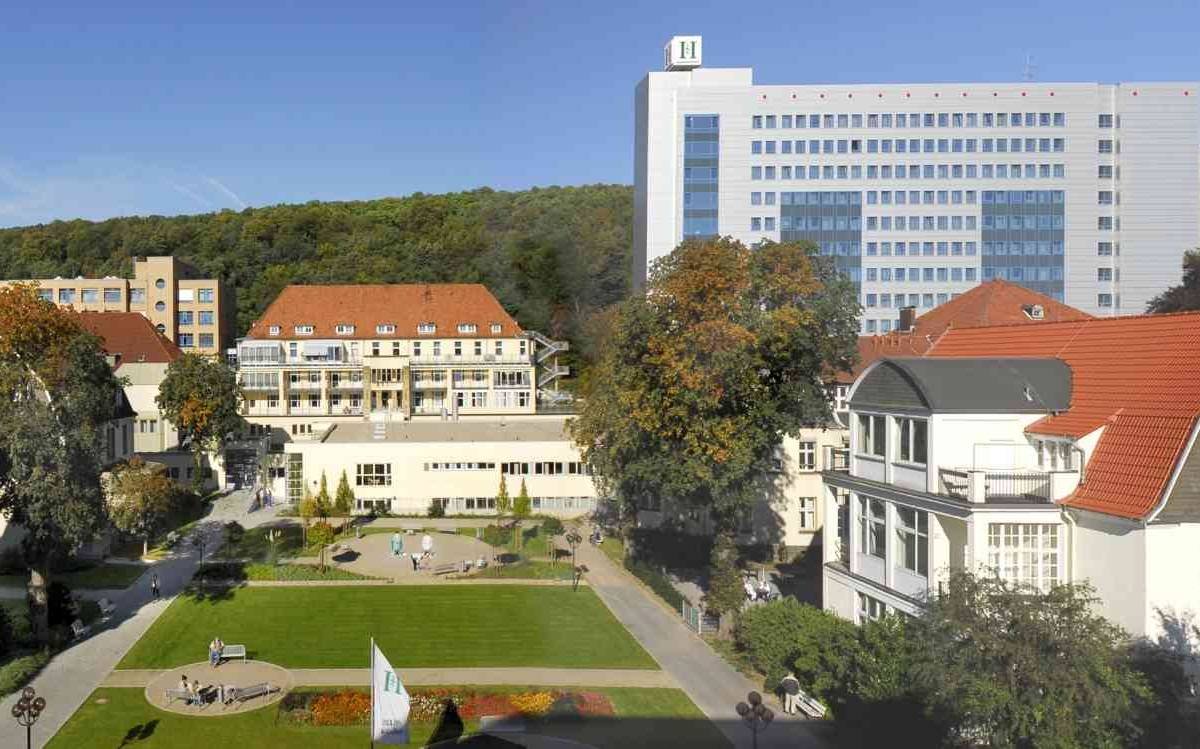




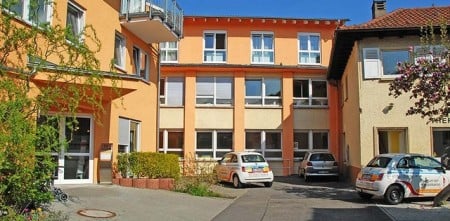
Zentrum der Rehabilitation Pforzheim
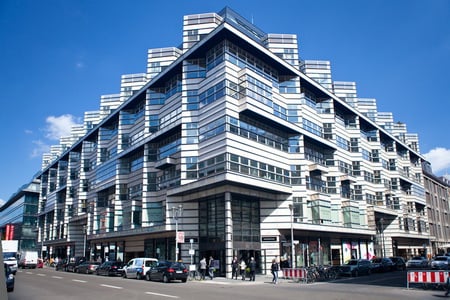
Robotic Rehabilitation Center Walk Again



Descripción general de Rehabilitación de accidentes cerebrovasculares en Alemania
- Esta terapia mejora las habilidades motoras y la cognición a través de movimientos de la cabeza guiados por computadora.
- Terapia de caricias - de $90Esta terapia es una técnica de estimulación sensorial, que favorece la relajación y la alegría, frecuentemente utilizada para personas con discapacidad.
- Terapia Vojta - de $700Esta terapia ayuda a mejorar la motricidad a través de movimientos específicos, adecuados para condiciones neurológicas, ofreciendo una recuperación más rápida y una mejor coordinación.
- Terapia bobath - de $70Esta terapia es un enfoque especializado para condiciones neurológicas, refinando la movilidad y la función a través de ejercicios personalizados.
- Terapia bruta - de $6,500Esta terapia ayuda a mejorar las habilidades motoras a través de la repetición de movimientos, el entrenamiento muscular y el juego creativo.
- Rehabilitación de la esclerosis múltiple - de $7,500Esta terapia ayuda a controlar los síntomas y mejorar la función en pacientes con un trastorno crónico del sistema nervioso.
- Rehabilitación cardiológica - de $6,500Esta terapia ayuda a los pacientes cardíacos a recuperar la fuerza, prevenir la progresión de la enfermedad y mejorar el bienestar general.
- La terapia ayuda a restaurar las capacidades físicas y cognitivas después del accidente cerebrovascular, e incluye sesiones de terapia y ejercicio diario personalizado.
Día 1: Llegada
- Llegada a la clínica de rehabilitación de ictus.
- Regístrese en un hotel local (alojamiento no incluido).
Día 2: Preoperatorio
- Consulta con neurólogo y fisioterapeuta.
- Sométete a un escáner de cuerpo completo y pruebas neurológicas.
Semana 1 - Semana 2: Rehabilitación del accidente cerebrovascular
- Iniciar sesiones diarias de fisioterapia.
- Acude a terapia ocupacional.
- Asistir a sesiones de terapia cognitiva y del habla.
Semana 3 - Semana 4: Rehabilitación continua
- Continúe con las sesiones diarias de terapia.
- Evaluación del progreso por parte del equipo de rehabilitación.
Semana 5: Postoperatorio
- Evaluación final por el neurólogo.
- Plan de ejercicios de rehabilitación en el hogar.
Semana 6: Salida
- Salga de la clínica después de una rehabilitación exitosa.
Tenga en cuenta que el plan de rehabilitación puede variar según la condición y el progreso de cada paciente.
- Depósito de Bookimed: 200 $ o 200 €.
- Depósito de la clínica: Pague un porcentaje fijo por adelantado.
Bookimed, una plataforma líder mundial en turismo médico, se compromete a ayudar a los clientes que buscan rehabilitación de accidente cerebrovascular en Alemania ofreciéndoles asistencia experta y soluciones médicas confiables para cada situación. Se utiliza un sistema de clasificación automático inteligente para elaborar listas de clínicas transparentes, mantenidas meticulosamente por un científico de datos que utiliza IA para mayor precisión. La plataforma garantiza la autenticidad al publicar reseñas de pacientes reales después de sus tratamientos. Bookimed ofrece soluciones médicas integrales, con actualizaciones de las clínicas para garantizar la confiabilidad. El contenido sobre la rehabilitación del accidente cerebrovascular en Alemania, elaborado por autores médicos experimentados y revisado por especialistas, cumple con las pautas editoriales de Bookimed , lo que refleja el compromiso de la plataforma de brindar información de salud clara y de alta calidad. Para obtener más detalles o consultas, no dude en contactarnos en marketing@bookimed.com o obtenga más información sobre nosotros y nuestra misión Acerca de Bookimed .
Obtenga una evaluación médica para Rehabilitación de accidentes cerebrovasculares en Alemania: Elija su especialista entre los mejores en el campo
Ver todos los médicos
Marco Dorshner
El Dr. Marco Dorshner se especializa en rehabilitación tras un ictus, combinando la terapia Bobath con técnicas manuales para ayudar a los pacientes a recuperar la movilidad.
- Formado como terapeuta Bobath para afecciones neurológicas
- Utiliza la terapia de uso forzado para mejorar la recuperación motora
- Ofrece rehabilitación integral que incluye logopedia y drenaje linfático
- Trabaja en el Zentrum der Rehabilitation Pforzheim

Daniela Dorshner-Gerlofs
La Dra. Daniela Dorshner-Gerlofs se especializa en neurología y medicina física en el Zentrum der Rehabilitation Pforzheim, conocido por su rehabilitación integral tras un accidente cerebrovascular.
- Experiencia en el tratamiento de enfermedades neuromusculares junto con la recuperación de accidentes cerebrovasculares
- Cuenta con la gran confianza tanto de pacientes como de colegas
- Ofrece planes de rehabilitación personalizados para maximizar los resultados de los pacientes

Ruud Gerlofs
El Dr. Gerlofs aporta más de de experiencia en neurología y fisioterapia a la rehabilitación de accidentes cerebrovasculares en el Zentrum der Rehabilitation Pforzheim.
- Especializado en neurología y ortopedia
- Experto en el tratamiento de lesiones deportivas
- Habla alemán, inglés y holandés con fluidez
- Altamente valorado por pacientes y colegas
Compartir contenido
Historias en video de pacientes de Bookimed
 Olena Sikoza
Datos сlave sobre Rehabilitación de accidentes cerebrovasculares
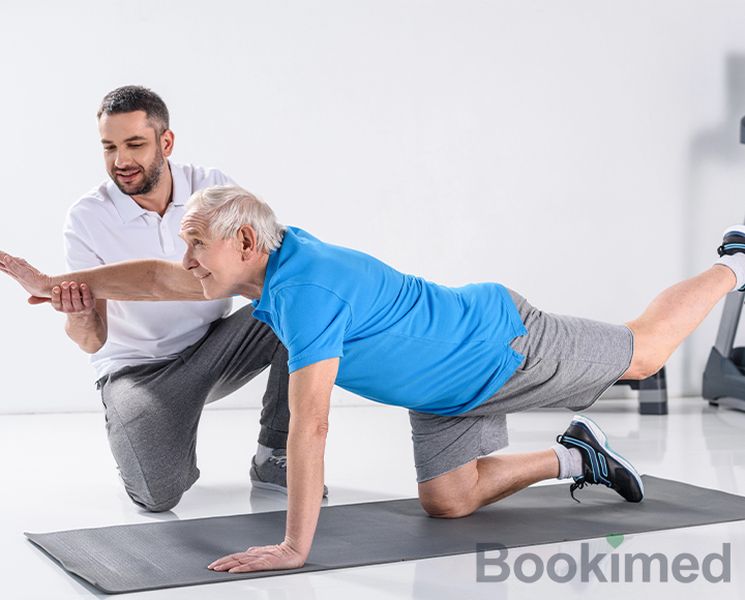
Rehabilitación del ictus
La rehabilitación del ictus es un programa integral diseñado para ayudar a las personas a recuperar y recobrar las habilidades perdidas debido a una lesión cerebral provocada por un ictus.
Preguntas frecuentes sobre Rehabilitación de accidentes cerebrovasculares en Alemania
¿Qué sucede inmediatamente después de que termina la rehabilitación hospitalaria?
Después de finalizar la rehabilitación hospitalaria tras un accidente cerebrovascular en Alemania, los pacientes pasan a un plan de alta estructurado centrado en la atención ambulatoria. Esta fase incluye el cambio de la supervisión médica de 24 horas a la neurorrehabilitación ambulatoria, fisioterapia en el hogar y citas de seguimiento especializadas con neurólogos para mantener el progreso de la recuperación neurológica.
- Transición médica: Traslado de centros hospitalarios a centros de neurorrehabilitación ambulatoria.
- Coordinación de seguimiento: Comienzan las citas programadas con neurólogos, médicos rehabilitadores y el médico de cabecera.
- Entrega de documentación: Los pacientes reciben resúmenes de terapia, recetas y formularios de discapacidad o baja por enfermedad.
- Atención domiciliaria: Las sesiones de terapia ocupacional y del habla continúan en el hogar o en clínicas locales.
Opinión de expertos de Bookimed: Aunque muchos eligen hospitales universitarios famosos como los de Essen o Bremen-Mitte, centros especializados como el Zentrum der Rehabilitation Pforzheim ofrecen una ventaja significativa para la planificación del alta. Debido a que estas instalaciones más pequeñas están fundadas por médicos rehabilitadores como Ruud Gerlofs, a menudo proporcionan una coordinación más personalizada entre la terapia robótica hospitalari
¿Cuál es la estructura de la rehabilitación tras un ictus en Alemania?
La rehabilitación tras un ictus en Alemania sigue un sistema médico por fases regulado por las directrices del Grupo de Trabajo Federal para la Rehabilitación (BAR). Traslada a los pacientes desde las unidades de ictus agudo (Fase A) a través de la neurorrehabilitación temprana intensiva (Fase B) hasta el entrenamiento funcional post-agudo especializado (Fases C-D) utilizando robótica avanzada y equipos de terapia multidisciplinarios.
- Atención de Fase B: Se centra en la terapia intensiva para pacientes médicamente estables que requieren un alto nivel de asistencia de enfermería.
- Técnicas de terapia: Incluyen la terapia Bobath, el entrenamiento de uso forzado y sistemas de marcha asistidos por robots para la neuroplasticidad.
- Equipos multidisciplinarios: Coordinan neurólogos, fisioterapeutas y logopedas para planes de recuperación individualizados.
- Tecnología clínica: Utiliza diagnósticos basados en IA y marcos de marcha con exoesqueleto en centros de Berlín y Essen.
Perspectiva del experto de Bookimed: Mientras que muchos países se centran solo en la fisioterapia, los centros alemanes como el Zentrum der Rehabilitation Pforzheim integran osteopatía especializada y drenaje linfático en la neurorrehabilitación. Los datos muestran que las clínicas aquí mantienen mayores ratios de médico por paciente, con más de 500 médicos en Helios Wupper
¿Existen centros especializados para la rehabilitación de accidentes cerebrovasculares en Alemania?
Alemania alberga una alta densidad de centros especializados en rehabilitación de accidentes cerebrovasculares (ACV) certificados por la ISO y la revista Focus. Estas instalaciones brindan neurorrehabilitación multidisciplinaria para pacientes hospitalizados, combinando terapia del habla, terapia ocupacional y asistencia robótica. Centros especializados como la Clínica Bremen-Mitte y Walk Again Berlin utilizan tecnologías avanzadas de recuperación neurológica para la atención integral del paciente.
- Tecnología robótica: El Robotic Rehabilitation Center Walk Again utiliza robótica innovadora para la recuperación musculoesquelética.
- Personal especializado: El Zentrum der Rehabilitation Pforzheim ofrece programas únicos de restauración neurológica dirigidos por expertos en rehabilitación.
- Instalaciones acreditadas: La Clínica Bremen-Mitte es reconocida entre los mejores hospitales del mundo por Newsweek.
- Terapia intensiva: Los centros se centran en programas diarios de alta intensidad para afasia, movilidad y problemas de deglución.
Opinión de expertos de Bookimed: La recuperación de un ACV en Alemania sigue una trayectoria única en la que los pacientes pasan directamente de la atención aguda a las Reha-Kliniken dedicadas. Instalaciones como la Clínica Bremen-Ost y Helios Wuppertal gestionan más de 150.000 pacientes al año, lo que destaca u
¿Qué terapias se incluyen en la rehabilitación de accidentes cerebrovasculares en Alemania?
La rehabilitación de accidentes cerebrovasculares en Alemania presenta un enfoque multidisciplinario estructurado en fases que integra fisioterapia, terapia ocupacional y logopedia. Los programas utilizan técnicas basadas en evidencia como la terapia Bobath y el entrenamiento asistido por robot. La atención transita desde la estabilización médica intensiva en la Fase B hasta la recuperación subaguda centrada en ganar independencia funcional.
- Fisioterapia esencial: La fisioterapia se enfoca en el entrenamiento de la marcha, el equilibrio y ejercicios en cinta rodante para la movilidad.
- Terapia ocupacional: Ejercicios específicos ayudan a los pacientes a recuperar la independencia al vestirse, comer y usar las manos.
- Apoyo logopédico: Los especialistas abordan la afasia y la disfagia mediante entrenamiento del habla, comprensión del lenguaje y deglución.
- Tecnologías avanzadas: Los centros especializados utilizan exoesqueletos y dispositivos robóticos para acelerar la recuperación musculoesquelética.
Perspectiva de expertos de Bookimed: Los datos de 82 clínicas alemanas muestran que centros como el Zentrum der Rehabilitation Pforzheim destacan por emplear terapeutas con doble certificación en terapia Bobath y terapia manual. Esta integración es crucial porque la intensidad de la rehabilitación alemana se basa en la práctica diaria repetiti
¿Cuánto suele durar la rehabilitación después de un accidente cerebrovascular en Alemania?
La rehabilitación de accidentes cerebrovasculares en Alemania suele implicar una fase inicial de hospitalización de 3 a 6 semanas. Si bien los programas estándar comienzan con una aprobación de 21 días, los especialistas en centros como el Zentrum der Rehabilitation Pforzheim extienden el tratamiento según el progreso funcional y la gravedad de los déficits neurológicos.
- Proceso de aprobación: Los médicos evalúan a los pacientes después de 3 semanas para determinar si la necesidad médica justifica las extensiones.
- Tratamiento por fases: Los programas siguen etapas estructuradas, centrándose en la movilización temprana en las fases B y C.
- Tecnologías avanzadas: Clínicas como el Walk Again Center en Berlín utilizan sistemas robóticos para una recuperación intensiva.
- Variedad de terapias: Las sesiones de alta densidad incluyen terapia Bobath, logopedia y ergoterapia especializada para habilidades motoras.
Opinión de experto de Bookimed: Las clínicas neurológicas alemanas suelen lograr tasas de éxito más altas mediante la integración de la robótica desde el principio en la ventana de 3 a 6 semanas. En el Zentrum der Rehabilitation Pforzheim, especialistas como Ruud Gerlofs aprovechan 30 años de experiencia para combinar los métodos tradicionales Bobath con la neurociencia moderna. Este enfoque dual a menudo conduce a ganancias funcionales m
¿Dónde se encuentran los centros de rehabilitación de accidentes cerebrovasculares de alta calidad en Alemania?
Los centros de rehabilitación de accidentes cerebrovasculares de alta calidad en Alemania se concentran en centros médicos como Berlín, Pforzheim, Bremen y Heidelberg. Estas instalaciones utilizan equipos multidisciplinarios y tecnologías robóticas para tratar a los pacientes a través de las fases B, C y D de la recuperación neurológica dentro de redes hospitalarias con certificación ISO o clasificadas por Newsweek.
- Rehabilitación robótica: Los especialistas en Berlín brindan una recuperación motora avanzada utilizando tecnologías musculoesqueléticas innovadoras.
- Atención neurológica especializada: Los centros de Pforzheim se centran en la terapia Bobath y la terapia de uso forzado (Forced Use) para la apoplejía compleja.
- Integración académica: Los hospitales de Heidelberg y Essen combinan la investigación clínica con programas intensivos de neurología para pacientes hospitalizados.
- Redes integrales: Las clínicas de Bremen ofrecen neurología aguda y rehabilitación integradas bajo los estándares de calidad KTQ.
Perspectiva del experto de Bookimed: Si bien los grandes hospitales universitarios en Essen o Dusseldorf ofrecen una gran escala, centros especializados más pequeños como el Zentrum der Rehabilitation Pforzheim ofrecen programas restaurativos únicos. Ruud Gerlofs cuenta allí con más de 30 años de experiencia. Estas clínicas especi
¿Cuál es el papel de la rehabilitación ambulatoria después de la atención hospitalaria por accidente cerebrovascular en Alemania?
La rehabilitación ambulatoria de accidentes cerebrovasculares en Alemania proporciona una transición estructurada para pacientes estables que pasan del entorno clínico a la vida en el hogar. Esta fase se centra en la independencia funcional a largo plazo a través de fisioterapia especializada, terapia ocupacional y logopedia en centros como el Zentrum der Rehabilitation Pforzheim o mediante visitas a domicilio.
- Ganancias funcionales: Se centra en la restauración de las actividades diarias, las funciones cognitivas y la reintegración social después del alta.
- Técnicas especializadas: Utiliza la terapia Bobath, terapia manual y asistencia robótica para mantener el progreso logrado durante la hospitalización.
- Atención de transición: Actúa como el puente crítico entre la atención hospitalaria aguda y la vida permanente en el hogar.
- Opciones robóticas: Instalaciones como Walk Again en Berlín ofrecen entrenamiento robótico de alta intensidad para la recuperación motora.
Perspectiva del experto de Bookimed: Si bien muchos pacientes se centran en grandes hospitales universitarios como Helios Wuppertal, los mejores resultados a largo plazo a menudo provienen de centros privados especializados. Médicos como Ruud Gerlofs aportan más de 30 años de experiencia a los entornos ambulatorios. Estas clínicas más pequeñas ofrecen frecuentemente más horas d
¿Qué hospitales en Alemania tienen las calificaciones más altas en neurocirugía?
Alemania alberga algunos de los departamentos de neurocirugía más prestigiosos del mundo, liderados por la Charité – Universitätsmedizin Berlin y el Hospital Universitario de Heidelberg. Estos centros destacan en el tratamiento de tumores cerebrales complejos y enfermedades cerebrovasculares. Para maximizar la eficacia de sus procedimientos, utilizan tecnologías de vanguardia como la resonancia magnética intraoperatoria y la neuronavegación asistida por computadora.
- Charité Berlín: Realiza más de 5000 cirugías al año. La clínica está dirigida por el reconocido neurocirujano Dr. Peter Vaikoczy.
- Centro Médico Solingen: El Dr. Ralf Buhl ha realizado más de 4.000 cirugías, incluidas cirugías de columna mínimamente invasivas.
- Clínica Asklepios Nord: equipada con el único sistema de resonancia magnética intraoperatoria bilateral de Alemania para garantizar precisión quirúrgica en tiempo real durante la extirpación del tumor.
- Clínica Nordwest: reconocida por la revista Newsweek como un hospital líder por su innovación en tecnología de ultrasonido 3D.
Opinión experta de Bookimed: Los datos muestran que elegir centros con un alto volumen quirúrgico suele llevar a recomendaciones de tratamiento más conservadoras. En el Centro Médico Solingen, que atiende a más de 60.000 pacientes al año, los cirujanos suelen sugerir fisioterapia en lugar de cirugía
¿Cuáles son las tasas de éxito de los procedimientos neuroquirúrgicos complejos en Alemania?
En Alemania, los procedimientos neuroquirúrgicos de alta complejidad demuestran una seguridad excepcional. Las tasas de éxito en las fusiones espinales alcanzan el 99 %. La tasa de supervivencia en las resecciones de tumores cerebrales primarios es del 97 %. La independencia funcional es alta. Más del 82 % de los pacientes reciben el alta inmediatamente después del tratamiento. Los centros alemanes priorizan la preservación de la función neurológica mediante técnicas modernas de mapeo.
- Resección de tumores: los cirujanos logran una resección tumoral completa en el 87,2% de los casos de metástasis cerebrales.
- Éxito en el tratamiento de enfermedades vasculares: los hospitales alemanes informan de una tasa de supervivencia del 98,7% para aneurismas no rotos.
- Mejora del estado neurológico: casi el 43% de los pacientes experimentan una mejora de los parámetros funcionales después de resecciones complejas.
- Seguridad de las intervenciones quirúrgicas: En grandes centros quirúrgicos, las tasas de supervivencia de los pacientes después de la cirugía de columna son del 98-99%.
Opinión experta de Bookimed: Cirujanos experimentados como el Dr. Uwe Köhler, de la Clínica Asklepios Altona, realizan más de 2000 cirugías al año. Los datos muestran que estos especialistas mantienen tasas de éxito de hasta el 90 %, incluso en los tumores cerebrales más comp
¿Qué tecnologías avanzadas suelen estar disponibles en las clínicas neuroquirúrgicas alemanas?
Las clínicas neuroquirúrgicas alemanas incorporan regularmente instrumentos digitales de alta precisión y visualización en tiempo real a la práctica quirúrgica. Entre las tecnologías clave se encuentra la neuronavegación computarizada para cirugías de cerebro y médula espinal. Instituciones como la Clínica Asklepios Nord utilizan la resonancia magnética intraoperatoria para verificar la extirpación de tumores en tiempo real. Estos sistemas proporcionan a los cirujanos navegación GPS 3D.
- Neuronavegación: proporciona visualización 3D y seguimiento de instrumentos en tiempo real para lograr precisión quirúrgica hasta el nivel submilimétrico.
- Imágenes intraoperatorias: sistemas como iMRI y O-arm CT permiten la confirmación inmediata de una resección exitosa.
- Neuromonitorización: Monitorea las funciones motoras y sensoriales durante la cirugía para proteger el sistema nervioso.
- Diagnóstico de fluorescencia: se utiliza el colorante 5-ALA para resaltar los bordes del tumor para una eliminación más completa.
- Asistencia robótica: Sistemas como el Da Vinci mejoran la precisión en procedimientos complejos y mínimamente invasivos.
Opinión experta de Bookimed: Grandes centros como la Charité – Universitätsmedizin de Berlín realizan más de 4000 procedimientos neuroquirúrgicos al año, lo que crea un entorno rico en datos para p