Cirugía de tumor hipofisario en India — obtén 3 clínicas con costos


Revisado médicamente por
Fahad Mawlood
¿Cuál es el precio de Cirugía de tumor hipofisario en India? Descubra ahora
Sus beneficios y garantías con Bookimed
Precios directos
Bookimed no añade cargos adicionales a los precios de Cirugía de tumor hipofisario. Las tarifas proceden de las listas de precios oficiales de las clínicas. Pagará directamente en la clínica por su Cirugía de tumor hipofisario a su llegada al país.
Sólo clínicas y médicos verificados
Bookimed está comprometido con su seguridad. Solo trabajamos con las clínicas que mantienen altos estándares internacionales en Cirugía de tumor hipofisario y tienen las licencias necesarias para atender a pacientes internacionales en todo el mundo.
Asistencia 24/7 gratuita
Bookimed ofrece asistencia experta gratuita. Un coordinador médico personal le apoya antes, durante y después del tratamiento, resolviendo cualquier problema. Nunca estará solo en su viaje médico de Cirugía de tumor hipofisario.

Su coordinador médico personal de Bookimed
- Le apoya en cada etapa
- Ayuda a elegir la clínica y el médico adecuados
- Asegura un acceso rápido y conveniente a la información
Descubra las mejores clínicas de Cirugía de tumor hipofisario en India: 7 opciones verificadas y Precios










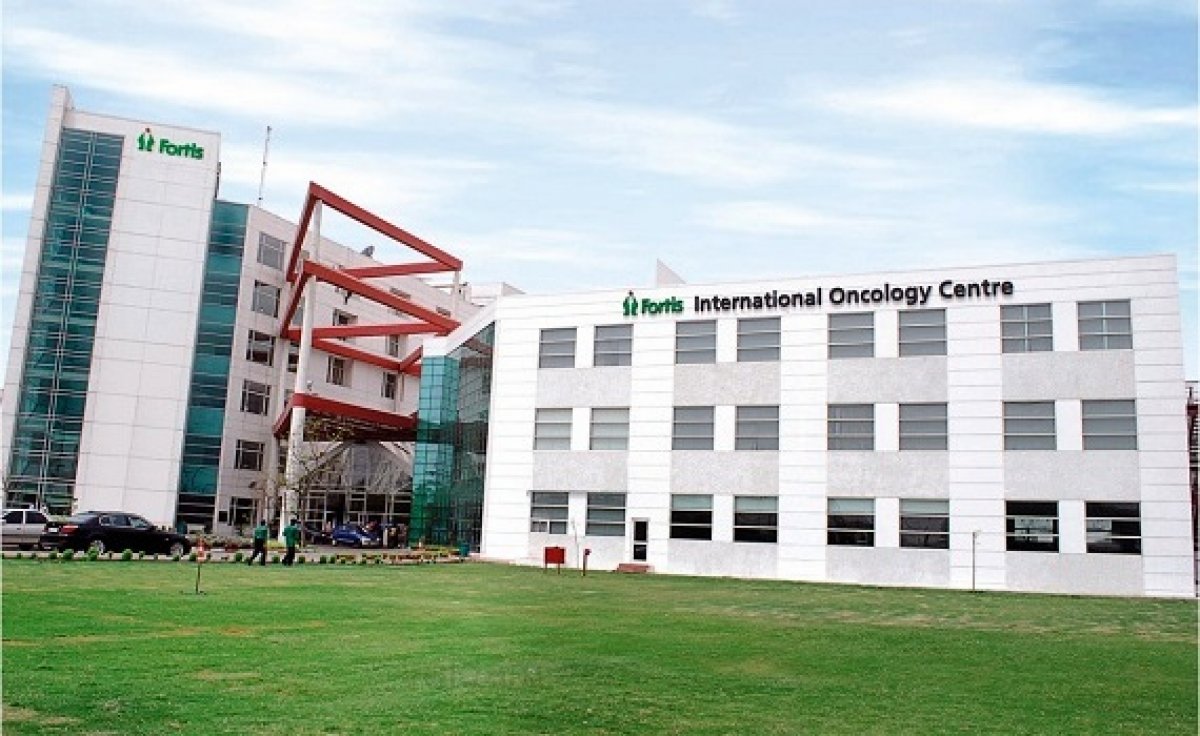
Hospital Fortis

Hospital Indraprastha Apollo
Descripción general de Cirugía de tumor hipofisario en India
- Extirpación de tumores cerebrales - de $7,000La cirugía extrae crecimientos dañinos en el cerebro, mejorando la salud del paciente y reduciendo síntomas como dolores de cabeza o convulsiones.
- Resección transnasal de tumor - de $5,500Esta operación elimina los tumores por vía nasal, reduciendo el tiempo de recuperación y minimizando las cicatrices quirúrgicas.
- Cirugías estereotáxicas - de $5,000El procedimiento utiliza coordenadas precisas para operar en áreas pequeñas del cerebro, mejorando la precisión y reduciendo las complicaciones.
- Eliminación de meningioma - de $5,800La operación tiene como objetivo eliminar quirúrgicamente un tumor cerebral benigno, mejorar la función neurológica y reducir los síntomas.
- Resección de glioma - de $6,500La operación elimina tumores cerebrales, mejora la supervivencia del paciente y reduce los síntomas, con precisión y daño mínimo.
- Resección de glioblastoma - de $6,500El procedimiento elimina los tumores cerebrales, mejorando los síntomas y la supervivencia. Implica cirugía, requiere experiencia y puede ser complejo.
- Escisión de tumor de base de cráneo - de $8,500El procedimiento elimina los crecimientos cerca de la parte inferior del cráneo mediante técnicas quirúrgicas, lo que mejora la salud y la esperanza de vida del paciente.
Día 1
- Llegada al país.
- Traslado del aeropuerto al hotel 4*.
Dia 2
- Traslado del hotel a la clínica.
- Consulta con especialista en neurocirugía.
- Resonancia magnética de cabeza preoperatoria.
Día 3
- Control de salud preoperatorio por anestesiólogo.
- Consulta adicional si es necesario.
Día 4
- Cirugía de tumor hipofisario bajo anestesia general.
- La duración de la cirugía es de aproximadamente 2-4 horas.
- Recuperación postoperatoria bajo supervisión.
Día 5-7
- Control postoperatorio por neurocirujano.
- Permanezca en la clínica para observación.
Semana 2
- Alta de la clínica.
- Traslado de la clínica al hotel.
Semana 3-6
- Rehabilitación y recuperación en el hogar.
- Regreso paulatino a las actividades livianas.
Semana 7
- Regreso al trabajo y actividades normales.
Tenga en cuenta que el cronograma de recuperación de cada paciente puede variar según el estado de salud individual y la complejidad de la cirugía.
- Depósito de Bookimed: 200 $ o 200 €.
- Depósito de la clínica: Pague un porcentaje fijo por adelantado.
Historias en video de pacientes de Bookimed
Reseñas
Todas las reseñasCompartir contenido
 Olena Sikoza
Datos сlave sobre Cirugía de tumor hipofisario
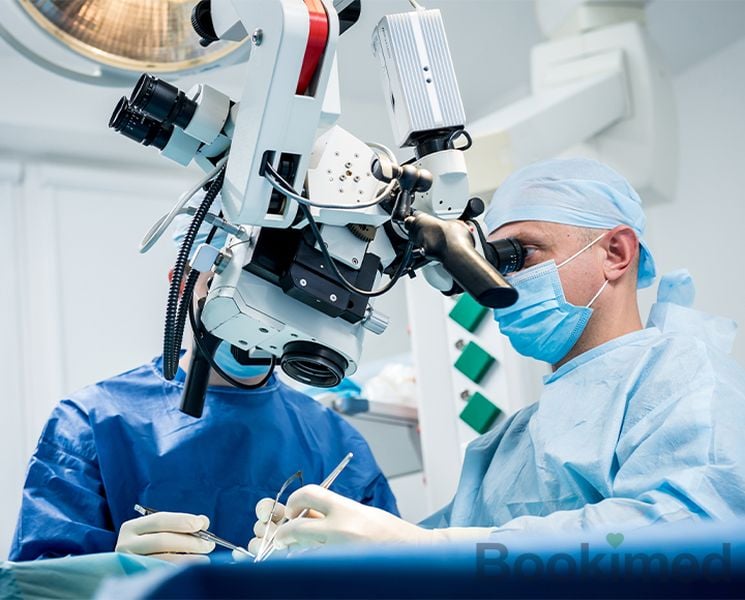
Cirugía del tumor hipofisario
Este procedimiento consiste en la extirpación de un tumor de la hipófisis, a menudo mediante técnicas mínimamente invasivas.
Preguntas frecuentes sobre Cirugía de tumor hipofisario en India
¿Cuándo requiere una intervención quirúrgica un tumor hipofisario?
La cirugía es necesaria cuando un tumor hipofisario causa déficits neurológicos, como hemianopsia bitemporal, o produce un exceso de hormonas como ACTH u hormona del crecimiento. Los neurocirujanos recomiendan la intervención si un macroadenoma comprime el quiasma óptico, es resistente a la medicación o desencadena emergencias agudas de apoplejía hipofisaria.
- Efecto de masa: La cirugía alivia la presión sobre el quiasma óptico para restaurar la visión periférica.
- Control hormonal: La resección trata la enfermedad de Cushing o la acromegalia mediante la extirpación del tejido secretor de hormonas.
- Resistencia al tratamiento: La intervención es necesaria cuando los prolactinomas no responden a los agonistas de la dopamina.
- Descompresión de emergencia: La cirugía inmediata trata la apoplejía hipofisaria para prevenir la ceguera permanente o la muerte.
Perspectiva del experto de Bookimed: Los indicadores de calidad para la cirugía hipofisaria en la India a menudo se centran en el volumen institucional. Centros como Manipal Hospitals y Global Hospital Chennai gestionan más de 2.000.000 y 80.000 pacientes al año, respectivamente. Este alto volumen de casos sugiere que los equipos son más competentes en el manejo de casos hormonales y neuroquirúrgicos complejos en comparación con centros de menor volumen.
¿Cuál es la tasa de éxito de la cirugía de tumores hipofisarios en centros indios?
La tasa de éxito de la cirugía de tumores hipofisarios en los principales centros médicos de la India oscila entre el 80% y el 95%. La mayoría de las instalaciones avanzadas, como los hospitales Manipal y el hospital Indraprastha Apollo, utilizan la cirugía endoscópica endonasal mínimamente invasiva. Esta técnica avanzada evita incisiones externas y mantiene una eficacia clínica superior al 93% en la mejora de la visión.
- Éxito según el tamaño: Los microadenomas muestran tasas de éxito del 80% al 90% en unidades neuroquirúrgicas indias especializadas.
- Restauración de la visión: Los datos postoperatorios indican que entre el 93,5% y el 97,3% de los pacientes experimentan una estabilidad visual significativa.
- Eficiencia de la técnica: Los procedimientos endoscópicos logran la extirpación completa del tumor en hasta el 81,3% de los casos.
- Seguridad quirúrgica: Los centros especializados en base de cráneo en la India mantienen tasas de mortalidad excepcionalmente bajas, inferiores al 1,6%.
Opinión de expertos de Bookimed: Aunque las tasas de éxito son altas en toda la India, centros como el Global Hospital Chennai y Medanta a menudo superan a otros al integrar equipos multidisciplinarios de endocrinología. Los datos muestran que la normalización hormonal alcanza el 78,9% con métodos endoscópicos en comparación con el 68,1% con herramientas m
¿Cuál es la duración de la estancia hospitalaria y el período recomendado en el país para pacientes internacionales?
Los pacientes internacionales que se someten a una cirugía de tumor hipofisario en la India suelen permanecer en el hospital de 3 a 7 días. La mayoría de los cirujanos recomiendan permanecer en el país un total de 10 a 14 días. Este margen permite una monitorización crítica de los niveles de electrolitos y la retirada segura del taponamiento nasal.
- Duración hospitalaria: La estancia dura de 3 a 7 días según la estabilidad hormonal y los riesgos de complicaciones.
- Estancia en el país: Pase un total de 10 a 14 días en la India antes de tomar vuelos de larga distancia.
- Monitorización médica: Los médicos controlan los niveles de sodio y el gasto urinario para controlar la diabetes insípida.
- Atención postoperatoria: Los cirujanos retiran el taponamiento nasal y realizan pruebas de imagen tempranas en el plazo de 1 semana.
Perspectiva de expertos de Bookimed: Aunque muchos sitios web se centran en la cirugía en sí, nuestros datos de 92 clínicas indias muestran que la segunda semana es la más crítica para los pacientes internacionales. Clínicas como Manipal Hospitals e Indraprastha Apollo, acreditadas por la JCI, hacen hincapié en la vigilancia de los desequilibrios de sodio tardíos. Permanecer los 14 días completos evita complicaciones peligrosas que pueden ocurrir durante el vuelo debido a la fluctuación de los niveles hormonales.
¿Cuáles son los riesgos y efectos secundarios potenciales de la cirugía de tumores hipofisarios?
La cirugía de tumores hipofisarios en la India es generalmente segura, pero conlleva riesgos específicos como cambios hormonales permanentes, fugas de líquido cefalorraquídeo y congestión nasal. Las complicaciones raras incluyen deterioro de la visión o meningitis. La mayoría de los procedimientos utilizan técnicas endoscópicas mínimamente invasivas en instalaciones acreditadas por la NABH para minimizar el impacto neurológico y el tiempo de recuperación.
- Desequilibrio hormonal: El daño a la glándula pituitaria puede requerir terapia de reemplazo hormonal de por vida.
- Diabetes insípida: La sed extrema y la micción excesiva, temporales o permanentes, ocurren en el 2% de los casos.
- Fuga de LCR: El goteo de líquido claro por la nariz puede requerir una reparación quirúrgica secundaria.
- Hiponatremia: Los niveles bajos de sodio en sangre a menudo aparecen de 4 a 7 días después de la cirugía.
Perspectiva del experto de Bookimed: Aunque muchos se centran en la cirugía en sí, nuestros datos muestran que es crucial seleccionar hospitales con departamentos de endocrinología internos, como Manipal Hospitals o Medanta. Los cirujanos a menudo se centran en la extirpación del tumor, pero los endocrinólogos especializados gestionan las complejas oscilaciones electrolíticas postoperatorias y la reducción gradual de esteroides que previenen el reingreso
¿Pueden los tumores hipofisarios reaparecer después de una cirugía exitosa?
Los tumores hipofisarios pueden reaparecer después de una cirugía exitosa porque pueden quedar células microscópicas sin detectar incluso después de una resección completa. Aproximadamente entre el 12% y el 18% de los pacientes experimentan un nuevo crecimiento, generalmente dentro de 1 a 5 años, lo que hace esencial el monitoreo a largo plazo mediante resonancias magnéticas y pruebas hormonales.
- Ventana de recurrencia: La mayoría de los tumores vuelven a crecer dentro de los 5 años, aunque pueden ocurrir recurrencias tardías décadas después.
- Tipos de mayor riesgo: Los tumores funcionales como los prolactinomas y la enfermedad de Cushing tienen tasas de recurrencia más altas que los tipos no funcionales.
- Invasión tumoral: El crecimiento hacia el seno cavernoso o el hueso aumenta significativamente el riesgo de recurrencia.
- Marcadores biológicos: Los niveles altos de proliferación celular Ki-67 a menudo se correlacionan con un crecimiento tumoral más agresivo.
Perspectiva del experto de Bookimed: Si bien la India ofrece neurocirugía avanzada en centros como Manipal Hospitals o Medanta, el control exitoso a largo plazo depende de la atención multidisciplinaria. Los datos sugieren que elegir clínicas con grandes volúmenes, como el Global Hospital Chennai con 18,000 operaciones anuales, garantiza el acceso a la patología y endocrinología es