Brazo biónico en Italia — obtén 3 clínicas con costos


Revisado médicamente por
Fahad Mawlood
¿Cuál es el precio de Brazo biónico en Italia? Descubra ahora
A bionic arm in Italy typically costs from Precio a consultar to Precio a consultar. The final price depends on technology complexity, custom socket manufacturing, and the specific brand. Basic cosmetic prosthetics generally cost much less than multi-grip bionic systems.
- High-functioning bionic systems: These advanced multi-grip arms involve significant investment in technology and sensors.
- Custom socket manufacturing: Precise fitting and custom fabrication are essential and influence the total cost.
- Basic cosmetic prosthetics: Standard mechanical or aesthetic options typically cost 70-80% less than bionic versions.
- Regional variations: Major medical hubs like Bologna and Milan may offer more advanced bionic options.
Bookimed Expert Insight: Italy is a top destination for advanced neural integration. Maria Cecilia Hospital in Bologna is one of few centers performing Targeted Muscle Reinnervation (TMR). This technique improves control for bionic limbs significantly. The hospital is Joint Commission International (JCI) accredited. It serves over 9,000 patients every year. Choosing centers with TMR expertise ensures better long-term functional value. This is especially true for patients seeking high-tech multi-grip systems.
Sus beneficios y garantías con Bookimed
Precios directos
Bookimed no añade cargos adicionales a los precios de Brazo biónico. Las tarifas proceden de las listas de precios oficiales de las clínicas. Pagará directamente en la clínica por su Brazo biónico a su llegada al país.
Sólo clínicas y médicos verificados
Bookimed está comprometido con su seguridad. Solo trabajamos con las clínicas que mantienen altos estándares internacionales en Brazo biónico y tienen las licencias necesarias para atender a pacientes internacionales en todo el mundo.
Asistencia 24/7 gratuita
Bookimed ofrece asistencia experta gratuita. Un coordinador médico personal le apoya antes, durante y después del tratamiento, resolviendo cualquier problema. Nunca estará solo en su viaje médico de Brazo biónico.

Su coordinador médico personal de Bookimed
- Le apoya en cada etapa
- Ayuda a elegir la clínica y el médico adecuados
- Asegura un acceso rápido y conveniente a la información
Descubra las mejores clínicas de Brazo biónico en Italia: 1 opciones verificadas y Precios





Descripción general de Brazo biónico en Italia
- Prótesis de extremidades - de $5,500El procedimiento consiste en reemplazar las extremidades perdidas, mejorar la movilidad, utilizando prótesis hechas para diversas actividades.
- Prótesis por debajo de la rodilla - de $6,500Esta terapia reemplaza la parte inferior de la pierna, mejorando la movilidad y mejorando la calidad de vida después de la amputación.
- Pie protésico - de $6,500El procedimiento consiste en colocar un pie artificial para permitir la movilidad y mejorar la calidad de vida.
- Pierna biónica - de $38,000La operación instala una prótesis de alta tecnología, mejorando la movilidad y el equilibrio de las personas con pérdida de una pierna.
- Prótesis electrónicas de la pierna - de $18,000El procedimiento equipa a los pacientes con piernas artificiales avanzadas y programables, mejorando el movimiento, la precisión y la comodidad.
- Prótesis de brazo - de $6,500Esta terapia reemplaza un brazo perdido, mejorando la movilidad y la funcionalidad a través de una prótesis.
- Prótesis de brazo cosmética - de $6,500El procedimiento ofrece un reemplazo estético de un brazo faltante, lo que garantiza una apariencia natural y aumenta la confianza en sí mismo.
- Prótesis de dedo - de $3,200El procedimiento ayuda a reemplazar los dígitos que faltan, mejorando la función de la mano y la apariencia con reemplazos móviles y personalizables.
Día 1 - Llegada
- Llegada al país y registro en la clínica.
- Reúnase con el equipo médico y discuta los detalles del procedimiento.
- Hágase un examen físico y las pruebas médicas necesarias.
Día 2 - Preoperatorio
- Consultar con el neurólogo y el especialista en prótesis.
- Tenga una reunión final con el cirujano.
- Prepárese para la operación (sin comer ni beber).
Día 3 - Operación
- Recibir anestesia general.
- Someterse a la operación del brazo biónico (alrededor de 4-6 horas).
- Despertar en sala de recuperación, monitoreado por personal médico.
Día 4 - Postoperatorio
- Permanezca en la clínica para una estrecha vigilancia.
- Comience a tomar los medicamentos recetados para controlar el dolor.
- Comience una fisioterapia suave con un terapeuta capacitado.
Semana 1 - Rehabilitación
- Continúe con las sesiones diarias de fisioterapia.
- Aprende a controlar el brazo biónico con un terapeuta.
- Aumente gradualmente la complejidad de las tareas con el brazo biónico.
Semana 2 - Rehabilitación
- Continúe la terapia y el entrenamiento de control.
- Comience a reanudar las actividades diarias ligeras.
- Tener una consulta de seguimiento con el cirujano.
Semana 3 a 8 - Rehabilitación
- Gradualmente regrese al trabajo, dependiendo del tipo de trabajo.
- Continuar con la fisioterapia y el entrenamiento de control.
- Incrementar gradualmente las actividades físicas y deportivas.
Semana 9 en adelante - Resultado Final
- Vea el resultado final de la operación del brazo biónico.
- Continuar los seguimientos programados con el equipo médico.
Tenga en cuenta que el cronograma y el proceso pueden variar según los casos individuales y la complejidad de la operación.
- Depósito de Bookimed: 200 $ o 200 €.
- Depósito de la clínica: Pague un porcentaje fijo por adelantado.
Reseñas
Todas las reseñasCompartir contenido
Historias en video de pacientes de Bookimed
 Olena Sikoza
Datos сlave sobre Brazo biónico
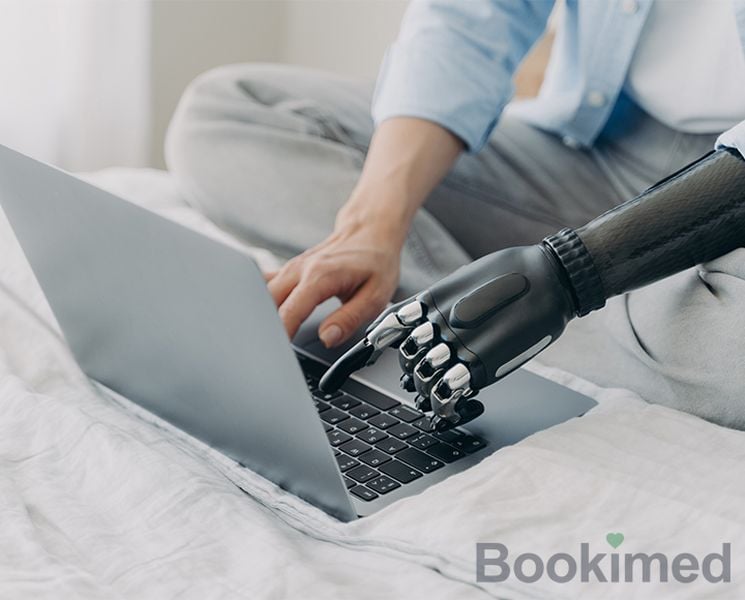
Brazo biónico
Un brazo biónico es un dispositivo protésico avanzado diseñado para sustituir o mejorar la función de un miembro perdido, proporcionando una mayor movilidad y destreza.
Preguntas frecuentes sobre Brazo biónico en Italia
¿Cómo funcionan los brazos biónicos modernos?
Los brazos biónicos modernos utilizan sensores de electromiografía (EMG) para detectar señales eléctricas de los músculos supervivientes. Estos impulsos son interpretados por microprocesadores integrados. El ordenador activa entonces actuadores motorizados para mover los dedos o las muñecas. Los sistemas avanzados utilizan el aprendizaje automático para predecir los movimientos deseados y múltiples patrones de agarre.
- Extracción de señales: Los electrodos de superficie o los sensores implantados captan las contracciones musculares a través del contacto entre la piel y el encaje.
- Control por microprocesador: Los ordenadores traducen la electricidad muscular bruta en comandos digitales para las articulaciones motorizadas.
- IA avanzada: Los algoritmos de reconocimiento de patrones clasifican los gestos musculares únicos para una funcionalidad fluida y de agarre múltiple.
- Opciones de dispositivos: Marcas líderes como Ottobock Michelangelo y Hero Arm ofrecen variados modos de agarre.
Perspectiva del experto de Bookimed: Los centros italianos como el Hospital Maria Cecilia enfatizan los enfoques multidisciplinarios. Esto es crucial porque el éxito biónico depende más del ajuste del encaje que del hardware. Incluso los dispositivos caros como los de Össur fallan si el contacto con la piel no es perfecto. Los pacientes deben priorizar las clínic
¿Qué instituciones italianas lideran el desarrollo de extremidades biónicas?
Italia lidera la innovación biónica a través del Istituto Italiano di Tecnologia (IIT) y la Scuola Superiore Sant’Anna. Estos centros desarrollan interfaces biomiméticas como la mano Hannes y prótesis controladas por imanes. La implementación clínica se realiza en el Centro Protésico INAIL y en hospitales especializados que ofrecen cirugía de integración neuronal.
- IIT (Génova): Desarrolló la mano Hannes, que restaura el 90% de la funcionalidad humana natural.
- Sant’Anna (Pisa): Lanzó la primera prótesis controlada por imanes para el control de los dedos mediante el pensamiento.
- Hospital Maria Cecilia: Ofrece la Reinervación Muscular Dirigida (TMR) para un control avanzado de extremidades biónicas.
- L’Istituto Ortopedico Rizzoli: Pionero en la osteointegración para anclar extremidades biónicas directamente en el hueso.
Perspectiva del experto de Bookimed: Mientras que los centros de investigación se centran en prototipos, el Hospital Maria Cecilia cierra la brecha al implementar la cirugía TMR. Este hospital cuenta con la acreditación JCI y trata a 9.000 pacientes al año. Se especializan en el complejo trabajo neuro-ortopédico necesario para una conectividad biónica de alta gama.
Consenso de los pacientes: Los pacientes identifican al Policlinico Gemelli en Roma como el centro principal para implantes a largo plazo.
¿Dónde se encuentran los principales centros de referencia de Italia para la adaptación de brazos biónicos?
Los principales centros de referencia de Italia para la adaptación de brazos biónicos incluyen el Centro Protesi INAIL en Vigorso di Budrio y el Maria Cecilia Hospital en Bolonia. Estas instalaciones integran bioingeniería avanzada con rehabilitación multidisciplinaria para prótesis de miembros superiores controladas por microprocesador y mioeléctricas.
- Centro nacional: El Centro Protesi INAIL atiende a más de 6.500 pacientes al año utilizando tecnología mioeléctrica pionera.
- Excelencia privada: El Maria Cecilia Hospital cuenta con la acreditación de la Joint Commission International (JCI) para atención ortopédica y neuroquirúrgica.
- Liderazgo en investigación: La Università Campus Bio-Medico de Roma desarrolla prótesis sensorizadas que restauran la sensibilidad táctil a los usuarios.
- Integración quirúrgica: El Ospedale Galeazzi Sant-Ambrogio de Milán se especializa en cirugías ortopédicas de revisión complejas y adaptaciones mioeléctricas.
Opinión de expertos de Bookimed: El Maria Cecilia Hospital destaca por su combinación única de investigación y éxito clínico de gran volumen. Es parte de la red GVM Care & Research. Esta clínica gestiona más de 9.000 pacientes cada año. Su estatus de la Joint Commission International (JCI) garantiza una alta seguridad para casos internacionales de reconstrucción de extremidades.
Con
¿Qué ventajas funcionales ofrecen las manos biónicas de diseño italiano?
Las manos biónicas de diseño italiano ofrecen beneficios funcionales avanzados a través de tecnología de subactuación adaptativa y fuerzas de agarre de alta presión. Estos dispositivos utilizan un solo motor para controlar los cinco dedos. Esto permite que la prótesis se adapte naturalmente a varias formas de objetos mientras mantiene una potente fuerza de agarre de 150 N.
- Agarre adaptativo: Los dedos se moldean automáticamente a las formas de los objetos sin requerir cambios manuales preestablecidos.
- Respuesta de alta velocidad: Dispositivos como Hannes logran un agarre completamente cerrado en menos de un segundo.
- Retroalimentación táctil: Prototipos avanzados restauran la percepción sensorial de presión y textura a través de electrodos implantados.
- Diseño ligero: La mayoría de los modelos pesan menos de 480 gramos para minimizar la fatiga del usuario durante las actividades.
Perspectiva del experto de Bookimed: La ingeniería italiana se centra en la simplicidad mecánica para mejorar la durabilidad y reducir las necesidades de mantenimiento. Al usar un motor en lugar de cinco, estos diseños suelen ser un 30% más baratos. Clínicas como el Hospital Maria Cecilia en Bolonia ofrecen un entorno quirúrgico de alto volumen para implantes exitosos.
Consenso de los pacientes: Los usuarios valoran la mano Michelangelo pa
¿En qué se diferencian las manos protésicas accionadas por imanes de las mioeléctricas convencionales?
Las manos protésicas accionadas por imanes utilizan perlas magnéticas implantadas de 3 mm para rastrear el desplazamiento muscular con una precisión del grosor de un cabello. A diferencia de los modelos mioeléctricos convencionales que detectan señales eléctricas ruidosas a través de electrodos en la superficie de la piel, los sistemas accionados por imanes permiten un control fluido y voluntario de los dedos y un movimiento natural sin el retraso causado por el sudor o la interferencia de la piel.
- Mecanismo de control: Los sensores accionados por imanes rastrean la longitud física del músculo utilizando pares magnéticos implantados quirúrgicamente.
- Precisión de la señal: La tecnología rastrea el movimiento hasta 37 micras para una destreza digital independiente superior.
- Interfaz del dispositivo: La mioeléctrica depende de electrodos de superficie no invasivos propensos al desplazamiento y la recalibración.
- Requisito quirúrgico: Los sistemas accionados por imanes requieren una cirugía de implantación menor con un tiempo de recuperación total de 2 a 4 semanas.
Opinión de expertos de Bookimed: Si bien las manos mioeléctricas siguen siendo el estándar mundial, la magnetomicrometría representa un salto en la capacidad de respuesta. Nuestros datos muestran que centros especializados como el Hospital Maria Cecilia en Italia lideran la ortope
¿Pueden los brazos biónicos mejorar la reintegración laboral y la independencia a largo plazo?
Los brazos biónicos mejoran significativamente la reintegración laboral y la independencia a largo plazo al restaurar el control motor fino y las estrategias conductuales complejas. Los usuarios a menudo alcanzan niveles de productividad que igualan su rendimiento previo a la lesión. Los sistemas mioeléctricos avanzados permiten realizar tareas de oficina como escribir y actividades especializadas como conducir, facilitando el regreso a roles mentalmente exigentes.
- Valor socioeconómico: Los usuarios pueden generar el triple del costo del dispositivo en valor económico en un año.
- Recuperación funcional: Las personas con amputación debajo del codo suelen recuperar el 80 % de las tareas diarias, como comer y escribir.
- Éxito en la reintegración: Combinar la adaptación biónica con 6 meses de terapia ocupacional duplica las tasas de retorno al empleo.
- Alivio para los cuidadores: La mejora en la autonomía del usuario reduce la carga física y emocional sobre los sistemas de apoyo familiar.
Perspectiva del experto de Bookimed: Aunque Italia ofrece cobertura de salud pública para prótesis, el proceso de aprobación suele tardar de 12 a 18 meses. Los pacientes que buscan una reintegración más rápida suelen elegir clínicas privadas como el Hospital Maria Cecilia en Bolonia. Los datos sugieren que autofinanciar el costo de Precio a consultar a _op_