Rehabilitación para niños con parálisis cerebral en Italia — obtén 3 clínicas con costos


Revisado médicamente por
Fahad Mawlood
¿Cuál es el precio de Rehabilitación para niños con parálisis cerebral en Italia? Descubra ahora
La rehabilitación para niños con parálisis cerebral en Italia suele costar entre Precio a consultar y Precio a consultar. El precio final depende de la duración del programa, el nivel de la clínica y las modalidades de terapia específicas requeridas. Los programas a menudo incluyen evaluaciones especializadas por parte de neurofisiatras y sesiones de fisioterapia personalizadas.
- Neurorrehabilitación intensiva: Suele añadir entre un 30 y un 50% a los costos estándar debido a la participación de múltiples especialistas.
- Centros médicos principales: Los centros más importantes para la atención especializada incluyen Roma y Milán.
- Rehabilitación robótica: La tecnología de alta gama como Lokomat a menudo aumenta el costo de las estancias intensivas.
- Técnicas especializadas: La rizotomía dorsal selectiva o la terapia con células madre conllevan gastos adicionales significativos.
Perspectiva del experto de Bookimed: Elegir una clínica en Roma o Milán ofrece acceso a una infraestructura médica de élite. La clínica Villa Stuart en Roma cuenta con la acreditación de la FIFA. Proporciona experiencia en medicina deportiva de clase mundial aplicable a la corrección de la marcha. Para necesidades ortopédicas avanzadas, el IRCCS Ospedale Galeazzi - Sant'Ambrogio en Milán es una opción de primer nivel. Realiza el 75% de las cirugías ortopédicas de revisión en Italia. Los paquetes en estos centros de primer nivel suelen comenzar entre $3,000 y $6,200.
Sus beneficios y garantías con Bookimed
Precios directos
Bookimed no añade cargos adicionales a los precios de Rehabilitación para niños con parálisis cerebral. Las tarifas proceden de las listas de precios oficiales de las clínicas. Pagará directamente en la clínica por su Rehabilitación para niños con parálisis cerebral a su llegada al país.
Sólo clínicas y médicos verificados
Bookimed está comprometido con su seguridad. Solo trabajamos con las clínicas que mantienen altos estándares internacionales en Rehabilitación para niños con parálisis cerebral y tienen las licencias necesarias para atender a pacientes internacionales en todo el mundo.
Asistencia 24/7 gratuita
Bookimed ofrece asistencia experta gratuita. Un coordinador médico personal le apoya antes, durante y después del tratamiento, resolviendo cualquier problema. Nunca estará solo en su viaje médico de Rehabilitación para niños con parálisis cerebral.

Su coordinador médico personal de Bookimed
- Le apoya en cada etapa
- Ayuda a elegir la clínica y el médico adecuados
- Asegura un acceso rápido y conveniente a la información
Descubra las mejores clínicas de Rehabilitación para niños con parálisis cerebral en Italia: 2 opciones verificadas y Precios




Clinic Villa Stuart
Descripción general de Rehabilitación para niños con parálisis cerebral en Italia
- Esta terapia mejora las habilidades motoras y la cognición a través de movimientos de la cabeza guiados por computadora.
- Terapia de caricias - de $250Esta terapia es una técnica de estimulación sensorial, que favorece la relajación y la alegría, frecuentemente utilizada para personas con discapacidad.
- Terapia Vojta - de $650Esta terapia ayuda a mejorar la motricidad a través de movimientos específicos, adecuados para condiciones neurológicas, ofreciendo una recuperación más rápida y una mejor coordinación.
- Terapia bobath - de $650Esta terapia es un enfoque especializado para condiciones neurológicas, refinando la movilidad y la función a través de ejercicios personalizados.
- Terapia bruta - de $1,200Esta terapia ayuda a mejorar las habilidades motoras a través de la repetición de movimientos, el entrenamiento muscular y el juego creativo.
- Rehabilitación de la esclerosis múltiple - de $4,500Esta terapia ayuda a controlar los síntomas y mejorar la función en pacientes con un trastorno crónico del sistema nervioso.
- Rehabilitación cardiológica - de $3,200Esta terapia ayuda a los pacientes cardíacos a recuperar la fuerza, prevenir la progresión de la enfermedad y mejorar el bienestar general.
- La terapia ayuda a restaurar las capacidades físicas y cognitivas después del accidente cerebrovascular, e incluye sesiones de terapia y ejercicio diario personalizado.
Día 1
- Llegada al aeropuerto del país de destino.
- Traslado del aeropuerto al hotel en servicio de la clínica.
Dia 2
- Consulta inicial con el neurólogo pediátrico.
- Exploración física y revisión de la historia clínica.
- Pruebas como resonancia magnética, análisis de sangre y radiografías si es necesario.
Día 3-7
- Inicio de las sesiones de rehabilitación.
- La terapia incluye terapias físicas, ocupacionales y del habla.
- Cada sesión tiene una duración de 2-3 horas.
Semana 2-4
- Continuación de las sesiones diarias de rehabilitación.
- Evaluación de progreso por parte del equipo cada semana.
- Ajustes al plan de terapia si es necesario.
Semana 5
- Fin de la parte intensiva de la rehabilitación.
- Darse de alta del hospital con un programa basado en el hogar.
- Traslado del hotel al aeropuerto en servicio de la clínica.
Semana 6 en adelante
- El programa de rehabilitación en el hogar continúa.
- Visita de seguimiento programada a los 3 meses.
- Las actividades normales se pueden reanudar después de 6 meses.
Tenga en cuenta que el programa de rehabilitación de cada niño es individual y los plazos mencionados pueden variar.
- Depósito de Bookimed: 200 $ o 200 €.
- Depósito de la clínica: Pague un porcentaje fijo por adelantado.
Reseñas
Todas las reseñasCompartir contenido
Historias en video de pacientes de Bookimed
 Olena Sikoza
Datos сlave sobre Rehabilitación para niños con parálisis cerebral
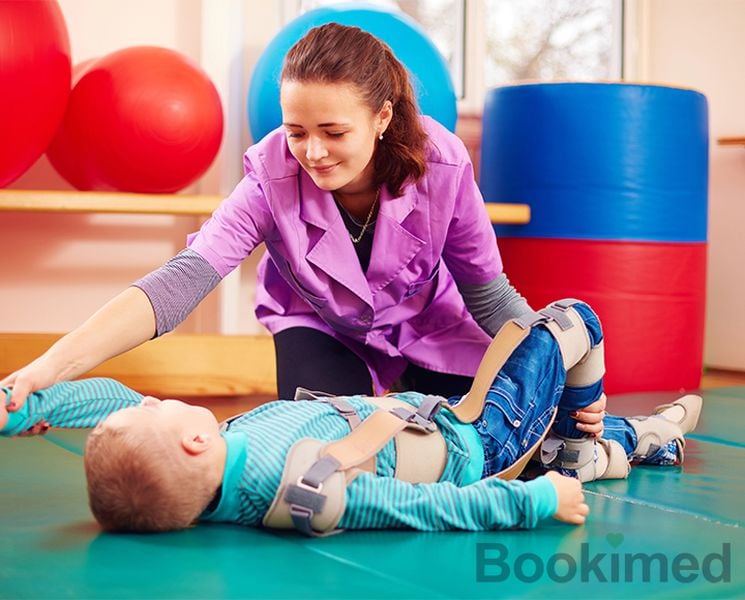
Rehabilitación para niños con parálisis cerebral
La neuroterapia se centra en mejorar las habilidades motoras, la comunicación y las capacidades cognitivas de los niños con parálisis cerebral.
Preguntas frecuentes sobre Rehabilitación para niños con parálisis cerebral en Italia
¿Cuáles son los principios fundamentales de la rehabilitación de la parálisis cerebral en Italia?
La rehabilitación de la parálisis cerebral en Italia sigue las directrices del Proyecto de Rehabilitación Individualizado (PRI) establecidas por SIMFER y SINPIA. Este marco multidisciplinario prioriza la intervención temprana, la neuroplasticidad y la participación centrada en la familia, utilizando un enfoque activo y orientado a objetivos para mejorar la independencia del niño y su integración social en el hogar y la escuela.
- Intervención temprana: La terapia comienza a los 6 meses para aprovechar la neuroplasticidad para la función motora.
- Modelo multidisciplinario: Los equipos incluyen neurólogos, fisioterapeutas y ortopedistas que coordinan la atención con la familia.
- Integración tecnológica: Las clínicas utilizan el entrenamiento de la marcha Lokomat y exoesqueletos para un movimiento de alta intensidad basado en datos.
- Adaptación contextual: Las modificaciones ambientales y las tareas funcionales minimizan la frustración mientras promueven el compromiso exitoso con las habilidades.
Opinión del experto de Bookimed: Los centros italianos con acreditación IRCCS, como el Ospedale Galeazzi - Sant'Ambrogio, ofrecen una ventaja única al combinar la práctica clínica con la investigación de alto nivel. Este estatus garantiza que los pacientes accedan a protocolos innovadores, como la terapia asistida por exoesqueleto y evaluaciones tempra
¿Qué enfoques de rehabilitación motora especializada se utilizan en Italia para niños con parálisis cerebral?
La rehabilitación motora especializada en Italia para niños con parálisis cerebral integra el Método Perfetti, de origen italiano, con estándares internacionales como la terapia Bobath y Vojta. Centros avanzados en Milán y Roma utilizan sistemas robóticos de entrenamiento de la marcha como Lokomat junto con el aprendizaje motor funcional basado en el juego para mejorar la coordinación.
- Método Perfetti: Se centra en procesos cognitivos como la atención para impulsar la recuperación motora y la neuroplasticidad.
- Concepto Bobath: Enfoque individualizado que analiza la coordinación del movimiento y la postura para mejorar las habilidades funcionales diarias.
- Sistemas robóticos: Corrección de la marcha de alta tecnología en el IRCCS Ospedale Galeazzi - Sant'Ambrogio utilizando asistencia automatizada.
- Intervenciones intensivas: La terapia de movimiento inducido por restricción (CIMT) se dirige a casos de hemiplejia restringiendo la extremidad más fuerte.
Perspectiva del experto de Bookimed: La rehabilitación italiana destaca al combinar la investigación clínica con una gran experiencia práctica. El IRCCS Ospedale Galeazzi - Sant'Ambrogio trata a 343.500 pacientes al año y cuenta con una acreditación de investigación especializada. Este entorno centrado en la investigación garantiza que los niños reciban protocolos basados en evidencia que ev
¿Quiénes forman parte del equipo de atención multidisciplinar para la rehabilitación de la parálisis cerebral pediátrica en Italia?
La rehabilitación de la parálisis cerebral pediátrica en Italia sigue un enfoque multidimensional dirigido por un neuropsiquiatra infantil y un fisiatra. Este equipo incluye especialistas únicos como terapeutas en neuropsicomotricidad del desarrollo, fisioterapeutas y terapeutas ocupacionales. Las colaboraciones con organizaciones como GIPCI garantizan protocolos clínicos estandarizados en los centros médicos italianos.
- Coordinación central: Los neuropsiquiatras infantiles supervisan el desarrollo neurológico y la salud psicológica.
- Medicina física: Los fisiatras se centran en la función motora, la postura y el manejo de la espasticidad.
- Terapia psicomotriz: Especialistas utilizan actividades apropiadas para la edad para tratar trastornos neuropsiquiátricos.
- Expertos en movilidad: Los fisioterapeutas proporcionan entrenamiento de la marcha y previenen contracturas musculares.
- Servicios de apoyo: Los logopedas abordan los problemas de deglución y el desarrollo de la comunicación.
- Apoyo social: Los trabajadores sociales ayudan a las familias con los beneficios por discapacidad y el acceso a equipos.
Perspectiva del experto de Bookimed: La ubicación geográfica afecta significativamente la accesibilidad a la atención para pacientes pediátricos en Italia. Las clínicas en regiones del norte
¿Qué organizaciones establecen las directrices nacionales para la rehabilitación pediátrica en Italia?
Las directrices de rehabilitación pediátrica en Italia están reguladas por el Istituto Superiore di Sanità (ISS). Estos estándares son desarrollados a través de las sociedades SINPIA (neuropsiquiatría) y SIMFER (medicina física). Juntas, validan protocolos basados en evidencia dentro del Sistema Nacional de Guías (SNLG) para garantizar una atención al desarrollo de alta calidad.
- Supervisión del ISS: El organismo principal que valida los protocolos oficiales de rehabilitación pediátrica a nivel nacional.
- Marco clínico: SINPIA y SIMFER colaboran para definir las vías de atención neuromotora.
- Adaptación regional: Redes locales como la ATS de Lombardía adaptan las directrices nacionales a nivel local.
- Asociaciones de neuropsicomotricidad: ANUPI TNPEE define los estándares profesionales para los terapeutas neuropsicomotores.
Perspectiva del experto de Bookimed: La calidad de la rehabilitación italiana a menudo sigue una jerarquía regional en lugar de solo reglas nacionales. Las clínicas en Milán, como el IRCCS Ospedale Galeazzi - Sant'Ambrogio, frecuentemente poseen la acreditación IRCCS del Ministerio de Salud. Este estatus significa que integran la investigación activa directamente en la atención al paciente. Elegir un centro certificado por IRCCS a menudo garantiza el acceso a protocolos que superan los mínimos nacionales generales.
<¿Es común la atención centrada en la familia en la rehabilitación de la parálisis cerebral en Italia?
La atención centrada en la familia es el estándar para la rehabilitación de la parálisis cerebral en Italia. Desde 2004, organizaciones como el Grupo Italiano para la Parálisis Cerebral han integrado estos principios. Los centros especializados se centran en la dignidad y la asociación entre los profesionales médicos y los padres para mejorar los resultados del desarrollo infantil.
- Formación profesional: Los terapeutas italianos reciben formación específica para integrar a las familias en la práctica clínica.
- Planes individualizados: Los médicos desarrollan Planes de Rehabilitación Individual (PRI) en estrecha colaboración con los padres.
- Prestación de servicios: Los hospitales universitarios en áreas metropolitanas suelen ofrecer la atención más completa.
- Enfoque en la asociación: Los modelos de rehabilitación enfatizan el trato respetuoso y la comunicación efectiva entre todas las partes.
Perspectiva del experto de Bookimed: Aunque la rehabilitación italiana es profundamente colaborativa, los médicos suelen dirigir la hoja de ruta. Esto difiere de los modelos donde las familias impulsan la toma de decisiones inicial. Clínicas como Villa Stuart a menudo manejan casos neurológicos complejos. Los pacientes deben esperar un enfoque estructurado y dirigido por el médico que valora mucho el aporte de los padres durante la ejecución.