Escleroterapia de varices en Italia — obtén 3 clínicas con costos


Revisado médicamente por
Fahad Mawlood
¿Cuál es el precio de Escleroterapia de varices en Italia? Descubra ahora
La escleroterapia de venas varicosas en Italia suele costar entre $350 y $800. El precio total depende de si el paciente requiere una sola sesión o un paquete de varias sesiones. En los EE. UU. El tratamiento generalmente incluye la consulta con el especialista, el procedimiento en sí y el seguimiento clínico posterior.
- Terapia de sesión única: Los costos oscilan entre $100 y $350 para el tratamiento de venas específicas.
- Paquetes de tratamiento integral: Estos suelen incluir ecografía Doppler diagnóstica y múltiples sesiones.
- Consultas diagnósticas: Las ecografías preliminares con especialistas vasculares añaden aproximadamente de $200 a $350.
- Precios en centros regionales: Los principales centros médicos en Roma y Bolonia ofrecen estándares de instalaciones avanzados.
Perspectiva del experto de Bookimed: Elegir centros multidisciplinarios como el Maria Cecilia Hospital ofrece un valor significativo. Esta instalación acreditada por la JCI maneja el 15% de las cirugías cardíacas de Italia. Los hospitales de alto volumen a menudo brindan resultados más confiables para los procedimientos vasculares. Por ejemplo, los paquetes integrales en Bolonia comienzan alrededor de $1,100. Esto suele ser más rentable que pagar por sesiones individuales en clínicas locales más pequeñas. Los principales centros también brindan un acceso más fácil a aeropuertos internacionales y servicios de traslado.
Beneficios clave
¿Por qué elegir Italia para la escleroterapia de venas varicosas?
- Clínicas acreditadas: Hospitales certificados por JCI ofrecen garantía de atención de alta calidad. Cumplen con estándares internacionales.
- Últimas tecnologías: Italia emplea métodos como la escleroterapia con espuma utilizando Polidocanol y Sulfato de Tetradecil Sodio. Estos aseguran resultados efectivos en el tratamiento. Dispositivos como Veinlite y marcas como Asclera® se utilizan comúnmente para precisión y seguridad.
- Altas tasas de éxito: La escleroterapia en Italia tiene una tasa de eficacia del 80-90% para venas varicosas pequeñas a medianas. El procedimiento implica mínimas complicaciones.
- Cirujanos expertos: Los principales flebólogos en Italia están certificados por la Sociedad Italiana de Flebología. Han realizado más de 5,000 procedimientos de escleroterapia, asegurando amplia experiencia y pericia.
Acceda a soluciones avanzadas de escleroterapia para venas varicosas en clínicas de confianza de $350.
Sus beneficios y garantías con Bookimed
Precios directos
Bookimed no añade cargos adicionales a los precios de Escleroterapia de varices. Las tarifas proceden de las listas de precios oficiales de las clínicas. Pagará directamente en la clínica por su Escleroterapia de varices a su llegada al país.
Sólo clínicas y médicos verificados
Bookimed está comprometido con su seguridad. Solo trabajamos con las clínicas que mantienen altos estándares internacionales en Escleroterapia de varices y tienen las licencias necesarias para atender a pacientes internacionales en todo el mundo.
Asistencia 24/7 gratuita
Bookimed ofrece asistencia experta gratuita. Un coordinador médico personal le apoya antes, durante y después del tratamiento, resolviendo cualquier problema. Nunca estará solo en su viaje médico de Escleroterapia de varices.

Su coordinador médico personal de Bookimed
- Le apoya en cada etapa
- Ayuda a elegir la clínica y el médico adecuados
- Asegura un acceso rápido y conveniente a la información
Descubra las mejores clínicas de Escleroterapia de varices en Italia: 2 opciones verificadas y Precios






Descripción general de Escleroterapia de varices en Italia
- EVLA (ablación endovenosa con láser) - de $1,500El procedimiento emplea calor láser para cerrar las venas defectuosas, un proceso mínimamente invasivo que ofrece una recuperación más rápida.
- Tratamiento láser para varices - de $2,500Esta terapia utiliza luz enfocada para cerrar las venas abultadas e incómodas, lo que ofrece una recuperación rápida y una cicatriz mínima.
- Escleroterapia de varices - de $350Esta terapia trata las venas agrandadas y antiestéticas mediante la inyección de una solución para colapsarlas y atenuarlas con el tiempo.
- Eliminación de venas varicosas - de $3,200El procedimiento elimina las venas dilatadas y torcidas, mejorando la apariencia y aliviando las molestias a través de métodos quirúrgicos o no quirúrgicos.
- Eliminación de venas varicosas - de $2,300Esta terapia trata las venas agrandadas extirpándolas quirúrgicamente, mejorando la circulación y la apariencia al mismo tiempo que reduce las molestias.
- Embolización de MAV - de $6,500Esta terapia sella los vasos sanguíneos anormales para detener el sangrado o prevenir la ruptura, lo que mejora la seguridad del paciente.
Día 1 - Llegada
- Organice su propio traslado a la clínica.
- Check-in en la recepción de la clínica.
Día 2 - Preoperatorio
- Consulta con un cirujano vascular.
- Realice las pruebas médicas necesarias según las instrucciones del cirujano.
- Compra medias prescritas para venas varicosas.
Día 3 - Procedimiento de escleroterapia
- Llegada a la clínica para el procedimiento.
- El procedimiento toma aproximadamente 1-2 horas.
- Se aplica anestesia local durante el procedimiento.
- Regreso a su alojamiento después del procedimiento.
Día 4 - Postoperatorio
- Visite al cirujano para un chequeo postoperatorio.
- Permanezca en el área por lo menos un día más para monitorear.
Semana 1 - Rehabilitación
- Comience a usar las medias para venas varicosas diariamente.
- Descanse y evite las actividades extenuantes.
Semana 2-4 - Rehabilitación
- Continúe usando las medias.
- Vuelva lentamente a sus actividades normales.
Semana 6 en adelante - Resultado final
- La recuperación completa generalmente se logra en este momento.
- Regreso al trabajo, deporte y otras actividades.
Tenga en cuenta que esta es una guía general y que los casos individuales pueden variar.
- Depósito de Bookimed: 200 $ o 200 €.
- Depósito de la clínica: Pague un porcentaje fijo por adelantado.
Historias en video de pacientes de Bookimed
Compartir contenido
 Olena Sikoza
Datos сlave sobre Escleroterapia de varices
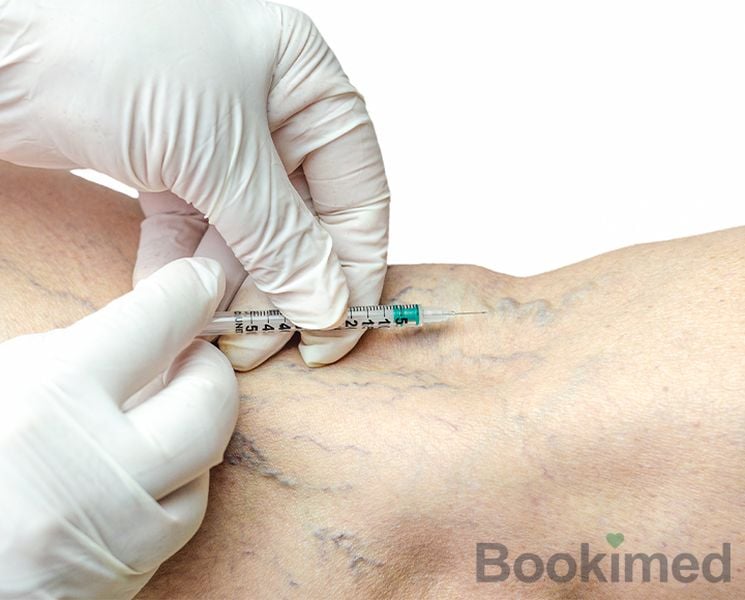
Escleroterapia de varices
La escleroterapia es un procedimiento mínimamente invasivo que consiste en inyectar una solución en las varices para provocar su colapso y desvanecimiento.
Preguntas frecuentes sobre Escleroterapia de varices en Italia
¿Qué es la escleroterapia con espuma y por qué se utiliza?
La escleroterapia con espuma es un tratamiento mínimamente invasivo para las varices. Los especialistas inyectan una solución química espumosa en los vasos dañados. Esta espuma desplaza la sangre para garantizar el máximo contacto con las paredes de las venas. Esto hace que colapsen, se sellen y finalmente desaparezcan.
- Objetivo del procedimiento: Trata de forma segura venas tortuosas o vasos de hasta 5 mm de ancho.
- Duración típica: Las sesiones duran de 20 a 45 minutos por pierna con anestesia local.
- Recuperación del paciente: Es obligatorio caminar inmediatamente para prevenir coágulos y mantener una circulación saludable.
- Requisitos de cuidado posterior: Los pacientes deben usar medias de compresión de grado médico durante 1 a 2 semanas.
Perspectiva de expertos de Bookimed: Aunque la escleroterapia líquida es común para las arañas vasculares, las clínicas italianas a menudo priorizan la espuma guiada por ultrasonido para los vasos más profundos. Los datos muestran que las instalaciones acreditadas por la JCI, como el Hospital Maria Cecilia, utilizan esta precisión para lograr tasas de cierre más altas. Elegir sesiones guiadas por ultrasonido reduce el riesgo de pasar por alto venas tributarias ocultas.
Consenso de los pacientes: La mayoría de los pacientes describen las inyecciones como picaduras rápidas de ab
¿Es dolorosa la escleroterapia y cuál es el tiempo de recuperación esperado?
La escleroterapia es un procedimiento mínimamente incómodo y prácticamente sin tiempo de inactividad. Los pacientes suelen sentir un ligero pinchazo o un leve escozor que dura de 1 a 2 minutos. Puede volver al trabajo inmediatamente, aunque las venas pueden tardar de 3 a 6 semanas en desaparecer por completo.
- Sensación durante el procedimiento: La mayoría de los pacientes informan de un pinchazo rápido similar a una picadura de mosquito o un pellizco.
- Recuperación inmediata: Puede conducir hasta su casa y reanudar actividades ligeras el mismo día.
- Terapia de compresión: El uso de medias de compresión durante 48 horas es vital para sellar las venas tratadas.
- Límites de actividad: Se recomienda caminar inmediatamente, pero evite el ejercicio de alto impacto durante 1 a 2 semanas.
Perspectiva del experto de Bookimed: Mientras que las pequeñas arañas vasculares desaparecen rápidamente, las varices más grandes a menudo requieren escleroterapia con espuma. Los datos de centros como el Hospital Maria Cecilia muestran que la atención vascular especializada garantiza una mayor precisión. En Italia, las clínicas suelen combinar este tratamiento con paquetes de detección integral para una mejor salud vascular a largo plazo.
Consenso de los pacientes: Los pacientes informan que, aunque las inyecciones causan breves calambres
¿Son permanentes los resultados de la escleroterapia?
Los resultados de la escleroterapia son permanentes para las venas tratadas específicamente porque el agente esclerosante inyectado provoca que colapsen y se transformen en tejido cicatricial. Aunque estos vasos no pueden volver a abrirse, el procedimiento no evita que se desarrollen nuevas venas varicosas debido al envejecimiento o la genética.
- Destrucción de vasos: Las venas tratadas con éxito se convierten en tejido cicatricial y el cuerpo las reabsorbe de forma permanente.
- Circulación redirigida: El flujo sanguíneo se redirige naturalmente hacia venas más profundas y saludables inmediatamente después de que el vaso tratado se cierra.
- Recurrencia a largo plazo: Muchos pacientes requieren sesiones de retoque cada 3 a 5 años para las nuevas venas que aparecen.
- Absorción completa: Las arañas vasculares se desvanecen en 6 semanas, mientras que las venas varicosas más grandes tardan 4 meses.
Perspectiva de expertos de Bookimed: Las clínicas italianas como el Hospital Maria Cecilia priorizan la precisión diagnóstica utilizando primero una ecografía venosa. Este paso es vital porque la escleroterapia solo corrige las venas superficiales. Si el reflujo más profundo permanece sin tratar, es probable que aparezcan nuevas venas varicosas en un plazo de 12 meses. Elegir un centro acreditado por la JCI garantiza el acceso a un mapeo avanzado que
¿Qué clínicas italianas son bien consideradas para la escleroterapia de varices?
Centros italianos como el Ospedale San Carlo di Nancy en Roma y el Maria Cecilia Hospital en Bolonia son reconocidos por la escleroterapia de varices. Estas instalaciones utilizan técnicas de espuma guiadas por ultrasonido y cuentan con especialistas vasculares a menudo acreditados por el Servicio Nacional de Salud italiano o la Joint Commission International.
- Experiencia especializada: El Prof. Dr. Luigi Masoni se especializa en técnicas vasculares mínimamente invasivas en Roma.
- Diagnóstico avanzado: Las clínicas utilizan ecografía Doppler para un mapeo preciso de las venas antes de inyectar agentes esclerosantes.
- Alto éxito: La escleroterapia en Italia logra una eficacia del 80-90% para varices de tamaño pequeño a mediano.
- Atención ambulatoria: Los procedimientos generalmente se realizan de forma ambulatoria con un tiempo de recuperación mínimo.
Opinión del experto de Bookimed: Aunque Roma y Milán son centros médicos populares, el Maria Cecilia Hospital en Bolonia destaca por su acreditación de la Joint Commission International y sus equipos multidisciplinarios. Esta supervisión específica a menudo se correlaciona con estándares de seguridad más altos para intervenciones vasculares en comparación con clínicas privadas locales no acreditadas.
Consenso de los pacientes: Los pacientes enfatizan la importancia del