Rinoplastia para hombres en Corea del Sur — encuentre las 3 mejores clínicas con costos


Revisado médicamente por
Fahad Mawlood
Cómo funciona
¿Cuál es el precio de Rinoplastia para hombres en Corea del Sur? Descubra ahora
La rinoplastia masculina en la República de Corea suele costar entre Precio a consultar y Precio a consultar. El precio total depende de la técnica quirúrgica, la experiencia del cirujano y la complejidad de la reparación de la anatomía nasal masculina. En los EE. La mayoría de los paquetes incluyen imágenes 3D, anestesia y tratamientos postoperatorios para reducir la inflamación.
- Selección de material: El uso de cartílago costal autólogo suele añadir entre un 20% y un 30% a la tarifa quirúrgica base.
- Prima de clínicas de élite: Los centros especializados en Gangnam o Apgujeong pueden cobrar tarifas hasta un 20% más altas.
- Cirugía de revisión: Los procedimientos secundarios complejos a menudo cuestan significativamente más que las cirugías primarias debido al tejido cicatricial.
- Reembolso de IVA: Los pacientes internacionales pueden solicitar un reembolso de impuestos del 7% al 10% en el aeropuerto.
Perspectiva del experto de Bookimed: Las clínicas de alto nivel como JK Plastic Surgery Center justifican los costos más elevados con una tasa de éxito del 100%. Este centro premium ha realizado más de 85,000 procedimientos desde 1998. Los pacientes que buscan una buena relación calidad-precio pueden encontrar tarifas competitivas alrededor de $2,000 en el Seoul Miz Hospital. Verifique siempre que los cirujanos estén certificados, como los miembros de la KSPRS Rhinoplasty Research Society. Elegir una clínica con acreditación JCI o ISO garantiza estándares de seguridad sin costos de marketing inflados.
Descubra las mejores clínicas de Rinoplastia para hombres en Corea del Sur: 9 opciones verificadas y Precios

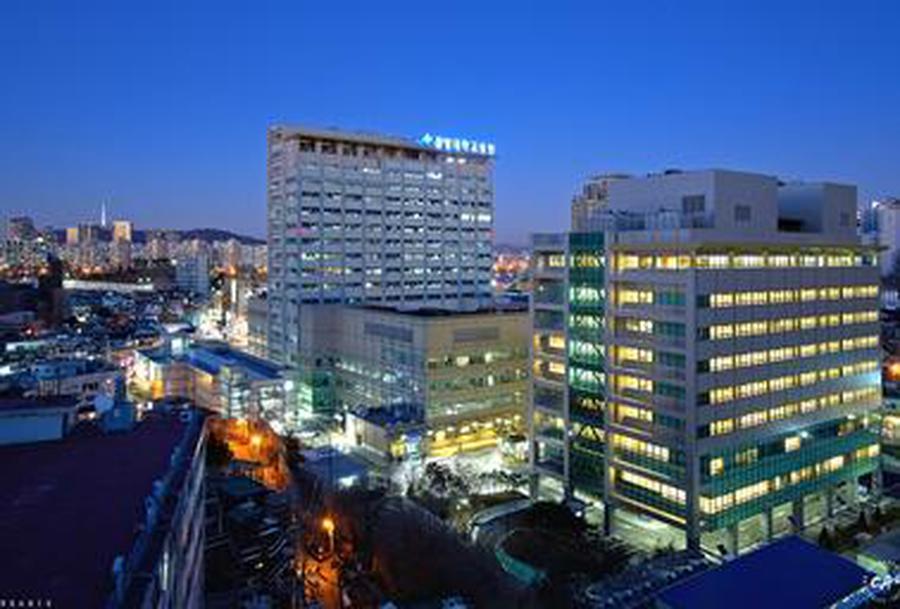
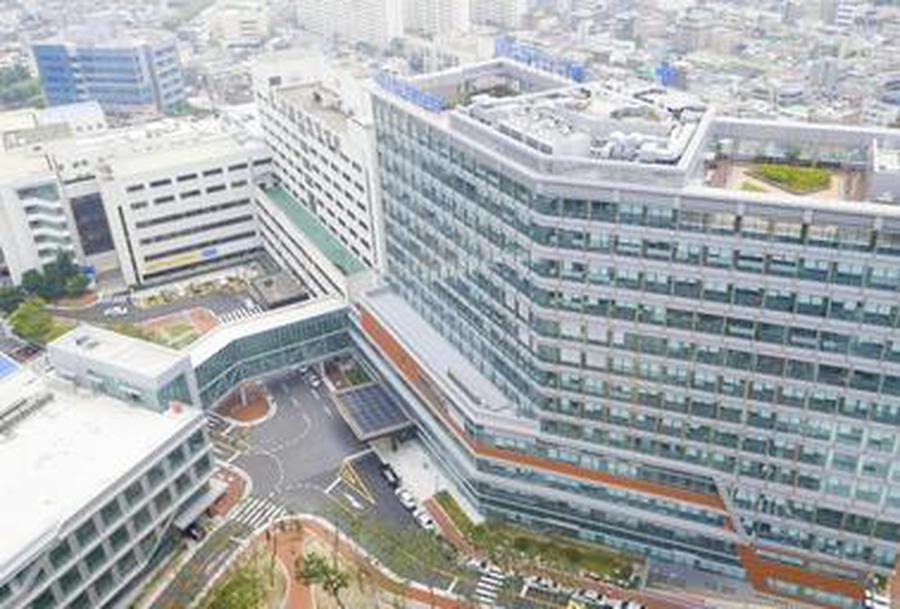
Hospital universitario Chung-Ang (Chung-Ang University Hospital)


Cirugía plástica estética Delightful (Delightful Aesthetics Plastic Surgery)

Centro médico Sun (Sun Medical Center)
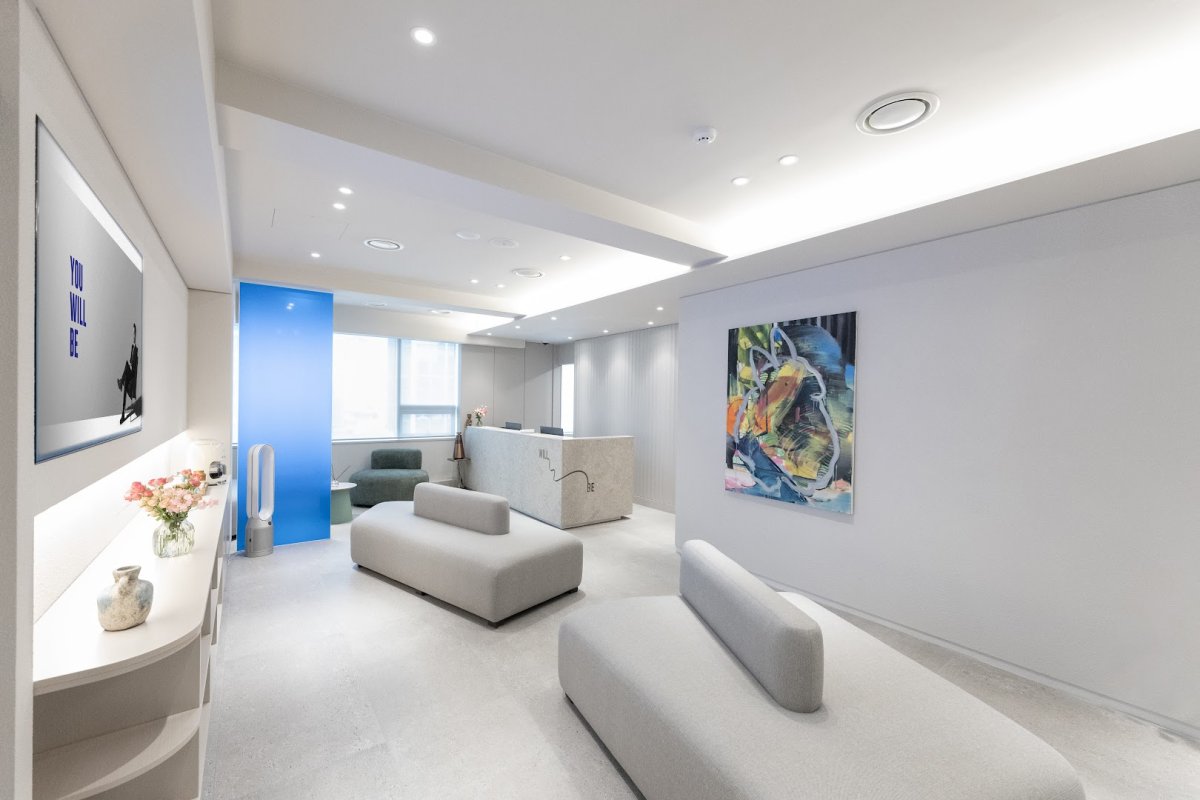
Willbe Plastic Surgery
Descripción general de Rinoplastia para hombres en Corea del Sur
- Rinoplastia - de $3,000El procedimiento altera la forma o el tamaño de la nariz, mejorando la armonía facial y mejorando los problemas respiratorios.
- Rinoplastia de la punta nasal - de $1,900El procedimiento refina la punta de la nariz, mejorando el equilibrio y la armonía nasal a través de la remodelación, ofreciendo una apariencia estéticamente más agradable.
- Rinoplastia cerrada - de $3,000La operación remodela la nariz internamente, asegurando un mejor perfil con cicatrices mínimas y una recuperación más rápida.
- Rinoplastia abierta - de $3,400La operación remodela la nariz a través de incisiones en el exterior, ofreciendo mayor control quirúrgico y visibilidad.
- Rinoplastia de revisión - de $4,000El procedimiento repara cirugías de nariz anteriores, mejorando la función y la apariencia a través de técnicas reconstructivas precisas.
- Eliminación de joroba nasal - de $2,000El procedimiento suaviza la forma de la nariz eliminando el exceso de hueso y cartílago, mejorando la armonía facial.
- Prótesis nasal - de $3,500La operación ofrece una estructura nasal artificial, mejora la apariencia, restaura la función y mejora la confianza en sí mismo. Es no invasivo y personalizable.
- Rinoplastia asiática - de $3,800**Rinoplastia asiática**: Esta cirugía remodela la nariz para conseguir un aspecto natural y armonioso, a menudo utilizando implantes o injertos de cartílago, centrándose en las preferencias culturales y estéticas.
- Depósito de Bookimed: 200 $ o 200 €.
- Depósito de la clínica: Pague un porcentaje fijo por adelantado.
Obtenga una evaluación médica de Rinoplastia para hombres en Corea del Sur: haga una consulta con 12 médicos experimentados ahora
Ver todos los médicos
Yong Woo Kim
El cirujano plástico certificado Dr. Kim se especializa en rinoplastia masculina y ha recibido múltiples premios por su excelencia en cirugía plástica.
- Formado en la Sociedad Americana de Microcirugía Reconstructiva
- Graduado de la Facultad de Medicina de la Universidad de Hanyang
- Recibió el premio al mejor artículo de la Sociedad Coreana de Cirujanos Plásticos y Reconstructivos
- Miembro de la Sociedad Coreana de Cirugía Plástica Estética
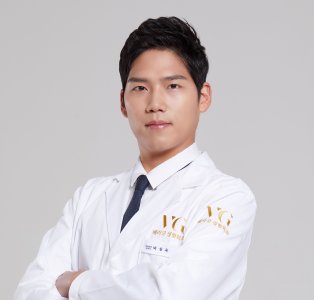
Park Sangwook
Director de VG Plastic Surgery – El Dr. Park se especializa en rinoplastia masculina con experiencia certificada.
- Residencia en el Seoul St. Mary’s Hospital, un centro líder en cirugía plástica
- Miembro de pleno derecho de varias prestigiosas sociedades coreanas de cirugía plástica
- Ex director de DA Plastic Surgery, aporta un amplio liderazgo
- Director actual de la clínica VG Plastic Surgery
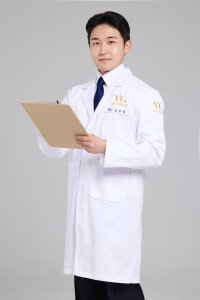
Yang Jong Phil
El Dr. Yang Jong Phil es cirujano plástico certificado en el Centro Médico de la Universidad de Corea. Obtuvo su título de médico (MD) en la Facultad de Medicina de la Universidad de Corea. Realizó un fellowship clínico en cirugía plástica y reconstructiva en el Centro Médico de la Universidad de Chicago. Es miembro activo de la Fundación AO.
Sus afiliaciones incluyen la International Confederation for Plastic, Reconstructive and Aesthetic Surgery (IPRAS), la American Society of Plasti
Historias en video de pacientes de Bookimed
Reseñas
Todas las reseñasRinoplastia para hombres: Fotos de antes y después
Ver todos los Antes y Después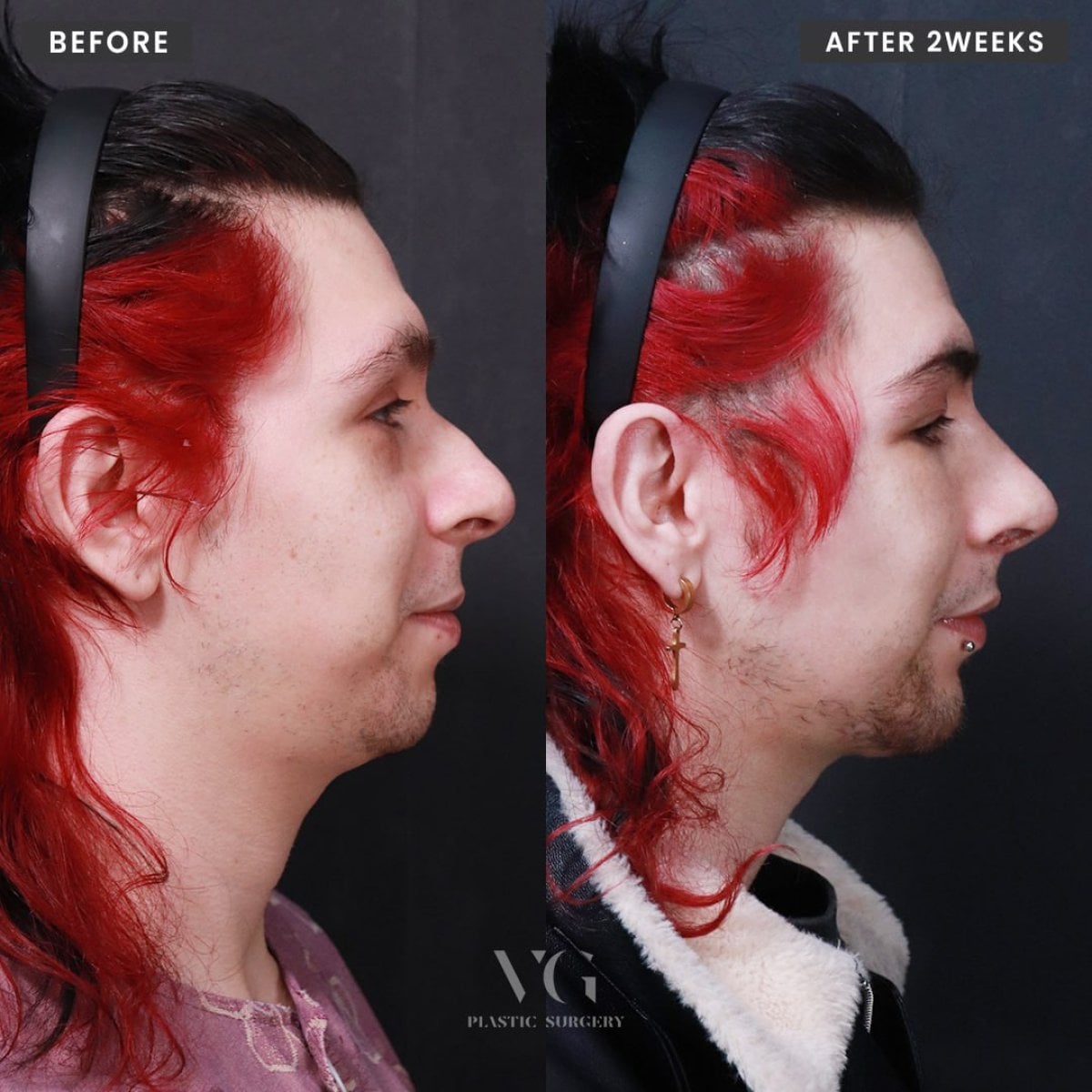
Compartir contenido
 Olena Sikoza
Preguntas frecuentes sobre Rinoplastia para hombres en Corea del Sur
¿Cuál es la diferencia entre la rinoplastia para hombres y la rinoplastia para mujeres en Corea?
La rinoplastia masculina en Corea se centra en crear un puente nasal recto y definido, con una punta angulada de 90 a 95 grados. En cambio, los diseños femeninos favorecen una línea suave y cóncava, con un ángulo de punta más pronunciado de 95 a 105 grados para lograr una apariencia delicada y menuda.
- Perfil del puente: Los hombres reciben implantes rectos y lineales, mientras que las mujeres prefieren contornos ligeramente curvados y femeninos.
- Soporte estructural: Los cirujanos utilizan un mayor refuerzo de cartílago para sostener la piel y los tejidos masculinos, que son más gruesos.
- Giro de la punta: Las puntas masculinas permanecen menos giradas para mantener la masculinidad, mientras que las puntas femeninas apuntan hacia arriba.
- Tiempo de recuperación: Los hombres experimentan períodos más prolongados de hinchazón debido al mayor grosor de la piel y a la manipulación estructural agresiva.
Opinión experta de Bookimed: Si bien muchas clínicas ofrecen paquetes estándar, los cirujanos líderes de Seúl, como los de la Clínica de Cirugía Plástica Wonjin, se especializan en grosores de implantes específicos para cada género. Nuestros datos muestran que los hombres suelen requerir injertos reforzados para evitar la caída de la punta mamaria, algo menos común en los procedimientos realizados en mujeres. Esta diferencia estructural, sumada al
¿Cuál es el periodo de recuperación y cuándo puedo volar a casa después de una rinoplastia masculina en Corea?
La mayoría de los hombres pueden regresar a casa entre 7 y 10 días después de una rinoplastia en Corea del Sur, una vez que los cirujanos retiran las férulas nasales y las suturas externas. Si bien la hinchazón inicial visible disminuye en dos semanas, los tejidos internos requieren de 6 a 12 meses para sanar por completo y alcanzar la estabilidad estructural definitiva.
- Recuperación inicial: Los hematomas e hinchazón más notables suelen alcanzar su punto máximo en las primeras 72 horas y desaparecen al cabo de 14 días.
- Seguridad en el vuelo: Los vuelos cortos son seguros después de 7 días; los vuelos largos requieren de 10 a 14 días.
- Reincorporación al trabajo: La mayoría de los pacientes retoman trabajos ligeros en los 10 días posteriores al procedimiento.
- Fase de recuperación: Aproximadamente el 80% de la hinchazón visible desaparece durante el primer mes posterior a la cirugía.
Opinión de los expertos de Bookimed: Los datos de las principales clínicas de Seúl, como el Centro de Cirugía Plástica JK, muestran un alto volumen de pacientes internacionales, que a menudo supera los 6000 al año. Los cirujanos suelen utilizar técnicas avanzadas que reducen los hematomas externos, pero los pacientes que han recibido un trasplante de costilla deben planificar una estancia de hasta 14 días para permitir que la zona donante se estabilice antes de
¿Cuáles son los problemas estructurales y estéticos más comunes que se tratan en las clínicas de rinoplastia coreanas para hombres?
La rinoplastia coreana para hombres se centra en crear un puente nasal recto y definido, así como una punta nasal definida, para mejorar el equilibrio de los rasgos faciales masculinos. Las clínicas se especializan en el perfil en forma de I, con un ángulo nasolabial de 90 a 95 grados, y corrigen puentes nasales bajos, puntas bulbosas y problemas funcionales como el tabique desviado mediante técnicas avanzadas y personalizadas.
- Aumento del puente nasal: Los implantes de silicona o Gore-Tex elevan los puentes nasales planos para crear una apariencia elegante en la zona T.
- Refinamiento de la punta: La eliminación del cartílago y la reducción de las alas remodelan las puntas bulbosas sin estrechar excesivamente la piel gruesa.
- Corrección funcional: Las cirugías especializadas de septoplastia y osteotomía corrigen las dificultades respiratorias y las anomalías estructurales internas.
- Injertos estructurales: El cartílago costal autólogo proporciona un soporte fiable para un estilo de vida activo y resultados de aspecto natural.
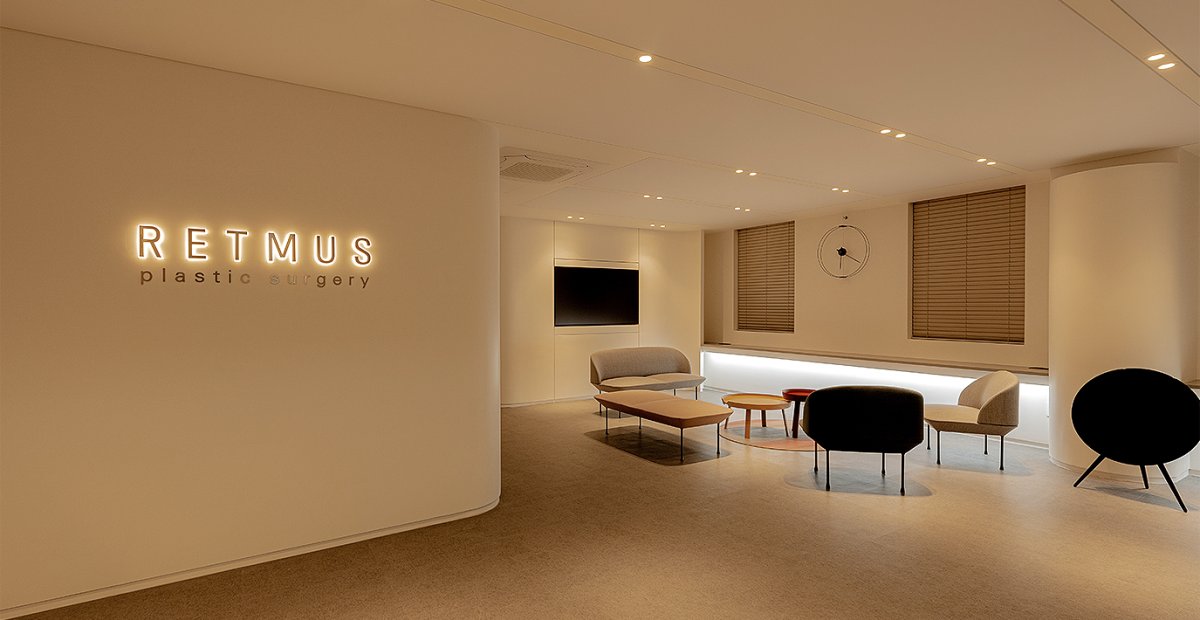
Opinión experta de Bookimed: Datos de 77 clínicas coreanas muestran una tendencia hacia el uso de técnicas patentadas, como el lifting de labios sin cicatrices en la Clínica de Cirugía Plástica Retmus. Este enfoque corrige el filtrum junto con la rinoplastia para lograr un pliegue nasolabial ideal. Cirujanos como el Dr.
¿Qué actividades o hábitos debo evitar durante mi período de recuperación?
Los pacientes que se recuperan de una rinoplastia masculina en Corea del Sur deben evitar la actividad física intensa, levantar pesas de más de 5 kg y sonarse la nariz durante al menos tres semanas. Evitar la nicotina, el alcohol y la presión en el rostro causada por gafas o sombreros pesados es fundamental para prevenir el desplazamiento del injerto, el aumento de la inflamación o la demora en la cicatrización en las clínicas de Seúl especializadas en tratamientos expertos.
- Ejercicio: Evite el ejercicio cardiovascular, levantar objetos pesados y agacharse durante 3 semanas para prevenir hemorragias.
- Presión en la cara: No utilice gafas ni gafas de sol durante 3 semanas para proteger el puente de la nariz.
- Traumatismo directo: Evite sonarse la nariz o inhalar; utilice aerosoles de solución salina para despejar las fosas nasales de forma segura.
- Restricciones en el estilo de vida: Evite fumar, vapear o consumir alcohol durante 1 mes para asegurar la circulación.
Opinión experta de Bookimed: Las clínicas líderes en Seúl, como el Centro de Cirugía Plástica JK, imponen una estricta prohibición de soju durante 30 días. Los principales centros coreanos señalan que el alcohol empeora significativamente los hematomas y prolonga la hinchazón entre 3 y 6 meses. La experiencia de cirujanos como el Dr. Lee Hyuk-jae demuestra que los pacientes que sig