Esofagectomía en España: las 6 mejores clínicas y sus precios


Revisado médicamente por
Fahad Mawlood
Cómo funciona
¿Cuál es el precio de Esofagectomía en España? Descubra ahora
De $26,000. Los precios varían según el hospital, la experiencia del cirujano, el enfoque (abierto, mínimamente invasivo o robótico) y la complejidad del caso. UU.
Los hospitales españoles suelen incluir la evaluación preoperatoria, la cirugía con anestesia, la estancia en UCI y hospitalaria, los suministros quirúrgicos estándar y la atención de seguimiento en el precio total. En EE. UU., el precio indicado suele cubrir solo los honorarios del cirujano y del hospital, mientras que la anestesia, la UCI y la atención postoperatoria se facturan por separado. Siempre confirmar exactamente qué está incluido en el precio cotizado en cada clínica.
| España | Turquía | México | |
|---|---|---|---|
| Esofagectomía | de $26,000 | de $12,000 | ≈ $22,000 |
Descubra las mejores clínicas de Esofagectomía en España: 6 opciones verificadas y Precios





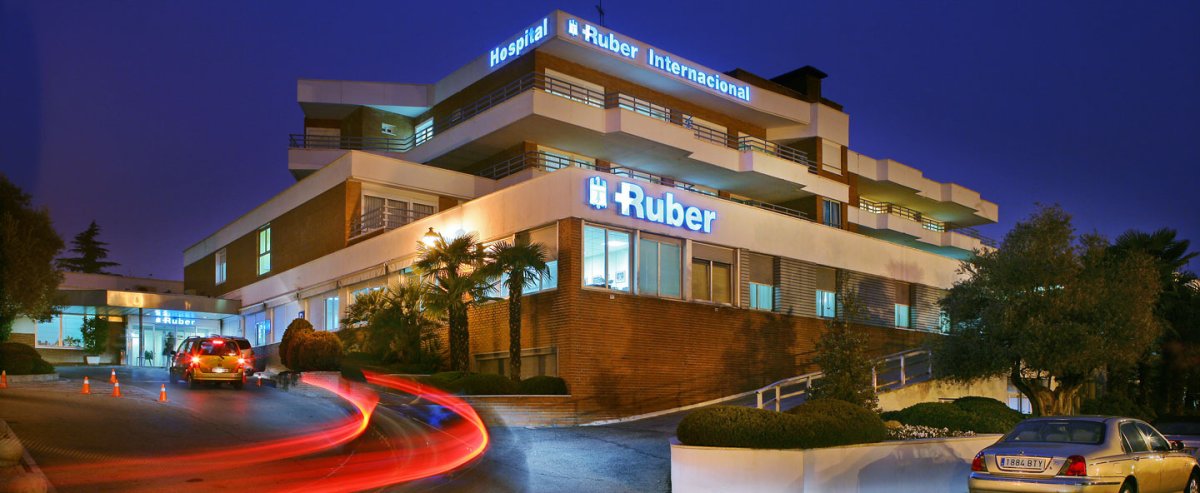


Hospital Sant Joan de Déu Barcelona










Descripción general de Esofagectomía en España
- Cirugía de cáncer de estómago - de $27,000Esta operación elimina los tumores de estómago, lo que ayuda a frenar la propagación del cáncer y aliviar los síntomas, lo que ayuda a la supervivencia y el bienestar general.
- Omentectomía - de $9,500La operación elimina la capa de grasa en el abdomen, conocida como epiplón, para tratar o prevenir enfermedades abdominales.
- Esofagectomía - de $26,000El procedimiento consiste en extirpar una parte del esófago para tratar diversas anomalías, lo que garantiza una mejor capacidad para tragar.
- Gastroectomia - de $18,300La operación extirpa todo o parte de su estómago para tratar enfermedades estomacales, mejorando su calidad de vida.
- Gastroectomia da vinci - de $19,000Esta cirugía, realizada de forma robótica, se enfoca en los problemas estomacales al extirpar partes o la totalidad del mismo, ofreciendo precisión y una recuperación rápida.
- Resección del esófago - de $22,000La operación consiste en retirar parte del tubo de alimentación para tratar enfermedades específicas, beneficiando la salud del paciente.
Día 1
- Llegada al país.
- Traslado a la clínica.
- Alojamiento en la clínica (si está disponible).
Dia 2
- Consulta inicial con un especialista.
- Someterse a las pruebas médicas necesarias.
- Discusión sobre el procedimiento y plan de operación.
Día 3
- Control de salud preoperatorio.
- Reunión con el anestesiólogo.
- Procedimientos adicionales si es necesario.
Día 4
- Día de la Esofaguectomía.
- Se administra anestesia general.
- La operación dura de 3 a 6 horas.
Día 5-14
- Atención postoperatoria en la clínica.
- Revisiones periódicas y seguimiento por parte del personal médico.
- El paciente permanece en la clínica durante unos 10 días.
Semana 2-6
- Inicio del proceso de rehabilitación.
- Ejercicios regulares para recuperar fuerza y movilidad.
- Consultas de seguimiento con el especialista.
Semana 7
- Regreso al trabajo, dependiendo del progreso de la recuperación.
- Regreso gradual a los deportes y otras actividades.
- El resultado final se puede ver en esta etapa.
Tenga en cuenta que esta es una guía general y cada caso puede variar.
- Depósito de Bookimed: 200 $ o 200 €.
- Depósito de la clínica: Pague un porcentaje fijo por adelantado.
Obtenga una evaluación médica para Esofagectomía en España: Elija su especialista entre los mejores en el campo
Ver todos los médicos
Miquel Sans Cuffí
El Dr. Sans Cuffí se especializa en trastornos complejos del sistema digestivo, con amplia experiencia en enfermedades inflamatorias intestinales y procedimientos de esofagectomía en el Centro Médico Teknon.
- Completó formación avanzada en la Case Western Reserve University en EE. UU.
- Autor de más de 150 publicaciones y más de 500 presentaciones en congresos
- Miembro de múltiples asociaciones de gastroenterología de prestigio
- Se centra en enfermedades inflamatorias intestinales e inflamación intestinal crónica
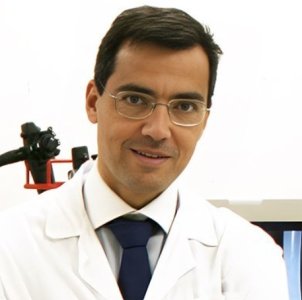
José Miguel Esteban Lopez-jamar
Pionero en ecografía endoscópica en España – El Dr. López-Jamar dirige la Unidad de Endoscopia Digestiva en el Hospital Ruber Internacional.
- 20 años de experiencia en endoscopia digestiva avanzada
- Especializado en tratamientos mínimamente invasivos para enfermedades gastrointestinales complejas
- Líder en estudios europeos multicéntricos sobre terapias endoscópicas
- Formado en instituciones de primer nivel, incluido el Academic Medical Center de Ámsterdam

Dr Sanchez Yague
Pionero en España en disección submucosa endoscópica: el Dr. Sánchez Yagüe introdujo esta técnica en Andalucía tras una formación especializada en Japón.
- _doctor_8312_años_ de experiencia en gastroenterología y técnicas endoscópicas avanzadas
- Primero en el mundo en utilizar el stent AXIOS de 15 mm para el drenaje de líquido pancreático
- Miembro del American College of Gastroenterology y de la American Society for Gastrointestinal Endoscopy
- Galardonado con la Medalla de Oro de la Sociedad Andaluza de Patología Digestiva
- Coautor de las guías de referencia de la European Society of Gastrointestinal Endoscopy

Sonia Peña
Historias en video de pacientes de Bookimed
Reseñas
Todas las reseñas


Compartir contenido
 Olena Sikoza
Datos сlave sobre Esofagectomía
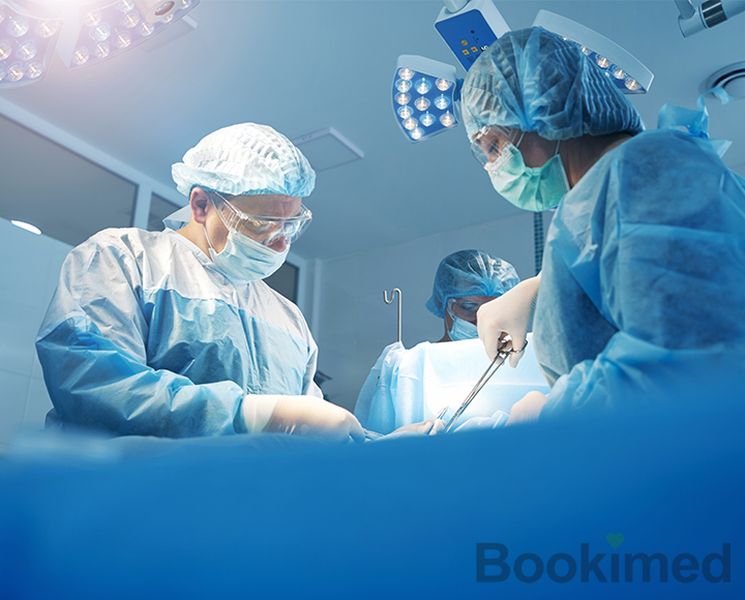
Esofagectomía
La esofagectomía es un procedimiento quirúrgico para extirpar una parte o la totalidad del esófago, a menudo utilizado para tratar el cáncer de esófago.
Preguntas frecuentes sobre Esofagectomía en España
¿Cuánto dura la estancia hospitalaria para una esofagectomía en España?
Una estancia hospitalaria para una esofagectomía en España suele durar entre 7 y 14 días. Los pacientes generalmente pasan los primeros 1 a 2 días en la unidad de cuidados intensivos para un seguimiento especializado antes de pasar a una sala quirúrgica durante el resto del período de recuperación.
- Cuidados intensivos: La mayoría de los pacientes pasan de 24 a 48 horas en la UCI para el control de los signos vitales.
- Sala quirúrgica: Después de la UCI, los pacientes permanecen de 7 a 10 días en una habitación privada.
- Mínimamente invasivo: Los enfoques laparoscópicos o robóticos a menudo conducen a estancias más cortas, de entre 7 y 9 días.
- Recuperación completa: Aunque la estancia hospitalaria es corta, la recuperación total suele requerir de 6 a 8 semanas.
Perspectiva del experto de Bookimed: Los datos de centros españoles líderes como la Clínica Universidad de Navarra y el Hospital Ruber Internacional destacan una tendencia hacia el alta más temprana. Los hospitales de gran volumen que realizan más de 20,000 cirugías al año suelen utilizar protocolos de recuperación mejorada. Estos sistemas priorizan la movilización temprana y el apoyo nutricional especializado para ayudar a los pacientes a regresar a casa en un plazo medio de 9 días.
Consenso de los pacientes: La mayoría de los pacientes se centran en la impo
¿Cuánto tiempo dura una cirugía de esofagectomía?
Una cirugía de esofagectomía suele durar de 6 a 8 horas de tiempo operativo activo. La duración varía según las técnicas quirúrgicas, como los enfoques mínimamente invasivos o abiertos. Los centros especializados en España, como el Centro Médico Teknon, utilizan sistemas robóticos avanzados Da Vinci Xi para optimizar la precisión quirúrgica.
- Duración del procedimiento: La mayoría de las cirugías duran de 6 a 8 horas según la complejidad del caso.
- Estancia hospitalaria: Los pacientes generalmente permanecen hospitalizados durante 12 días para seguimiento y recuperación.
- Impacto tecnológico: Las técnicas asistidas por robot pueden tomar de 3 a 6 horas en manos experimentadas.
- Tiempo de recuperación: El regreso al trabajo ocurre de 6 a 8 semanas después del procedimiento.
Perspectiva del experto de Bookimed: Aunque el tiempo de operación es significativo, la experiencia del cirujano en España es un diferenciador clave. Clínicas de primer nivel como el Hospital Ruber Internacional y el Hospital Universitario HM Madrid realizan miles de operaciones al año. Los datos muestran que los hospitales con gran volumen de pacientes y acreditación JCI suelen mantener mejores resultados en este procedimiento complejo.
Consenso de los pacientes: Los pacientes destacan que, si bien el día de la cirugía es largo, el verdadero desaf
¿Se extirpará todo mi esófago?
La esofagectomía en España rara vez implica la extirpación de todo el esófago a menos que los tumores se extiendan por toda su longitud. Los cirujanos suelen realizar una esofagectomía parcial, eliminando solo el segmento enfermo y el tejido circundante para garantizar márgenes claros mientras se preserva la mayor cantidad posible de órgano sano.
- Extensión quirúrgica: La eliminación varía desde 1/3 hasta la mayor parte del órgano según los márgenes del tumor.
- Métodos de reconstrucción: Los cirujanos suelen subir el estómago o el intestino para unir el esófago restante.
- Técnicas avanzadas: Centros españoles como el Hospital Ruber Internacional utilizan el robot Da Vinci Xi para mayor precisión.
- Apoyo a la recuperación: Las sondas de alimentación temporales son estándar a medida que los pacientes hacen la transición a comidas más pequeñas y frecuentes.
Perspectiva del experto de Bookimed: Los centros oncológicos españoles como la Clínica Universidad de Navarra mantienen resultados de primer nivel al integrar robótica de alto nivel con estándares de seguridad acreditados por la JCI. Si bien los procedimientos de Ivor Lewis son comunes, la elección entre enfoques transtorácicos y transhiatales a menudo depende del volumen quirúrgico específico del hospital.
Consenso de los pacientes: Muchos pacientes descubren que de
¿Cuáles son los efectos secundarios después de una esofagectomía?
Una esofagectomía suele causar fatiga a corto plazo, pérdida de apetito y molestias al tragar. Los efectos secundarios a largo plazo incluyen el síndrome de vaciamiento rápido (dumping syndrome), reflujo ácido crónico y pérdida de peso. Los pacientes a menudo requieren ajustes dietéticos permanentes y deben dormir en ángulo para evitar la aspiración y la regurgitación durante la recuperación.
- Síndrome de vaciamiento rápido: El movimiento rápido de los alimentos causa náuseas, mareos y debilidad poco después de comer.
- Formación de estenosis: El tejido cicatricial puede estrechar el esófago, lo que requiere dilatación endoscópica periódica.
- Gestión del reflujo: Es necesario dormir en un ángulo de 30 grados para evitar el reflujo biliar o ácido.
- Cambios dietéticos: Los pacientes deben consumir 6-8 comidas pequeñas evitando bebidas carbonatadas y alimentos difíciles de masticar.
Perspectiva del experto de Bookimed: Si bien la esofagectomía es compleja, España ofrece algunas de las instalaciones oncológicas mejor calificadas a nivel mundial. Centros como el Hospital Ruber Internacional y el Centro Médico Teknon están acreditados por la JCI y utilizan sistemas robóticos Da Vinci Xi. Estas tecnologías a menudo conducen a incisiones más pequeñas, lo que ayuda a reducir el dolor en el costado y el entumecimiento a largo plazo comunes en la cirug