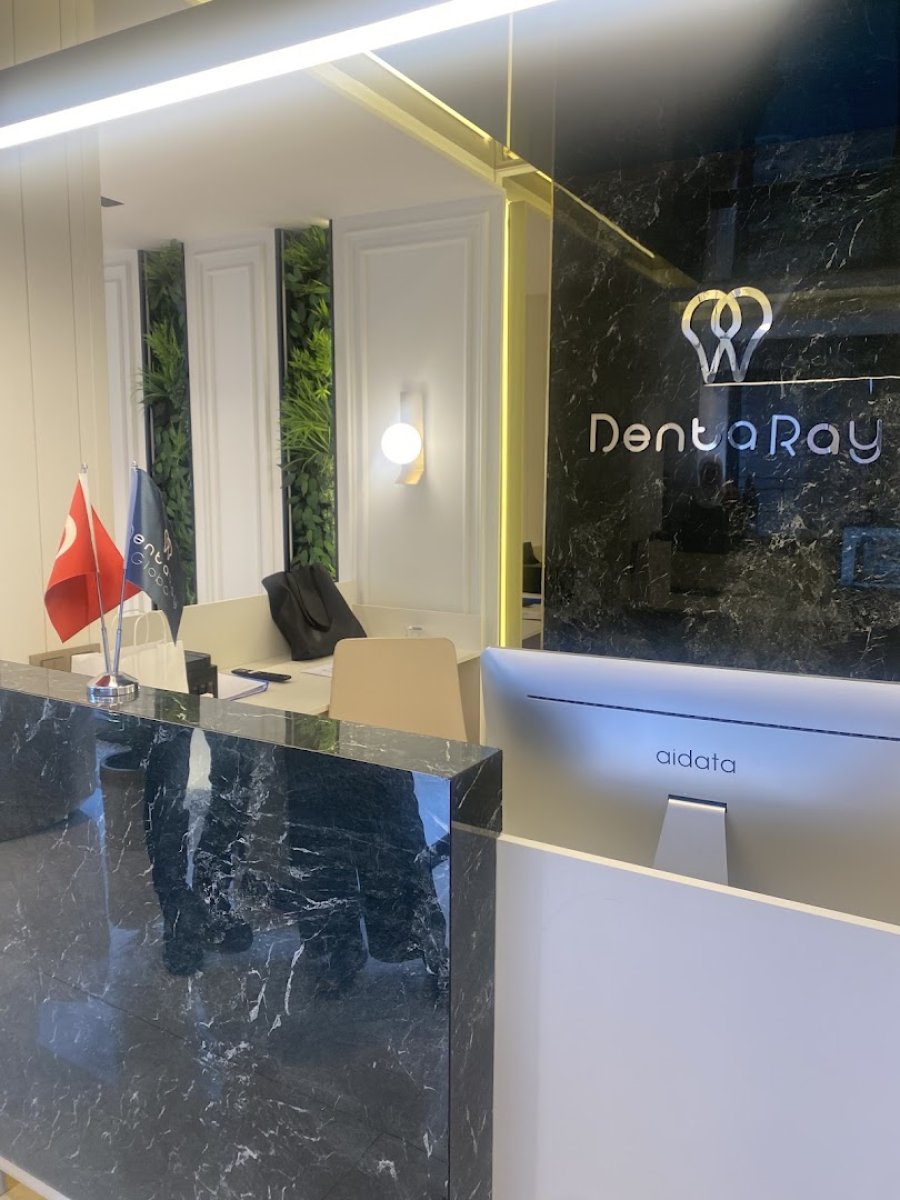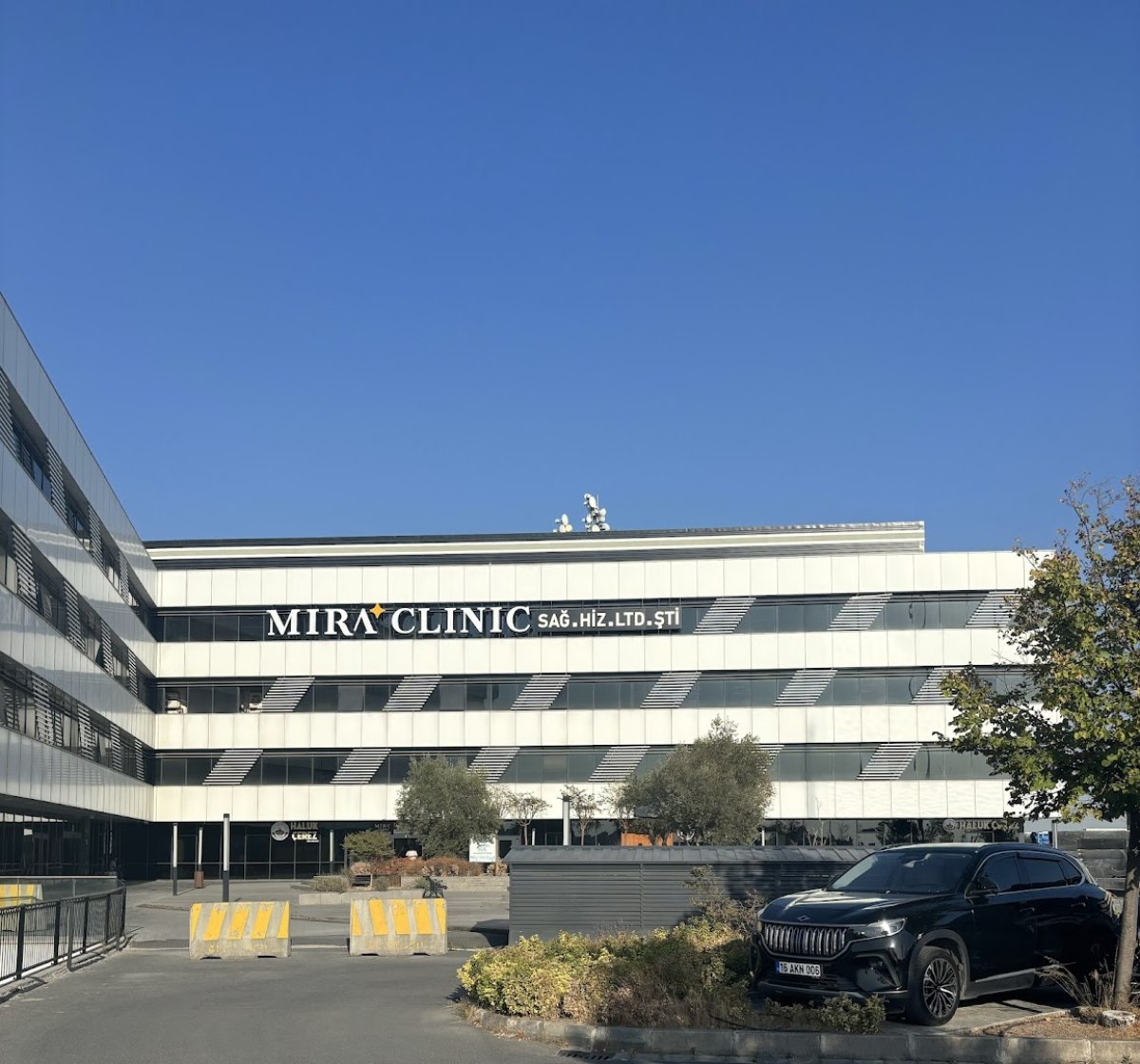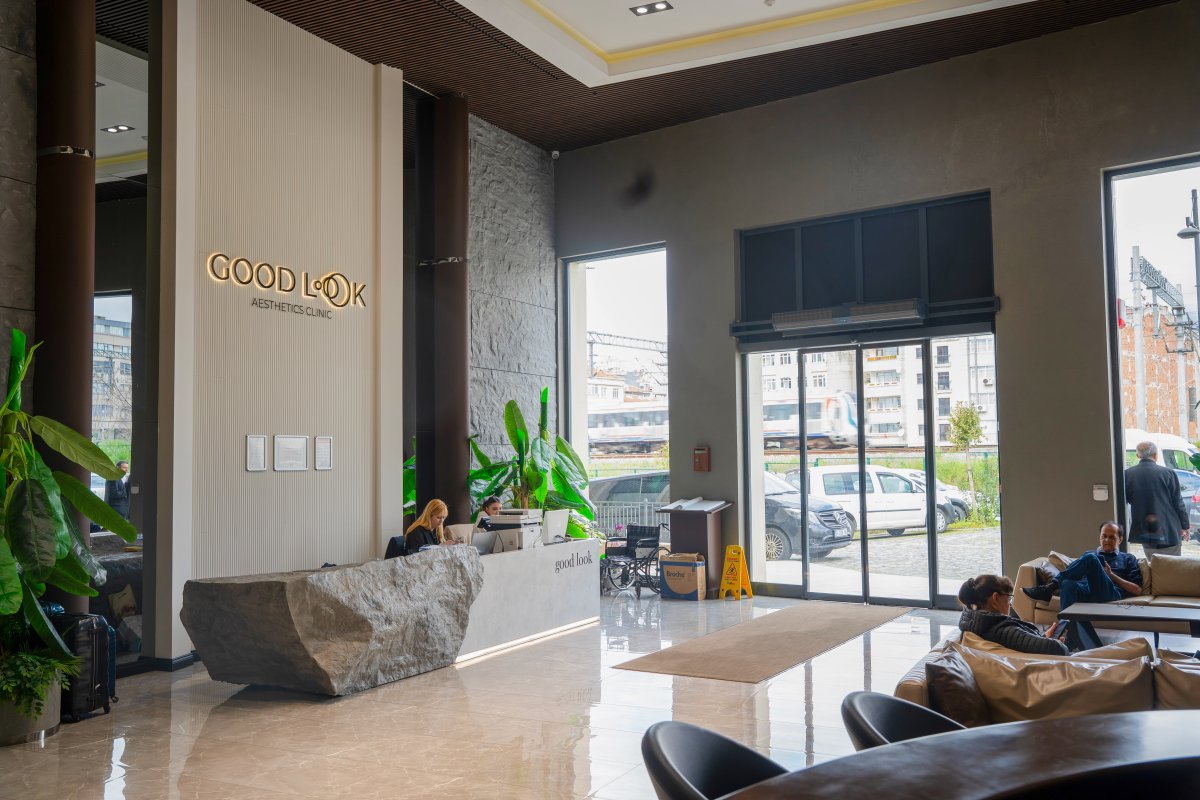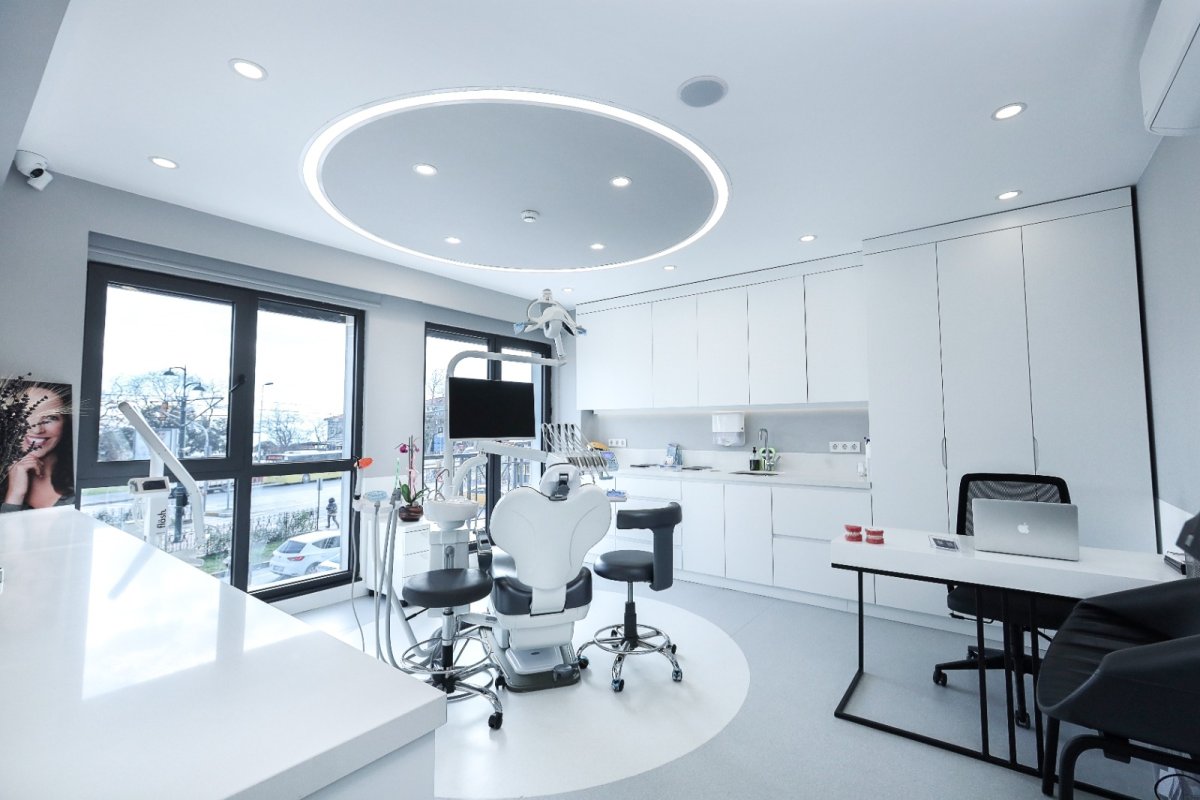
Clínica dental Dentavie (Istanbul Dentavie Dental Clinic)
Turquía, Estambul
Solo para niños y adolescentes (0-18 años)
Clínica certificada por : 




Revisado médicamente por
Fahad Mawlood
El costo de la genioplastia deslizante en Turquía suele oscilar entre $2,900 y $4,500. Los precios pueden variar según la clínica, la experiencia del cirujano y la complejidad de la remodelación del mentón (cantidad de movimiento óseo, necesidad de placas de fijación). En Estados Unidos, el costo promedio es de $9,000 (según ASPS). Esto significa que la genioplastia deslizante en Turquía cuesta aproximadamente un 59% menos que en EE. UU.
Las clínicas turcas suelen incluir exámenes preoperatorios, anestesia general, la cirugía en sí, materiales quirúrgicos (como placas y tornillos de titanio), una noche de hospital y visitas de seguimiento. En EE. UU., el precio cotizado a menudo solo cubre los honorarios del cirujano, mientras que la anestesia, la estancia hospitalaria y el material se facturan por separado. Siempre confirmar exactamente qué está incluido con la clínica elegida.
| Turquía | España | Estados Unidos | |
|---|---|---|---|
| Genioplastia de deslizamiento | de $2,900 | de $6,800 | ≈ $6,500 |



Día 1
Dia 2
Día 3
Día 4
Semana 1
Semana 2-3
Semana 4
Semana 6
Semana 8-12
Tenga en cuenta que el tiempo de recuperación de cada paciente puede variar según las circunstancias individuales y la complejidad de la cirugía. Siga siempre los consejos de su proveedor de atención médica.

El Dr. Murat Yaman es un experimentado cirujano plástico y estético. Es conocido por su experiencia en cirugías de abdominoplastia y el empleo de técnicas quirúrgicas avanzadas para obtener resultados óptimos. Ha realizado un número impresionante de diversas cirugías, incluyendo más de 1 500 operaciones de nariz y aumento de senos, 500 estiramientos faciales, 1 000 cirugías de lifting, y alrededor de 1 000 liposucciones utilizando la tecnología VASER lipo.
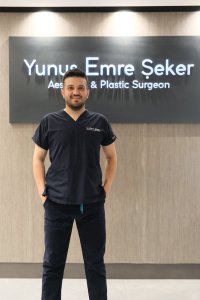
El Dr. Yunus Emre Şeker es cirujano plástico, reconstructivo y estético en Antalya. Se graduó en la Facultad de Medicina de la Universidad de Ankara. Completó la residencia en el Hospital Universitario de Akdeniz. Se formó con el Prof. Ömer Özkan. Fue miembro activo del equipo en cirugías de trasplante de útero y de trasplante bilateral de brazos.
En 2023 obtuvo el segundo lugar (rama clínica) en el Concurso de Investigación de la Sociedad Turca de Cirugía Plástica, Reconstructiva y Es

El doctor se graduó de la Escuela de Medicina, GATA, y completó su residencia en la Universidad Dokuz Eylul de İzmir. Especializado en cirugía plástica reconstructiva estética, el doctor ha realizado más de 12,000 cirugías para más de 5,000 pacientes a nivel mundial. Las áreas de especialización incluyen cirugía craneofacial, cirugía de mano, procedimientos microquirúrgicos y diversas cirugías estéticas como rinoplastia, estética mamaria y abdominoplastia.<\/p>
El doctor es compet
El Dr. Melikgazi Ozturk es especialista en Cirugía Plástica, Reconstructiva y Estética. Actualmente trabaja en el Hospital Memorial Şişli. Ha sido especialista en varios hospitales destacados, como el Hospital de Formación e Investigación Şişli Hamidiye Etfal, el Hospital Estatal de Afyonkarahisar, el Hospital Estatal Düzce Atatürk y el Hospital de Formación e Investigación de la Ciudad de Kayseri.
El Dr. Ozturk realizó su formación de especialista en la Facultad de Medicina de la Uni





 Olena Sikoza
Un mentón equilibrado define toda la parte inferior del rostro, por lo que la decisión detrás de esto merece algo más que un simple precio. Este artículo aborda cuatro puntos clave: elegir la operación frente a un implante rápido, cuánto cambia realmente tu perfil, cómo gestionan los cirujanos los riesgos y cómo evaluar a tu cirujano.
Ambas opciones pueden definir un mentón poco pronunciado, pero funcionan de maneras muy distintas. Un implante de mentón de silicona es la operación más rápida. Una genioplastia de deslizamiento en Turquía reposiciona tu propio hueso mandibular vivo y lo fija en su lugar. La nueva forma se convierte en una parte permanente de tu esqueleto, según la Cleveland Clinic. No es un objeto independiente que descansa sobre el hueso.
| Genioplastia de deslizamiento | Implante de mentón | |
|---|---|---|
| Material | Tu propio hueso mandibular vivo | Silicona sintética |
| Riesgo de reabsorción ósea | Evitado (usa tu propio hueso) | Posible con los años debido a la presión |
| Direcciones de corrección | Adelante, atrás, arriba, abajo, lateralmente | Solo proyección hacia adelante |
| Ideal para | Hueso mandibular subdesarrollado, asimetría, cambio vertical | Mentón con falta de proyección |
| Precio aprox. en Turquía | alrededor de $2,000–$5,300 | alrededor de $2,700 |
El material es lo que importa a largo plazo. Un implante sintético se coloca contra el hueso mandibular bajo presión constante. Con el paso de los años, esto puede causar reabsorción ósea, una erosión lenta del hueso subyacente. El resultado puede ser un contorno hundido. La genioplastia mueve tu propio hueso, por lo que evita este problema.
También existe una diferencia en versatilidad. Un implante solo puede proyectar el mentón hacia adelante. El reposicionamiento óseo permite al cirujano mover el mentón en cualquier dirección, según la Cleveland Clinic. Una sola operación puede corregir la proyección, la altura vertical y la asimetría al mismo tiempo.
Entonces, ¿qué es lo mejor para ti? La genioplastia es la opción más adecuada para un hueso mandibular subdesarrollado, un mentón desigual o un cambio multidireccional. Un implante es razonable cuando el mentón simplemente no tiene suficiente proyección. En Turquía, un implante de mentón cuesta alrededor de $2,700. Una genioplastia de deslizamiento cuesta aproximadamente entre $2,000 y $5,300, según datos de Bookimed. Esto es aproximadamente un 60% menos que el rango en EE. UU. de $8,000 a $16,000. Puedes comparar cirujanos de genioplastia turcos verificados antes de decidir.
Es natural asumir que avanzar el hueso 5 mm moverá tu perfil 5 mm. El resultado visible es un poco más sutil. Algunas situaciones médicas también requieren una pausa.
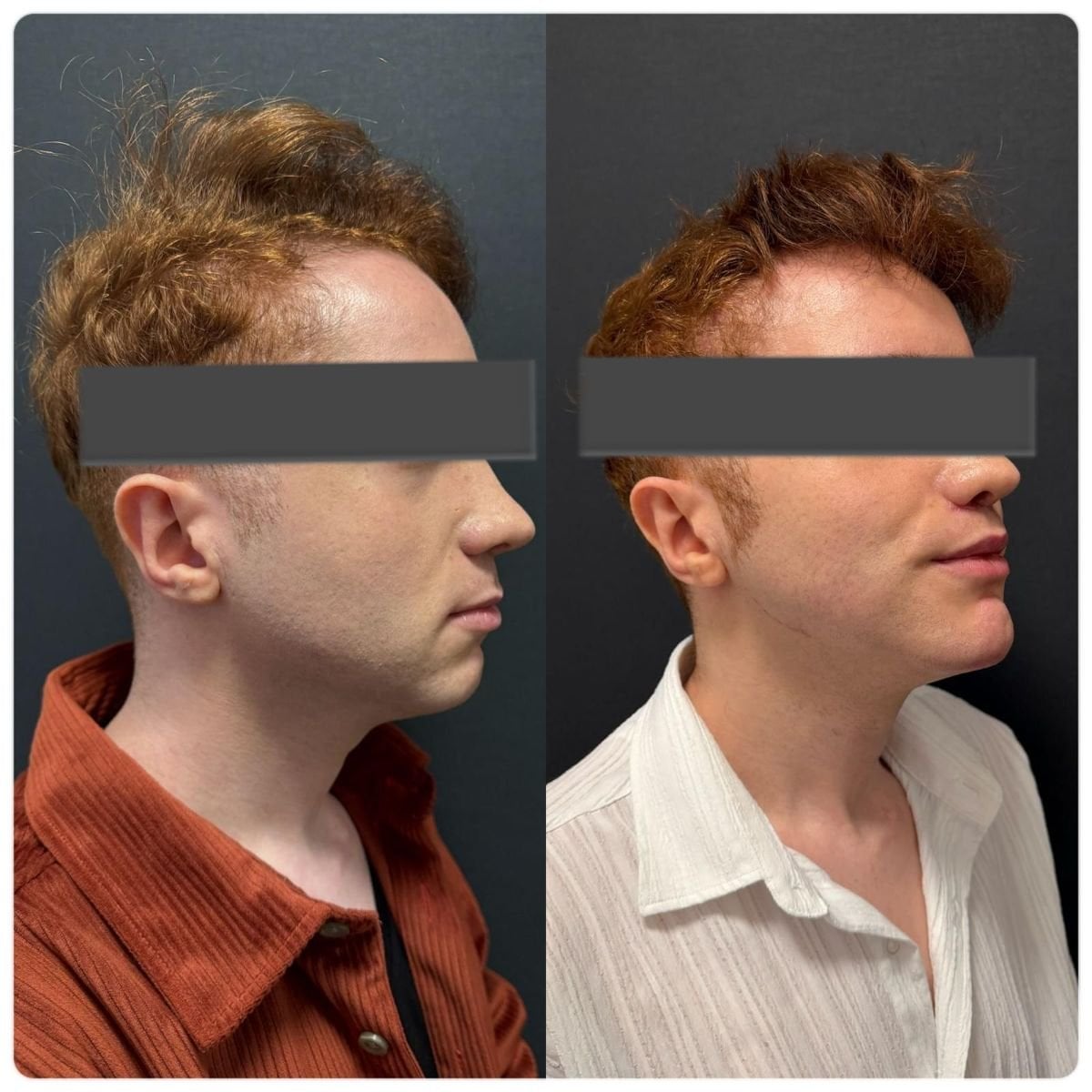
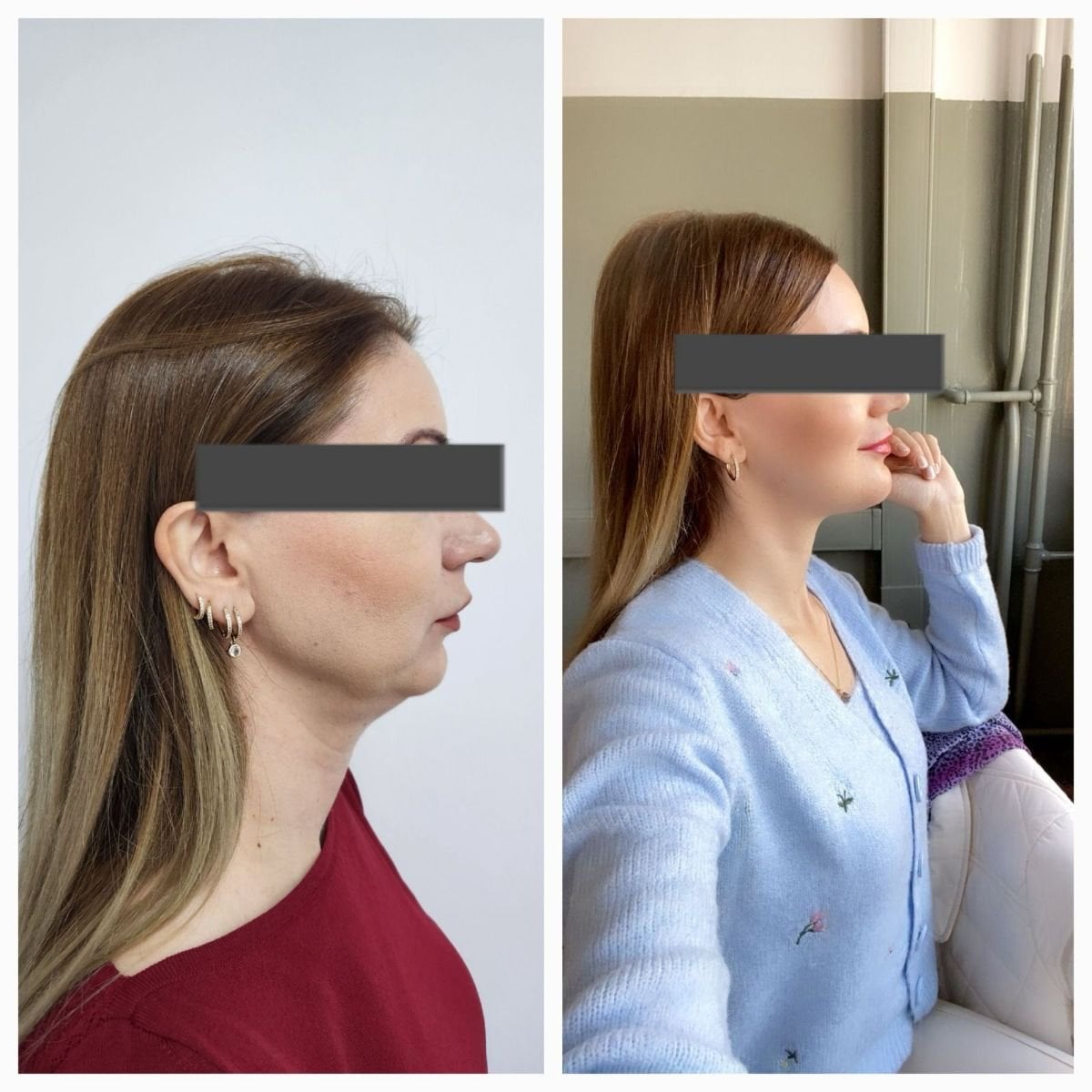
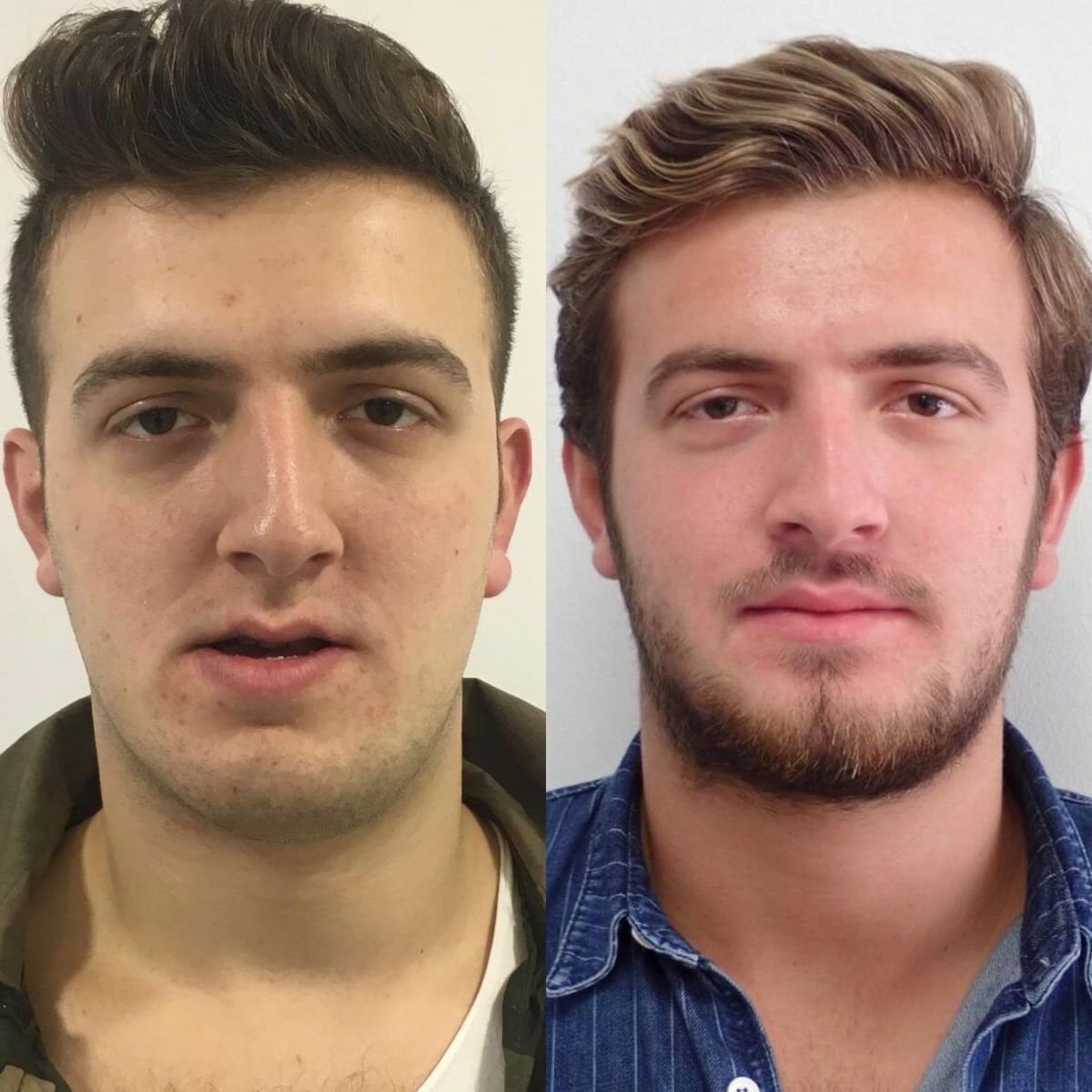
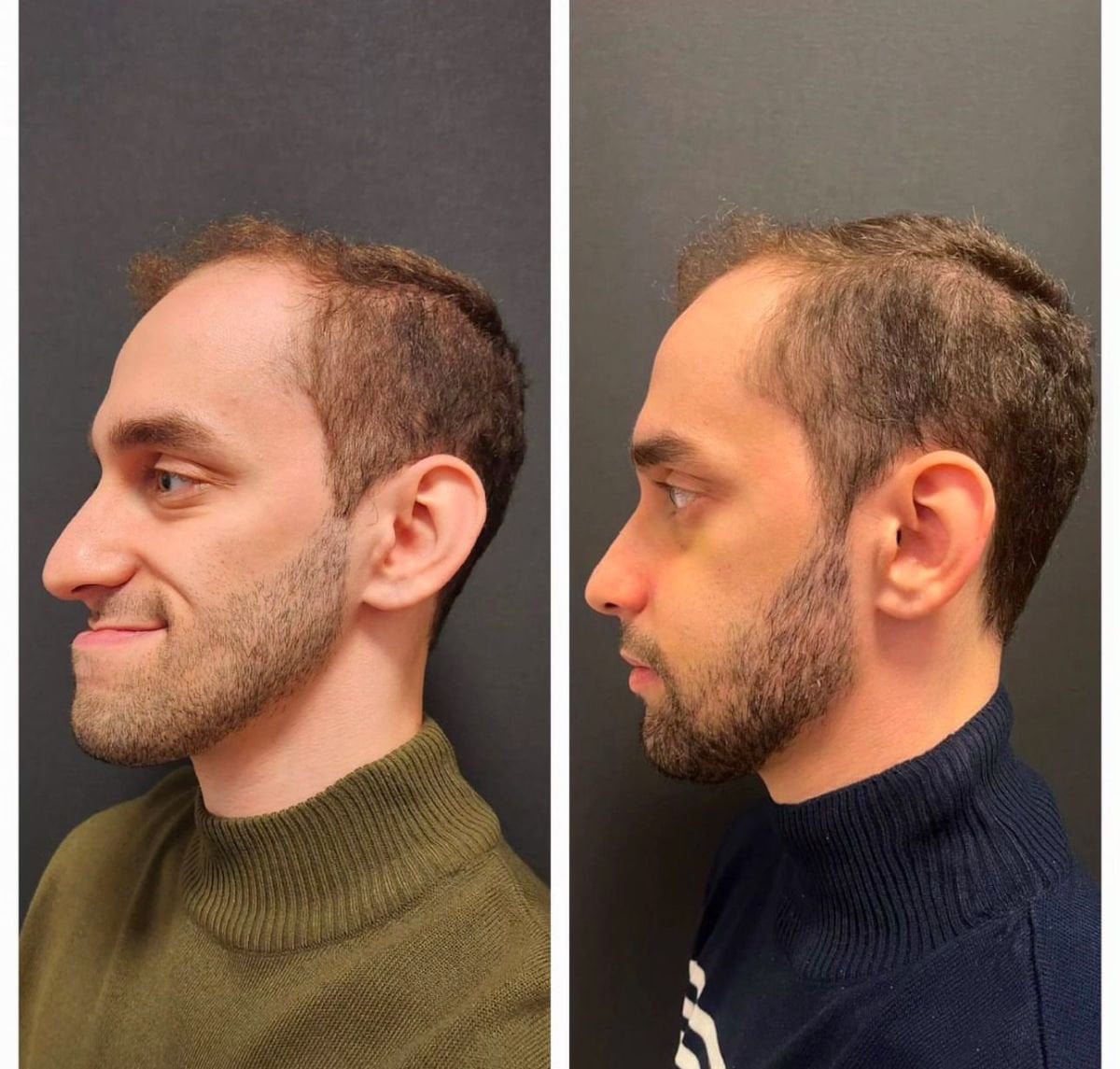
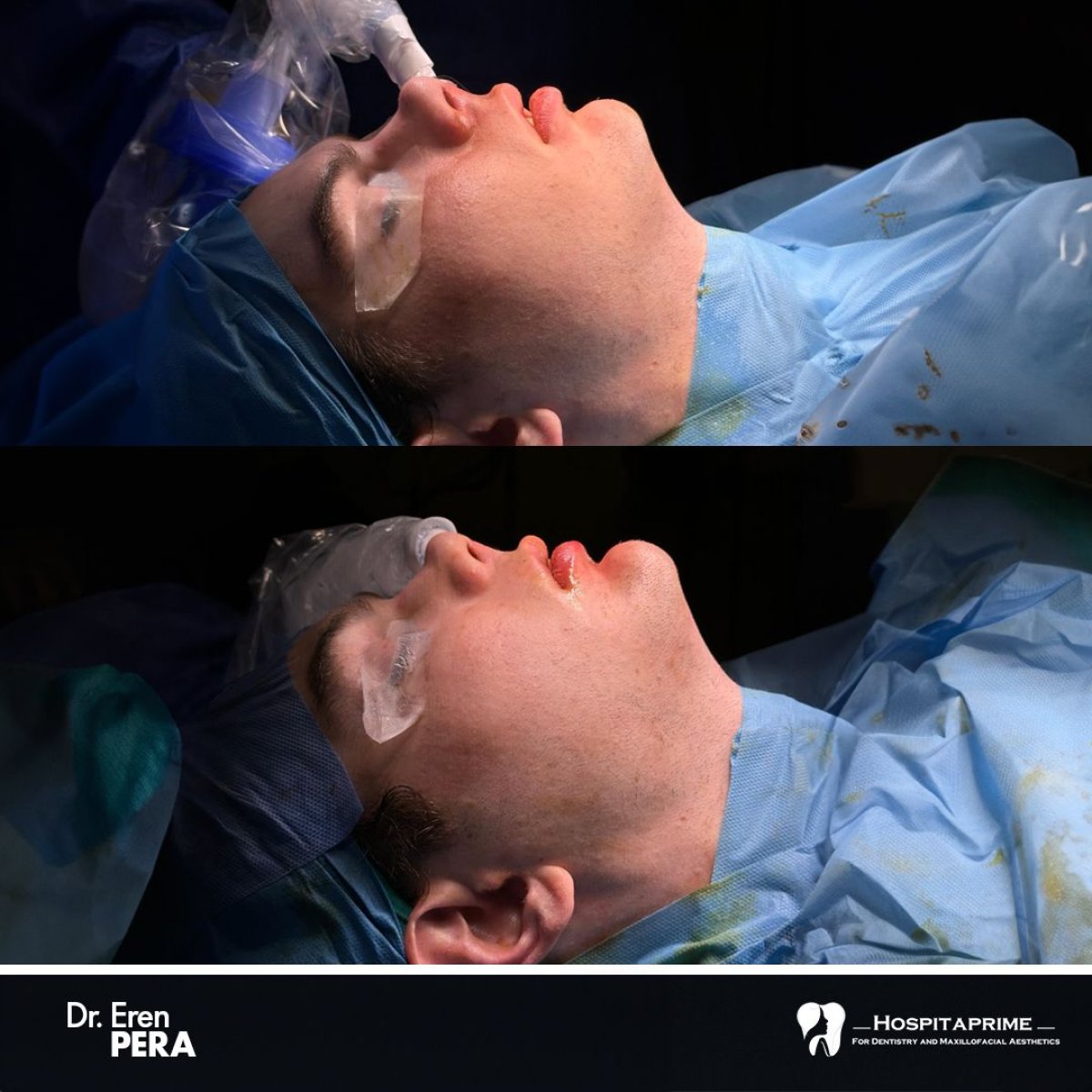
Tu piel y músculo no siguen al hueso exactamente. Se desplazan en una relación de tejido blando a duro de aproximadamente 1:0.89. Por lo tanto, un avance óseo de 10 mm se traduce en aproximadamente 8.9 mm de cambio visible, según un estudio clínico. Un buen cirujano incorpora esta relación en el plan. El tejido blando sobre el mentón también se adelgaza unos 0.90 mm en promedio. Eso se traduce en un contorno más esculpido y definido.
El resultado que ves al principio se mantiene en gran medida. Con la fijación de titanio, el hueso retrocede aproximadamente un 10% (menos de 1 mm) durante los primeros seis meses. El mentón que ves en la recuperación es muy parecido al que conservarás.
Esta es una cirugía ósea, por lo que la mandíbula debe estar completamente desarrollada primero. Eso generalmente significa a partir de los 16 años para mujeres y 18 años para hombres. Los pacientes más jóvenes deben pedir al cirujano que confirme que el crecimiento ha finalizado. Algunos factores de salud también afectan la curación ósea. Menciónalos en tu consulta virtual:
Ninguno de estos es automáticamente un impedimento. Son razones para discutir los tiempos y la preparación con tu cirujano. La demanda es constante. En un periodo típico de 90 días, Bookimed coordina entre 30 y 40 solicitudes de genioplastia de deslizamiento, la mayoría de EE. UU., Canadá y el Reino Unido.
Toda operación conlleva riesgos, y la cirugía ósea de mentón no es una excepción. Lo tranquilizador es que los riesgos principales están bien comprendidos y son en gran medida prevenibles. Saber qué preguntar convierte una preocupación en una lista de verificación sencilla.
El nervio mentoniano proporciona sensibilidad al labio inferior y al mentón, y atraviesa la mandíbula. Algo de entumecimiento u hormigueo temporal es parte normal de la recuperación. Suele desaparecer en un plazo de 3 a 12 meses. Un cambio permanente es raro y prevenible. Más del 99% de los pacientes en datos quirúrgicos publicados conservan la sensibilidad total de forma permanente. Pregunta si el cirujano utiliza mapeo CT de haz cónico 3D. El corte óseo debe mantenerse al menos a 6 mm del canal nervioso.
Para llegar al hueso del mentón, el cirujano libera temporalmente el músculo mentoniano. Volver a unirlo correctamente durante el cierre evita un mentón caído, a veces llamado "mentón de bruja". Pregunta si la resuspensión del músculo mentoniano es una parte estándar del protocolo de cierre del cirujano.
El corte óseo horizontal debe situarse al menos a 5 mm por debajo de las raíces de tus dientes frontales inferiores. Ese margen mantiene las raíces seguras. Confirma que se incluyan radiografías panorámicas preoperatorias o imágenes 3D para mapear la profundidad de tus raíces. Clínicas como el Hospital Memorial Şişli combinan estas imágenes con quirófanos de grado hospitalario.
Las placas y tornillos de titanio que sujetan el hueso son biocompatibles y están destinados a permanecer. En el 97–99% de los casos, el hardware de titanio no causa ninguna sensación notable ni sensibilidad a la temperatura. Puede retirarse electivamente una vez que el hueso se haya fusionado completamente, típicamente 12+ meses después. Pregunta a la clínica sobre su política de retirada de hardware de antemano. Una lista de verificación rápida:
¿Ya tienes un mentón caído debido a un implante o reducción previa? Este es un problema solucionable, no un callejón sin salida. Un músculo desprendido se corrige con la resuspensión mentoniana. El cirujano elimina cualquier exceso de tejido a través de una pequeña incisión debajo del mentón. Un cirujano con experiencia en genioplastia primaria puede planificar esa revisión.
El factor más importante en tu resultado es quién opera y dónde. Algunas comprobaciones específicas separan a un especialista maxilofacial genuino de un "médico estético" genérico. Cada una es fácil de realizar antes de comprometerte.
Para la cirugía de mentón con corte óseo, busca un Doctorado en Cirugía Oral y Maxilofacial o certificación EBOPRAS. EBOPRAS es el Consejo Europeo de Cirugía Plástica, Reconstructiva y Estética. La membresía activa en una asociación de cirugía maxilofacial también cuenta. Puedes revisar las calificaciones enumeradas para clínicas de cirugía maxilofacial acreditadas en Turquía antes de reservar.
Los cirujanos asociados de Bookimed cumplen con estos estándares. El Dr. Abdulsamet Kundakcioglu tiene un doctorado en Cirugía Oral y Maxilofacial de la Universidad de Estambul y se centra en la cirugía ortognática. El Dr. Emrah Dilaver es miembro de la sociedad turca de cirugía maxilofacial con investigaciones publicadas sobre osteotomía mandibular.
La experiencia se mide mejor por el volumen de casos, no solo por los años. Un cirujano cómodo con este procedimiento suele haber realizado más de 50 a 100 de ellos. En los estudios de complicaciones publicados, las tasas generales de complicaciones de la genioplastia se agrupan en el rango de un solo dígito a dos dígitos bajos. Los centros de mayor volumen tienden a reportar mejores resultados, según un estudio clínico. Así que busca un cirujano que realice este procedimiento de forma rutinaria en lugar de ocasionalmente.
Confirma el entorno operativo y asegúrate exactamente de quién te trata. Las clínicas con las que trabaja Bookimed para este cuidado están calificadas con 4.5 a 5.0 por los pacientes. Incluyen hospitales acreditados por JCI o ISO como Memorial Bahçelievler y Anadolu Medical Center. Otros, como Soraca Med, poseen el Certificado de Autorización de Turismo de Salud del gobierno. Revisa esto antes de firmar:
Una línea más que vale la pena comprobar. Los pacientes internacionales en Turquía ahora cuentan con un seguro de complicaciones obligatorio para complicaciones reconocidas, por hasta seis meses después de la cirugía. Pregunta si tu presupuesto ya lo incluye.
La genioplastia deslizante en Turquía es segura cuando la realizan cirujanos orales y maxilofaciales certificados por la junta en hospitales acreditados por JCI, como Memorial Şişli. Se mantienen altos estándares de seguridad a través de la planificación quirúrgica con TC 3D y materiales de fijación de titanio de primera calidad, como Straumann, asegurando estabilidad estructural y precisión estética.
Perspectiva del Experto Bookimed: Si bien muchas clínicas estéticas ofrecen cirugía de mentón, la seguridad para procedimientos óseos como la genioplastia deslizante aumenta significativamente en los hospitales multidisciplinarios. Centros como Memorial Bahçelievler proporcionan departamentos de emergencia in situ y unidades de radiología especializadas que las clínicas boutique más pequeñas a menudo
Los riesgos de la genioplastia deslizante incluyen cambios temporales en la sensación nerviosa, infección en la incisión intraoral y asimetría ósea menor. La mayoría de los pacientes experimenta entumecimiento del labio inferior que se resuelve en 3 a 6 meses, mientras que la pérdida sensorial permanente ocurre en aproximadamente el 5% de los casos a nivel mundial.
Opinión Experta de Bookimed: Aunque muchos eligen cirujanos plásticos generales, los datos muestran resultados superiores en centros especializados de cirugía maxilofacial como Dentavie Estambul. Los cirujanos allí, como el Dr. Abdulsamet Kundakcioglu, poseen doctorados específicamente en cirugía de mandíbula. Esta especialización es vital porque la genioplastia deslizante requiere cortes óseos (osteotomía) precisos cerca de las raíces dentales, una habilidad más común en especialistas maxilofaciales qu
La recuperación después de una genioplastia deslizante en Turquía típicamente toma de 10 a 14 días para que la hinchazón visible disminuya lo suficiente para viajar. Aunque la consolidación ósea requiere de 3 a 6 meses para una estabilidad completa, la mayoría de los pacientes retoman el trabajo de oficina dentro de 7 a 10 días posteriores a la operación.
Perspectiva Experta de Bookimed: Datos de centros importantes en Estambul como Memorial Şişli muestran un patrón específico de recuperación. Los pacientes a menudo ven una reducción del 50% de la hinchazón para el día 5. Esta rápida recuperación visible se apoya frecuentemente en kits postoperatorios especializados proporcionados por clínicas turcas. Estos kits suelen incluir soluciones específicas que ayudan a manejar las incisiones orales internas de manera más efectiva que el cuidado estándar en casa.<
La mentoplastia deslizante involucra cortar y reposicionar quirúrgicamente el hueso natural del mentón, mientras que un implante de mentón añade material sintético como la silicona sobre el hueso. La genioplastia ofrece cambios estructurales permanentes en altura y anchura, mientras que los implantes proporcionan principalmente proyección horizontal y pueden eventualmente desplazarse o causar erosión ósea.
Opinión Experta de Bookimed: Aunque los implantes ofrecen una recuperación más rápida de 2 semanas, los datos de centros especializados turcos como Ata Health Center sugieren que la genioplastia deslizante es la opción superior para proyección de más de 6 mm. Los cirujanos maxilofaciales de alto volumen suelen utilizar planificación 3D para garantizar la preservación natural de los nervios, lo que justifica una estancia más larga de 10 días en Turquía.
Un candidato adecuado para genioplastia deslizante suele ser un adulto con un mentón retraído, protuberante o asimétrico que requiere corrección funcional o estructural. Los pacientes ideales deben haber alcanzado la madurez esquelética completa y poseer suficiente densidad ósea para el reposicionamiento a través de técnicas de osteotomía ósea.
Perspectiva Experta de Bookimed: Datos de centros maxilofaciales turcos como Dentavie Estambul muestran que especialistas como el Dr. Abdulsamet Kundakcioglu priorizan a candidatos que necesitan alargamiento vertical. Mientras que los implantes solo añaden proyección, la genioplastia deslizante permite un movimiento de 5 mm o más que el ha
Todo el contenido médico de esta página está elaborado por autores con formación médica especializada y revisado por médicos certificados en el campo correspondiente. Revisión médica por Fahad Mawlood, Editor médico y Científico de datos.
Última actualización: 10/23/2026.
Todos los datos se proporcionan sólo con fines informativos generales y pueden no reflejar resultados o experiencias individuales.