
Fuda Cancer Hospital
China, Cantón


Revisado médicamente por
Fahad Mawlood
De $250. Las opciones de tratamiento primario como la quimioterapia para el cáncer de mama cuestan entre $14,800 y $31,000, mientras que la radioterapia para el cáncer colorrectal varía de $11,500 a $27,500. Los gastos totales dependen del enfoque quirúrgico y del nivel del hospital, ofreciendo ahorros del 50-70% en comparación con los EE. UU. Los principales centros de tratamiento incluyen Pekín, Shanghái y Cantón.
Costos típicos del tratamiento del cáncer de hígado en etapa 2 en China
Perspectiva de los expertos de Bookimed: Los pacientes que buscan alternativas avanzadas a la quimioterapia tradicional deberían considerar centros especializados en Cantón. El Fuda Cancer Hospital es una instalación acreditada por la JCI que ofrece tecnologías mínimamente invasivas únicas como NanoKnife y criocirugía. Esta clínica ha tratado a más de 30,000 pacientes internacionales, especializándose en casos de etapas avanzadas. Para aquellos que requieren atención integral, expertos como Liuying brindan experiencia especializada en ablación térmica para tumores hepáticos.
| China | España | Turquía | |
|---|---|---|---|
| Radioterapia para el cáncer colorrectal | ≈ $11,500 | de $7,500 | de $5,000 |
| Quimioterapia para el cáncer de mama | ≈ $14,800 | de $1,700 | de $3,000 |
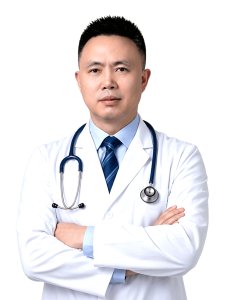
Médico jefe y profesor. Experto de nivel 1 en el Centro Oncológico del West China Hospital, Sichuan University (clasificado n.º 2 en China). Completó un posdoctorado en radiología intervencionista en el Chinese PLA General Hospital. Dirige equipos multidisciplinarios (MDT) para tumores complejos. Experto en oncología intervencionista mínimamente invasiva para cánceres de hígado, pulmón y páncreas.
Acreditaciones: Miembro del consejo, WATA. Miembro de los comités de CACA y CMDA sobre in

El profesor Luo Xiaoping es un radiólogo intervencionista reconocido a nivel nacional y una autoridad destacada en el oeste de China. Comenzó a realizar intervenciones vasculares pioneras a principios de la década de 1990. Ayudó a fundar el Grupo de Intervencionismo del Segundo Hospital Afiliado de la Universidad Médica de Chongqing.
Ha realizado más de 100 000 procedimientos intervencionistas, incluidos unos 4 000 casos complejos. Sus competencias clave incluyen TACE para el carcinoma

El Dr. He Weibing es pionero de la crioablación con argón‑helio en China, con más de 20 años de práctica en primera línea. Fue miembro fundador del Hospital Oncológico Fuda (Guangzhou). Cofundó su Centro de Tratamiento Tumoral Mínimamente Invasivo y fue subdirector ejecutivo. También ayudó a crear el Grupo de Ablación de la Asociación China contra el Cáncer. Ha sido operador principal en más de 10.000 procedimientos.
Se especializa en crioablación tumoral y domina la braquiterapia con

El profesor Xiao Yueyong es médico jefe del Departamento de Radiodiagnóstico del Hospital General del EPL de China. Es un experto líder en oncología intervencionista mínimamente invasiva. Es el primer presidente de WATA (2025–). Preside la Sociedad Internacional (2020–) y la Sociedad Asiática (2012–) de Crioterapia. También es subjefe del Grupo de Expertos de la NHC sobre regulaciones de ablación tumoral (2009–).
Ha realizado más de 100 000 procedimientos mínimamente invasivos guiados
 Olena Sikoza
El sistema de cáncer de hígado de China (CNLC) define el estadio 2 como un nivel intermedio de cáncer de hígado. Requiere una función hepática preservada (Child-Pugh A o B). La enfermedad debe permanecer localizada en el hígado. No hay propagación a vasos principales, ganglios linfáticos u órganos distantes.
Perspectiva del experto de Bookimed: Los centros oncológicos chinos a menudo priorizan la resecabilidad clínica sobre las etiquetas de estadificación TNM tradicionales. Por ejemplo, el Dr. Liuying en el Hospital Jinshazhou gestiona casos donde la función hepática afecta el plan más que el tamaño del tumor. El Hospital Fuda Cancer trata con éxito casos de estadio 2 utilizando criocirugía mínimamente invasiva. Este enfoque ayuda a los pacientes que no pueden tolerar la quimioterapia estándar o una resección mayor.
Consenso de los pacientes: Los pacientes señalan que las etiquetas de estadificación en China pueden cambiar después de la cirugía o la biopsia.
La cirugía es una opción curativa primaria para el cáncer de hígado en estadio 2 en China. Las directrices nacionales priorizan la resección quirúrgica o el trasplante para tumores localizados. Los especialistas chinos utilizan el sistema de estadificación del cáncer de hígado de China para determinar la operabilidad. El éxito depende de la función hepática y la ubicación del tumor después de escaneos exhaustivos.
Perspectiva de expertos de Bookimed: Los centros oncológicos chinos a menudo aplican criterios quirúrgicos más agresivos que los hospitales occidentales. Algunas instalaciones se especializan en el tratamiento de cáncer en etapa avanzada para más de 30 000 pacientes internacionales. Estos centros combinan regularmente la resección con tecnologías especializadas como la terapia intervencionista vascular. Este enfoque permite a los cirujanos operar tumores que antes se consideraban demasiado arriesgados o
China combina la inmunoterapia con tratamientos localizados integrando inhibidores de puntos de control con procedimientos como TACE, criocirugía o NanoKnife. Esta estrategia multimodal convierte los tumores inmunorreactivos en tumores «calientes» para aumentar las tasas de respuesta. Los centros utilizan frecuentemente la infusión arterial hepática y la ablación para desencadenar respuestas antitumorales sistémicas mediante la liberación de antígenos.
Perspectiva del experto de Bookimed: Un patrón distintivo en China es el uso agresivo de estrategias de reducción de estadio (downstaging) para el cáncer de hígado en estadio 2. Clínicas como el Fuda Cancer Hospital utilizan instalaciones acreditadas por la JCI para combinar terapia intervencionista vascular especializa
La medicina tradicional china no puede curar el cáncer de hígado en estadio 2 por sí sola. Se requieren intervenciones modernas como la resección quirúrgica o la ablación para eliminar los tumores. Los centros oncológicos chinos suelen utilizar cuidados integrativos. Combinan la cirugía occidental con fórmulas a base de hierbas para controlar los efectos secundarios.
Perspectiva de expertos de Bookimed: Centros de alto volumen como el Fuda Cancer Hospital demuestran que los resultados exitosos dependen de enfoques multimodales. Utilizan NanoKnife y criocirugía junto con terapias de apoyo para más de 30.000 pacientes internacionales. Elegir una clínica con acreditación JCI garantiza que estos métodos integrativos cumplan con estrictos estándares de