Aumento de senos con implantes de silicona en Alemania — obtén 3 clínicas con costos


Revisado médicamente por
Fahad Mawlood
¿Cuál es el precio de Aumento de senos con implantes de silicona en Alemania? Descubra ahora
De $7,800. Los precios varían según la clínica, la experiencia del cirujano, la marca del implante (como Motiva, Mentor o Polytech) y si el procedimiento utiliza implantes redondos o anatómicos. En Estados Unidos, el costo promedio es de $10,500 (según la ASPS). El aumento de senos con implantes de silicona en Alemania es aproximadamente un 26% menos costoso que en EE. UU.
Las clínicas alemanas suelen incluir los honorarios del cirujano, implantes de silicona de alta calidad, anestesia general, estancia hospitalaria (1–2 noches), pruebas preoperatorias, medicamentos y visitas de seguimiento. En EE. UU., el precio anunciado suele cubrir solo los honorarios del cirujano, con cargos adicionales por implantes, anestesia y atención hospitalaria. Siempre confirmar exactamente qué está incluido con la clínica elegida.
| Alemania | España | Estados Unidos | |
|---|---|---|---|
| Aumento de senos con implantes de silicona | de $7,800 | de $8,000 | ≈ $8,000 |
Sus beneficios y garantías con Bookimed
Precios directos
Bookimed no añade cargos adicionales a los precios de Aumento de senos con implantes de silicona. Las tarifas proceden de las listas de precios oficiales de las clínicas. Pagará directamente en la clínica por su Aumento de senos con implantes de silicona a su llegada al país.
Sólo clínicas y médicos verificados
Bookimed está comprometido con su seguridad. Solo trabajamos con las clínicas que mantienen altos estándares internacionales en Aumento de senos con implantes de silicona y tienen las licencias necesarias para atender a pacientes internacionales en todo el mundo.
Asistencia 24/7 gratuita
Bookimed ofrece asistencia experta gratuita. Un coordinador médico personal le apoya antes, durante y después del tratamiento, resolviendo cualquier problema. Nunca estará solo en su viaje médico de Aumento de senos con implantes de silicona.

Su coordinador médico personal de Bookimed
- Le apoya en cada etapa
- Ayuda a elegir la clínica y el médico adecuados
- Asegura un acceso rápido y conveniente a la información
Descubra las mejores clínicas de Aumento de senos con implantes de silicona en Alemania: 1 opciones verificadas y Precios
Descripción general de Aumento de senos con implantes de silicona en Alemania
- Aumento de pecho - de $8,000El procedimiento aumenta el tamaño de los senos usando implantes o transferencia de grasa, ofreciendo una mayor confianza y una mejor forma del cuerpo.
- Aumento de senos con transferencia de grasa - de $10,000Esta terapia aumenta el tamaño de los senos utilizando la propia grasa de la paciente, una alternativa natural que ofrece resultados sutiles y duraderos.
- Aumento de senos con implantes en forma de gota - de $6,200La operación utiliza implantes moldeados, que mejoran el pecho de la mujer, imitan la forma natural de los senos y brindan un realce sutil.
- Esta cirugía estética mejora el tamaño y la forma de las mamas mediante implantes de silicona duraderos en forma de lágrima para conseguir un aspecto natural, con un periodo de recuperación típico de unas pocas semanas.
- Aumento de senos con implantes salinos - de $10,000Esta cirugía estética mejora el tamaño y la forma de las mamas mediante implantes salinos, suele requerir un breve periodo de recuperación y ofrece resultados personalizables.
- Aumento de senos con implantes de silicona - de $7,800Esta cirugía mejora el tamaño y la forma de las mamas mediante la colocación de implantes de silicona bajo el tejido mamario o el músculo pectoral, ofreciendo una sensación y un aspecto naturales con un periodo de recuperación que implica hinchazón y dolor temporales.
- Depósito de Bookimed: 200 $ o 200 €.
- Depósito de la clínica: Pague un porcentaje fijo por adelantado.
Obtenga una evaluación médica para Aumento de senos con implantes de silicona en Alemania: Elija su especialista entre los mejores en el campo
Ver todos los médicos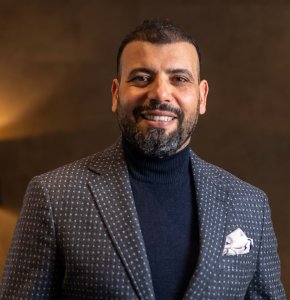
Walid Eljabu
El Dr. Walid Eljabu combina certificaciones de la junta en Cirugía Plástica y Estética, Cirugía de la Mano y Cirugía de Trauma, ofreciendo una precisión inigualable en el aumento de senos.
- Formado en el Reino Unido y Alemania con formación estética especializada en Suecia y Turquía
- Miembro de la Sociedad Americana de Cirujanos Plásticos y de la Sociedad de Rinoplastia de Europa
- Cirujano jefe en Esthétique du Nord con una amplia experiencia en cirugía reconstructiva
- Realiza procedimientos de rejuvenecimiento facial, cirugía mamaria y contorno corporal
Historias en video de pacientes de Bookimed
Aumento de senos con implantes de silicona: Fotos de antes y después
Ver todos los Antes y Después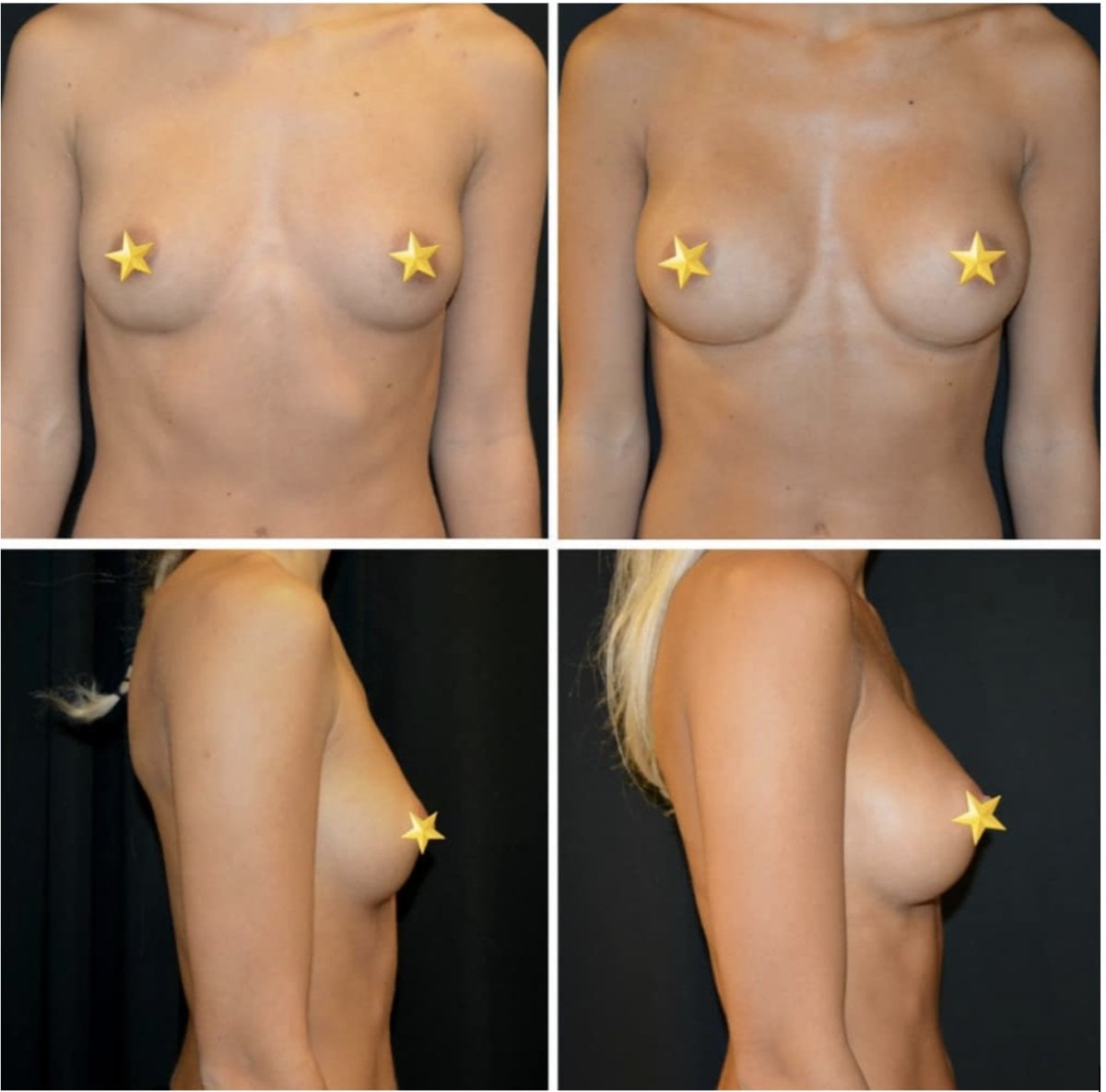
Compartir contenido
 Olena Sikoza
Preguntas frecuentes sobre Aumento de senos con implantes de silicona en Alemania
¿Son seguros los implantes de silicona para un uso a largo plazo?
Los implantes de silicona modernos se consideran seguros para un uso a largo plazo cuando son supervisados por cirujanos plásticos certificados. Aunque los estudios de la FDA muestran que mantienen más del 90% de su resistencia después de 10 años, no son dispositivos para toda la vida y pueden requerir revisión o reemplazo debido al desgaste natural, el envejecimiento o el embarazo.
- Longevidad del dispositivo: La mayoría de los implantes se reemplazan o revisan de forma electiva en un plazo de 10 a 20 años.
- Ruptura silenciosa: Las pruebas de rutina mediante resonancia magnética o ultrasonido detectan fugas que a menudo no presentan síntomas.
- Contractura capsular: El endurecimiento del tejido cicatricial sigue siendo la razón más frecuente para la revisión de implantes a largo plazo.
- Credenciales del cirujano: La seguridad depende de cirujanos certificados por la Sociedad Alemana de Cirujanos Plásticos (DGPRÄC).
Perspectiva de expertos de Bookimed: Si bien muchos pacientes se centran en la ruptura, nuestros datos sugieren que los cambios estéticos suelen provocar revisiones antes. En clínicas como Esthétique du Nord en Hamburgo, los cirujanos enfatizan que los cambios de peso o el embarazo afectan la satisfacción a largo plazo más que la falla del material. Elegir un cirujano con formación internacional, como el Dr. Walid Eljabu, garanti
¿Podré amamantar después de un aumento de pecho?
La mayoría de las pacientes pueden amamantar con éxito después de un aumento de senos. Aunque la cirugía puede afectar el volumen de leche, rara vez impide la lactancia por completo. El éxito depende de preservar los conductos galactóforos, los nervios y el suministro de sangre alrededor del complejo areola-pezón durante el procedimiento quirúrgico en Alemania.
- Colocación del implante: Colocar los implantes debajo del músculo pectoral generalmente preserva más tejido glandular productor de leche.
- Elección de la incisión: Las incisiones inframamarias o transaxilares evitan los conductos galactóforos por completo para garantizar la seguridad.
- Preservación de los nervios: Mantener la sensibilidad del pezón es fundamental para activar la respuesta hormonal necesaria para la eyección de la leche.
- Suministro de leche: Las pacientes pueden experimentar una reducción en el suministro en lugar de una incapacidad total para producir leche.
Opinión de los expertos de Bookimed: Las clínicas alemanas como Esthetique du Nord a menudo cuentan con cirujanos con triple certificación. El Dr. Walid Eljabu, por ejemplo, tiene credenciales en cirugía plástica, de mano y traumatológica. Esta profundidad de experiencia microquirúrgica es vital para las pacientes que priorizan la lactancia materna, ya que asegura la preservación precisa de las delicadas estruc
¿Qué tipos de implantes se recomiendan con mayor frecuencia en Alemania?
Los implantes de gel de silicona son la recomendación estándar en Alemania para el aumento de senos. Los cirujanos priorizan los implantes redondos de superficie lisa debido a su tacto natural y menor perfil de complicaciones a largo plazo. Las decisiones entre formas anatómicas o redondas dependen del ancho individual del tórax, la elasticidad de la piel y el grosor del tejido.
- Material del implante: El gel de silicona es la opción predeterminada por su textura suave y realista.
- Textura de la superficie: Se prefieren los implantes de superficie lisa para minimizar los riesgos de seguridad y las complicaciones a largo plazo.
- Selección de forma: Los cirujanos recomiendan formas redondas para el volumen superior y formas anatómicas para perfiles en forma de lágrima.
- Enfoque de tamaño: Es común un tamaño conservador para garantizar una cobertura tisular adecuada y resultados duraderos.
Perspectiva de expertos de Bookimed: Las clínicas alemanas como Esthétique du Nord muestran una tendencia hacia una especialización de alto nivel, con cirujanos como el Dr. Walid Eljabu que poseen certificaciones triples. Este enfoque en la experiencia multidisciplinaria significa que las recomendaciones a menudo priorizan las técnicas de colocación quirúrgica, como la submuscular frente a la subglandular, sobre el marketing de marcas específicas para garant
¿Cuánto tiempo dura la recuperación completa?
La recuperación completa tras un aumento de pecho con implantes de silicona en Alemania suele durar entre 3 y 12 meses para la adaptación final de los tejidos. Aunque las pacientes suelen volver al trabajo de oficina en un plazo de 7 a 14 días, la cicatrización interna y la posición final del implante continúan mucho más allá de la fase quirúrgica inicial.
- Recuperación inicial: En las primeras 2 semanas es frecuente sentir dolor intenso, tirantez y presión en el pecho.
- Restricciones de actividad: Por lo general, está prohibido levantar objetos pesados y entrenar los músculos pectorales durante al menos 6 semanas.
- Resultados finales: Los implantes se vuelven más blandos y adoptan su posición natural a los 3 meses.
- Prenda de compresión: Los cirujanos exigen estrictamente el uso de un sujetador de compresión durante varias semanas para garantizar una cicatrización correcta.
Opinión de los expertos de Bookimed: Las clínicas alemanas, como Esthétique du Nord, prestan especial atención a la cualificación de los cirujanos, recurriendo a menudo a especialistas con triple certificación en cirugía plástica, de mano y traumatológica. Esta experiencia interdisciplinar refleja una tendencia nacional en la que la precisión técnica y la integridad estructural son prioritarias para minimizar los riesgos de desplazamiento del implante a largo plazo.
¿Es necesario cambiar los implantes después de 10 años?
Los implantes de silicona no requieren un reemplazo automático después de 10 años. Aunque no son dispositivos de por vida, muchos pacientes los conservan durante 20 años o más. Los cirujanos en Alemania recomiendan el reemplazo solo por indicaciones médicas, como una ruptura o contractura capsular, y no por un cronograma estricto.
- Monitoreo regular: Los exámenes físicos anuales o las pruebas de imagen permiten controlar la integridad del implante y la salud de los tejidos.
- Detección de rupturas: La ecografía o la resonancia magnética permiten detectar fugas «silenciosas» características de las generaciones antiguas de silicona.
- Indicaciones médicas: El reemplazo se realiza en caso de dolor, endurecimiento o cambios significativos en la forma del pecho.
- Durabilidad moderna: Los implantes cohesivos más nuevos (implantes «osito de goma») tienen una mayor durabilidad en comparación con los modelos obsoletos.
Opinión de expertos de Bookimed: Las clínicas alemanas, como Esthetique du Nord, prefieren cirujanos con una formación internacional diversa. El Dr. Walid Eljabou cuenta con una triple certificación en tres países. Este alto nivel de especialización garantiza que las cirugías de revisión se centren en la salud anatómica y no en fechas arbitrarias. Este enfoque puede ahorrarle hasta un 26% en comparación con el cost
¿Está cubierto este procedimiento por el seguro médico alemán?
El seguro médico alemán solo cubre el aumento de pecho si los cirujanos lo reconocen como una necesidad médica. Las compañías de seguros públicas y privadas suelen excluir los procedimientos puramente estéticos. Para cubrir los gastos, se requiere la prueba de una indicación médica, como la reconstrucción tras un cáncer, el tratamiento de una asimetría congénita o una lesión física grave documentada por un médico.
- Necesidad médica: Las aseguradoras cubren las operaciones de reconstrucción tras una mastectomía o un traumatismo.
- Seguro público: Los pacientes deben presentar pruebas de daños físicos o psicológicos para obtener la aprobación.
- Autorización previa: Los pacientes deben obtener una aprobación por escrito de su compañía de seguros antes de reservar la operación.
- Seguro privado: El reembolso depende de las condiciones específicas de la póliza y de la documentación médica previa.
Opinión de los expertos de Bookimed: El éxito depende a menudo de cómo el cirujano formule el diagnóstico en la documentación. En clínicas como Esthétique du Nord en Hamburgo, cirujanos con triple certificación como Walid Eljabu proporcionan la documentación clínica detallada que exigen las aseguradoras. Los informes de alta calidad sobre defectos congénitos o daños en los tejidos aumentan significativamente las posibilidades de éxito de una apelación en
¿Qué hospitales en Alemania tienen las calificaciones más altas en neurocirugía?
Alemania alberga algunos de los departamentos de neurocirugía más prestigiosos del mundo, liderados por la Charité – Universitätsmedizin Berlin y el Hospital Universitario de Heidelberg. Estos centros destacan en el tratamiento de tumores cerebrales complejos y enfermedades cerebrovasculares. Para maximizar la eficacia de sus procedimientos, utilizan tecnologías de vanguardia como la resonancia magnética intraoperatoria y la neuronavegación asistida por computadora.
- Charité Berlín: Realiza más de 5000 cirugías al año. La clínica está dirigida por el reconocido neurocirujano Dr. Peter Vaikoczy.
- Centro Médico Solingen: El Dr. Ralf Buhl ha realizado más de 4.000 cirugías, incluidas cirugías de columna mínimamente invasivas.
- Clínica Asklepios Nord: equipada con el único sistema de resonancia magnética intraoperatoria bilateral de Alemania para garantizar precisión quirúrgica en tiempo real durante la extirpación del tumor.
- Clínica Nordwest: reconocida por la revista Newsweek como un hospital líder por su innovación en tecnología de ultrasonido 3D.
Opinión experta de Bookimed: Los datos muestran que elegir centros con un alto volumen quirúrgico suele llevar a recomendaciones de tratamiento más conservadoras. En el Centro Médico Solingen, que atiende a más de 60.000 pacientes al año, los cirujanos suelen sugerir fisioterapia en lugar de cirugía
¿Cuáles son las tasas de éxito de los procedimientos neuroquirúrgicos complejos en Alemania?
En Alemania, los procedimientos neuroquirúrgicos de alta complejidad demuestran una seguridad excepcional. Las tasas de éxito en las fusiones espinales alcanzan el 99 %. La tasa de supervivencia en las resecciones de tumores cerebrales primarios es del 97 %. La independencia funcional es alta. Más del 82 % de los pacientes reciben el alta inmediatamente después del tratamiento. Los centros alemanes priorizan la preservación de la función neurológica mediante técnicas modernas de mapeo.
- Resección de tumores: los cirujanos logran una resección tumoral completa en el 87,2% de los casos de metástasis cerebrales.
- Éxito en el tratamiento de enfermedades vasculares: los hospitales alemanes informan de una tasa de supervivencia del 98,7% para aneurismas no rotos.
- Mejora del estado neurológico: casi el 43% de los pacientes experimentan una mejora de los parámetros funcionales después de resecciones complejas.
- Seguridad de las intervenciones quirúrgicas: En grandes centros quirúrgicos, las tasas de supervivencia de los pacientes después de la cirugía de columna son del 98-99%.
Opinión experta de Bookimed: Cirujanos experimentados como el Dr. Uwe Köhler, de la Clínica Asklepios Altona, realizan más de 2000 cirugías al año. Los datos muestran que estos especialistas mantienen tasas de éxito de hasta el 90 %, incluso en los tumores cerebrales más comp
¿Qué tecnologías avanzadas suelen estar disponibles en las clínicas neuroquirúrgicas alemanas?
Las clínicas neuroquirúrgicas alemanas incorporan regularmente instrumentos digitales de alta precisión y visualización en tiempo real a la práctica quirúrgica. Entre las tecnologías clave se encuentra la neuronavegación computarizada para cirugías de cerebro y médula espinal. Instituciones como la Clínica Asklepios Nord utilizan la resonancia magnética intraoperatoria para verificar la extirpación de tumores en tiempo real. Estos sistemas proporcionan a los cirujanos navegación GPS 3D.
- Neuronavegación: proporciona visualización 3D y seguimiento de instrumentos en tiempo real para lograr precisión quirúrgica hasta el nivel submilimétrico.
- Imágenes intraoperatorias: sistemas como iMRI y O-arm CT permiten la confirmación inmediata de una resección exitosa.
- Neuromonitorización: Monitorea las funciones motoras y sensoriales durante la cirugía para proteger el sistema nervioso.
- Diagnóstico de fluorescencia: se utiliza el colorante 5-ALA para resaltar los bordes del tumor para una eliminación más completa.
- Asistencia robótica: Sistemas como el Da Vinci mejoran la precisión en procedimientos complejos y mínimamente invasivos.
Opinión experta de Bookimed: Grandes centros como la Charité – Universitätsmedizin de Berlín realizan más de 4000 procedimientos neuroquirúrgicos al año, lo que crea un entorno rico en datos para p
¿Qué formación especializada reciben los neurocirujanos en ejercicio en Alemania?
En Alemania, los neurocirujanos deben completar una residencia especializada de seis años tras graduarse de la facultad de medicina. Este programa estructurado incluye cuidados intensivos, práctica clínica y una revista quirúrgica obligatoria. Posteriormente, los candidatos aprueban un examen estatal para obtener el título de residente (Facharzt für Neurochirurgie).
- Residencia clínica: requiere de 48 a 72 meses de práctica neuroquirúrgica especializada.
- Cuidados intensivos: incluye una pasantía obligatoria de 6 meses en una unidad de cuidados intensivos neuroquirúrgicos.
- Revista quirúrgica: los cirujanos documentan cientos de cirugías, incluidas craneotomías y cirugías de columna.
- Examen de licencia: Los solicitantes deben aprobar un examen médico oral y práctico administrado por el estado.
Opinión experta de Bookimed: La formación neuroquirúrgica alemana se centra en una amplia experiencia quirúrgica. Por ejemplo, el Dr. Ralf Buhl, del Centro Médico Solingen, ha realizado más de 4000 cirugías. El Dr. Jürgen Kiwit, del Hospital Meoklinik, cuenta con más de 25 años de experiencia. Este riguroso sistema garantiza que los especialistas de los principales centros aborden casos complejos con una precisión demostrada.
Comentarios de los pacientes: Los pacientes se sienten seguros al saber que sus médicos han recibido año