Cirugía de cataratas (un ojo) en Alemania: las 5 mejores clínicas y sus precios


Revisado médicamente por
Fahad Mawlood
Cómo funciona
¿Cuál es el precio de Cirugía de cataratas (un ojo) en Alemania? Descubra ahora
De $2,200. Los precios pueden variar según el tipo de lente intraocular (monofocal estándar frente a multifocal premium), la clínica y la experiencia del cirujano. UU.
Las clínicas alemanas generalmente incluyen el examen preoperatorio, la anestesia local, el procedimiento quirúrgico, una lente monofocal estándar y el seguimiento postoperatorio. En los EE. UU., el precio indicado a menudo cubre solo la cirugía básica, con cargos adicionales por lentes premium, anestesia y seguimientos. Confirme siempre qué incluye su paquete en cada clínica.
| Alemania | España | Turquía | |
|---|---|---|---|
| Cirugía de cataratas (un ojo) | de $2,200 | de $3,500 | de $1,200 |
Descubra las mejores clínicas de Cirugía de cataratas (un ojo) en Alemania: 5 opciones verificadas y Precios










Descripción general de Cirugía de cataratas (un ojo) en Alemania
- Cirugía de cataratas (un ojo) - de $2,200El procedimiento elimina un cristalino opaco en un ojo, reemplazándolo con uno artificial para restaurar la visión.
- Cirugía de cataratas (ambos ojos) - de $3,600Esta operación de doble ojo elimina los lentes nublados, reemplazándolos con lentes artificiales, mejorando la claridad y la calidad de la visión.
- La operación reemplaza el cristalino nublado con implantes multifocales, mejorando la claridad de la visión y el enfoque en múltiples distancias.
Día 1: Llegada
- La clínica no proporciona traslado desde el aeropuerto.
- A su llegada a la clínica, estará registrado.
- Se proporcionará un traductor si es necesario.
Día 2: Preoperatorio
- Consultarás con un oftalmólogo.
- Se realizará una autorrefractometría para medir la refracción del ojo.
- Le harán otras pruebas médicas necesarias.
Día 3: Cirugía de Cataratas
- Se le administrará anestesia local.
- La operación dura alrededor de 1-2 horas.
- El cirujano reemplazará su lente opaca por una clara.
Día 4: Postoperatorio
- Después de la cirugía, lo controlarán para detectar complicaciones.
- Es posible que se requiera hospitalización durante la noche, según su condición.
Día 5: Alta
- Serás dado de alta del hospital.
- Se programará una cita de seguimiento.
Semana 1-2: Rehabilitación
- Evite las actividades extenuantes y el levantamiento de objetos pesados.
- Use gafas de sol para proteger su ojo.
Semana 3-4: Rehabilitación
- Puede volver al trabajo y reanudar sus actividades normales.
- Seguimiento con su oftalmólogo.
Tenga en cuenta que cada caso es individual y la línea de tiempo puede variar según su condición personal y la velocidad de recuperación.
Lo que les gusta a los pacientes:
- Precio. El costo de la cirugía de cataratas (un ojo) en Alemania oscila entre $3500 y $5000. Esto es relativamente más bajo en comparación con un costo promedio de $ 5000 a $ 7000 en países como los EE. UU.
- Profesionalidad de los médicos. Los cirujanos oculares alemanes están altamente capacitados y, a menudo, cuentan con prestigiosas certificaciones. Con frecuencia son miembros de organizaciones oftalmológicas internacionales, lo que aumenta la confianza del paciente.
- Nivel de servicio. Los pacientes aprecian el nivel de servicio excepcional. Desde el personal de recepción hasta las enfermeras, todos muestran la máxima profesionalidad y atención.
- Eficacia de la cirugía de cataratas (un ojo). Las técnicas modernas utilizadas en Alemania aseguran altas tasas de éxito de la cirugía. Los pacientes a menudo experimentan mejoras drásticas en la visión después de la cirugía.
- Logística. El eficiente sistema de salud de Alemania garantiza una logística fluida. Los pacientes rara vez enfrentan problemas con la programación de citas o las visitas al hospital.
Lo que no les gusta a los pacientes:
- _cost_link_ A pesar de los costos más bajos en comparación con otros países, algunos pacientes aún consideran que la cirugía es costosa.
- Tiempo de espera. En ocasiones, los pacientes informan largos tiempos de espera para la cirugía, lo que afecta su experiencia general.
- Atención posquirúrgica. Algunos pacientes sienten que la atención posterior a la cirugía podría ser mejor y requerir una atención más personalizada.
- Depósito de Bookimed: 200 $ o 200 €.
- Depósito de la clínica: Pague un porcentaje fijo por adelantado.
Bookimed, una plataforma líder mundial en turismo médico, se compromete a ayudar a los clientes que buscan una cirugía de cataratas (un ojo) en Alemania ofreciéndoles asistencia experta y soluciones médicas confiables para cada situación. Se utiliza un sistema de clasificación automático inteligente para elaborar listas de clínicas transparentes, mantenidas meticulosamente por un científico de datos que utiliza IA para mayor precisión. La plataforma garantiza la autenticidad al publicar reseñas de pacientes reales después de sus tratamientos. Bookimed ofrece soluciones médicas integrales, con actualizaciones de las clínicas para garantizar la confiabilidad. El contenido sobre la cirugía de cataratas (un ojo) en Alemania, elaborado por autores médicos experimentados y revisado por especialistas, cumple con las pautas editoriales de Bookimed , lo que refleja el compromiso de la plataforma de brindar información de salud clara y de alta calidad. Para obtener más detalles o consultas, no dude en contactarnos en marketing@bookimed.com o obtenga más información sobre nosotros y nuestra misión Acerca de Bookimed .
Obtenga una evaluación médica de Cirugía de cataratas (un ojo) en Alemania: haga una consulta con 6 médicos experimentados ahora
Ver todos los médicos
André Rosentreter Chief Of Ophthalmology

Kadir Kocadag
El Dr. med. Kadir Kocadag es oftalmólogo alemán con título de especialista. Se formó en la Universidad de Duisburg‑Essen y en la Clínica Universitaria de Oftalmología de Essen con los profesores Bornfeld y Steuhl. Ocupó un cargo clínico sénior centrado en enfermedades maculares y retinianas y en tumores oculares. Tiene amplia experiencia en cirugía refractiva y tratamientos láser oftálmicos.
Fue médico consultor en el Hospital Elisabeth de Essen. Desde 2015 ejerce en Solingen y Colonia

Ansgar Neußer

Randolf Widder
Historias en video de pacientes de Bookimed
Reseñas
Todas las reseñasCompartir contenido
 Olena Sikoza
Datos сlave sobre Cirugía de cataratas (un ojo)
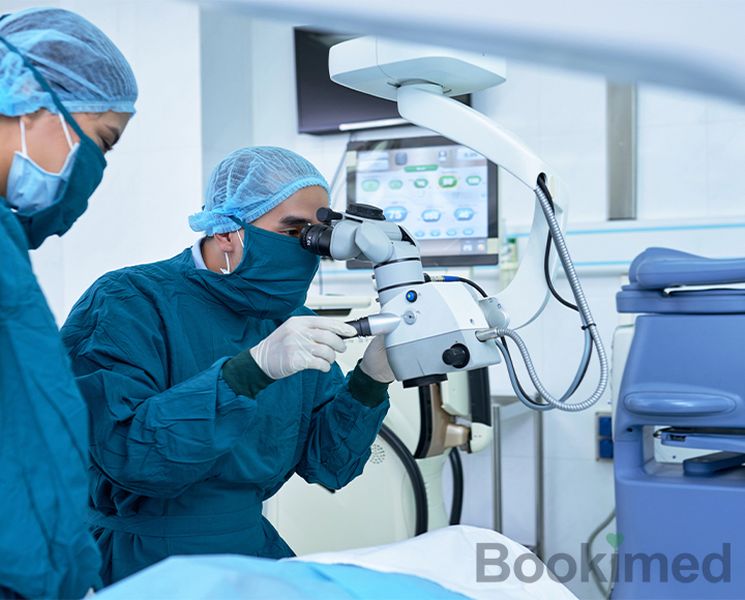
Cirugía de cataratas (un ojo)
Este procedimiento oftalmológico consiste en extraer el cristalino opaco de un ojo y sustituirlo por una lente intraocular artificial transparente para recuperar la visión.
Preguntas frecuentes sobre Cirugía de cataratas (un ojo) en Alemania
¿Cuánto tiempo dura la recuperación de un ojo?
La mayoría de los pacientes experimentan una mejora inicial de la visión entre 1 y 3 días después de la cirugía de cataratas en Alemania. Aunque la curación anatómica completa y la estabilización visual suelen tardar de 4 a 8 semanas, generalmente puede reanudar actividades diarias ligeras como leer o ver la televisión en un plazo de 24 horas.
- Hitos iniciales: La visión se aclara rápidamente después de las primeras 24 horas de sensibilidad a la luz y sensación de arenilla.
- Reanudación de actividades: La mayoría regresa al trabajo de oficina y a caminar suavemente en un plazo de 2 a 3 días.
- Restricciones físicas: Evite levantar objetos pesados, agacharse y usar maquillaje en los ojos durante al menos 1 semana.
- Estabilización completa: Las recetas definitivas de gafas suelen emitirse entre 4 y 8 semanas después de la cirugía.
De $4,200. Cirujanos como el Dr. Johannes Gonnermann han realizado más de 30.000 procedimientos, lo que destaca que un alto volumen a menudo se traduce en recuperaciones más fluidas y menos complicaciones.
Consenso de los pacientes: Espere un desequilibrio visual temporal
¿Qué sucede durante la cirugía de cataratas en un ojo en Alemania?
La cirugía de cataratas en Alemania es un procedimiento ambulatorio estandarizado de 15 minutos. Los cirujanos reemplazan el cristalino natural opaco por una lente intraocular artificial transparente bajo anestesia local. Los pacientes suelen experimentar una mejora significativa de la visión en un plazo de 24 a 72 horas y regresan a casa el mismo día.
- Técnicas quirúrgicas: Las clínicas ofrecen facoemulsificación por ultrasonido o cirugía avanzada asistida por láser de femtosegundo para mayor precisión.
- Método de anestesia: Los cirujanos utilizan gotas anestésicas o inyecciones locales para que los pacientes solo sientan una ligera presión.
- Opciones de lentes: Los pacientes eligen entre implantes monofocales, multifocales o trifocales según sus necesidades visuales.
- Protocolo de recuperación: El alta se produce poco después de la cirugía con un protector ocular y un horario de gotas antibióticas.
Perspectiva del experto de Bookimed: La oftalmología alemana se centra en gran medida en la especialización de alto volumen para garantizar la seguridad. Por ejemplo, el Dr. Johannes Gonnermann en AugenCentrum am Rothenbaum ha realizado más de 30,000 cirugías. Esta enorme experiencia clínica a menudo conduce a resultados más predecibles en comparación con los centros quirúrgicos generales. Al elegir una clínica, verifique si el cirujano cuenta
¿Qué restricciones se aplican después de la cirugía?
Después de una cirugía de cataratas en Alemania, las restricciones estándar priorizan la protección de la incisión microscópica y la prevención de picos de presión. Los pacientes deben evitar frotarse el ojo, levantar objetos de más de 10 libras (4.5 kg) y realizar ejercicio extenuante durante unas 4 semanas. La mayoría de las personas retoman actividades ligeras como leer o ver televisión en un plazo de 24 horas.
- Esfuerzo físico: Evite agacharse, levantar objetos pesados o hacer ejercicios de gimnasio para prevenir el aumento de la presión ocular.
- Protocolo de higiene: Mantenga el jabón, el champú y el agua del grifo fuera del ojo durante 1 semana.
- Seguridad ambiental: Manténgase alejado de áreas con polvo, humo o viento para reducir los riesgos de infección.
- Protección al dormir: Use un protector ocular por la noche y evite dormir sobre el lado operado.
Perspectiva del experto de Bookimed: Las clínicas alemanas como EuroEyes o AugenCentrum am Rothenbaum enfatizan la `disciplina con las gotas oculares` por encima del reposo físico. Los datos de cirujanos como el Dr. Johannes Gonnermann, quien ha realizado 30,000 procedimientos, indican que omitir las gotas recetadas es un factor de riesgo mayor que reanudar caminatas ligeras. Confirme siempre su capacidad para conducir en el seguimiento de las 24 horas antes de ponerse al volante.
¿Se pueden operar ambos ojos al mismo tiempo?
Los cirujanos pueden operar ambos ojos el mismo día mediante la Cirugía de Cataratas Bilateral Secuencial Inmediata (ISBCS). Sin embargo, los especialistas alemanes a menudo prefieren espaciar los procedimientos de 1 a 4 semanas. Este enfoque escalonado garantiza la seguridad, permite la adaptación visual y permite a los médicos ajustar los cálculos de la lente para el segundo ojo.
- Protocolo de seguridad: Los cirujanos tratan cada ojo como una operación separada con juegos de instrumentos frescos y estériles.
- Beneficio clínico: Los médicos pueden ajustar la potencia de la lente del segundo ojo según la curación del primero.
- Comodidad del paciente: La cirugía escalonada evita la discapacidad visual temporal total mientras ambos ojos se recuperan simultáneamente.
- Criterios para candidatos: Los pacientes de alto riesgo con glaucoma o diabetes generalmente requieren fechas quirúrgicas separadas.
Perspectiva de expertos de Bookimed: Clínicas alemanas como EuroEyes Medical Network o AugenCentrum am Rothenbaum enfatizan la precisión al realizar más de 20,000 procedimientos al año. Utilizando datos de alto volumen, los cirujanos a menudo recomiendan un intervalo corto de 1 semana. Esta ventana es un secreto del éxito porque evita problemas de percepción de profundidad a largo plazo y, al mismo tiempo, permite que la córnea se estabilice para un
¿Cubre el seguro médico legal alemán (GKV) la cirugía?
El seguro médico legal alemán (GKV) cubre la cirugía de cataratas cuando es médicamente necesaria. Los implantes de lentes monofocales estándar están totalmente cubiertos a través de su tarjeta sanitaria en centros acreditados. Esto incluye las evaluaciones preoperatorias y los cuidados de seguimiento esenciales realizados por cirujanos oftalmológicos u hospitales participantes dentro de la red de salud pública.
- Necesidad médica: La deficiencia visual documentada o las limitaciones funcionales deben justificar la intervención quirúrgica.
- Tipo de lente: El GKV cubre solo lentes monofocales estándar, proporcionando una visión clara básica.
- Mejoras premium: Las lentes multifocales, trifocales o tóricas requieren pagos privados de su bolsillo.
- Red de proveedores: La cirugía debe realizarse en clínicas u hospitales acreditados por el GKV para garantizar la cobertura.
Perspectiva del experto de Bookimed: Los pacientes a menudo asumen que todas las opciones quirúrgicas están cubiertas, pero existe una brecha clara entre la atención básica y la premium. Clínicas especializadas como EuroEyes tratan a 20.000 pacientes de cataratas anualmente utilizando láseres avanzados. Si bien el GKV cubre el procedimiento básico, muchos pacientes optan por pagar de forma privada por implantes multifocales para eliminar las gafas por completo.
Co
¿Cuál es el tiempo de recuperación y cuándo se aclarará mi visión?
La recuperación de la cirugía de cataratas en Alemania suele tardar de 4 a 8 semanas para una estabilización completa, mientras que la visión comienza a aclararse en un plazo de 24 a 72 horas. La mayoría de los pacientes logran una visión funcional para las actividades diarias en un plazo de 3 a 5 días, a medida que la inflamación quirúrgica disminuye y el cerebro se ajusta.
- Aclaramiento inicial: Las mejoras notables en la nitidez y el brillo del color suelen ocurrir de 1 a 3 días después de la cirugía.
- Visión funcional: Los pacientes generalmente reanudan la lectura, la televisión y el trabajo ligero en un plazo de 3 a 5 días.
- Estabilización completa: El ojo sana y la visión se estabiliza por completo en un plazo de 4 a 8 semanas después de la cirugía.
- Cuidados postoperatorios: Use las gotas antibióticas recetadas y evite levantar objetos pesados durante 1 a 2 semanas.
Perspectiva del experto de Bookimed: Las clínicas alemanas como AugenCentrum am Rothenbaum y EuroEyes destacan a cirujanos con un volumen extremo, que a menudo supera los 30.000 procedimientos. Los datos muestran que los especialistas de alto volumen como el Dr. Johannes Gonnermann contribuyen a tiempos de recuperación más rápidos mediante técnicas refinadas y mínimamente invasivas. Elegir un centro oftalmológico especializado en ciudades como Hamburgo o Berlín garantiza
¿Qué atención postoperatoria se espera en Alemania?
La atención postoperatoria en Alemania está altamente estructurada y regulada por ley a través del protocolo oficial de Entlassmanagement. Los pacientes reciben una carta de alta que detalla los planes de medicación inmediatos, las recetas de seguimiento esenciales y un informe médico completo. La recuperación pasa del entorno hospitalario a una supervisión ambulatoria especializada por parte de oftalmólogos certificados.
- Protocolo de alta: Las clínicas proporcionan una carta resumen y la medicación inmediata antes de que usted se vaya.
- Gestión de la medicación: Los pacientes se administran gotas antibióticas o antiinflamatorias para los ojos siguiendo un horario estricto.
- Seguimiento especializado: Un Facharzt (médico especialista) comunitario suele realizar revisiones oculares durante la primera semana.
- Pautas de actividad: La protección implica evitar frotarse los ojos y usar un protector ocular durante el sueño.
Perspectiva de expertos de Bookimed: Las clínicas alemanas como EuroEyes o Spreebogen a menudo utilizan cirujanos con un volumen inmenso, como el Dr. Johannes Gonnermann, quien ha realizado 30.000 procedimientos. Esta experiencia de alto volumen permite a los centros alemanes ofrecer una atención ambulatoria estandarizada y eficiente que elimina la necesidad de estancias hospitalarias prolongadas. Mientras que las clínicas d
¿Cuál es la diferencia entre las lentes intraoculares estándar y premium en las clínicas alemanas?
La principal diferencia entre las lentes intraoculares estándar y premium en Alemania es el rango de visión. Las lentes monofocales estándar corrigen la visión de lejos pero requieren gafas de lectura. Las opciones premium, como las lentes trifocales o EDOF, proporcionan una visión clara a distancias cercanas e intermedias, eliminando a menudo la necesidad de gafas por completo.
- Flexibilidad visual: Las lentes estándar ofrecen un punto focal, mientras que las multifocales y trifocales cubren tres.
- Corrección del astigmatismo: Las lentes tóricas premium neutralizan el astigmatismo corneal, lo cual las lentes monofocales estándar no pueden corregir.
- Estructura de costes: El seguro público cubre totalmente las lentes estándar; las lentes premium requieren copagos de bolsillo.
- Posibles efectos secundarios: Las lentes premium pueden causar halos leves o deslumbramientos al conducir de noche.
Perspectiva del experto de Bookimed: Clínicas alemanas como EuroEyes manejan más de 20.000 casos de cataratas y cirugía refractiva al año con gran éxito. Cirujanos experimentados como el Dr. Johannes Gonnermann han realizado 30.000 procedimientos, lo que los convierte en expertos en adaptar el tipo de lente a la anatomía ocular. Los centros de alto nivel a menudo incluyen diagnósticos avanzados en sus paquetes premium para garantizar la precisión de la l
¿Necesito una derivación de un médico de cabecera en Alemania?
No necesita una derivación de un médico de cabecera para visitar a un oftalmólogo en Alemania. Los pacientes mantienen la libre elección de médico y pueden reservar directamente con especialistas en ojos para evaluaciones de cataratas. Los seguros privados y ciertos modelos de salud pública pueden tener requisitos distintos para la cobertura.
- Acceso directo: Los oftalmólogos están exentos de derivaciones obligatorias bajo el sistema de seguro médico legal alemán.
- Tipos de seguro: Los planes «Hausarztmodell» requieren una visita previa al médico de cabecera para servicios médicos no exentos.
- Códigos de urgencia: Los médicos de cabecera proporcionan códigos de urgencia para garantizar citas con especialistas dentro de las cuatro semanas.
- Diagnóstico experto: Los oftalmólogos como el Dr. Johannes Gonnermann realizan exámenes clínicos para confirmar la necesidad quirúrgica.
Perspectiva de expertos de Bookimed: Aunque las derivaciones no son obligatorias, centros oculares especializados como la Clínica EuroEyes tratan a más de 20 000 pacientes al año. Los altos volúmenes de pacientes a menudo conducen a tiempos de espera más cortos en consultorios privados en comparación con los hospitales generales. Elegir un centro de oftalmología dedicado a menudo agiliza el proceso de diagnóstico sin necesidad de trámites previos del médico de cabecera.<
¿Qué hospitales en Alemania tienen las calificaciones más altas en neurocirugía?
Alemania alberga algunos de los departamentos de neurocirugía más prestigiosos del mundo, liderados por la Charité – Universitätsmedizin Berlin y el Hospital Universitario de Heidelberg. Estos centros destacan en el tratamiento de tumores cerebrales complejos y enfermedades cerebrovasculares. Para maximizar la eficacia de sus procedimientos, utilizan tecnologías de vanguardia como la resonancia magnética intraoperatoria y la neuronavegación asistida por computadora.
- Charité Berlín: Realiza más de 5000 cirugías al año. La clínica está dirigida por el reconocido neurocirujano Dr. Peter Vaikoczy.
- Centro Médico Solingen: El Dr. Ralf Buhl ha realizado más de 4.000 cirugías, incluidas cirugías de columna mínimamente invasivas.
- Clínica Asklepios Nord: equipada con el único sistema de resonancia magnética intraoperatoria bilateral de Alemania para garantizar precisión quirúrgica en tiempo real durante la extirpación del tumor.
- Clínica Nordwest: reconocida por la revista Newsweek como un hospital líder por su innovación en tecnología de ultrasonido 3D.
Opinión experta de Bookimed: Los datos muestran que elegir centros con un alto volumen quirúrgico suele llevar a recomendaciones de tratamiento más conservadoras. En el Centro Médico Solingen, que atiende a más de 60.000 pacientes al año, los cirujanos suelen sugerir fisioterapia en lugar de cirugía