Enlace cruzado corneal (CCL) (un ojo) en Israel — obtén 3 clínicas con costos


Revisado médicamente por
Fahad Mawlood
¿Cuál es el precio de Enlace cruzado corneal (CCL) (un ojo) en Israel? Descubra ahora
De $4,500. Los precios fluctúan según el nivel de la clínica, la antigüedad del cirujano y la necesidad de imágenes diagnósticas avanzadas. En los EE.
- Acreditación de la clínica: Las instalaciones con acreditación JCI en Tel Aviv a menudo cobran más por sus estándares globales.
- Consultas con especialistas: Los exámenes iniciales realizados por los mejores profesores pueden añadir de $400 a $1,200 al precio base total.
- Inclusiones del paquete: Los paquetes hospitalarios premium pueden incluir evaluaciones integrales previas al tratamiento y medicamentos especializados.
- Ubicación geográfica: Los principales centros médicos como Jerusalén, Tel Aviv y Haifa sirven como los centros de tratamiento principales.
Perspectiva del experto de Bookimed: Elegir un centro líder como el Centro Médico Sourasky (Ichilov) brinda acceso a expertos de renombre mundial. Especialistas como el profesor Elyia Levinger aportan formación internacional de instituciones como el Toronto Western Hospital. Si bien las instalaciones de primer nivel pueden tener precios más altos, ofrecen tecnología avanzada como IA e imágenes digitales. Estos hospitales se clasifican constantemente en las Mejores Clínicas Especializadas del Mundo de Newsweek, lo que garantiza una atención de alto valor para casos corneales complejos.
Beneficios clave
¿Por qué elegir Israel para el cross-linking corneal (CCL) en un ojo?
- Clínicas acreditadas: En Israel, los hospitales certificados por JCI mantienen estándares de clase mundial y priorizan la seguridad del paciente.
- Últimas tecnologías: Se emplean técnicas como el Sistema Avedro KXL y el cross-linking de Riboflavina/UVA para asegurar resultados efectivos en el tratamiento.
- Altas tasas de éxito: El cross-linking corneal (CCL) ha demostrado tasas de eficacia de hasta 90% en detener la progresión del queratocono.
- Cirujanos expertos: Oftalmólogos líderes, certificados por instituciones prestigiosas, han realizado más de 500 procedimientos exitosos de CCL. Su experiencia garantiza alta competencia y satisfacción del paciente.
Accede a soluciones avanzadas de Cross-Linking Corneal (CCL) (Un ojo) en clínicas de confianza de $4,500.
| Israel | España | Turquía | |
|---|---|---|---|
| Enlace cruzado corneal (CCL) (un ojo) | de $4,500 | de $2,400 | de $1,400 |
Sus beneficios y garantías con Bookimed
Precios directos
Bookimed no añade cargos adicionales a los precios de Enlace cruzado corneal (CCL) (un ojo). Las tarifas proceden de las listas de precios oficiales de las clínicas. Pagará directamente en la clínica por su Enlace cruzado corneal (CCL) (un ojo) a su llegada al país.
Sólo clínicas y médicos verificados
Bookimed está comprometido con su seguridad. Solo trabajamos con las clínicas que mantienen altos estándares internacionales en Enlace cruzado corneal (CCL) (un ojo) y tienen las licencias necesarias para atender a pacientes internacionales en todo el mundo.
Asistencia 24/7 gratuita
Bookimed ofrece asistencia experta gratuita. Un coordinador médico personal le apoya antes, durante y después del tratamiento, resolviendo cualquier problema. Nunca estará solo en su viaje médico de Enlace cruzado corneal (CCL) (un ojo).

Su coordinador médico personal de Bookimed
- Le apoya en cada etapa
- Ayuda a elegir la clínica y el médico adecuados
- Asegura un acceso rápido y conveniente a la información
Descubra las mejores clínicas de Enlace cruzado corneal (CCL) (un ojo) en Israel: 3 opciones verificadas y Precios







Prof. Or Kaiserman
Descripción general de Enlace cruzado corneal (CCL) (un ojo) en Israel
- Enlace cruzado corneal (CCL) (un ojo) - de $4,500El tratamiento fortalece la córnea a través de luz ultravioleta y riboflavina, previniendo condiciones oculares progresivas.
- Queratoplastia - de $14,300Esta cirugía trasplanta tejido de córnea, mejorando la visión o aliviando el dolor, a menudo con una recuperación rápida y una cicatriz mínima.
- Trasplante de córnea - de $6,500Esta cirugía reemplaza la superficie dañada del ojo con tejido sano de un donante para mejorar la visión o aliviar el dolor.
- Implantación de anillo corneal - de $2,800El procedimiento consiste en colocar pequeños anillos en el ojo para remodelar la córnea, mejorar la visión y la comodidad.
Día 1 - Llegada
- Llegada al país.
- Regístrese en su alojamiento.
Día 2 - Preoperatorio
- Consulta con un oftalmólogo.
- Realice las pruebas oculares necesarias.
- Ultimar los detalles de la operación.
Día 3 - Cross Linking Corneal (CCL)
- El procedimiento comienza con anestesia local.
- El proceso de CCL toma alrededor de 1-2 horas.
- Control postoperatorio por el oftalmólogo.
Día 4 - Postoperatorio
- Permanezca en la clínica para observación.
- Asistir a una consulta postoperatoria.
Semana 1 - Rehabilitación
- Descanse y evite las actividades extenuantes.
- Asistir a las citas de seguimiento si es necesario.
Semana 2
- Regreso gradual a las actividades normales.
- Continúe evitando la actividad física extenuante.
Semana 3 - Resultado Final
- Consulta con el oftalmólogo.
- Ver el resultado final de la operación.
Tenga en cuenta que el proceso puede variar según la condición del individuo y el consejo del médico.
- Depósito de Bookimed: 200 $ o 200 €.
- Depósito de la clínica: Pague un porcentaje fijo por adelantado.
Como plataforma líder mundial de turismo médico, tenemos una gran responsabilidad ante nuestros clientes, tanto pacientes como centros médicos. Toda la información proporcionada en Bookimed.com se basa en la investigación, la previsión y la experiencia y cumple con un alto interés relacionado con el producto y sigue:
Sistema inteligente de clasificación automática
Formamos nuestros listados de clínicas y médicos con estrictas regulaciones de nuestro sistema inteligente de clasificación automática. El sistema, basado en tarifas de pacientes reales de Bookimed, proporciona la información más objetiva y transparente sobre clínicas y servicios médicos, incluido Corneal Cross Linking (CCL) (Un ojo) en Israel.
Nuestro experimentado científico de datos recopila datos a diario, supervisa y optimiza el sistema de clasificación mediante el aprendizaje automático y la inteligencia artificial para garantizar que el sistema de clasificación esté actualizado y proporcione resultados precisos.
Solo la experiencia de personas reales
Recopilamos las opiniones de los clientes de Bookimed solo después de obtener experiencia médica con la clínica, incluidos aquellos que se han sometido a un enlace cruzado corneal (CCL) (un ojo) en Israel, para que todos en la plataforma puedan confiar en el centro que elijan. Nos esforzamos por hacer que el contenido de nuestra plataforma sea lo más útil posible y garantizamos la libertad de expresar opiniones críticas. Así, publicamos críticas positivas y negativas, con el objetivo de ser una fuente para la toma de decisiones informadas para nuestros futuros clientes.
Temas con altos niveles de experiencia, autoridad y confiabilidad
En Bookimed.com, puede encontrar opciones y conveniencia para encontrar las mejores soluciones médicas de los principales proveedores de servicios médicos en un solo lugar y, a menudo, a precios competitivos. Asegurándose de brindar la información más actualizada, los representantes de la clínica actualizan los CV de los médicos, las capacidades de las clínicas, las fotos de antes y después, los precios, los paquetes y las ofertas especiales en breve. Puede reunirse con el representante de la clínica y verificar la fecha del contenido actualizado en la página de cada clínica para asegurarse de su confiabilidad, incluidas las que ofrecen Corneal Cross Linking (CCL) (Un ojo) en Israel.
Nuestro blog y artículos de apoyo son creados por autores profesionales con al menos 3 años de experiencia en redacción médica y editados por especialistas médicos con experiencia clínica y de investigación relevante, todos reclutados cuidadosamente para el equipo. Nos esforzamos por mejorar el acceso de los pacientes a la información de salud, haciéndola experta pero fácil de entender. Todas las piezas siguen las Directrices Editoriales de Bookimed.
Valores reservados
Estamos hechos de personas y para personas, y ese es nuestro valor fundamental. Es por eso que todos los datos presentados en la plataforma son recopilados, editados, revisados y actualizados regularmente por nuestros pacientes, nuestras clínicas asociadas y nuestro equipo, incluido el Consejo Asesor Médico de Bookimed, que consta de médicos de renombre mundial con una valiosa experiencia en 20 años de práctica y una reputación positiva. Conozca más sobre nosotros y nuestra misión .
En caso de que encuentre algún error o tenga alguna pregunta sobre la información presentada en Bookimed.com, incluida la información sobre Corneal Cross Linking (CCL) (Un ojo) en Israel, no dude en contactarnos en marketing@bookimed.com .
Obtenga una evaluación médica para Enlace cruzado corneal (CCL) (un ojo) en Israel: Elija su especialista entre los mejores en el campo
Ver todos los médicos
Elyia Levinger
La Dra. Elyia Levinger se especializa en cirugía de córnea, incluyendo tratamientos avanzados como el trasplante de córnea, en el Centro Médico Ichilov.
- Formada en la Facultad de Medicina Technion y en el Toronto Western Hospital
- Realizó numerosas cirugías de trasplante de córnea y cristalino
- Miembro de la Academia Americana de Oftalmología
- Cirujana senior en varios centros médicos líderes en Tel Aviv

Anat Loewenstein
El profesor Loewenstein es un especialista en oftalmología con amplia experiencia en tratamientos de córnea.
- Profesor en una institución médica líder
- Especializado en procedimientos avanzados de cuidado ocular
- Se centra en enfoques de tratamiento centrados en el paciente

Yuval Yasur
El profesor Yuval Yasur se especializa en oftalmología y cirugía oftálmica en el Centro Médico Sourasky (Ichilov).
- Experto en tratamientos y cirugías de córnea
- Amplia experiencia en procedimientos oftálmicos avanzados
- Profesor con una sólida trayectoria académica y clínica
Historias en video de pacientes de Bookimed
Reseñas
Todas las reseñasCompartir contenido
 Olena Sikoza
Datos сlave sobre Enlace cruzado corneal (CCL) (un ojo)
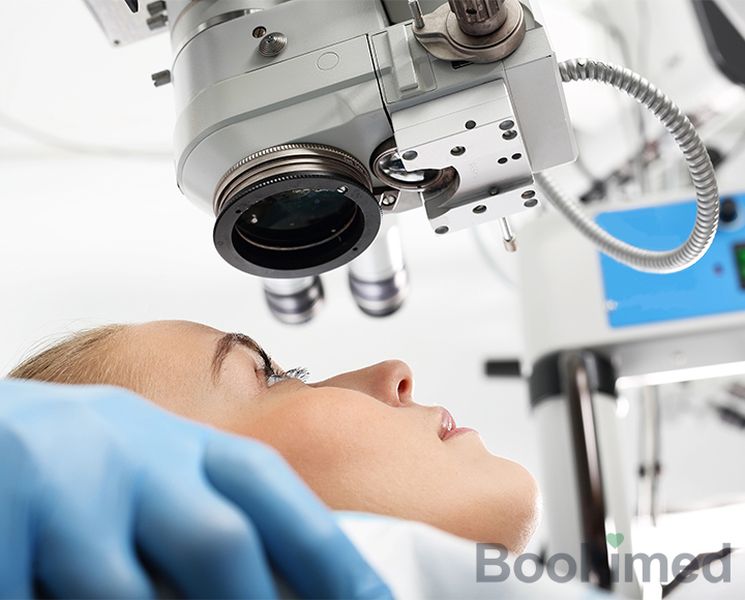
Corneal Cross Linking (CCL) (Un ojo)
Este procedimiento refuerza la córnea mediante luz ultravioleta y gotas de riboflavina para detener la progresión del queratocono.
Preguntas frecuentes sobre Enlace cruzado corneal (CCL) (un ojo) en Israel
¿Cuáles son los riesgos del cross-linking?
El cross-linking corneal es altamente efectivo, con una tasa de éxito del 95 al 99 por ciento para detener el queratocono. Los riesgos principales incluyen opacidad corneal temporal, queratitis infecciosa y una cicatrización epitelial prolongada. Complicaciones raras como cicatrices corneales o fracaso del tratamiento afectan aproximadamente al 8 por ciento de los pacientes, lo que potencialmente requiere procedimientos repetidos.
- Opacidad visual: La nubosidad corneal temporal es común mientras la agudeza visual se estabiliza durante varios meses.
- Riesgo de infección: La queratitis infecciosa ocurre en el 1 al 2 por ciento de los casos después de la cirugía.
- Variaciones de técnica: Los procedimientos epi-off conllevan una mayor sensibilidad en comparación con la técnica epi-on, que tiene una cicatrización más rápida.
- Fracaso del tratamiento: La progresión del queratocono puede continuar, lo que requiere intervenciones alternativas como trasplantes de córnea.
Perspectiva de expertos de Bookimed: Centros israelíes como el Sourasky Medical Center utilizan protocolos acreditados por la JCI para minimizar los riesgos de infección. Aunque el CXL previene la progresión, rara vez mejora la visión natural. Los datos muestran que los pacientes a menudo requieren nuevos ajustes de lentes de contacto debido al aplanamiento impredecible de la córnea
¿Es efectivo el procedimiento?
El Cross-linking corneal (CCL) es altamente efectivo para detener la progresión del queratocono y la ectasia corneal. Este procedimiento mínimamente invasivo utiliza gotas oculares de riboflavina y luz ultravioleta para fortalecer las fibras de la córnea. Aunque estabiliza el ojo, la corrección de la visión generalmente requiere lentes de contacto después de la recuperación.
- Tasa de éxito: El CCL detiene eficazmente la progresión de la enfermedad en aproximadamente el 97% de los pacientes.
- Tiempo de estabilización: La estabilización corneal completa suele requerir entre 6 y 12 meses.
- Objetivo principal: El tratamiento se centra en detener el deterioro de la visión en lugar de mejorarla.
- Técnicas quirúrgicas: Los especialistas del Sourasky Medical Center ofrecen enfoques tanto Epi-off como Epi-on.
Perspectiva del experto de Bookimed: Las clínicas israelíes como el Sourasky Medical Center (Ichilov) realizan más de 34,000 operaciones al año, manteniendo una alta precisión en el fortalecimiento corneal. Cirujanos senior como el Dr. Elyia Levinger, miembro del Toronto Western Hospital, a menudo priorizan el enfoque Epi-off (protocolo de Dresde) para obtener la máxima eficacia. Este enfoque reduce significativamente el riesgo a largo plazo de necesitar un trasplante de córnea al crear enlaces químicos más fuertes.
Consenso de l
¿Qué sucede durante el procedimiento?
El cross-linking corneal en Israel es un procedimiento ambulatorio de 30 a 45 minutos que se realiza bajo anestesia local con gotas. Los cirujanos aplican riboflavina (vitamina B2) en la córnea y la activan con luz ultravioleta para fortalecer los enlaces químicos. Este enfoque quirúrgico detiene eficazmente la progresión del queratocono.
- Técnica Epi-off: Los cirujanos eliminan la fina capa externa de la córnea para una mejor penetración de la riboflavina.
- Saturación de riboflavina: Se aplican gotas de vitaminas cada pocos minutos antes de la exposición a la luz UV.
- Activación UV: Los pacientes permanecen quietos durante 20 a 45 minutos mientras la luz ultravioleta estabiliza los tejidos.
- Lente protectora: Se coloca una lente de contacto de vendaje transparente para proteger el ojo.
Perspectiva del experto de Bookimed: Mientras que muchas clínicas internacionales se centran en protocolos básicos, los principales centros israelíes como el Centro Médico Sourasky utilizan cirujanos experimentados como el Dr. Elyia Levinger, quienes se especializan en tratamientos corneales combinados. Elegir un centro de alto volumen con más de 34,000 operaciones anuales garantiza la precisión técnica necesaria para la fase de luz UV. Esta experiencia es vital porque el procedimiento tiene como objetivo estabilizar el ojo en lugar de corregir la visión, lo
¿Cuál es el tiempo de recuperación?
La recuperación del cross-linking corneal (CCL) para un ojo en Israel requiere de 3 a 7 días para una visión funcional. Aunque la curación inicial es rápida, la claridad visual completa suele tardar de 1 a 3 meses. La estabilización corneal completa y los resultados a largo plazo a menudo se desarrollan durante los 6 meses posteriores a la cirugía.
- Curación temprana: La recuperación funcional generalmente ocurre dentro de los 3 a 7 días posteriores al procedimiento.
- Claridad visual: Espere visión borrosa o neblina durante el primer mes antes de que la visión comience a aclararse.
- Período de estabilización: La remodelación de la córnea y la estabilización visual final pueden tardar hasta 6 meses.
- Tiempo de baja laboral: Los pacientes deben planificar de 5 a 7 días de descanso laboral para un reposo ocular adecuado.
Perspectiva del experto de Bookimed: Clínicas como el Sourasky Medical Center en Tel Aviv ofrecen técnicas tanto Epi-off como Epi-on. Su elección determina su nivel de comodidad inmediato. A menudo se prefiere Epi-off para la estabilidad a largo plazo, pero requiere manejo del dolor durante 24 a 72 horas. Epi-on generalmente ofrece un retorno más rápido y menos doloroso a las actividades diarias.
Consenso de los pacientes: Espere una sensibilidad significativa a la luz durante varias semanas. Los pacien
¿Quién es un buen candidato para CXL en Israel?
Los candidatos ideales para el cross-linking corneal en Israel son personas con queratocono progresivo o ectasia corneal, generalmente de entre 18 y 40 años. El procedimiento estabiliza la córnea utilizando riboflavina y luz ultravioleta para prevenir una mayor pérdida de visión y la necesidad de un trasplante en el futuro.
- Progresión de la enfermedad: Los candidatos deben mostrar un aumento documentado de la curvatura corneal o un empeoramiento del astigmatismo con el tiempo.
- Grosor corneal: Por seguridad, generalmente se requiere un grosor mínimo de 400 μm.
- Criterios de edad: Aunque es estándar para adultos, los pacientes más jóvenes con progresión rápida son una prioridad alta.
- Estado de la visión: Es mejor para pacientes antes de que se produzcan cicatrices centrales significativas en la córnea o una pérdida de visión permanente.
Perspectiva del experto de Bookimed: Los centros médicos israelíes como Sourasky (Ichilov) brindan atención ultraespecializada donde los cirujanos senior también enseñan en las principales universidades. Elegir estos centros de alto volumen es estratégico porque sus expertos a menudo manejan casos complejos donde el grosor corneal es límite. Pueden ofrecer enfoques especializados como técnicas aceleradas que pueden no estar disponibles en clínicas más pequeñas.
Consenso de los pacientes:
¿Duele?
El cross-linking corneal es indoloro durante el procedimiento gracias a las gotas anestésicas. Sin embargo, los pacientes suelen experimentar una molestia ocular de moderada a intensa durante las 24 a 48 horas posteriores a la cirugía. La recuperación requiere descansar en una habitación oscura durante 1 a 3 días para controlar la sensibilidad a la luz.
- Tipo de anestesia: Los cirujanos utilizan gotas anestésicas para asegurar la ausencia total de dolor durante la aplicación de riboflavina.
- Pico postoperatorio: La molestia suele comenzar de 1 a 2 horas después de la cirugía, una vez que el efecto de la anestesia desaparece.
- Impacto de la técnica: Los procedimientos "Epi-off" implican la eliminación de la superficie corneal, lo que aumenta el dolor inicial de la recuperación.
- Sensibilidad a la luz: La sensibilidad extrema a la luz a menudo persiste más tiempo que el dolor físico real en el ojo.
Opinión del experto de Bookimed: Si bien los centros líderes de Israel, como el Centro Médico Sourasky (Ichilov), realizan 34,000 cirugías al año, el manejo del dolor postoperatorio es el factor diferenciador. Solicite siempre una receta de analgésicos fuertes antes de salir de la clínica. Tenerlos listos evita un intervalo doloroso una vez que el efecto de las gotas anestésicas desaparece después de 90 minutos.
Consenso de los pacie
¿Cuánto dura la cirugía?
El cross-linking corneal para un ojo requiere normalmente de 30 a 90 minutos de tiempo quirúrgico activo. Los pacientes deben planificar un total de 2 horas de estancia en el centro para cubrir la preparación preoperatoria esencial y la absorción de las gotas de riboflavina. El procedimiento utiliza anestesia tópica sin necesidad de ingreso hospitalario.
- Tiempo quirúrgico activo: Los procedimientos suelen durar entre 30 y 90 minutos por ojo.
- Técnica Epi-off: Este enfoque quirúrgico estándar suele llevar de 60 a 90 minutos.
- Técnica Epi-on: La versión no quirúrgica es más rápida y suele completarse en 30 a 45 minutos.
- Saturación de riboflavina: La aplicación de gotas de vitamina B2 cada 2 minutos supone aproximadamente 30 minutos.
Opinión del experto de Bookimed: Aunque la exposición a la luz UV dura solo 5 minutos, la duración total depende de la rapidez con la que su córnea absorba la riboflavina. Especialistas como el Dr. Elyia Levinger en el Sourasky Medical Center (Ichilov) realizan miles de cirugías oculares al año. Su eficiencia en centros acreditados por la JCI garantiza que la preparación diagnóstica y la aplicación de las gotas sigan un protocolo preciso y optimizado en cuanto a tiempo.
Consenso de los pacientes: Espere que la etapa de las gotas de riboflavina sea la parte que más tiempo consume. Los paci
¿Por qué Israel es uno de los principales destinos para la neurocirugía?
Israel es un centro líder en neurocirugía gracias a su combinación de avances médicos de alta tecnología y una experiencia quirúrgica de primer nivel. Instalaciones avanzadas como el Centro Médico Sheba utilizan sistemas de navegación basados en IA y resonancia magnética intraoperatoria en tiempo real. Centros especializados reportan una tasa de éxito del 98% en procedimientos complejos, como la craneotomía con el paciente despierto y el tratamiento de trastornos del movimiento.
- Tecnología avanzada: Las clínicas utilizan ultrasonido enfocado guiado por resonancia magnética (MRgFUS) y sistemas robóticos para realizar incisiones.
- Experiencia quirúrgica: Cirujanos como el Dr. Zvi Ram lideran asociaciones internacionales con más de 25 años de experiencia.
- Acceso rápido: Los pacientes internacionales generalmente pueden programar cirugías complejas de cerebro o columna en un plazo de 2 a 4 semanas.
- Atención médica acreditada: Grandes centros como Sourasky (Ichilov) y Assuta están acreditados por la JCI, lo que confirma su seguridad.
Opinión experta de Bookimed: Los datos muestran una clara diferencia entre las opciones de tratamiento públicas y privadas en Israel. Centros privados, como el Centro Médico Assuta, realizan más de 92.000 cirugías al año y permiten a los pacientes elegir a un cirujano líder específico. Esto supone una ventaja signi
¿Qué tipos de enfermedades neuroquirúrgicas se tratan en Israel?
Los neurocirujanos israelíes tratan una amplia gama de afecciones, desde tumores cerebrales y de médula espinal hasta trastornos funcionales complejos. Los centros especializados utilizan tecnologías de vanguardia, como el bisturí de rayos gamma, la estimulación cerebral profunda y la resonancia magnética intraoperatoria, para un diagnóstico altamente preciso de la epilepsia, la enfermedad de Parkinson y las patologías cerebrovasculares.
- Enfermedades oncológicas: tratamiento de gliomas, meningiomas y tumores hipofisarios mediante resección de la base del cráneo.
- Trastornos funcionales: tratamiento de la enfermedad de Parkinson y del temblor esencial mediante estimulación cerebral profunda.
- Patologías de columna: corrección de escoliosis, hernias discales y tumores espinales mediante sistemas robóticos.
- Tratamiento de las enfermedades cerebrovasculares: tratamiento quirúrgico de aneurismas cerebrales y malformaciones arteriovenosas mediante intervenciones endovasculares.
- Neurocirugía pediátrica: atención especializada en hidrocefalia y anomalías congénitas en centros pediátricos especializados.
Opinión experta de Bookimed: Los hospitales israelíes suelen combinar diversas especialidades para abordar casos complejos. En el Centro Médico Sourasky, neurocirujanos como el Dr. Zvi Lidar combinan neurocirugía y ortopedi
¿Qué hospitales en Israel son más conocidos por sus departamentos de neurocirugía?
Israel alberga centros neuroquirúrgicos de renombre mundial, como el Centro Médico Sourasky, el Centro Médico Sheba y el Centro Médico Hadassah. Estas instituciones son líderes mundiales en el tratamiento de tumores cerebrales complejos, enfermedades de la columna vertebral y trastornos del movimiento. Utilizan tecnologías de vanguardia como el bisturí de rayos gamma, sistemas robóticos y resonancia magnética intraoperatoria.
- Suraski (Ichilov): realiza más de 2.500 operaciones neuroquirúrgicas al año en Tel Aviv con una tasa de éxito del 98%.
- Centro Médico Sheba: clasificado entre los diez mejores hospitales del mundo, trata a 1,9 millones de pacientes al año.
- Centro Médico Hadassah: Nominado al Premio Nobel de la Paz. Líder en neurocirugía pediátrica y terapia génica.
- Centro Médico Assuta: el centro médico privado más grande de Israel. Especializado en cirugías mínimamente invasivas de columna y cerebro.
- Hospital Infantil Schneider: un centro líder en neurocirugía pediátrica que trata a 275.000 niños al año.
Opinión experta de Bookimed: Nuestros datos muestran que, si bien la mayoría de los pacientes buscan tratamiento en Tel Aviv, el Centro Médico Rambam en Haifa ofrece una atención única para neurotraumatismos. Cuenta con una unidad especializada en cuidados neurocríticos que atiende a aproximadamente un milló