Enlace cruzado corneal (CCL) (un ojo) en Alemania: clínicas verificadas y sus precios


Revisado médicamente por
Fahad Mawlood
¿Cuál es el precio de Enlace cruzado corneal (CCL) (un ojo) en Alemania? Descubra ahora
| Alemania | España | Turquía | |
|---|---|---|---|
| Enlace cruzado corneal (CCL) (un ojo) | de $1,500 | de $2,400 | de $1,500 |
Sus beneficios y garantías con Bookimed
Precios directos
Bookimed no añade cargos adicionales a los precios de Enlace cruzado corneal (CCL) (un ojo). Las tarifas proceden de las listas de precios oficiales de las clínicas. Pagará directamente en la clínica por su Enlace cruzado corneal (CCL) (un ojo) a su llegada al país.
Sólo clínicas y médicos verificados
Bookimed está comprometido con su seguridad. Solo trabajamos con las clínicas que mantienen altos estándares internacionales en Enlace cruzado corneal (CCL) (un ojo) y tienen las licencias necesarias para atender a pacientes internacionales en todo el mundo.
Asistencia 24/7 gratuita
Bookimed ofrece asistencia experta gratuita. Un coordinador médico personal le apoya antes, durante y después del tratamiento, resolviendo cualquier problema. Nunca estará solo en su viaje médico de Enlace cruzado corneal (CCL) (un ojo).

Su coordinador médico personal de Bookimed
- Le apoya en cada etapa
- Ayuda a elegir la clínica y el médico adecuados
- Asegura un acceso rápido y conveniente a la información
Descubra las mejores clínicas de Enlace cruzado corneal (CCL) (un ojo) en Alemania: 2 opciones verificadas y Precios




Descripción general de Enlace cruzado corneal (CCL) (un ojo) en Alemania
- Enlace cruzado corneal (CCL) (un ojo) - de $1,500El tratamiento fortalece la córnea a través de luz ultravioleta y riboflavina, previniendo condiciones oculares progresivas.
- Queratoplastia - de $4,800Esta cirugía trasplanta tejido de córnea, mejorando la visión o aliviando el dolor, a menudo con una recuperación rápida y una cicatriz mínima.
- Trasplante de córnea - de $6,800Esta cirugía reemplaza la superficie dañada del ojo con tejido sano de un donante para mejorar la visión o aliviar el dolor.
- Implantación de anillo corneal - de $2,500El procedimiento consiste en colocar pequeños anillos en el ojo para remodelar la córnea, mejorar la visión y la comodidad.
Día 1 - Llegada
- Llegada al país.
- Regístrese en su alojamiento.
Día 2 - Preoperatorio
- Consulta con un oftalmólogo.
- Realice las pruebas oculares necesarias.
- Ultimar los detalles de la operación.
Día 3 - Cross Linking Corneal (CCL)
- El procedimiento comienza con anestesia local.
- El proceso de CCL toma alrededor de 1-2 horas.
- Control postoperatorio por el oftalmólogo.
Día 4 - Postoperatorio
- Permanezca en la clínica para observación.
- Asistir a una consulta postoperatoria.
Semana 1 - Rehabilitación
- Descanse y evite las actividades extenuantes.
- Asistir a las citas de seguimiento si es necesario.
Semana 2
- Regreso gradual a las actividades normales.
- Continúe evitando la actividad física extenuante.
Semana 3 - Resultado Final
- Consulta con el oftalmólogo.
- Ver el resultado final de la operación.
Tenga en cuenta que el proceso puede variar según la condición del individuo y el consejo del médico.
- Depósito de Bookimed: 200 $ o 200 €.
- Depósito de la clínica: Pague un porcentaje fijo por adelantado.
Como plataforma líder mundial de turismo médico, Bookimed.com se compromete a proporcionar información y servicios de alta calidad relacionados con Corneal Cross Linking (CCL) (Un ojo) en Alemania. Toda la información proporcionada en Bookimed.com se basa en la investigación, la previsión y la experiencia y cumple con un alto interés relacionado con el producto y sigue:
Sistema inteligente de clasificación automática
Formamos nuestras listas de clínicas y médicos con estrictas regulaciones de nuestro sistema inteligente de clasificación automática, que incluye las mejores clínicas en Alemania que ofrecen Corneal Cross Linking (CCL) (Un ojo). El sistema se basa en tarifas de pacientes reales de Bookimed para proporcionar la información más objetiva y transparente sobre las clínicas y los servicios médicos allí.
Nuestro experimentado científico de datos recopila datos a diario, supervisa y optimiza el sistema de clasificación mediante el aprendizaje automático y la inteligencia artificial para garantizar que el sistema de clasificación esté actualizado y proporcione resultados precisos.
Solo la experiencia de personas reales
Recopilamos las opiniones de los clientes de Bookimed solo después de obtener experiencia médica con la clínica, para que todos en la plataforma puedan confiar en el centro que elijan. Nos esforzamos por hacer que el contenido de nuestra plataforma sea lo más útil posible y garantizamos la libertad de expresar opiniones críticas. Por lo tanto, publicamos reseñas positivas y negativas, con el objetivo de ser una fuente para la toma de decisiones informadas para nuestros futuros clientes, incluidos aquellos que buscan un enlace cruzado corneal (CCL) (un ojo) en Alemania.
Temas con altos niveles de experiencia, autoridad y confiabilidad
En Bookimed.com, puede encontrar opciones y conveniencia para encontrar las mejores soluciones médicas de los principales proveedores de servicios médicos en Alemania en un solo lugar y, a menudo, a precios competitivos. Asegurándose de brindar la información más actualizada, los representantes de la clínica actualizan los CV de los médicos, las capacidades de las clínicas, las fotos de antes y después, los precios, los paquetes y las ofertas especiales en breve. Puede reunirse con el representante de la clínica y verificar la fecha del contenido actualizado en la página de cada clínica para asegurarse de su confiabilidad, particularmente para aquellas que ofrecen Corneal Cross Linking (CCL) (Un ojo) en Alemania.
Nuestro blog y artículos de apoyo son creados por autores profesionales con al menos 3 años de experiencia en redacción médica y editados por especialistas médicos con experiencia clínica y de investigación relevante, todos reclutados cuidadosamente para el equipo. Nos esforzamos por mejorar el acceso de los pacientes a la información de salud, haciéndola experta pero fácil de entender. Todas las piezas siguen las Directrices Editoriales de Bookimed.
Valores reservados
Estamos hechos de personas y para personas, y ese es nuestro valor fundamental. Es por eso que todos los datos presentados en la plataforma son recopilados, editados, revisados y actualizados regularmente por nuestros pacientes, nuestras clínicas asociadas y nuestro equipo, incluido el Consejo Asesor Médico de Bookimed, que consta de médicos de renombre mundial con experiencia valiosa sobre 20 años de práctica y una reputación positiva. Conozca más sobre nosotros y nuestra misión .
En caso de que encuentre algún error o tenga alguna pregunta sobre la información presentada en Bookimed.com sobre el enlace cruzado corneal (CCL) (un ojo) en Alemania, no dude en contactarnos en marketing@
Obtenga una evaluación médica para Enlace cruzado corneal (CCL) (un ojo) en Alemania: Elija su especialista entre los mejores en el campo
Ver todos los médicos
André Rosentreter Chief Of Ophthalmology
Historias en video de pacientes de Bookimed
Reseñas
Todas las reseñasCompartir contenido
 Olena Sikoza
Datos сlave sobre Enlace cruzado corneal (CCL) (un ojo)
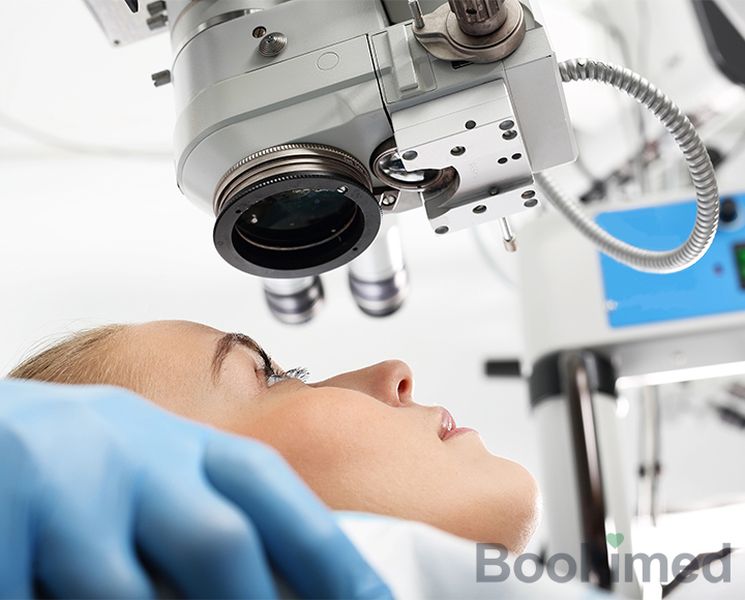
Corneal Cross Linking (CCL) (Un ojo)
Este procedimiento refuerza la córnea mediante luz ultravioleta y gotas de riboflavina para detener la progresión del queratocono.
Preguntas frecuentes sobre Enlace cruzado corneal (CCL) (un ojo) en Alemania
¿Qué es el Cross-Linking corneal (CCL) y por qué se realiza?
El cross-linking corneal es un procedimiento ambulatorio mínimamente invasivo que fortalece la córnea mediante gotas de riboflavina y luz ultravioleta. Se realiza para estabilizar la estructura del ojo y detener la progresión del queratocono o la ectasia corneal, ayudando al 90% de los pacientes a evitar una cirugía de trasplante invasiva.
- Estabilización biomecánica: Crea nuevos enlaces de colágeno para reforzar y endurecer el tejido corneal debilitado.
- Detención de la progresión de la enfermedad: Previene el empeoramiento del adelgazamiento corneal y la protuberancia irregular típica del queratocono.
- Estabilización de la visión: Fija la forma del ojo para detener los cambios rápidos en la graduación y el astigmatismo.
- Prevención de cirugías mayores: Detiene el deterioro del tejido a tiempo para evitar procedimientos costosos de trasplante de córnea.
Perspectiva del experto de Bookimed: Alemania se encuentra entre nuestros principales destinos para el cuidado de la córnea debido a instituciones de gran investigación como la Clínica Nordwest. Mientras que el cross-linking básico en los EE. UU. cuesta en promedio _price_compare_US_average_, los centros alemanes especializados ofrecen protocolos avanzados desarrollados en Alemania. Esta experiencia es fundamental porque estabilizar la córnea a tiempo preserva más la visión existente que un
¿Mejorará mi visión después del Cross-Linking corneal?
El cross-linking corneal está diseñado para estabilizar su visión deteniendo la progresión del queratocono en lugar de mejorar la claridad. Aunque el 95% de los pacientes logran la estabilidad corneal, cualquier mejora visual se considera un resultado adicional derivado del aplanamiento gradual del cono corneal.
- Objetivo principal: Detiene la protuberancia corneal para prevenir la pérdida de visión futura y posibles trasplantes.
- Cambios en la visión: Alrededor del 60% al 81% de los pacientes experimentan un ligero aplanamiento y una reducción del astigmatismo.
- Fase de recuperación: Espere visión borrosa o nubosidad temporal durante 2 a 4 semanas después de la cirugía.
- Resultado a largo plazo: La estabilidad visual final y las actualizaciones de las prescripciones de lentes suelen ocurrir de 6 a 12 meses después del procedimiento.
Perspectiva del experto de Bookimed: La estabilización es el estándar, pero clínicas alemanas como EuroEyes y Nordwest enfatizan la compatibilidad de las lentes a largo plazo. Dado que la córnea se vuelve más regular, los pacientes a menudo encuentran que las lentes de contacto especiales son mucho más fáciles de ajustar y tolerar después de la fase inicial de remodelación de 6 meses.
Consenso de los pacientes: Muchos pacientes describen el procedimiento como una forma de congelar su enf
¿Cuáles son las principales técnicas de CCL ofrecidas en Alemania?
Alemania ofrece el espectro completo de técnicas de Cross-Linking Corneal (CCL), incluyendo el protocolo de Dresde (Epi-off), que es el estándar de oro, opciones transepiteliales menos invasivas (Epi-on) y protocolos acelerados. Estos métodos utilizan riboflavina y luz UV-A para estabilizar la córnea y detener la progresión del queratocono.
- Técnica Epi-off: La eliminación del epitelio corneal garantiza la máxima absorción de riboflavina para una mayor estabilidad a largo plazo.
- Protocolo Epi-on: El epitelio intacto reduce el dolor postoperatorio y el riesgo de infección en casos de etapa temprana.
- CXL acelerado: Una mayor intensidad de UV reduce el tiempo de tratamiento de 30 minutos a solo unos minutos.
- Protocolo para córnea delgada: Gotas especiales de riboflavina permiten un tratamiento seguro para córneas de menos de 400 micrómetros.
Perspectiva del experto de Bookimed: Aunque muchos eligen Epi-on por comodidad, los centros de investigación alemanes como la Clínica Nordwest enfatizan que Epi-off sigue siendo el punto de referencia clínico. Más de 1.700 pacientes han buscado atención ocular avanzada en Alemania a través de nuestra plataforma, a menudo priorizando clínicas que mantienen tanto estándares ISO como afiliaciones de investigación universitaria para una seguridad superior.
Consenso de los pacientes:
¿Cómo es la recuperación y qué dolor debo esperar?
La recuperación del cross-linking corneal en Alemania conlleva de 2 a 4 días de molestias significativas. Los pacientes suelen sentir ardor, lagrimeo y una sensación de arenilla. La visión permanece borrosa durante varias semanas mientras la córnea se estabiliza. La mayoría de los síntomas alcanzan su punto máximo dentro de las primeras 72 horas después del procedimiento.
- Dolor inicial: Espere sensaciones de ardor o pinchazos durante 24 a 72 horas después de la cirugía.
- Sensibilidad a la luz: La fotofobia intensa requiere el uso de gafas de sol en interiores y evitar todas las pantallas digitales.
- Cambios en la visión: La vista permanece borrosa o inestable durante días antes de mostrar una mejora gradual.
- Superficie de curación: La irritación y la sequedad pueden durar hasta 3 semanas mientras sana.
Perspectiva del experto de Bookimed: Las clínicas alemanas como EuroEyes o Nordwest se especializan en técnicas «epi-off» que proporcionan estabilidad a largo plazo pero implican más dolor inicial. Dado que solo se trata un ojo, su recuperación será mucho más manejable. Mantener un ojo claro le permite conservar la movilidad básica incluso durante las primeras 48 horas, que son las más sensibles.
Consenso de los pacientes: Muchos pacientes describen el primer sueño como la etapa más difícil una vez que desaparece el
¿El seguro médico alemán cubre el CCL para un solo ojo?
El seguro médico legal alemán (GKV) cubre el Cross-Linking corneal (CCL) para un solo ojo cuando es médicamente necesario. La cobertura requiere una progresión documentada del queratocono mediante escaneos de topografía corneal. Los tratamientos se facturan por ojo, siempre que la córnea mantenga un espesor mínimo de 400 micrómetros por seguridad.
- Requisito de documentación: Los oftalmólogos deben proporcionar pruebas diagnósticas del empeoramiento activo mediante escaneos topográficos consecutivos.
- Requisitos clínicos: Los pacientes necesitan un espesor corneal mínimo de 400 micrómetros para la seguridad de la luz UV.
- Estatus del proveedor: La cirugía debe realizarse en clínicas universitarias públicas o con médicos registrados en el sistema legal.
- Costos asociados: La cirugía básica está cubierta, pero los escaneos avanzados de mapeo ocular pueden costar entre 50 y 150 €.
Perspectiva del experto de Bookimed: Aunque el seguro público cubre el procedimiento, las clínicas privadas como EuroEyes ofrecen principalmente el CCL como un servicio privado. Centros médicos como la Clínica Nordwest en Frankfurt manejan un gran volumen de casos complejos. Confirme siempre si el centro acepta su tarjeta sanitaria específica antes de la consulta inicial.
Consenso de los pacientes: La documentación que muestra la progresión es
¿Cuál es la estancia recomendada en el país y el cronograma de tratamiento para pacientes internacionales?
Los pacientes internacionales que se someten a un cross-linking corneal en Alemania deben planificar una estancia total de 3 a 7 días. Este cronograma incluye evaluaciones preoperatorias obligatorias y una ventana de seguimiento crítica para monitorear los hitos de curación temprana y verificar la estabilidad de la lente de contacto terapéutica antes de viajar en avión.
- Fase preoperatoria: Llegue 1 día antes para diagnósticos especializados y mapeo del espesor corneal.
- Duración del tratamiento: El procedimiento es ambulatorio y generalmente requiere solo 1 visita a la clínica.
- Ventana de recuperación: Espere una sensibilidad significativa a la luz y lagrimeo durante las primeras 48 a 72 horas.
- Autorización para volar: Obtenga un certificado de aptitud para volar durante un examen de seguimiento antes de su partida internacional.
Opinión de expertos de Bookimed: Los centros de oftalmología alemanes como EuroEyes o la Clínica Nordwest priorizan la ventana de seguridad de 72 horas. Aunque la cirugía es breve, las clínicas a menudo insisten en un chequeo al segundo día. Observamos que los pacientes que permanecen 5 días reportan una mayor comodidad durante los vuelos. Este tiempo adicional permite a los cirujanos confirmar que la lente terapéutica no se ha desplazado.
Consenso de los pacientes: La mayoría de los viaj
¿Qué hospitales en Alemania tienen las calificaciones más altas en neurocirugía?
Alemania alberga algunos de los departamentos de neurocirugía más prestigiosos del mundo, liderados por la Charité – Universitätsmedizin Berlin y el Hospital Universitario de Heidelberg. Estos centros destacan en el tratamiento de tumores cerebrales complejos y enfermedades cerebrovasculares. Para maximizar la eficacia de sus procedimientos, utilizan tecnologías de vanguardia como la resonancia magnética intraoperatoria y la neuronavegación asistida por computadora.
- Charité Berlín: Realiza más de 5000 cirugías al año. La clínica está dirigida por el reconocido neurocirujano Dr. Peter Vaikoczy.
- Centro Médico Solingen: El Dr. Ralf Buhl ha realizado más de 4.000 cirugías, incluidas cirugías de columna mínimamente invasivas.
- Clínica Asklepios Nord: equipada con el único sistema de resonancia magnética intraoperatoria bilateral de Alemania para garantizar precisión quirúrgica en tiempo real durante la extirpación del tumor.
- Clínica Nordwest: reconocida por la revista Newsweek como un hospital líder por su innovación en tecnología de ultrasonido 3D.
Opinión experta de Bookimed: Los datos muestran que elegir centros con un alto volumen quirúrgico suele llevar a recomendaciones de tratamiento más conservadoras. En el Centro Médico Solingen, que atiende a más de 60.000 pacientes al año, los cirujanos suelen sugerir fisioterapia en lugar de cirugía
¿Cuáles son las tasas de éxito de los procedimientos neuroquirúrgicos complejos en Alemania?
En Alemania, los procedimientos neuroquirúrgicos de alta complejidad demuestran una seguridad excepcional. Las tasas de éxito en las fusiones espinales alcanzan el 99 %. La tasa de supervivencia en las resecciones de tumores cerebrales primarios es del 97 %. La independencia funcional es alta. Más del 82 % de los pacientes reciben el alta inmediatamente después del tratamiento. Los centros alemanes priorizan la preservación de la función neurológica mediante técnicas modernas de mapeo.
- Resección de tumores: los cirujanos logran una resección tumoral completa en el 87,2% de los casos de metástasis cerebrales.
- Éxito en el tratamiento de enfermedades vasculares: los hospitales alemanes informan de una tasa de supervivencia del 98,7% para aneurismas no rotos.
- Mejora del estado neurológico: casi el 43% de los pacientes experimentan una mejora de los parámetros funcionales después de resecciones complejas.
- Seguridad de las intervenciones quirúrgicas: En grandes centros quirúrgicos, las tasas de supervivencia de los pacientes después de la cirugía de columna son del 98-99%.
Opinión experta de Bookimed: Cirujanos experimentados como el Dr. Uwe Köhler, de la Clínica Asklepios Altona, realizan más de 2000 cirugías al año. Los datos muestran que estos especialistas mantienen tasas de éxito de hasta el 90 %, incluso en los tumores cerebrales más comp
¿Qué tecnologías avanzadas suelen estar disponibles en las clínicas neuroquirúrgicas alemanas?
Las clínicas neuroquirúrgicas alemanas incorporan regularmente instrumentos digitales de alta precisión y visualización en tiempo real a la práctica quirúrgica. Entre las tecnologías clave se encuentra la neuronavegación computarizada para cirugías de cerebro y médula espinal. Instituciones como la Clínica Asklepios Nord utilizan la resonancia magnética intraoperatoria para verificar la extirpación de tumores en tiempo real. Estos sistemas proporcionan a los cirujanos navegación GPS 3D.
- Neuronavegación: proporciona visualización 3D y seguimiento de instrumentos en tiempo real para lograr precisión quirúrgica hasta el nivel submilimétrico.
- Imágenes intraoperatorias: sistemas como iMRI y O-arm CT permiten la confirmación inmediata de una resección exitosa.
- Neuromonitorización: Monitorea las funciones motoras y sensoriales durante la cirugía para proteger el sistema nervioso.
- Diagnóstico de fluorescencia: se utiliza el colorante 5-ALA para resaltar los bordes del tumor para una eliminación más completa.
- Asistencia robótica: Sistemas como el Da Vinci mejoran la precisión en procedimientos complejos y mínimamente invasivos.
Opinión experta de Bookimed: Grandes centros como la Charité – Universitätsmedizin de Berlín realizan más de 4000 procedimientos neuroquirúrgicos al año, lo que crea un entorno rico en datos para p
¿Qué formación especializada reciben los neurocirujanos en ejercicio en Alemania?
En Alemania, los neurocirujanos deben completar una residencia especializada de seis años tras graduarse de la facultad de medicina. Este programa estructurado incluye cuidados intensivos, práctica clínica y una revista quirúrgica obligatoria. Posteriormente, los candidatos aprueban un examen estatal para obtener el título de residente (Facharzt für Neurochirurgie).
- Residencia clínica: requiere de 48 a 72 meses de práctica neuroquirúrgica especializada.
- Cuidados intensivos: incluye una pasantía obligatoria de 6 meses en una unidad de cuidados intensivos neuroquirúrgicos.
- Revista quirúrgica: los cirujanos documentan cientos de cirugías, incluidas craneotomías y cirugías de columna.
- Examen de licencia: Los solicitantes deben aprobar un examen médico oral y práctico administrado por el estado.
Opinión experta de Bookimed: La formación neuroquirúrgica alemana se centra en una amplia experiencia quirúrgica. Por ejemplo, el Dr. Ralf Buhl, del Centro Médico Solingen, ha realizado más de 4000 cirugías. El Dr. Jürgen Kiwit, del Hospital Meoklinik, cuenta con más de 25 años de experiencia. Este riguroso sistema garantiza que los especialistas de los principales centros aborden casos complejos con una precisión demostrada.
Comentarios de los pacientes: Los pacientes se sienten seguros al saber que sus médicos han recibido año