Reparación de hernia de hiato en Italia — obtén 3 clínicas con costos


Revisado médicamente por
Fahad Mawlood
¿Cuál es el precio de Reparación de hernia de hiato en Italia? Descubra ahora
La reparación de hernia de hiato en Italia suele costar entre $7,500 y $12,000. El precio final depende de la técnica quirúrgica, como los métodos laparoscópicos o asistidos por robot. También depende de la duración de la estancia hospitalaria y de la ciudad elegida para el tratamiento. En los EE. UU. Los paquetes médicos italianos estándar generalmente incluyen honorarios quirúrgicos, anestesia, atención de enfermería y una estancia hospitalaria de una a dos noches.
- Cirugía asistida por robot: Suele añadir una prima del 20-30% sobre las técnicas laparoscópicas convencionales.
- Variaciones según la ciudad: Los precios en centros importantes como Milán, Roma y Bolonia pueden variar ligeramente.
- Servicios de diagnóstico: Las tomografías computarizadas preoperatorias y las consultas con especialistas a menudo se facturan por separado de la cirugía.
- Niveles hospitalarios: Las opciones de hospitalización VIP o las estancias en clínicas privadas aumentan significativamente la inversión total.
Perspectiva del experto de Bookimed: Elegir centros acreditados por la JCI como el Maria Cecilia Hospital ofrece seguridad de alto nivel y atención especializada. Si bien algunas clínicas en Milán o Roma brindan servicios premium, a menudo mantienen precios competitivos para pacientes internacionales. Por ejemplo, un procedimiento laparoscópico en Bolonia puede costar aproximadamente $14,100. Esto incluye una estancia VIP de 2 días, lo que ilustra un excelente valor para una cirugía mayor en Europa.
Beneficios clave
¿Por qué eligen los pacientes Italia para la reparación de hernia hiatal?
- Clínicas acreditadas: Hospitales certificados por JCI y centros reconocidos por el Ministerio de Salud de Italia garantizan altos estándares de atención.
- Últimas tecnologías: El uso de técnicas laparoscópicas, como la fundoplicatura de Nissen y el Sistema de Gestión de Reflujo LINX, ofrece opciones mínimamente invasivas. Estos métodos contribuyen a reducir los tiempos de recuperación.
- Altas tasas de éxito: Los procedimientos de reparación de hernia hiatal en Italia tienen una tasa de eficacia del 95%. Esto asegura un alivio efectivo de los síntomas y una mejor calidad de vida.
- Cirujanos expertos: Los principales cirujanos italianos están certificados por la Junta Europea de Cirugía. Han realizado más de 2,000 reparaciones de hernia hiatal, demostrando su amplia experiencia y pericia.
Accede a soluciones avanzadas para la reparación de hernia hiatal en clínicas de confianza de $7,500.
| Italia | España | Turquía | |
|---|---|---|---|
| Reparación de hernia de hiato | ≈ $7,500 | de $10,800 | de $5,400 |
Sus beneficios y garantías con Bookimed
Precios directos
Bookimed no añade cargos adicionales a los precios de Reparación de hernia de hiato. Las tarifas proceden de las listas de precios oficiales de las clínicas. Pagará directamente en la clínica por su Reparación de hernia de hiato a su llegada al país.
Sólo clínicas y médicos verificados
Bookimed está comprometido con su seguridad. Solo trabajamos con las clínicas que mantienen altos estándares internacionales en Reparación de hernia de hiato y tienen las licencias necesarias para atender a pacientes internacionales en todo el mundo.
Asistencia 24/7 gratuita
Bookimed ofrece asistencia experta gratuita. Un coordinador médico personal le apoya antes, durante y después del tratamiento, resolviendo cualquier problema. Nunca estará solo en su viaje médico de Reparación de hernia de hiato.

Su coordinador médico personal de Bookimed
- Le apoya en cada etapa
- Ayuda a elegir la clínica y el médico adecuados
- Asegura un acceso rápido y conveniente a la información
Descubra las mejores clínicas de Reparación de hernia de hiato en Italia: 3 opciones verificadas y Precios










Descripción general de Reparación de hernia de hiato en Italia
- Reparación de hernia umbilical - de $3,500La operación corrige un bulto cerca del ombligo, lo que reduce la incomodidad y previene complicaciones peligrosas.
- Resección de estómago - de $14,500El procedimiento consiste en extirpar parte del estómago para tratar afecciones como el cáncer, lo que brinda resultados potencialmente curativos.
- Amputación - de $7,500El procedimiento consiste en extirpar una parte del cuerpo para salvar vidas, aliviar el dolor o abordar el progreso de la enfermedad.
- Cirugía de hernia inguinal - de $2,800El procedimiento trata un bulto en el área de la ingle empujándolo hacia atrás y fortaleciendo la pared abdominal.
- Reparación de hernia de hiato - de $7,500El procedimiento repara las protuberancias del tejido abdominal a través del diafragma, mejorando la digestión y reduciendo las molestias.
- Colecistectomía - de $8,500La operación extirpa la vesícula biliar para tratar cálculos biliares, inflamación o cáncer con menos cicatrices y una recuperación más rápida.
- Cirugía - de $5,500El procedimiento consiste en corregir defectos corporales o enfermedades mediante operaciones manuales, generalmente bajo anestesia.
- Aterectomía - de $8,500El procedimiento elimina la placa en las arterias, mejora el flujo sanguíneo y reduce el riesgo de enfermedades cardíacas con una cirugía mínimamente invasiva.
Día 1 - Llegada
- Llegada al centro médico.
- Complete el papeleo necesario y el registro.
- Reúnase con el equipo quirúrgico para la consulta.
Día 2 - Preoperatorio
- Someterse a pruebas médicas previas a la cirugía, como análisis de sangre.
- Se le realizará una prueba de la serie Gastrointestinal (GI) superior.
- Sométete a una prueba de enfermedad por reflujo gastroesofágico (ERGE) si es necesario.
- El ayuno comienza la noche anterior a la cirugía.
Día 3 - Cirugía
- El procedimiento dura aproximadamente 2-3 horas.
- Se administra anestesia general.
- El cirujano reparará la hernia por vía laparoscópica.
- Después de la cirugía, pasará algunas horas en recuperación.
Día 4 - Postoperatorio
- Permanezca en el hospital para observación y descanso.
- Comience actividad física ligera según lo aprobado por el médico.
- Comience una dieta líquida antes de hacer la transición a alimentos sólidos.
Semana 1 - Rehabilitación
- Continuar con actividades físicas ligeras.
- Poco a poco introduzca alimentos regulares según lo aprobado por el médico.
Semana 2 - Rehabilitación
- Regrese al trabajo si su trabajo no requiere actividad extenuante.
- Asista a las citas de seguimiento con su cirujano.
Semana 4 - Rehabilitación
- Reanude actividades físicas más vigorosas con el permiso del médico.
- Espere ver los resultados finales de la cirugía.
Nota: La recuperación de cada paciente puede variar según las condiciones de salud individuales y la complejidad de la cirugía.
- Depósito de Bookimed: 200 $ o 200 €.
- Depósito de la clínica: Pague un porcentaje fijo por adelantado.
Historias en video de pacientes de Bookimed
Compartir contenido
 Olena Sikoza
Datos сlave sobre Reparación de hernia de hiato
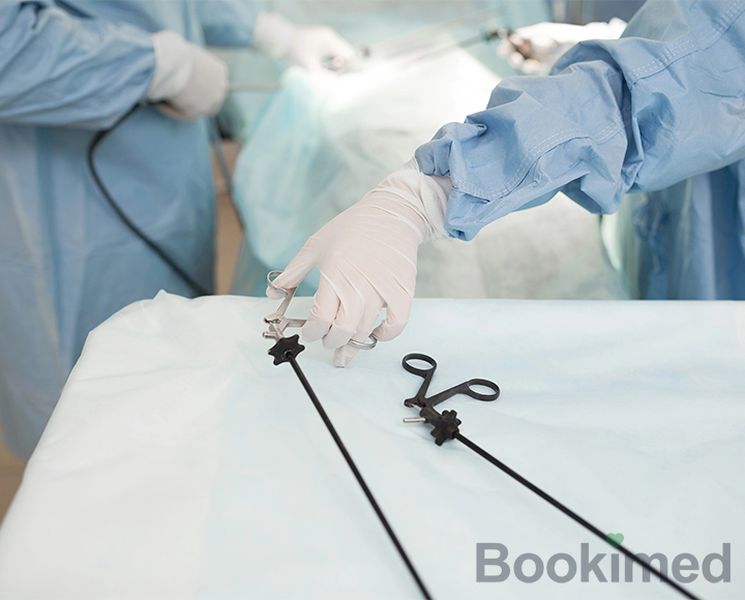
Reparación de la hernia de hiato
Esta intervención quirúrgica corrige una hernia de hiato reposicionando el estómago y reforzando el diafragma.
Preguntas frecuentes sobre Reparación de hernia de hiato en Italia
¿Es segura la reparación de hernia hiatal en Italia y qué credenciales debo buscar en un cirujano?
La reparación de hernia hiatal en Italia es altamente segura, con tasas de éxito de hasta el 95 %. Los cirujanos utilizan técnicas laparoscópicas avanzadas y sistemas robóticos para garantizar la precisión. Los principales expertos italianos a menudo mantienen certificaciones del European Board of Surgery y realizan más de 2,000 procedimientos para garantizar la seguridad del paciente.
- Certificación del cirujano: Priorice a los cirujanos con credenciales de la Italian Society of Hernia and Abdominal Wall Surgery (ISHAWS).
- Experiencia clínica: Busque especialistas que realicen más de 50 procedimientos laparoscópicos de hernia cada año.
- Acreditación de instalaciones: Elija centros con acreditación JCI o IRCCS como el Hospital San Donato en Milán.
- Volumen clínico: Los centros de alto volumen en Roma o Milán generalmente reportan tasas más bajas de recurrencia de hernia.
Perspectiva de expertos de Bookimed: Los centros italianos acreditados por IRCCS, como el Hospital San Donato, combinan la atención clínica con la investigación financiada por el gobierno. Este doble enfoque a menudo se traduce en una adopción más temprana de técnicas de reparación sin malla en comparación con los hospitales generales estándar. Los pacientes en estas instituciones de investigación intensiva se benefician de equipos multidisciplinarios que manejan casos comp
¿Cómo se repara una hernia hiatal por laparoscopia y en qué se diferencia el procedimiento de la cirugía abierta?
La reparación laparoscópica de hernia hiatal utiliza de 3 a 5 pequeñas incisiones para reposicionar el estómago y tensar la abertura diafragmática. Los cirujanos utilizan una cámara y herramientas especializadas para realizar el procedimiento de forma mínimamente invasiva. Este enfoque ofrece una recuperación significativamente más rápida y menos dolor que la cirugía abierta.
- Tamaño de la incisión: Los cirujanos realizan pequeñas incisiones tipo ojo de cerradura en lugar de una gran abertura abdominal o torácica.
- Estancia hospitalaria: Los pacientes suelen permanecer de 1 a 2 días en comparación con los 3 a 7 días de los procedimientos abiertos.
- Cronograma de recuperación: La mayoría de los pacientes caminan el mismo día y retoman actividades ligeras en 1 semana.
- Resultados a largo plazo: El refuerzo con malla laparoscópica reduce la recurrencia de la hernia del 30–50 % a menos del 10 %.
Perspectiva del experto de Bookimed: Los centros italianos como el Hospital San Donato integran la investigación con la práctica clínica para reducir las tasas de complicaciones. Elegir un centro de alto volumen es vital porque la experiencia evita envolturas de funduplicatura demasiado apretadas. Los hospitales públicos más pequeños pueden tener esperas de 3 a 6 meses. Las clínicas privadas acreditadas por la JCI en Milán o Roma brindan un acceso mucho
¿Cuáles son los principales riesgos o complicaciones después de la reparación de una hernia hiatal y cómo se manejan?
La reparación de hernia hiatal en Italia es generalmente segura, pero complicaciones como la dificultad para tragar (disfagia) y el síndrome de distensión gaseosa ocurren en hasta el 40-50% de los pacientes. La mayoría de los problemas se manejan mediante cambios en la dieta, mientras que la recurrencia o el reflujo persistente pueden requerir una cirugía de revisión laparoscópica realizada por cirujanos especializados.
- Dificultad para tragar: Afecta al 20-40% inicialmente debido al edema; se maneja con comidas pequeñas y blandas.
- Síndrome de distensión gaseosa: Causa presión abdominal; se maneja caminando y evitando bebidas carbonatadas o alimentos que produzcan gases.
- Recurrencia de la hernia: Ocurre en el 10-30% a largo plazo; se maneja mediante control de peso o cirugía de revisión asistida por robot.
- Lesión del nervio vago: Causa un vaciado gástrico retrasado; se maneja con medicamentos procinéticos para ayudar a la digestión.
Perspectiva del experto de Bookimed: Los centros italianos como el Hospital Maria Cecilia cuentan con la acreditación de la Joint Commission International (JCI), lo que se correlaciona con protocolos de seguridad estandarizados. Los datos muestran que los centros de alto volumen que realizan miles de operaciones anuales a menudo logran mejores resultados. Los pacientes deben confirmar si su cirujano realiza m
¿Soy un buen candidato para una reparación laparoscópica de hernia hiatal?
Los candidatos ideales para la reparación laparoscópica de hernia hiatal en Italia incluyen pacientes con enfermedad por reflujo gastroesofágico persistente, terapia farmacológica fallida o hernias paraesofágicas grandes. Generalmente, usted califica si la acidez estomacal crónica, la regurgitación o la dificultad para tragar afectan significativamente su vida diaria a pesar del uso de inhibidores de la bomba de protones.
- Gravedad de los síntomas: Reflujo crónico o dolor torácico resistente al tratamiento farmacológico a largo plazo.
- Especificaciones de la hernia: Hernias deslizantes grandes o tipos paraesofágicos que conllevan altos riesgos de estrangulamiento.
- Complicaciones médicas: Presencia de úlceras esofágicas, esófago de Barrett o neumonía por aspiración recurrente.
- Salud general: Capacidad para someterse a anestesia general sin enfermedades cardíacas o pulmonares graves.
Perspectiva del experto de Bookimed: Los centros italianos como el Hospital San Donato o el Hospital Maria Cecilia integran una experiencia quirúrgica de alto volumen con seguridad acreditada por la JCI. Los datos muestran que estas clínicas manejan miles de operaciones complejas anualmente. Los altos volúmenes de pacientes se traducen en técnicas laparoscópicas más refinadas y tasas de complicaciones más bajas para las reparaciones de hernias.
¿Cuánto tiempo duran la operación y la recuperación completa, y cuál es el programa de dolor postoperatorio y dieta?
La reparación laparoscópica de hernia hiatal en Italia suele durar de 90 minutos a 3 horas. Los pacientes generalmente permanecen en el hospital de 1 a 3 días. La recuperación completa oscila entre 4 y 8 semanas, y la mayoría regresa a trabajos ligeros en un plazo de 10 a 14 días.
- Duración quirúrgica: Los enfoques laparoscópicos toman 90 minutos, mientras que los procedimientos robóticos pueden requerir 3 horas.
- Estancia hospitalaria: La mayoría de las clínicas italianas dan el alta a los pacientes dentro de las 48 horas posteriores a la supervisión de la curación inicial.
- Hitos de recuperación: Regreso a trabajos no extenuantes en 2 semanas; evitar levantar objetos pesados durante 6 semanas.
- Manejo del dolor: Las molestias alcanzan su punto máximo durante los días 2 a 5, principalmente debido al gas quirúrgico en lugar de las incisiones.
- Etapas dietéticas: La progresión comienza con líquidos, pasando a purés en la semana 2 y sólidos en la semana 6.
Perspectiva del experto de Bookimed: Mientras que muchos centros internacionales se centran en el alta rápida, las instalaciones italianas acreditadas por la JCI, como el Hospital Maria Cecilia, enfatizan la seguridad diagnóstica. Los datos sugieren que un estudio de deglución antes de avanzar a sólidos es un estándar local común. Este paso adicional ayuda a preveni
¿Qué ciudades italianas ofrecen los programas más experimentados en hernia de hiato laparoscópica y hay coordinadores de habla inglesa disponibles?
Milán, Roma y Bolonia son los principales centros de Italia para la reparación laparoscópica de hernia de hiato. Estas ciudades albergan hospitales de investigación acreditados por la JCI como San Donato y San Carlo di Nancy. Las oficinas especializadas para pacientes internacionales ofrecen coordinadores dedicados de habla inglesa para gestionar la traducción médica y la logística para extranjeros.
- Centros especializados: Milán y Roma lideran en capacidad de cirugía gastrointestinal robótica y laparoscópica.
- Investigación clínica: Las instalaciones acreditadas por IRCCS en Milán combinan investigación avanzada con tratamientos mínimamente invasivos.
- Apoyo lingüístico: Las oficinas internacionales en clínicas como Gemelli y Policlinico gestionan seguros extranjeros.
- Estándares de las instalaciones: La mayoría de los hospitales de primer nivel mantienen acreditaciones JCI o estándares de certificación de calidad ISO.
Perspectiva del experto de Bookimed: Aunque las grandes clínicas de Roma tienen una gran visibilidad, el Hospital Maria Cecilia cerca de Bolonia ofrece una ventaja única. Opera un campus internacional dedicado y proporciona traslados directos desde el aeropuerto de Bolonia. Este nivel de coordinación logística suele ser más fluido que navegar por hospitales más grandes en el centro de la ciudad.
Consenso de lo