Cirugía de estrabismo en Italia: las 4 mejores clínicas y sus precios


Revisado médicamente por
Fahad Mawlood
¿Cuál es el precio de Cirugía de estrabismo en Italia? Descubra ahora
La cirugía de estrabismo en Italia suele costar entre $2,800 y $4,600 dependiendo de la complejidad del caso y la ubicación de la clínica. El precio está influenciado por el número de ojos tratados y el tipo de anestesia requerida. En los EE. UU. Los costos generalmente incluyen el procedimiento quirúrgico, la anestesia y las visitas de seguimiento iniciales.
- Ubicación geográfica: Los precios en Roma suelen ser entre un 40 y un 50% más altos que en Bari o Turín.
- Tipo de anestesia: La anestesia general, estándar para casos pediátricos, aumenta los costos en comparación con la sedación tópica.
- Complejidad quirúrgica: Operar ambos ojos suele añadir entre un 30 y un 50% al precio base de un solo ojo.
- Nivel clínico: Las instituciones con gran actividad investigadora en Milán pueden cobrar tarifas más altas por evaluaciones diagnósticas especializadas.
Perspectiva del experto de Bookimed: Elegir centros regionales como el Ospedale Santa Maria o Santa Caterina da Siena ofrece un valor significativo. Estas instalaciones brindan atención especializada por aproximadamente entre $3,000 y $4,000. Esto es considerablemente más bajo que los más de $6,000 que suelen cobrar los hospitales privados de la capital. Para casos complejos, el San Raffaele de Milán es una de las mejores opciones. Está clasificado entre los mejores hospitales del mundo en 2021 por Newsweek. Si bien las consultas allí comienzan cerca de los $300, su enfoque basado en la investigación garantiza el acceso a una experiencia quirúrgica de élite.
| Italia | España | Turquía | |
|---|---|---|---|
| Cirugía de estrabismo | ≈ $2,800 | de $14,900 | de $1,800 |
Sus beneficios y garantías con Bookimed
Precios directos
Bookimed no añade cargos adicionales a los precios de Cirugía de estrabismo. Las tarifas proceden de las listas de precios oficiales de las clínicas. Pagará directamente en la clínica por su Cirugía de estrabismo a su llegada al país.
Sólo clínicas y médicos verificados
Bookimed está comprometido con su seguridad. Solo trabajamos con las clínicas que mantienen altos estándares internacionales en Cirugía de estrabismo y tienen las licencias necesarias para atender a pacientes internacionales en todo el mundo.
Asistencia 24/7 gratuita
Bookimed ofrece asistencia experta gratuita. Un coordinador médico personal le apoya antes, durante y después del tratamiento, resolviendo cualquier problema. Nunca estará solo en su viaje médico de Cirugía de estrabismo.

Su coordinador médico personal de Bookimed
- Le apoya en cada etapa
- Ayuda a elegir la clínica y el médico adecuados
- Asegura un acceso rápido y conveniente a la información
Descubra las mejores clínicas de Cirugía de estrabismo en Italia: 4 opciones verificadas y Precios










Descripción general de Cirugía de estrabismo en Italia
- Cirugía de estrabismo - de $2,800La operación corrige la alineación de los ojos, implica ajustar los músculos de los ojos, lo que ayuda a mejorar el enfoque y la coordinación.
- Tratamiento de estrabismo - de $2,600El procedimiento corrige la desalineación de los ojos, mediante cirugía o anteojos, mejorando la visión y la apariencia.
- Tratamiento de ambliopía - de $900Esta terapia ayuda a restaurar la visión dañada al mejorar la función del ojo más débil a través de ejercicios, anteojos o parches.
Día 1 - Llegada
- Llegada al país e instalación en su alojamiento.
- La clínica no proporciona transporte al hospital.
Día 2 - Preoperatorio
- Se le realizará una prueba de autorrefractometría para medir la refracción.
- Un especialista revisará su historial médico y realizará un examen.
- Es posible que se requieran pruebas o procedimientos adicionales según su condición.
- Se proporcionará asistencia lingüística durante todo el proceso.
Día 3 - Cirugía de estrabismo
- La cirugía durará de 1 a 2 horas, bajo anestesia general.
- Los músculos de sus ojos se realinearán para corregir el estrabismo.
- Serás monitoreado en la recuperación post-cirugía.
Día 4 - Postoperatorio
- La valoración postoperatoria la realizará el especialista.
- Se proporcionarán instrucciones para el cuidado en el hogar.
- Permanezca en el hospital para control y recuperación.
Semana 1 - Rehabilitación
- Siga las instrucciones de cuidado en el hogar proporcionadas por el especialista.
- Evite la actividad física extenuante y los deportes.
Semana 2 - 4
- Regrese gradualmente a sus actividades normales, evitando levantar objetos pesados y practicar deportes.
- Los resultados finales de la cirugía deberían ser visibles al final de la semana 4.
Tenga en cuenta que el caso de cada paciente es único y el cronograma puede variar.
- Depósito de Bookimed: 200 $ o 200 €.
- Depósito de la clínica: Pague un porcentaje fijo por adelantado.
Historias en video de pacientes de Bookimed
Reseñas
Todas las reseñasCompartir contenido
 Olena Sikoza
Datos сlave sobre Cirugía de estrabismo
Cirugía del estrabismo
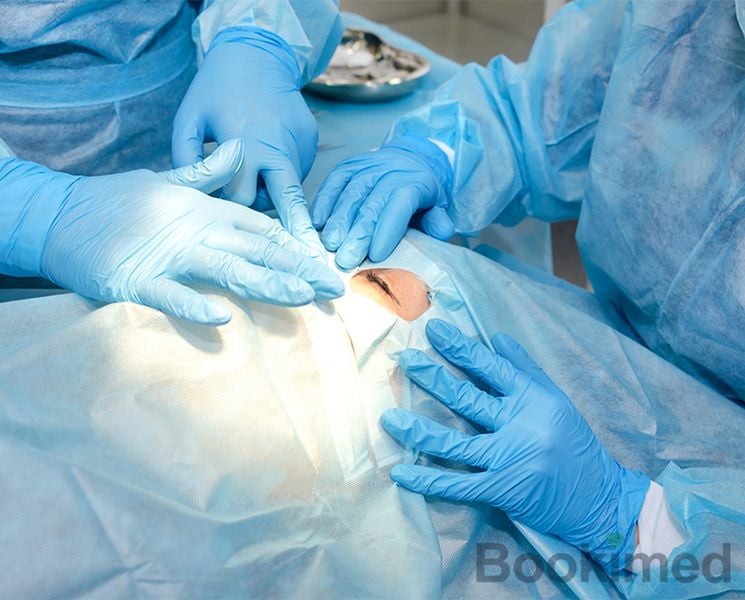
La cirugía del estrabismo consiste en ajustar los músculos de los ojos para mejorar la alineación y corregir los problemas de visión.
Preguntas frecuentes sobre Cirugía de estrabismo en Italia
¿Es segura la cirugía de estrabismo y cuáles son los principales riesgos?
La cirugía de estrabismo es excepcionalmente segura para niños y adultos, con tasas de éxito elevadas de entre el 80% y el 90%. Las complicaciones graves son raras y afectan a menos de 1 de cada 2.400 casos. La mayoría de los riesgos implican ajustes menores en la alineación o visión doble temporal mientras el cerebro se adapta a las nuevas posiciones oculares.
- Precisión de la alineación: La sobrecorrección o subcorrección ocurre en el 20% al 30% de los casos en adultos.
- Cambios en la visión: La visión doble temporal es común; la diplopía persistente afecta solo al 0,8% de los pacientes.
- Irritación superficial: Los pacientes a menudo informan una sensación temporal de arenilla similar a papel de lija en los ojos.
- Estabilidad muscular: Los riesgos poco frecuentes incluyen el deslizamiento de un músculo, que afecta aproximadamente al 0,04% al 0,07% de las cirugías.
Perspectiva del experto de Bookimed: Los hospitales de investigación italianos como el San Raffaele realizan más de 52.000 operaciones al año, ofreciendo una experiencia de alto volumen que a menudo falta en clínicas más pequeñas. Los datos sugieren que elegir cirujanos que manejan más de 100 casos al año reduce significativamente los riesgos de revisión. Los centros de alto volumen a menudo proporcionan equipos de anestesia especializados para niños, lo que garantiza resultado
¿Qué cualificaciones debo buscar en un cirujano italiano para una cirugía de estrabismo?
Los cirujanos italianos cualificados para la cirugía de estrabismo deben poseer un título universitario en medicina y completar una especialización de 6 años en oftalmología. Busque médicos registrados en la Ordine dei Medici Chirurghi (OMCeO) y preferiblemente certificados por el European Board of Ophthalmology (EBO) para estándares internacionales validados.
- Acreditación de especialista: Debe poseer un diploma de oftalmología de una universidad italiana acreditada.
- Volumen quirúrgico: El éxito profesional se correlaciona con cirujanos que realizan 50 o más procedimientos de estrabismo al año.
- Formación de subespecialidad (Fellowship): Priorice a especialistas con fellowships dedicados a oftalmología pediátrica o estrabismo en adultos.
- Entorno clínico: Seleccione instalaciones con acreditación IRCCS del Ministerio de Salud italiano o JCI.
Perspectiva del experto de Bookimed: La atención oftalmológica italiana se distingue por hospitales de investigación de alto volumen como el San Raffaele en Milán. Estos centros realizan más de 52.000 operaciones al año en diversas especialidades. Aunque existen clínicas generales, elegir un hospital con gran actividad investigadora a menudo proporciona acceso a herramientas de diagnóstico más precisas como los sinoptóforos. Esta infraestructura técnica es vital para casos complejos en adultos donde e
¿Cirugía de estrabismo en Italia, laparoscópica o abierta?
La cirugía de estrabismo en Italia se realiza como un procedimiento oftalmológico abierto, no laparoscópico. Los cirujanos acceden a los músculos oculares a través de pequeñas incisiones en la conjuntiva, la fina membrana que cubre la parte blanca del ojo. Este enfoque extraocular especializado permite una realineación muscular precisa sin entrar en las cavidades corporales internas.
- Enfoque quirúrgico: Las clínicas italianas utilizan técnicas tradicionales de realineación de los músculos extraoculares a cielo abierto.
- Método de acceso: Los cirujanos llegan a los músculos a través de pequeñas incisiones de «ojo de cerradura» en la conjuntiva.
- Lugar del procedimiento: Las operaciones se realizan en la superficie del ojo, al nivel de los músculos extraoculares.
- Opciones avanzadas: Clínicas de Milán como San Raffaele ofrecen suturas ajustables para una atención precisa en adultos.
Opinión de expertos de Bookimed: Aunque los pacientes a menudo buscan la laparoscopia porque suena menos invasiva, es físicamente imposible para la cirugía ocular. El hospital San Raffaele de Milán mantiene altos estándares de seguridad al realizar más de 52.000 operaciones anuales en todas las especialidades. Elegir hospitales de investigación como este garantiza el acceso a cirujanos que utilizan técnicas de incisión pequeña que imitan los beneficios de recuper
¿Cuánto tiempo dura la recuperación y cuándo puedo volar a casa?
La mayoría de los pacientes se recuperan de la cirugía de estrabismo en un plazo de 1 a 2 semanas. Por lo general, debe esperar de 7 a 10 días antes de volar a casa desde Italia. Este plazo garantiza la estabilidad, permite que la hinchazón inicial disminuya y permite un examen de seguimiento crucial con su oftalmólogo en Milán.
- Recuperación inicial: La mayoría de los pacientes retoman sus actividades ligeras en un plazo de 3 a 7 días.
- Ventana para volar: Los cirujanos recomiendan esperar de 7 a 10 días para evitar complicaciones por presión.
- Restricciones de actividad: Evite levantar objetos pesados, nadar y realizar ejercicio intenso durante 2 a 4 semanas.
- Manejo de síntomas: El pico de hinchazón ocurre entre los días 2 y 3 y desaparece para el día 14.
Perspectiva de expertos de Bookimed: Las clínicas italianas como San Raffaele en Milán atienden a más de 300.000 pacientes al año. Priorizan la estabilidad a largo plazo sobre las altas rápidas. Los datos muestran que quedarse 10 días en lugar de 5 reduce significativamente la irritación causada por el aire seco de la cabina. Este tiempo adicional permite a los cirujanos confirmar que la alineación sigue siendo perfecta antes de que se enfrente a los cambios de presión en la cabina.
Consenso de los pacientes: Los pacientes recomiendan permanecer en Italia durante
¿Soy un buen candidato para la cirugía de estrabismo?
Usted es un buen candidato para la cirugía de estrabismo si tiene una desalineación ocular que persiste a pesar de las opciones no quirúrgicas como prismas o terapia visual. Los candidatos ideales incluyen adultos o niños que experimentan visión doble, fatiga visual o preocupaciones cosméticas significativas que afectan la vida diaria.
- Síntomas visuales: La visión doble frecuente, los dolores de cabeza o la pérdida de percepción de profundidad indican una candidatura funcional.
- Gravedad de la desalineación: Los pacientes con una desviación de 15 a 40 dioptrías prismáticas suelen reportar la mayor satisfacción.
- Estabilidad: Los candidatos exitosos tienen una visión estable y no presentan infecciones o inflamaciones oculares activas.
- Causa principal: El estrabismo concomitante a menudo conduce a resultados quirúrgicos más claros que los tipos restrictivos o paralíticos.
Perspectiva de expertos de Bookimed: Los centros italianos como San Raffaele enfatizan el diagnóstico basado en la investigación, como las pruebas de motilidad certificadas por IRCCS. Elegir un centro de alto volumen con más de 50,000 operaciones anuales garantiza el acceso a cirujanos experimentados en casos complejos de adultos. Los pacientes a menudo encuentran que las clínicas privadas italianas brindan evaluaciones significativamente más rápidas que el sistema de salu
¿El procedimiento es hospitalario o ambulatorio, y cuántos días debo permanecer en Italia?
La cirugía de estrabismo en Italia se realiza como un procedimiento ambulatorio, siendo el alta el mismo día el protocolo estándar. Los pacientes deben planificar una estancia total de 4 a 5 días en Italia. Este plazo permite realizar la operación de 30 a 60 minutos, la monitorización inmediata y la recuperación inicial antes de viajar en avión.
- Tipo de procedimiento: La cirugía ambulatoria generalmente permite el alta de 2 a 4 horas después de despertar de la anestesia.
- Estancia hospitalaria: La mayoría de los pacientes se van el mismo día; 1 noche es raro para los niños.
- Estancia total en Italia: Planifique un total de 4 a 5 días para cubrir el pico de inflamación y el seguimiento inicial.
- Disponibilidad para viajar: Los viajes internacionales son factibles 48 horas después de la operación si no ocurren complicaciones.
Perspectiva de expertos de Bookimed: Los centros italianos acreditados por IRCCS como San Raffaele realizan más de 52.000 operaciones anuales, lo que garantiza un alto volumen quirúrgico. Aunque viajar es médicamente posible después de 48 horas, quedarse 5 días proporciona un margen de seguridad. Este tiempo adicional permite que la visión doble inicial se estabilice antes de navegar por aeropuertos internacionales concurridos.
Consenso de los pacientes: Los pacientes recomiendan organizar transp