Hospital de la Familia
México, Mexicali
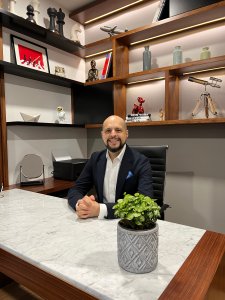
Joaquin Ayala Del Muro
33 años de experiencia

Clínica certificada por : 



Revisado médicamente por
Fahad Mawlood
| España | Estados Unidos | México | |
|---|---|---|---|
| Cirugía de Párpados Superiores e Inferiores | de $7,200 | de $5,500 | de $2,000 |


Día 1 - Llegada
Día 2 - Preoperatorio
Día 3 - Cirugía
Día 4-5 - Postoperatorio
Semana 1-2 - Rehabilitación
Semana 3-4
Semana 4-6
Nota: El cronograma de recuperación de cada paciente puede variar según las condiciones de salud individuales y la complejidad de la cirugía.

El doctor es un cirujano plástico galardonado que se especializa en procedimientos faciales y corporales. Certificado por el Consejo Mexicano de Cirugía Plástica, Estética y Reconstructiva, el doctor es reconocido como uno de los mejores cirujanos en la Ciudad de México, particularmente conocido por su experiencia en liposucción, rinoplastia y cirugías de levantamiento de glúteos brasileño (BBL).<\/p>
Actualmente practicando en el Centro Médico Salutaris, el doctor tiene un título
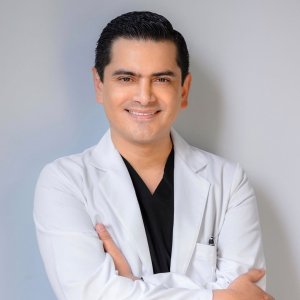
El Dr. Fer Cravioto es cirujano plástico, estético y reconstructivo con certificación del consejo, con sede en Interlomas, Ciudad de México. Se enfoca en cirugía plástica del tercio superior del rostro y cirugía mamaria. Entre sus principales procedimientos están la reducción de frente, elevación de cejas, lifting facial, rinoplastia y aumento mamario.
Utiliza el Método Premiere de Armonización Facial, que combina planificación individualizada y análisis facial 360°, buscando resultado
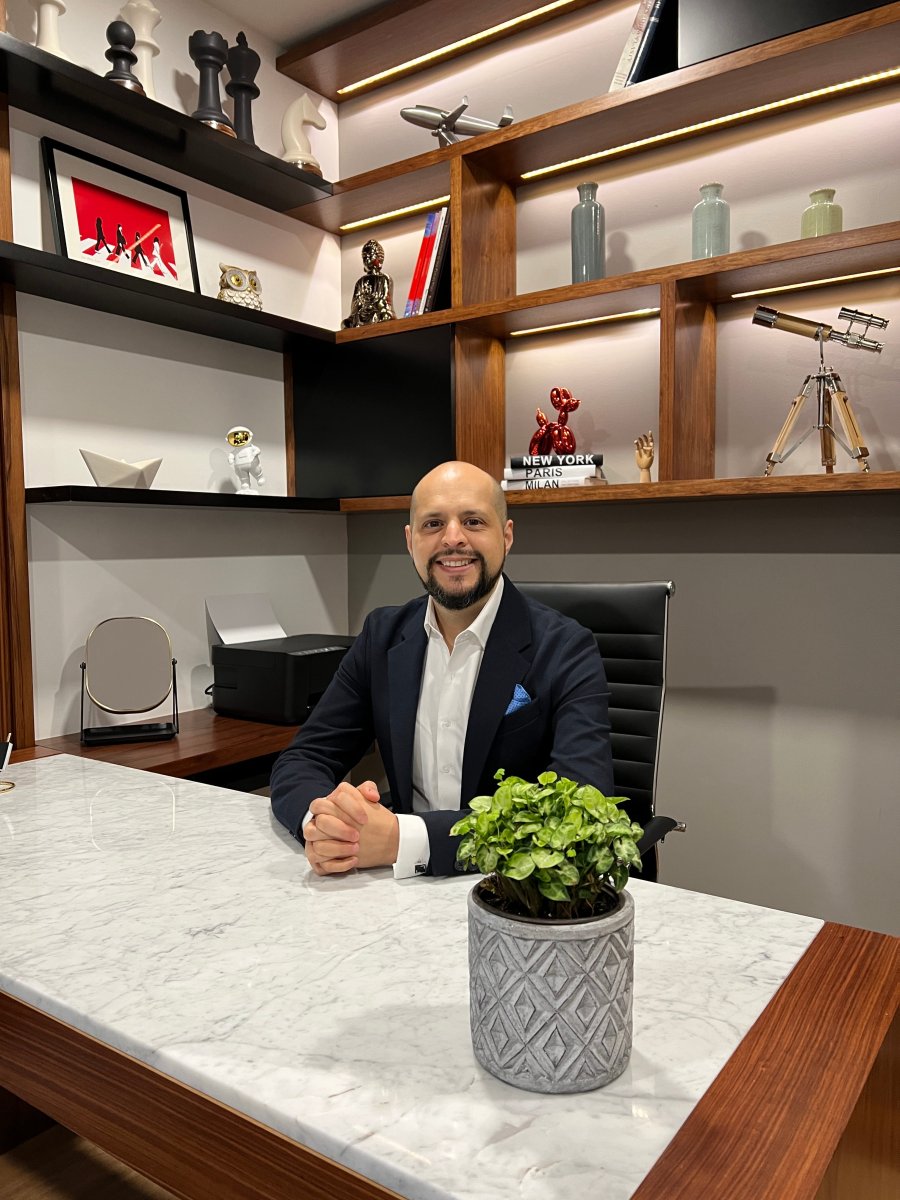
Cirujano plástico certificado con _doctor_8999_ años de experiencia – El Dr. Ayala se especializa en procedimientos faciales, incluyendo cirugías de párpados, con un historial impecable.
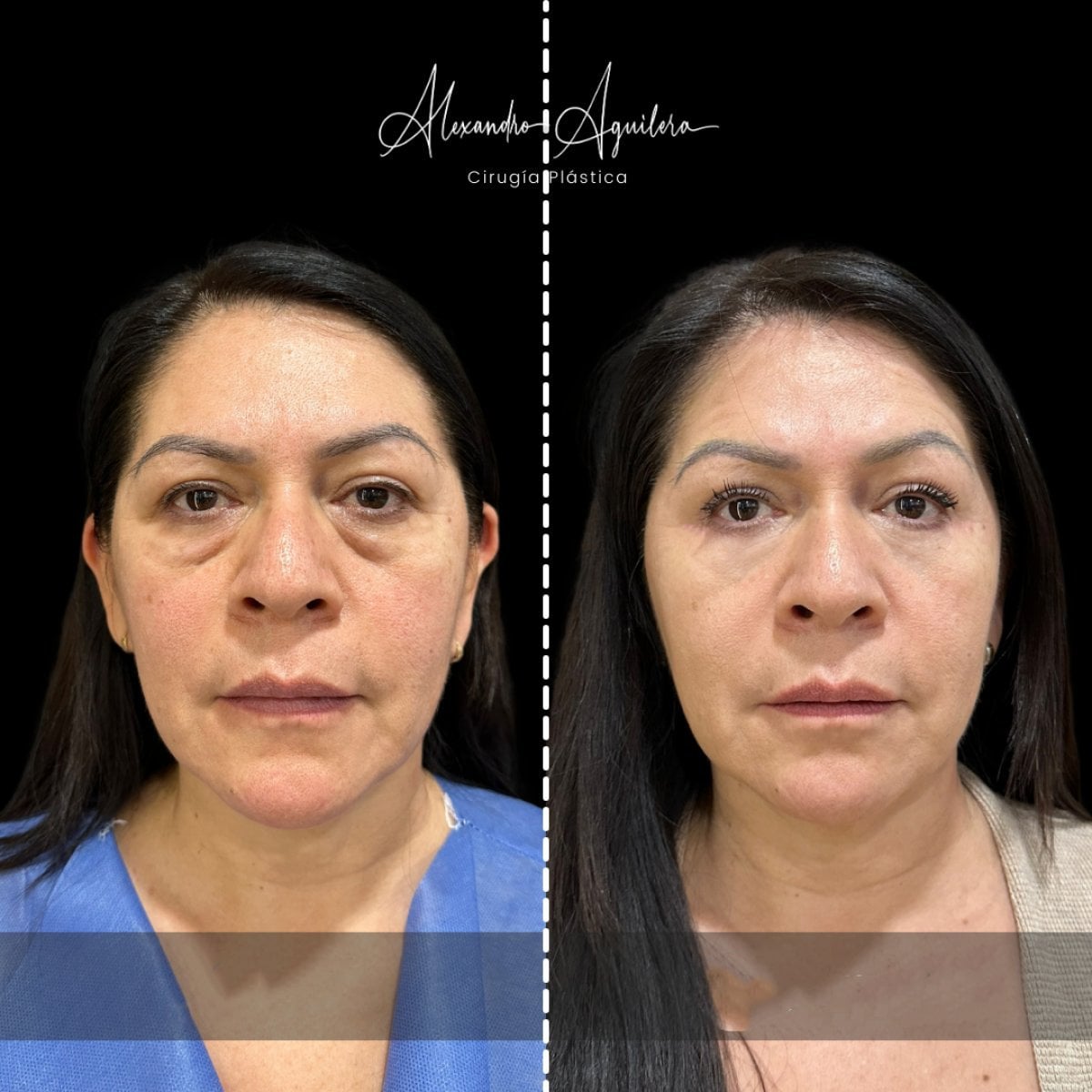
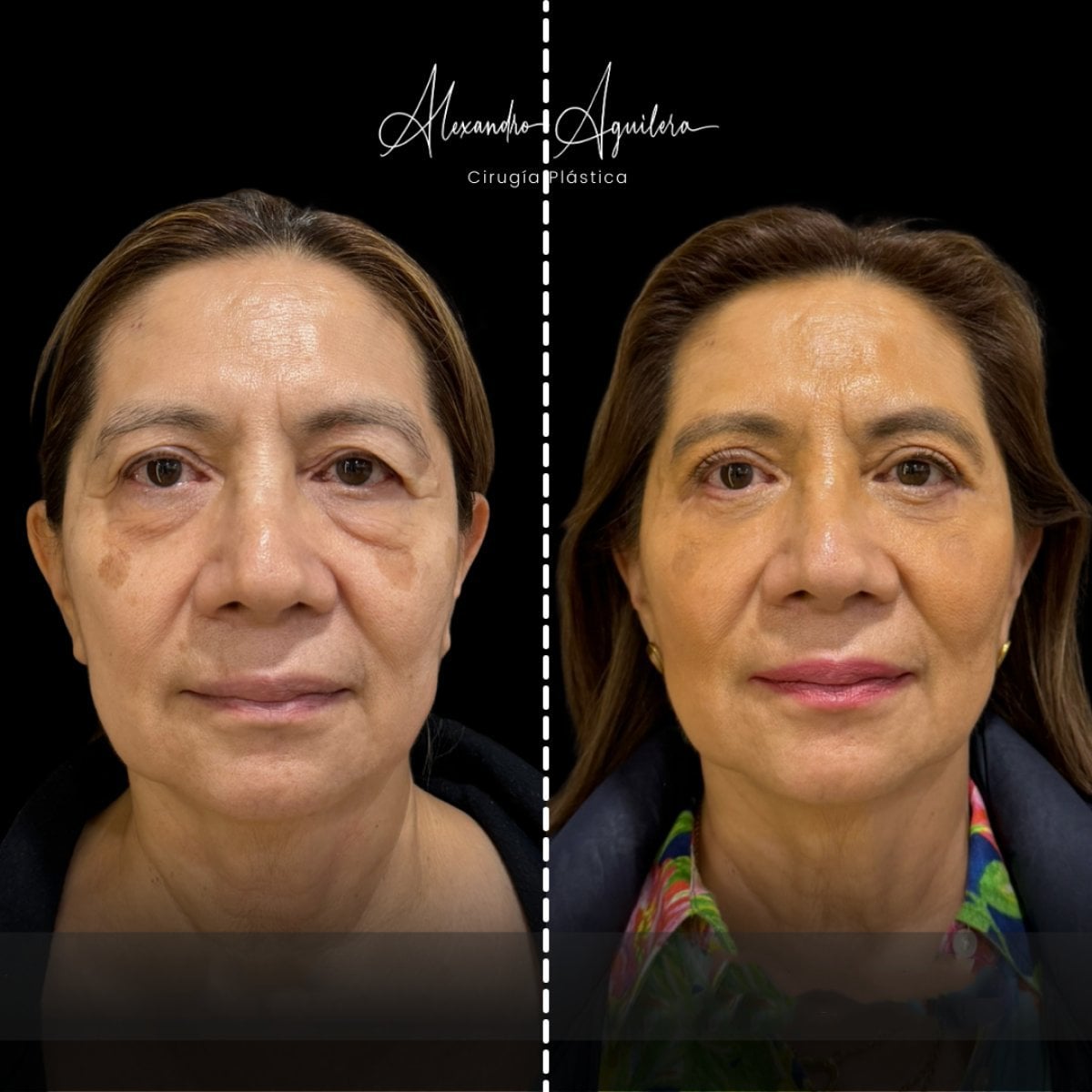
El Dr. Aguilera cuenta con una especialidad avanzada en cirugía de mano y parálisis facial, una experiencia poco común para procedimientos precisos en los párpados.


 Olena Sikoza
Un procedimiento quirúrgico para mejorar tanto los párpados superiores como inferiores, abordando los párpados caídos y las bolsas debajo de los ojos.
A surgeon needs about 12 to 14 years of training before Mexico's plastic-surgery board will certify them. You have already compared clinics in Mexico and what they charge. The questions that follow are about staying safe and planning your trip – the surgeon, your eyes, recovery, and the flight home.
To confirm your surgeon is a trained plastic surgeon, ask the clinic for the documents by name. Board certification in plastic and reconstructive surgery is separate from a general medical license and comes only after specialist training.
Mexico issues both licenses as cédulas through the Secretaría de Educación Pública, and lists them in the public Registro Nacional de Profesionistas.
Ask the clinic for these numbers before you travel. In our experience coordinating patients to Mexico, a clinic can provide these on request.
Before you travel, it is worth confirming:
Mexico's national plastic-surgery board, CMCPER, certifies plastic surgeons and renews that certification every five years. Confirming the date is current tells you the surgeon has kept up the standard. For example, among Bookimed's Mexican partner surgeons, Dr. Israel Villalobos Blasquez holds CMCPER board certification No. 2227.
CMCPER only certifies a surgeon who has finished the full path:
Every certificate carries a number, and the council keeps a public register of them. A number nobody can find is an answer in itself. Ask the clinic for the number and the renewal date, not just for an assurance that the surgeon is certified.
The clinic also needs a valid health permit from Mexico's federal health regulator, COFEPRIS. This permit covers safety and hygiene standards for surgery. For example, Marroquín & Sandoval Plastic Surgery Clinic in Guadalajara holds a COFEPRIS health-services permit. A large social-media following says nothing about a surgeon's training. A Bookimed coordinator can confirm these credentials for you before you travel.
Before eyelid surgery, also called blepharoplasty, a few eye checks tell the surgeon how much tissue is safe to remove. They also show whether to wait. The American Academy of Ophthalmology lists the checks that confirm your eye health and tear function are ready.
A tear test, called the Schirmer test, measures how much your eyes water. Above about 15 mm is normal. Below about 10 mm points to dry eyes, so the surgeon removes less tissue to keep them comfortable.
The surgeon also checks the lower-lid tone with two gentle pull tests. A loose lid may need a small supporting stitch to hold its shape as it heals. Surgeons call this stitch a canthopexy. If your eyes are set forward of your cheekbone, the surgeon anchors the lower lid. Anchoring it this way lowers the chance of the lid pulling downward.
If you have had laser eye surgery (LASIK), your tear function needs time to recover. The surgeon confirms it has recovered before planning eyelid surgery. A surgeon may also postpone surgery for a short time in some situations. These include:
Blood-thinning medicines and some supplements, such as fish oil and vitamin E, can increase bruising. Surgeons usually advise pausing them for about two weeks before and after surgery. Your surgeon will confirm what to stop and when.
Lower eyelid surgery can be done through a cut just under the lashes or through the inside of the lid. The choice affects whether there is a visible scar and how the lower lid settles afterward.
Here is how the two approaches compare on the things patients ask about most:
| Approach | Where the cut is | Visible scar | Effect on the lid muscle | Best suited for |
|---|---|---|---|---|
| Under-lash (subciliary) | Just below the lower lashes | A fine scar under the lashes | Passes through the lid muscle | When some loose skin needs removing |
| Inside-the-lid (transconjunctival) | On the inner surface of the lid | No visible scar | Leaves the lid muscle intact | Puffiness or fat with little loose skin |
When only a little loose skin needs trimming, the surgeon can use a conservative skin-pinch, without lifting a muscle flap.
The inside-the-lid approach is less likely to pull the lower lid downward, because it leaves the lid muscle intact. Ask your surgeon which approach suits your anatomy and why.
A muscle-preserving technique has a long track record. In one surgeon's ten-year experience of 700 lower eyelids, it corrected loose lids without the lid pulling out of position.
Most people who have eyelid surgery recover smoothly and are glad they did it. In a follow-up survey after 344 upper-eyelid surgeries under local anesthetic, 96% said they would have the surgery again. About 94% reported no problems at six months.
Some swelling and bruising in the first days is expected and eases over the following weeks. It's a normal part of healing, and simple supportive care is usually all that's needed.
Eyelid surgery is done in facilities with urgent eye care available. In the rare event of bleeding behind the eye, the team can treat it immediately to protect your sight. The warning signs are sudden pain and a firm, swollen eye.
Most swelling and bruising settle over the first weeks. You can plan time off work and your flight home around a realistic timeline. Here is the usual pattern after lower-eyelid surgery.
| What to expect | Week 1 | Week 2 | Around week 6 | Around week 12 |
|---|---|---|---|---|
| Swelling and bruising | Most visible | Dropping noticeably | Largely gone | Settled |
| Comfortable being seen in public | Only some feel ready | Many feel comfortable | Comfortable | Comfortable |
| Dry-eye feeling | Eased with drops | Easing | Mostly settled | Settled with lubrication |
Temporary numbness of the upper lid and lashes is also normal, and it fades as the nerves recover.
In one study of inside-the-lid surgery, swelling and bruising had largely settled by around six weeks. Any dry-eye feeling eased with lubricating drops.
You can usually fly home within about two weeks. A few simple steps keep your eyes comfortable on the plane. It helps to understand why the timing matters before you fix your return date.
The NHS counts recent surgery and any journey over four hours among the things that raise the chance of a blood clot. Dry cabin air adds dehydration on top. To lower the risk on a longer flight, choose an aisle seat and drink water. Move your calves about once an hour.
As a general guide, surgeons suggest waiting:
A combined upper-and-lower procedure often means a longer flight home, so plan for the longer end of these windows.
Pack preservative-free lubricating drops and ointment for the dry cabin air. Wear UV sunglasses to shield fresh incisions from light and drafts. Ask for help with heavy bags rather than lifting them into overhead lockers, which strains healing tissue.
Your regular travel or health insurance will usually not cover a complication treated after you get home. It's worth arranging dedicated coverage before you travel.
Treating a complication at home can be expensive, which is why this coverage is worth having.
Needing it is uncommon. In one series of 344 upper-eyelid operations, one patient needed a further operation under general anesthetic. Another 18 needed a minor correction under local anesthetic. If something does come up once you are home, your Bookimed coordinator can put you back in touch with the clinic.
La cirugía de párpados en México es segura cuando es realizada por cirujanos certificados por el Consejo Mexicano de Cirugía Plástica (CMCPER). Las clínicas de alto nivel en la Ciudad de México y Guadalajara utilizan estándares de seguridad internacionales, incluidos los protocolos JCI e ISO, para garantizar la seguridad y los resultados de los pacientes.
Perspectiva del experto de Bookimed: Aunque muchos pacientes se centran en las ciudades fronterizas por su proximidad, nuestros datos muestran que las clínicas de la Ciudad de México y Guadalajara a menudo ofrecen una mayor capacidad quirúrgica. El Hospital Innovare en Zapopan cuenta con 10 quirófanos dedicados y una casa de recuperación de lujo, proporcionando un nivel de monitoreo postoperatorio que rara vez se encuentra en clínicas fronterizas más pequeñas.
Consenso de
México es seguro para una blefaroplastia cuando se seleccionan cirujanos certificados por el Consejo Mexicano de Cirugía Plástica, Estética y Reconstructiva (CMCPER). Instalaciones como el Instituto José Cortés y el Hospital de la Familia mantienen altos estándares a través de acreditaciones CSG y JCI, garantizando la seguridad del paciente y la calidad quirúrgica.
Perspectiva de expertos de Bookimed: Aunque muchos buscan costos bajos, el camino más seguro en México implica elegir cirujanos con un alto volumen de procedimientos. El Dr. Alexandro Aguilera ha realizado más de 3,000 cirugías y el Dr. José Cortés es calificado constantemente como un especialista superior. Estos expertos de alto volumen a menudo ofrecen resultados más predecibles que los generalistas.
Consenso de los pacientes: Los pacientes
Todo el contenido médico de esta página está elaborado por autores con formación médica especializada y revisado por médicos certificados en el campo correspondiente. Revisión médica por Fahad Mawlood, Editor médico y Científico de datos.
Última actualización: 10/06/2026.
Todos los datos se proporcionan sólo con fines informativos generales y pueden no reflejar resultados o experiencias individuales.