Angioplastia arterial intracraneal y colocación de stent en España — obtén 3 clínicas con costos


Revisado médicamente por
Fahad Mawlood
¿Cuál es el precio de Angioplastia arterial intracraneal y colocación de stent en España? Descubra ahora
El costo de la angioplastia y el stent arterial intracraneal en España suele oscilar entre $14,000 y $21,000. Los precios varían según el hospital, la experiencia del neurointervencionista, la complejidad de la obstrucción y el tipo de stent utilizado. UU.
Las clínicas españolas suelen incluir la consulta inicial, análisis de sangre preoperatorios, medicación postoperatoria, consultas de seguimiento, personal que habla inglés, planes de tratamiento personalizados, instrucciones de cuidados postoperatorios, comidas durante las visitas a la clínica y soporte al paciente 24/7. En EE. UU., los honorarios hospitalarios y de especialistas, las imágenes, la anestesia y los seguimientos suelen facturarse por separado. Siempre confirmar exactamente qué está incluido en cada clínica.
| España | Turquía | México | |
|---|---|---|---|
| Angioplastia arterial intracraneal y colocación de stent | ≈ $14,000 | de $7,000 | ≈ $14,000 |
Sus beneficios y garantías con Bookimed
Precios directos
Bookimed no añade cargos adicionales a los precios de Angioplastia arterial intracraneal y colocación de stent. Las tarifas proceden de las listas de precios oficiales de las clínicas. Pagará directamente en la clínica por su Angioplastia arterial intracraneal y colocación de stent a su llegada al país.
Sólo clínicas y médicos verificados
Bookimed está comprometido con su seguridad. Solo trabajamos con las clínicas que mantienen altos estándares internacionales en Angioplastia arterial intracraneal y colocación de stent y tienen las licencias necesarias para atender a pacientes internacionales en todo el mundo.
Asistencia 24/7 gratuita
Bookimed ofrece asistencia experta gratuita. Un coordinador médico personal le apoya antes, durante y después del tratamiento, resolviendo cualquier problema. Nunca estará solo en su viaje médico de Angioplastia arterial intracraneal y colocación de stent.

Su coordinador médico personal de Bookimed
- Le apoya en cada etapa
- Ayuda a elegir la clínica y el médico adecuados
- Asegura un acceso rápido y conveniente a la información
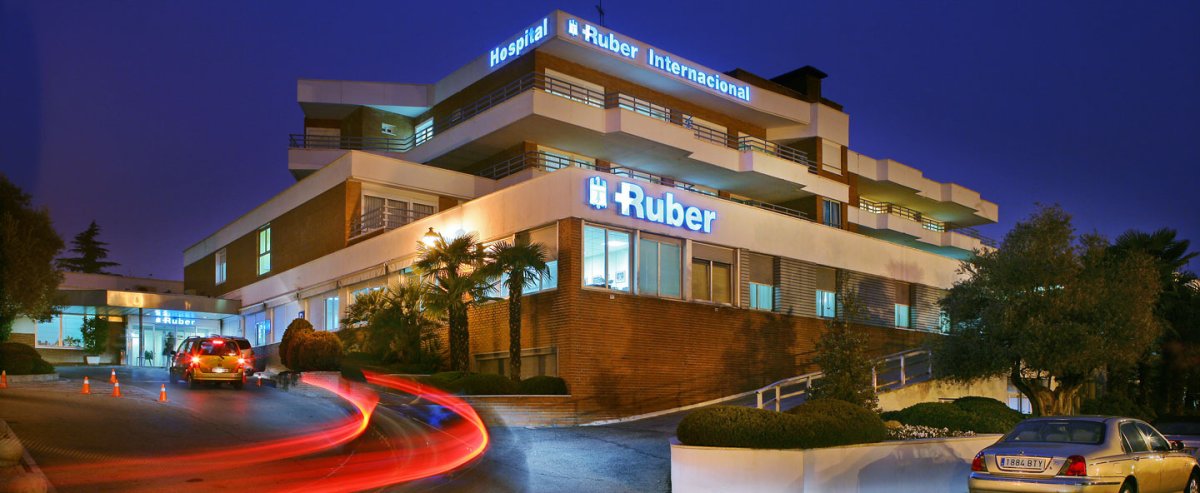
Descubra las mejores clínicas de Angioplastia arterial intracraneal y colocación de stent en España: 1 opciones verificadas y Precios


Descripción general de Angioplastia arterial intracraneal y colocación de stent en España
- Stent vascular periférico - de $7,200Este tratamiento abre los vasos estrechos a través de pequeños tubos, lo que ayuda al flujo sanguíneo y reduce el dolor, lo que brinda una recuperación rápida.
- Angioplastia - de $20,200Esta terapia expande las arterias estrechadas, utilizando un globo pequeño y un stent, mejorando el flujo sanguíneo de manera efectiva y segura.
- Angioplastia carotídea y colocación de stent - de $17,100El procedimiento ensancha las arterias estrechadas del cuello mediante el inflado del globo y la colocación de un stent, mitigando el riesgo de accidente cerebrovascular.
- Angioplastia arterial intracraneal y colocación de stent - de $14,000El procedimiento abre las arterias cerebrales estrechadas e inserta un stent para prevenir un accidente cerebrovascular, mejorando el flujo sanguíneo de manera eficiente.
- La operación consiste en dilatar las arterias vertebrales estrechadas y colocar un stent, mejorando el flujo sanguíneo para reducir los riesgos de accidente cerebrovascular.
- Angioplastia Arterial Transluminal (PTA) y Stent - de $22,400Esta terapia ensancha los vasos sanguíneos estrechos usando un globo y coloca un stent para una apertura continua, mejorando el flujo sanguíneo.
- Stent de Disección Arterial - de $6,500Esta terapia consiste en insertar un tubo de malla para abrir una arteria desgarrada, promoviendo un flujo sanguíneo seguro y previniendo complicaciones.
Día 1
- Llegue al hospital y regístrese en la oficina de admisiones.
- Consulta con un neurólogo y un especialista cardiovascular.
- Se realizan análisis de sangre, electrocardiograma y resonancia magnética.
Dia 2
- Reúnase con el anestesiólogo para discutir las opciones de anestesia.
- Preparación para el procedimiento, incluido el ayuno después de la medianoche.
Día 3
- El procedimiento se lleva a cabo, con una duración de alrededor de 2-3 horas.
- Se utiliza anestesia local o general.
- Se inserta un catéter en la arteria de la ingle para llegar al cerebro.
- Se infla un globo para ensanchar la arteria, se coloca un stent.
Día 4 - Día 7
- Recuperación postoperatoria en la clínica, con estrecho seguimiento.
- Se recetan medicamentos para prevenir los coágulos de sangre.
- Comienza la fisioterapia para mejorar la movilidad.
Semana 2 - Semana 4
- Continuar con las sesiones de fisioterapia en casa.
- Se recomienda el regreso gradual a las actividades normales, evitando el esfuerzo intenso.
Semana 6
- Reevaluación por el neurólogo para evaluar el progreso de la recuperación.
- Regreso al trabajo, dependiendo de las exigencias físicas del puesto.
Semana 8
- Reanude los deportes y otras actividades extenuantes, si así lo aconseja el médico.
semana 12
- Se puede ver la recuperación completa y el resultado final.
Recuerde, el proceso de recuperación de cada paciente puede variar según las condiciones de salud individuales y la complejidad del procedimiento.
- Depósito de Bookimed: 200 $ o 200 €.
- Depósito de la clínica: Pague un porcentaje fijo por adelantado.
Obtenga una evaluación médica para Angioplastia arterial intracraneal y colocación de stent en España: Elija su especialista entre los mejores en el campo
Ver todos los médicos
José Ángel Cabrera Rodríguez
Jefe de Cardiología en Quironsalud Madrid desde 2006 – El Dr. Cabrera aporta décadas de liderazgo en atención cardíaca.
- Especializado en cardiología intervencionista con formación en Londres y Madrid
- Profesor de la Universidad Europea de Madrid, liderando la investigación en cardiología traslacional
- Miembro de la Sociedad Europea de Cardiología y de la Heart Rhythm Society
- Amplia experiencia en el manejo de arritmias y electrofisiología

Francisco Javier Alzueta Rodriguez
Experto en arritmias cardíacas y cardiología intervencionista, con más de _doctor_8310_ años de experiencia en estudios electrofisiológicos avanzados e implantación de dispositivos.
- Profesor titular en la Universidad de Málaga, impartiendo docencia sobre enfermedades circulatorias
- Autor de más de 100 publicaciones científicas y 23 libros/capítulos
- Exjefe de la Unidad de Arritmias en la Clínica Puerta de Hierro
- Miembro de la Sociedad Europea de Cardiología y la Heart Rhythm Association
- Realiza ablaciones complejas con catéter e implantes de desfibriladores

Angel Pinto Gonzalez
El Dr. Angel Pinto Gonzalez es cardiólogo intervencionista en el Hospital Universitario HM Montepríncipe de Madrid. Trata la enfermedad de las arterias coronarias, la aterosclerosis y los trastornos de las válvulas cardíacas. El Dr. Pinto Gonzalez realiza la colocación de stents, ablación por radiofrecuencia e instalación de marcapasos. Trabaja en un hospital con acreditación ISO que atiende a 500,000 pacientes anualmente.
- Realiza angioplastia carotídea y colocación de stents para
Historias en video de pacientes de Bookimed
Reseñas
Todas las reseñasCompartir contenido
 Olena Sikoza
Datos сlave sobre Angioplastia arterial intracraneal y colocación de stent
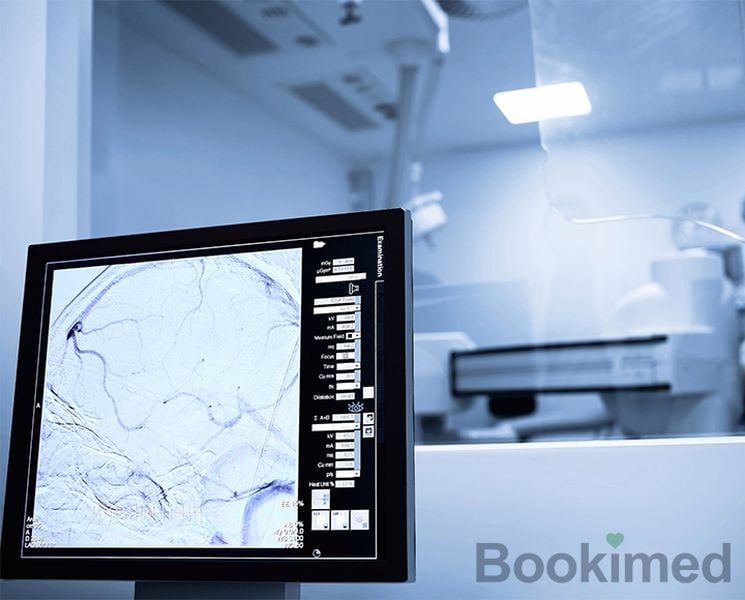
Angioplastia arterial intracraneal y colocación de stent
Este procedimiento consiste en ensanchar las arterias intracraneales estrechadas mediante un balón y colocar un stent para mantener el flujo sanguíneo y prevenir el ictus.
Preguntas frecuentes sobre Angioplastia arterial intracraneal y colocación de stent en España
¿Qué es la angioplastia arterial intracraneal y la colocación de stents?
La angioplastia arterial intracraneal y la colocación de stents es un procedimiento endovascular mínimamente invasivo diseñado para abrir las arterias cerebrales estrechadas. Utiliza un catéter con punta de globo para ensanchar el vaso y un stent de malla para mantener el flujo sanguíneo, reduciendo eficazmente los riesgos de accidente cerebrovascular isquémico cuando la medicación falla.
- Tipo de abordaje: Los cirujanos utilizan técnicas endovasculares no quirúrgicas, generalmente a través de la ingle, la muñeca o el cuello.
- Tecnología utilizada: Los neurorradiólogos intervencionistas utilizan resonancia magnética de 3 Teslas y guía por imagen para una colocación precisa del catéter.
- Período de recuperación: La curación inicial toma de 1 a 3 semanas con protocolos estrictos de anticoagulantes durante 3 a 6 meses.
- Estándares de las instalaciones: Los principales centros españoles como el Hospital Ruber Internacional cuentan con acreditaciones JCI e ISO 9001.
Perspectiva del experto de Bookimed: Aunque muchos pacientes se centran en la cirugía, el éxito a largo plazo de la colocación de stents en España a menudo depende de un seguimiento por imagen postoperatorio especializado. Centros como el Hospital Ruber Internacional utilizan tecnología avanzada de resonancia magnética de 3 Teslas y Gamma Knife. Este monitoreo de alta resolución gara
¿Cuáles son los riesgos y complicaciones potenciales de la angioplastia arterial intracraneal?
Los riesgos potenciales de la angioplastia arterial intracraneal incluyen accidente cerebrovascular isquémico, ruptura de vasos y disección arterial. Las complicaciones relacionadas con el procedimiento a menudo se derivan del desprendimiento de placa o daño a la pared del vaso. Los especialistas en España suelen reservar esta intervención para pacientes sintomáticos con un estrechamiento arterial grave superior al 70% para optimizar los resultados de seguridad.
- Accidente cerebrovascular o AIT: Eventos embólicos por desprendimiento de placa durante el proceso de cateterismo.
- Lesión vascular: Posible desgarro o ruptura de las frágiles paredes de los vasos intracraneales.
- Oclusión de perforantes: Bloqueo de pequeños vasos ramificados, lo que puede provocar isquemia cerebral localizada.
- Reestenosis: Re-estrechamiento gradual del segmento arterial tratado a lo largo de varios meses.
- Problemas en el sitio de acceso: Posible sangrado, hematomas o entumecimiento en la entrada de la arteria femoral.
Perspectiva del experto de Bookimed: Elegir un centro con certificaciones JCI e ISO, como el Hospital Ruber Internacional en Madrid, proporciona una capa adicional de seguridad. Estos estándares internacionales regulan estrictamente cómo las clínicas gestionan los riesgos quirúrgicos. Los especialistas altamente experimenta
¿Quién es candidato para una angioplastia arterial intracraneal y colocación de stent?
Los candidatos para la angioplastia arterial intracraneal y la colocación de stent incluyen pacientes con estrechamiento arterial sintomático superior al 70% que no han respondido a los medicamentos. Este procedimiento endovascular mínimamente invasivo ayuda a prevenir accidentes cerebrovasculares recurrentes o ataques isquémicos transitorios en personas que no son aptas para la cirugía cerebral abierta tradicional.
- Gravedad de la estenosis: Pacientes con obstrucción de la arteria cerebral de al menos el 70% a pesar de la terapia médica.
- Fallo del tratamiento médico: Personas que experimentan síntomas persistentes de accidente cerebrovascular mientras toman anticoagulantes o medicamentos para la presión arterial.
- Indicadores clínicos: Aquellos con enfermedad aterosclerótica intracraneal (ICAD) sintomática confirmada que requiere intervención especializada.
- Tolerancia a la medicación: Debe ser capaz de seguir un régimen de terapia antiplaquetaria dual de 6 meses después del procedimiento.
Perspectiva del experto de Bookimed: Los centros españoles como el Hospital Ruber Internacional combinan la seguridad acreditada por la JCI con una gran experiencia quirúrgica, realizando más de 6,000 cirugías al año. Mientras que los costos en EE. UU. promedian _price_compare_US_average_, los pacientes ahorran alrededor del _price_percent_discount_% en
¿Cuál es la tasa de éxito de la angioplastia arterial intracraneal y la colocación de stents en España?
La angioplastia arterial intracraneal y la colocación de stents en España demuestran una tasa de éxito técnico del 80% para la aterosclerosis grave. Los centros neurovasculares especializados reportan una tasa de éxito sin complicaciones del 90,5%. Los procedimientos se realizan con frecuencia en instalaciones acreditadas por la JCI, como el Hospital Ruber Internacional, por especialistas certificados en Madrid y Barcelona.
- Tasa de éxito: El éxito técnico promedia el 80% para restaurar el flujo sanguíneo en arterias estrechadas.
- Perfil de seguridad: Los casos especializados muestran una tasa de éxito del 90,5% sin complicaciones procedimentales mayores.
- Riesgo de reestenosis: La re-estrechez de la arteria tratada ocurre en casi el 20% de los casos.
- Tiempo de recuperación: Los pacientes generalmente permanecen en el hospital de 1 a 2 días.
Perspectiva del experto de Bookimed: El desempeño neurovascular de España está impulsado significativamente por la experiencia institucional. Las mejores clínicas, como el Hospital Ruber Internacional, atienden a 25,000 pacientes anualmente. El alto volumen se correlaciona con resultados consistentes. Cirujanos como Francisco Javier Alzueta Rodríguez poseen más de 40 años de experiencia cardiovascular. Este nivel de antigüedad es raro fuera de los principales centros europeos.
Consenso d
¿Qué cualificaciones debe tener el equipo médico para realizar este procedimiento?
El equipo médico para la angioplastia arterial intracraneal y la colocación de stents en España debe incluir neurointervencionistas o neurocirujanos con formación específica en intervenciones cerebrovasculares. Estos especialistas deben poseer experiencia en la navegación por la delicada vasculatura cerebral utilizando tecnologías de imagen avanzadas como la resonancia magnética de 3 Teslas y técnicas de cateterismo especializadas.
- Credenciales del especialista: Los cirujanos deben tener becas en radiología neurointervencionista o neurocirugía endovascular.
- Certificación hospitalaria: Busque centros acreditados por la JCI, como el Hospital Ruber Internacional, que mantengan altos estándares de seguridad.
- Equipo multidisciplinar: El éxito requiere la colaboración entre neurocirujanos, neurólogos y neuroanestesiólogos especializados para una atención específica del cerebro.
- Membresía: Los mejores médicos suelen pertenecer a la Sociedad Española de Cardiología o similares.
Perspectiva del experto de Bookimed: Aunque los cardiólogos intervencionistas generales como el Dr. Francisco Javier Alzueta Rodríguez son expertos en stents cardíacos, los procedimientos intracraneales conllevan mayores riesgos. Nuestros datos muestran que los hospitales españoles de primer nivel, como el Hospital Ruber Internacional, separan los departamentos cardíacos
¿Cuál es el proceso de recuperación después de una angioplastia y colocación de stent en arterias intracraneales?
La recuperación implica una monitorización intensiva en una unidad neurológica especializada durante 24 a 48 horas para garantizar un flujo sanguíneo cerebral estable. Los pacientes deben mantener reposo absoluto en cama durante las primeras 6 a 12 horas. La recuperación completa suele implicar 8 semanas de actividad ligera y terapia antiplaquetaria diaria de por vida.
- Estancia hospitalaria: La mayoría de los pacientes regresan a casa después de 1 noche de observación en clínicas de Madrid o Marbella.
- Límite de actividad: Evite levantar objetos pesados y realizar tareas extenuantes hasta 8 semanas después del procedimiento.
- Monitorización neurológica: Se realizan pruebas de imagen regulares como TC o angiorresonancia a los 3, 6 y 12 meses.
- Cuidado a largo plazo: El uso de aspirina o clopidogrel de por vida evita la formación de coágulos sanguíneos en el stent.
Opinión de expertos de Bookimed: Los principales centros de neurocirugía de España, como el Hospital Ruber Internacional, utilizan protocolos acreditados por la JCI que priorizan las imágenes multietapa. Después de la colocación del stent, los cirujanos a menudo buscan niveles de colesterol LDL inferiores a 70 mg/dL. Este enfoque específico en el control de lípidos reduce significativamente el riesgo de eventos vasculares mayores posteriores.
Consenso de los pacient
¿Cuánto tiempo debe permanecer un paciente en España para una angioplastia arterial intracraneal y colocación de stent?
Los pacientes deben planificar una estancia de 7 a 14 días en España para una angioplastia arterial intracraneal y colocación de stent. Este plazo garantiza una monitorización neurológica segura y la autorización médica antes de viajar en avión. La mayoría de las personas pasan de 2 a 5 días en un hospital acreditado por la JCI, como el Hospital Ruber Internacional, para una observación postoperatoria intensiva.
- Periodo de hospitalización: Espere de 1 a 5 días para el control crítico de la presión arterial y la monitorización neurológica.
- Observación postoperatoria: Por lo general, requiere 48 horas en el hospital para controlar posibles riesgos o dolores de cabeza.
- Autorización de viaje: Los médicos suelen requerir de 7 a 10 días antes de aprobar vuelos de larga distancia.
- Cronograma de recuperación: La rigidez leve en el cuello o los dolores de cabeza a menudo persisten durante unos 10 días después del procedimiento.
Perspectiva del experto de Bookimed: Los principales especialistas neurovasculares de España, como los de Quironsalud Madrid, utilizan resonancia magnética de 3 Teslas para una evaluación precisa después de la colocación del stent. Si bien la angioplastia básica comienza alrededor de $20,200, el procedimiento intracraneal complejo puede alcanzar $21,000. Elegir un centro acreditado por la JCI en Madr