| Tailandia | España | Estados Unidos | |
| Masculinización facial | de $7,500 / 277,500฿ | de $12,000 / 444,000฿ | de $30,000 / 1,110,000฿ |
El Dr. Saran Wannachamras aporta décadas de formación especializada en cirugía plástica y reconstructiva a los procedimientos de masculinización facial.
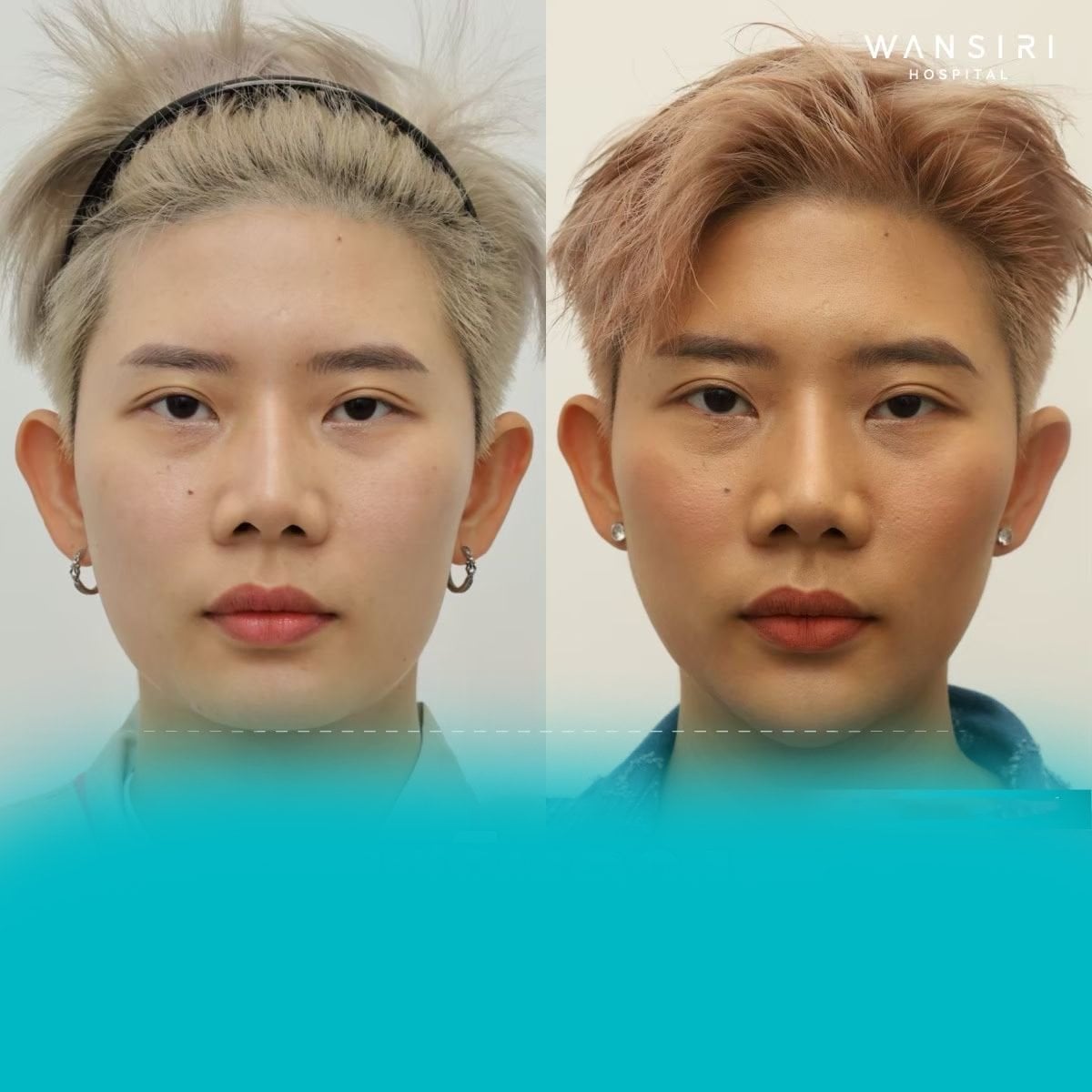
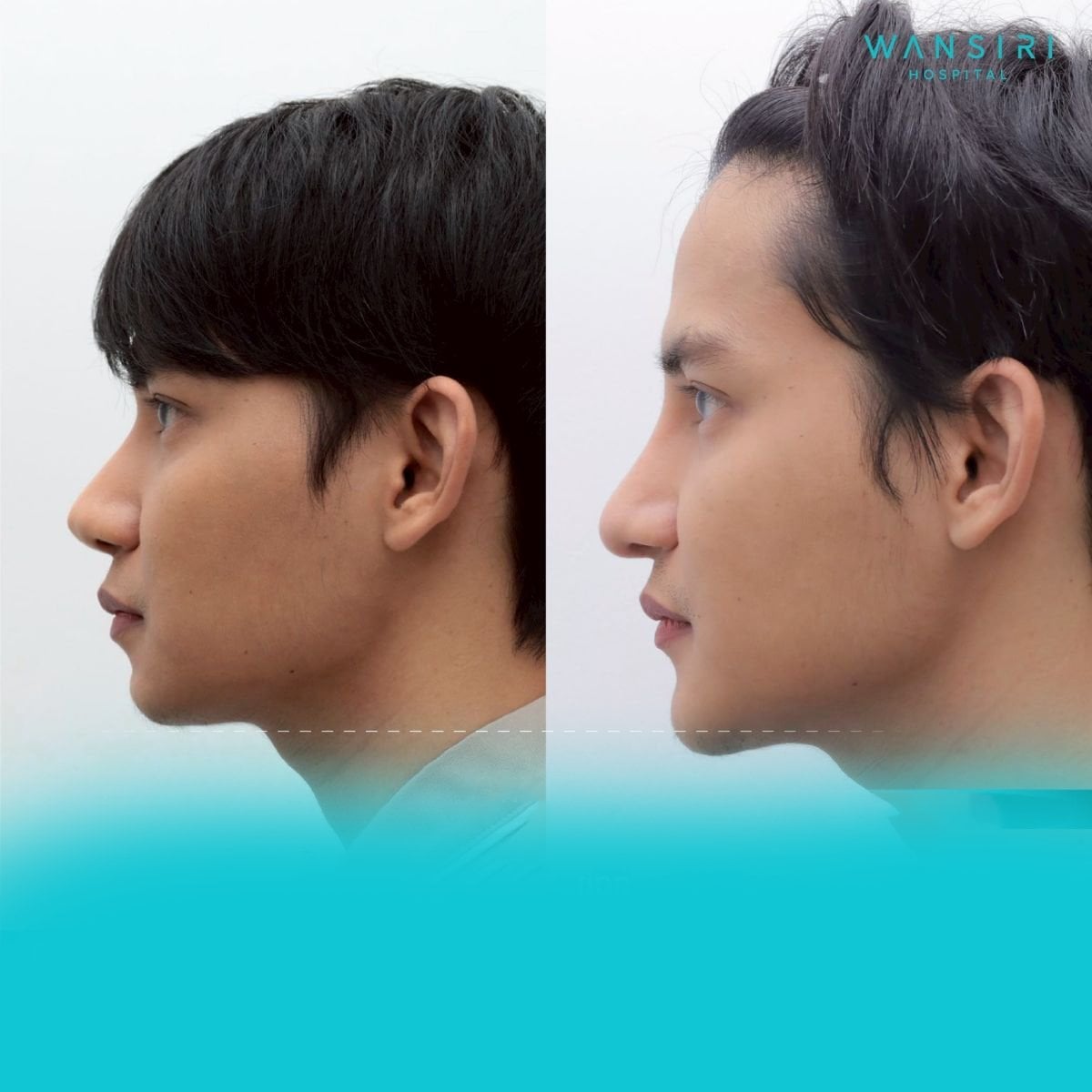
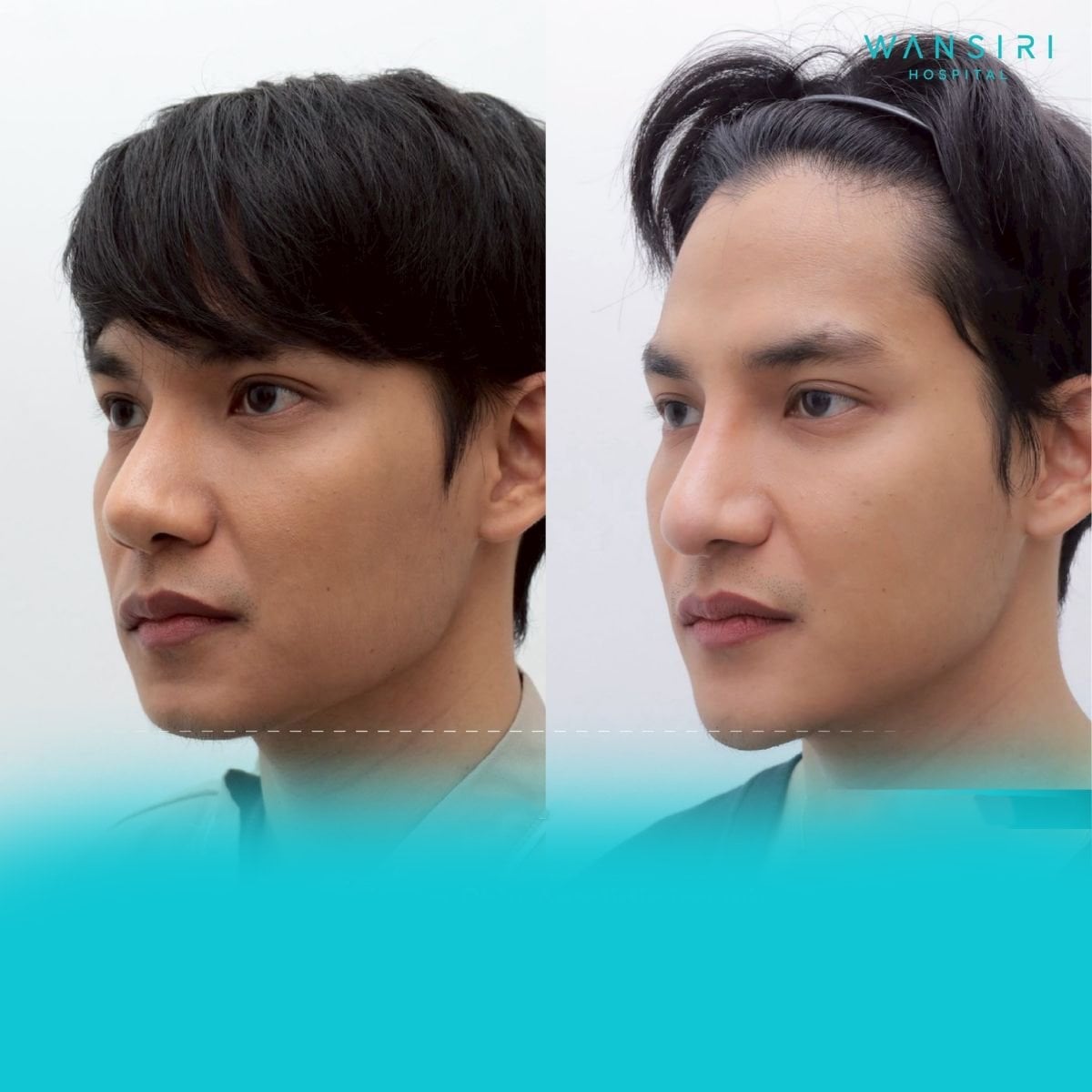
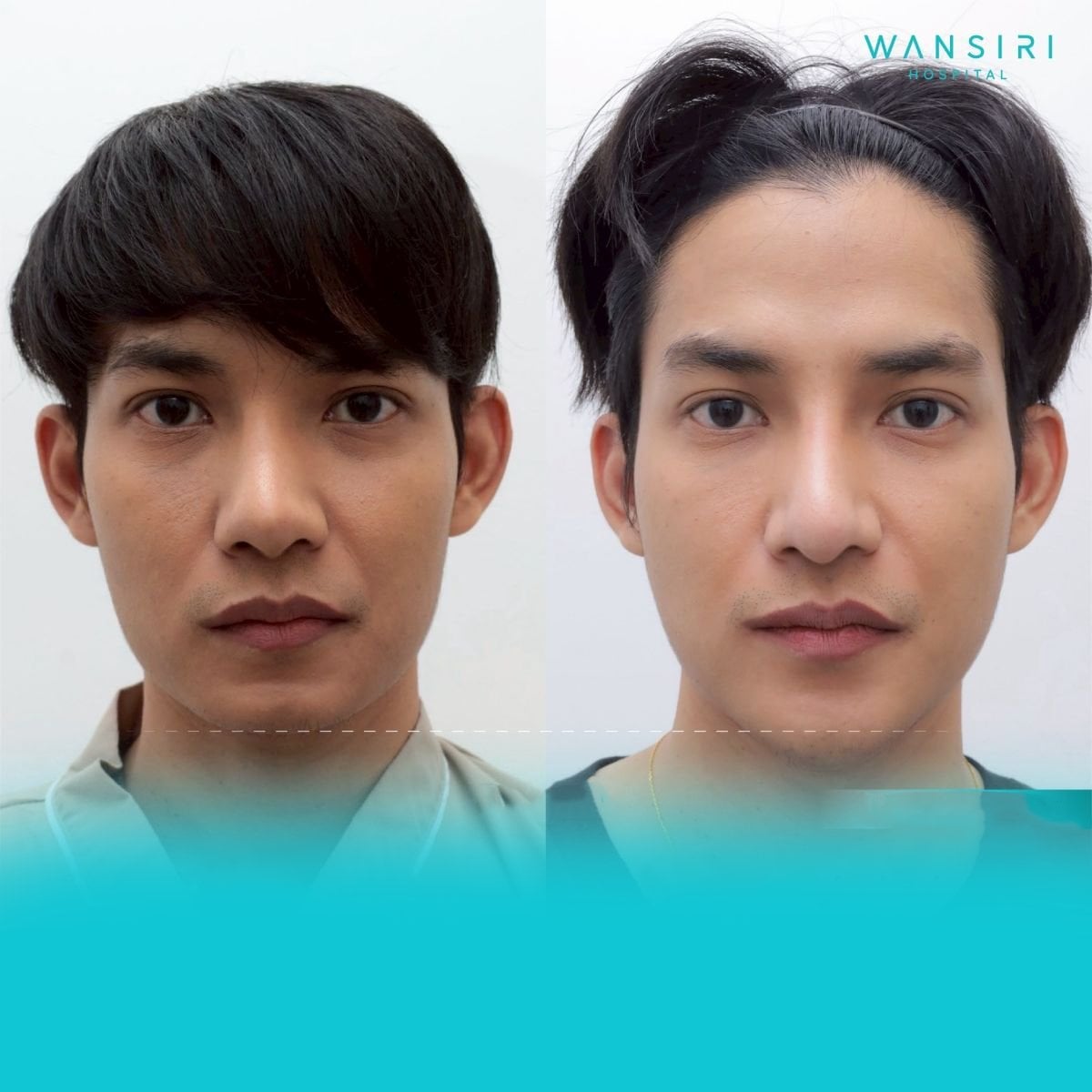
El Dr. Sarut Chaisrisawadisuk se especializa en contorno facial y cirugía de masculinización en el Hospital Wansiri.
El Dr. Rattanachinnakorn se especializa en Cirugía de Masculinización Facial en el Hospital Intrarat, con formación avanzada del simposio KVPS de Corea.

Especialista en masculinización facial en Bangkok Plastic Surgery, con formación internacional en técnicas estéticas y reconstructivas.
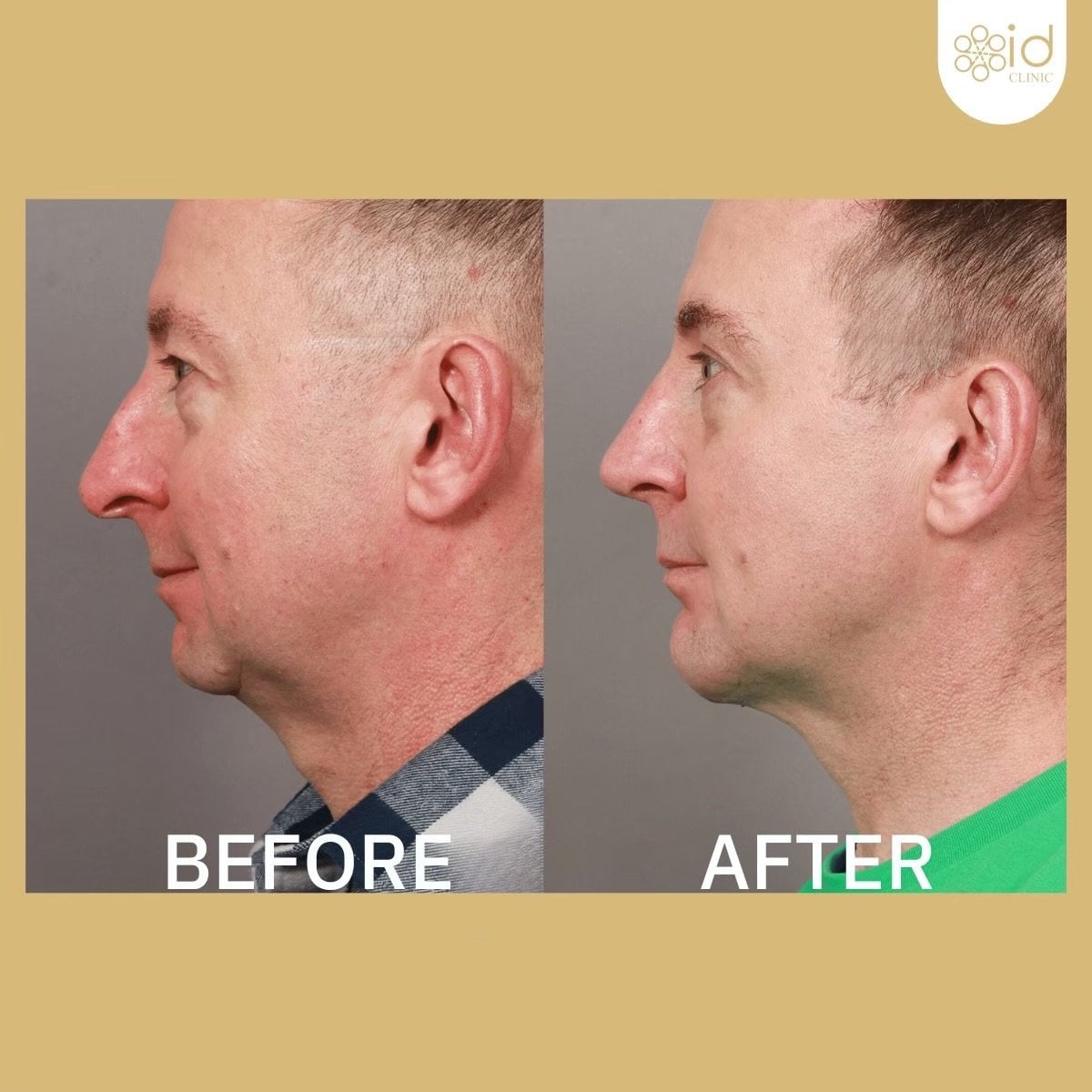
Transforma las características faciales para parecer más tradicionalmente masculinas a través de diversas técnicas quirúrgicas.
Facial masculinisation surgery is safe in Thailand at accredited facilities with board-certified plastic surgeons. Highly ranked hospitals in Bangkok hold Joint Commission International accreditation. These facilities use operating theatres with HEPA filtration. Specialists here often handle over 3,000 procedures. They follow international safety standards for bone contouring and soft-tissue reshaping.
Bookimed Expert Insight: Thailand offers affordable care, but safety depends on choosing surgeons with craniomaxillofacial training. Bookimed data shows several top surgeons completed fellowships in Australia or the USA. These specialists often work at clinics serving 2,000+ international patients annually. This helps them understand aesthetic goals for Western patients.
Patient Consensus: Thailand is safe with board-certified plastic surgeons and facilities offering structured follow-up. Check the specific techniques used for bone work versus implants. Focus on independent reviews rather than marketing photos.
Patients who experience complications after returning to Australia focus on remote assessment and local triage. Leading Bangkok clinics provide structured long-term follow-up and digital communication. Emergency issues require Australian hospital care. However, non-urgent revisions or hardware adjustments often involve returning to the original JCI-accredited facility for continuity.
Bookimed Expert Insight: While Australian revisions are costly, some Thai hospitals offer superior continuity of care. Dr Sarut Chaisrisawadisuk at Wansiri Hospital completed a fellowship at the Royal Adelaide Hospital. This Australian training background helps surgical techniques and documentation align with Australian medical standards if local follow-up is required.
Patient Consensus: Planning for a potential return trip to Thailand provides peace of mind. Patients suggest keeping all surgical photos and implant details ready for local GPs. Monitoring for slow-developing issues like wound healing or minor infections is the best way to stay safe at home.
Facial masculinisation in Thailand typically involves a combination of jaw and chin augmentation. Other common procedures include masculinising rhinoplasty and forehead lengthening. Surgeons focus on creating angular features and a stronger bone structure. These procedures use custom implants or bone work to enhance the brow ridge and jawline.
Bookimed Expert Insight: Thai surgical expertise in this field is highly specialised. Dr Sarut Chaisrisawadisuk at Wansiri Hospital completed a fellowship at the Royal Adelaide Hospital in Australia. Patients benefit from surgeons who combine international training with high-volume experience. These surgeons often perform over 3,000 procedures throughout their careers.
Patient Consensus: Facial masculinisation in Thailand is a customised process. It involves both bone work and soft-tissue changes. Surgeons provide tailored plans based on individual anatomy for natural-looking, masculine results.
Most patients require 14 to 21 days in Thailand for recovery after facial masculinisation surgery. It is generally safe to fly home 10 to 14 days post-operation. Extensive procedures like jaw contouring often require a full 3-week stay for safe travel clearance.
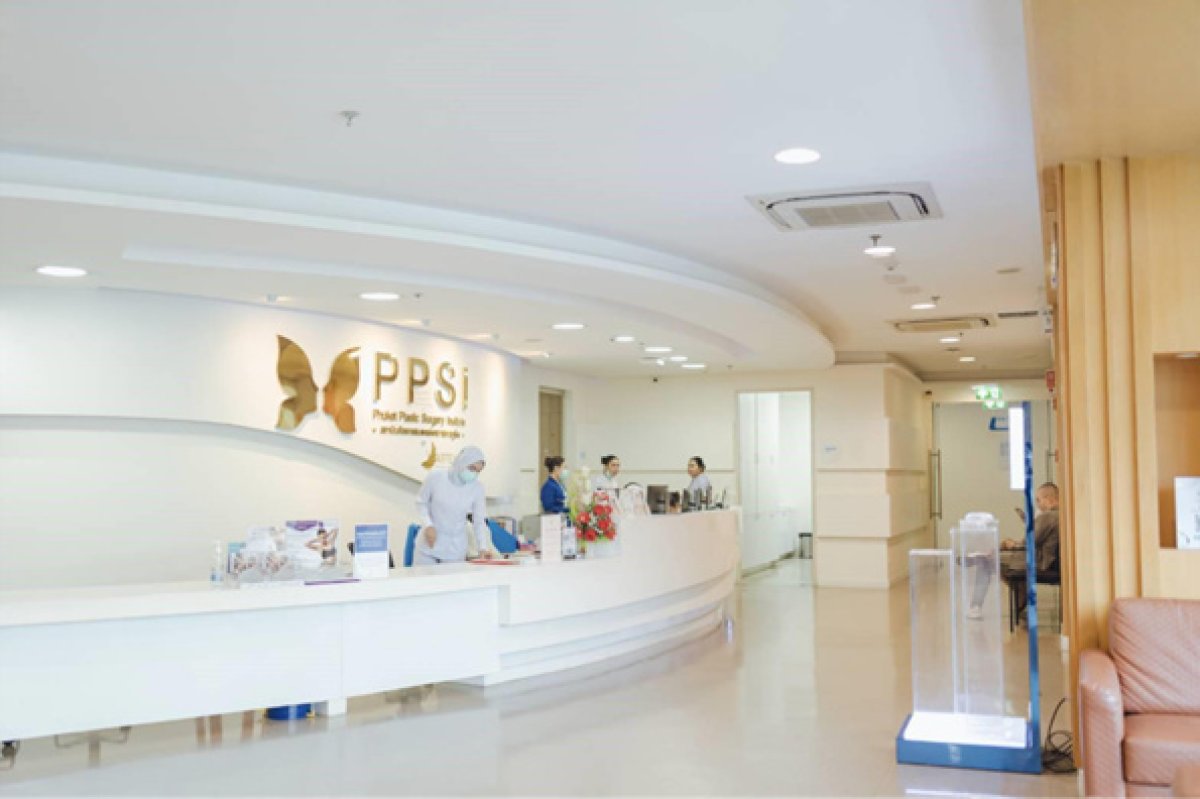
Bookimed Expert Insight: Basic packages starting from $7,500 cover essential care. However, choosing a hospital with a structured international pathway is vital. Phuket Plastic Surgery Institute (PPSI) provides specific protocols from inpatient admission through to long-term follow-up. This helps maintain medical stability before a long-haul flight back to Australia.
Patient Consensus: Many patients suggest staying 3–4 weeks in Thailand to manage swelling before flying. Bony work like jaw contouring causes significant swelling that can persist for 12 weeks. Build extra buffer days into travel plans for unexpected recovery delays or final checks.
Post-operative care for facial masculinisation in Thailand requires staying in the country for 10–14 days. This allows for initial healing and follow-up. Patients usually spend several days in hospital for monitoring before moving to a hotel. Professional wound care, compression garments, and structured follow-up appointments support successful bone and soft-tissue reshaping.
Bookimed Expert Insight: Australian patients benefit from doctors like Dr Sarut Chaisrisawadisuk at Wansiri Hospital. He completed craniomaxillofacial fellowships in Adelaide. This training ensures clinical standards and post-operative protocols align with what patients expect back home. Specialist centres in Bangkok often follow structured care pathways from admission to remote follow-up.
Patient Consensus: Patients in Thailand appreciate hands-on care including nurse visits and daily dressing changes. They also value organised room cleaning during their hotel stay. Clear communication and a scheduled plan before flying back to Australia provide significant peace of mind.
Surgeons in Thailand typically hide facial masculinisation incisions inside the mouth or within the hairline. This keeps marks from being visible. While risks of noticeable scarring remain under 10%, specialists use endoscopic brow lifts and intraoral jaw contouring for a natural appearance.
Bookimed Expert Insight: Thai clinics often integrate laser resurfacing or stem cell therapies into recovery to help tissue heal. Data suggests that choosing a surgeon with craniomaxillofacial training leads to better-hidden incisions during bone-shaping.
Patient Consensus: Patients find that coronal incisions on the scalp hide marks better than hairline-lowering cuts. Many recommend checking healed photos at twelve months. Some suggest hair transplants later for scar camouflage if needed.
Facial masculinisation surgery differs from testosterone by permanently altering the bone structure. Hormones only redistribute soft tissue and fat. Surgery creates a prominent brow ridge, widens the jawbone, and adds chin projection. Hormones primarily thicken skin, grow facial hair, and shift facial fat deposits.
Bookimed Expert Insight: Thai clinics offer a distinct advantage for Australian patients through surgeons like Dr Sarut Chaisrisawadisuk at Wansiri Hospital. He completed his craniomaxillofacial fellowship at the Royal Adelaide Hospital. This shared clinical background helps the surgical approach and safety standards align with what patients expect in Australia.
Patient Consensus: Patients in Thailand find that combining surgery with hormones achieves the best results. They suggest viewing specific galleries for jaw widening and brow projection. Most find the structural changes from surgery provide the permanent masculine shape that testosterone alone could not deliver.
Nombre oficial | El reino de Tailandia |
Moneda | Baht tailandés (también puedes pagar los servicios en dólares) |
Mejor época para viajar | noviembre-principios de abril |
Idioma | Tailandés (la mayoría del personal médico habla inglés con fluidez) |
Visa | requerido para un viaje de 3-6 meses |
Diferencia horaria con Europa | 7:00 |
Diferencia horaria de Estados Unidos | 12 horas |
Capital | bangkok |
Centro de Turismo Médico | bangkok |
Estaciones populares | Koh Samui, Phuket, Chiang Mai, Koh Chang, Hua Hin |
El cuidado de la salud es un sector de desarrollo clave para el gobierno tailandés. Las autoridades tailandesas están convencidas de que el cuidado de la salud de los ciudadanos debe ser una prioridad incondicional de la política estatal y gastan anualmente alrededor de 25 mil millones de baht en atención médica.
Como resultado, 36.673 establecimientos médicos brindan una excelente atención médica en el país. 64 centros médicos en el Reino están certificados por JCI (Joint Commission International) , un organismo internacional para mejorar la calidad y seguridad de los servicios médicos en todo el mundo. El índice de certificados recibidos es el más grande. A modo de comparación, hay 20 instituciones acreditadas por la JCI en Israel y solo 10 clínicas de este tipo en Alemania.
En el Reino de Tailandia existen hoteles de diferentes rangos de precios y niveles de servicio. El nivel de los hoteles tailandeses es comparable al de los hoteles de Túnez, Marruecos o Egipto. La mayoría de los turistas eligen hoteles de 4 y 5 estrellas con comidas todo incluido. Dichos hoteles tienen todo para una estancia confortable: comida variada, amplio territorio bien cuidado, animación para niños y adultos. Algunos hoteles tienen su propio parque acuático, que los huéspedes pueden utilizar de forma gratuita. Los viajeros con poco presupuesto pueden permitirse reservar un hotel económico de 3 estrellas con media pensión o sin comidas.
La principal ventaja de los resorts tailandeses es una larga temporada de playa. El clima es diferente en las costas este y oeste, así que tenlo en cuenta cuando planifiques tu viaje. La mejor época para viajar es durante la estación fresca y seca, de noviembre a principios de abril. Una gran afluencia de turistas se produce en marzo-mayo, cuando la temperatura del aire alcanza los +30°C.
Por el momento, el Reino de Tailandia requiere diferentes regímenes de visa para diferentes estados. Algunos extranjeros pueden permanecer en el país sin control de visa durante 60 días, algunos, solo 14 días.
Cuánto tiempo puede permanecer en Tailandia y qué países pueden cruzar la frontera lea fácilmente aquí .
Para solicitar una visa a Tailandia, se requieren una serie de documentos. La documentación necesaria se puede presentar 90 días antes de la salida prevista. La lista de documentos incluye :