Hospital Hisar Intercontinental
Turquía, Estambul
Tarik Akar
22 años de experiencia

Clínica certificada por : 




Revisado médicamente por
Fahad Mawlood



El doctor se graduó de la Escuela de Medicina, GATA, y completó su residencia en la Universidad Dokuz Eylul de İzmir. Especializado en cirugía plástica reconstructiva estética, el doctor ha realizado más de 12,000 cirugías para más de 5,000 pacientes a nivel mundial. Las áreas de especialización incluyen cirugía craneofacial, cirugía de mano, procedimientos microquirúrgicos y diversas cirugías estéticas como rinoplastia, estética mamaria y abdominoplastia.<\/p>
El doctor es compet
El doctor se graduó de la Escuela de Medicina Cerrahpaşa de la Universidad de Estambul en 2000 y completó la residencia en Medicina Interna en la Universidad de Ankara para 2004, obteniendo el título de Internista. Con una prolífica carrera académica, el doctor ha contribuido con 19 artículos internacionales, 6 artículos locales y ha presentado en 25 congresos locales e internacionales. El doctor recibió los premios a la Mejor Presentación Verbal y al Mejor Póster en el 7º Congreso Internacio
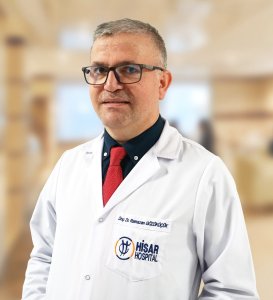
El Dr. Ramazan Gozukucuk es especialista en enfermedades infecciosas en el Hospital Hisar Intercontinental de Estambul. Se especializa en el tratamiento de hepatitis viral, infecciones hospitalarias y enfermedades relacionadas con los viajes. Obtuvo certificados de competencia en enfermedades infecciosas y microbiología clínica. El Dr. Gozukucuk trabaja en un centro acreditado por la JCI que trata a más de 500.000 pacientes cada año.
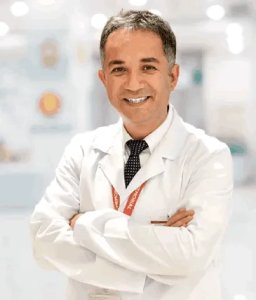
El Prof. Dr. Erdem Akbal es especialista en gastroenterología en los Hospitales Memorial Şişli y Memorial Bahçelievler de Estambul. Anteriormente trabajó en Liv Hospital Ulus, Medicana Ataşehir, los Hospitales Florence Nightingale y la Universidad Çanakkale Onsekiz Mart. Fue nombrado profesor asociado en 2014 y profesor en 2019.
Recibió formación avanzada en endoscopia intervencionista. Completó ESD en la Universidad Médica de Jichi, en Japón. Se formó en POEM/ESD y motilidad gastroint
 Olena Sikoza
La hepatitis B crónica no es curable actualmente, pero es altamente manejable mediante la supresión viral. Los hospitales turcos acreditados por la JCI proporcionan protocolos antivirales usando Tenofovir o Entecavir. Estas terapias reducen la carga viral para prevenir la cirrosis y el cáncer de hígado mientras mantienen la función hepática a largo plazo.
Perspectiva del experto de Bookimed: La infraestructura de Turquía está construida para la atención hepática de alto volumen. El Hospital Universitario Medipol Mega atiende a más de 1.000.000 de pacientes al año. Esta escala masiva garantiza que los médicos tengan una amplia experiencia en el manejo de cargas virales complejas. Elegir un centro multiespecialidad con más de 70 departamentos permite una coordinación más rápida si surgen complicac
Los mejores hospitales turcos para el tratamiento de la hepatitis B incluyen el Hospital Universitario Medipol Mega, el Hospital Memorial Şişli y el Centro Médico Anadolu. Estas instalaciones acreditadas por la JCI ofrecen departamentos especializados en gastroenterología y enfermedades infecciosas. Proporcionan una terapia antiviral esencial a largo plazo, monitorización de la carga viral y estadificación avanzada de la fibrosis hepática.
Perspectiva del experto de Bookimed: Los pacientes que buscan atención para VHB deben priorizar hospitales con departamentos de trasplante de órganos de gran volumen, como Memorial Şişli o Medipol. Estos centros poseen la infraestructura de hepatología más avanzada. A menudo tienen más experiencia en el manejo de daños hepáticos complejos. Esta experiencia garantiza una monitorización precisa incluso si no requiere cirugía.
Consenso de los pacientes: L
El manejo de la hepatitis B crónica requiere la supresión del virus mediante medicación antiviral a largo plazo y un control hepático regular. Los centros turcos se enfocan en usar fármacos de alta potencia como entecavir o tenofovir. Es necesaria una vigilancia de por vida cada 6 a 12 meses para mantener una tasa de supervivencia del 99% mediante la prevención de la cirrosis.
Opinión del experto de Bookimed: Los hospitales turcos acreditados por la JCI como el Memorial Şişli y el Anadolu Medical Center ofrecen unidades integradas de oncología y trasplantes. Esta infraestructura es vital porque el manejo crónico a veces evoluciona hacia una atención compleja. Aunque muchas clínicas atienden a miles de pacientes, estos centros específicos mantienen tasas de éxito del 90% para procedimientos hepáticos de alto riesgo.
Consenso de los pacientes:
La primera visita para la hepatitis B se centra en la confirmación del estado y la evaluación de la salud hepática. Los pacientes se reúnen con un gastroenterólogo o un especialista en enfermedades infecciosas en hospitales turcos acreditados por la JCI. La evaluación incluye pruebas de carga viral, análisis de enzimas hepáticas e imágenes no invasivas como la elastografía transitoria para determinar si es necesaria medicación inmediata.
Opinión del experto de Bookimed: Los centros de oncología y hepatología turcos como el Anadolu Medical Center se benefician de un alto volumen de pacientes. Atienden a más de 65.000 pacientes al año. Este enorme conjunto de datos permite a los especialistas diferenciar con mayor precisión entre la hepatitis B inmunoactiva e inactiva. Las clínicas de alto volumen suelen ofrecer planes de seguimiento a largo plazo más fiables graci
El trasplante de hígado es un tratamiento primario para la enfermedad hepática en etapa terminal relacionada con el VHB en Turquía. La hepatitis B crónica causa más del 35% de todos los trasplantes de hígado en el país. Los centros turcos acreditados por la JCI realizan cirugías de donante vivo y cadavérico con tasas de éxito que alcanzan el 90% en trasplantes de órganos.
Perspectiva del experto de Bookimed: Los centros de trasplante turcos demuestran una alta competencia técnica al gestionar volúmenes masivos de pacientes. Medipol Mega y el Hospital Hisar atienden juntos a más de 1,500,000 pacientes al año. Esta alta frecuencia permite a los equipos quirúrgicos mantener una precisión clínica máxima. La mayoría de los hospitales mejor calificados se encuentran en Estambul, lo que simplifica la logística para las familias internacionales