El costo de la cirugía para la apnea del sueño en Turquía suele oscilar de $3,200 a $4,800. El precio puede variar según el tipo de procedimiento (UPPP, avance del geniogloso o avance maxilomandibular), la experiencia del cirujano y la ubicación del hospital. En Estados Unidos, el precio promedio es $16,000 (según la AAO-HNS). Esto significa que la cirugía para la apnea del sueño en Turquía puede costar aproximadamente un 75% menos que en EE. UU.
Las clínicas turcas suelen incluir en sus paquetes la evaluación preoperatoria, la anestesia, la cirugía, la estancia hospitalaria (1–2 noches), los medicamentos postoperatorios y las visitas de seguimiento. En EE. UU., el precio base suele cubrir solo al cirujano, mientras que la anestesia, los honorarios hospitalarios y la atención posterior se facturan por separado. Se debe confirmar con la clínica elegida qué está incluido.
| España | Turquía | México | |
| Tratamiento quirúrgico de la apnea obstructiva del sueño | de $5,500 | de $3,200 | de $4,000 |
Este paquete todo incluido ofrece opciones mínimamente invasivas asistidas por robot para una mayor precisión quirúrgica. El Dr. Ziya Ilgin, graduado de la Universidad de Marmara con enfoque en más de 900 procedimientos de apnea del sueño, personaliza el enfoque en los acreditados hospitales Büyük Anadolu. Por aproximadamente 3.900 $, el paquete preliminar cubre la revisión del estudio del sueño, pruebas diagnósticas, una estancia de 6 días y coordinación multilingüe. La clínica cuenta con el Certificado de Autorización de Turismo de Salud Internacional y tiene una tasa de recomendación de pacientes del 98%.
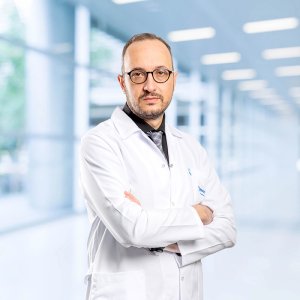
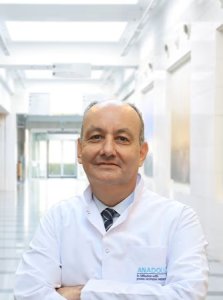
El Prof. Dr. M. Emre Üstündağ es profesor de Otorrinolaringología–Cirugía de Cabeza y Cuello en el Anadolu Medical Center de Gebze. Es profesor en la Universidad de Kocaeli desde 2006. Completó su título de médico (MD) y la residencia en ORL en la Universidad de Estambul entre 1983 y 1995. Ha trabajado en las universidades de Estambul y Kocaeli y en los hospitales Acıbadem. Además, mantiene consulta privada desde 2006.
Enfoque clínico: oncología y cirugía de cabeza y cuello; rinología y rinoplastia; laringología; septoplastia; cirugía de la apnea del sueño.
Realizó formación internacional en Irlanda (Ardkeen). En Alemania se formó en Tubinga; Friburgo (otología, 4 meses); y Ratisbona (rinología, 4 meses). En EE. UU. se formó en Stanford en laringología y apnea del sueño (4 meses). Tiene 47 artículos internacionales y 788 citas (Google Scholar, enero de 2026). Es miembro de la Sociedad Turca de ORL-CCC, de la Asociación de ORL de la Universidad de Estambul y de la Sociedad Alemana de ORL-CCC.
El Dr. Onur Ustun se especializa en afecciones de oído, nariz y garganta (ORL) en el Hospital de Formación e Investigación de Haseki, centrándose en la cirugía de la apnea del sueño.
El Prof. Yasar Cokkeser aporta décadas de experiencia especializada en otorrinolaringología (ORL) a la cirugía de la apnea del sueño, habiéndose formado con líderes mundiales en Johns Hopkins y el House Ear Institute.
El Dr. Vuralkan cuenta con una amplia experiencia en cirugía ORL, con un enfoque en los tratamientos para la apnea del sueño en el Hospital VM Medical Park Florya.
Surgeons in Turkey identify sleep apnea causes through clinical examinations and airway mapping. Specialists like Dr. Mehmet Emre Ustundag, who trained at Stanford University, use polysomnography to assess severity. They also use drug-induced sleep endoscopy to visually locate airway collapses during simulated sleep.
Bookimed Expert Insight: Turkish packages from clinics like Büyük Anadolu Hospitals often bundle preoperative tests. These bundles also include 3 nights of hospital monitoring. This allows surgeons to verify airway stability immediately after procedures such as UPPP. This surgery typically costs between $3,200 and $4,800.
Patient Consensus: Patients find that bringing previous sleep study reports helps surgeons confirm obstruction levels. They recommend asking for a physical ENT exam of the nose, throat, and palate before surgery.
Surgery in Turkey significantly reduces sleep apnea symptoms. However, it rarely provides a permanent 100% cure for every patient. Success typically means halving the respiratory interruption index rather than total eradication. Outcomes rely on precise airway diagnostics and maintaining a stable weight afterwards.
Bookimed Expert Insight: Turkish specialists often have academic backgrounds from institutions like Stanford or Johns Hopkins. For example, Professor Mehmet Emre Ustundag at Anadolu Medical Center trained at Stanford specifically in sleep apnea surgery. Choosing a surgeon with this international training provides access to modern airway management protocols.
Patient Consensus: Success depends on targeting the right anatomical level. This makes a pre-op sleep study vital. Many find that while snoring stops, objective testing is still needed to confirm apnea reduction.
Surgical success for sleep apnea in Turkey ranges from 40% to 90%. This depends on the procedure and patient anatomy. High-performing clinics in Istanbul use drug-induced sleep endoscopy (DISE) to locate airway obstructions. This allows for precise interventions that meet international clinical standards for obstructive sleep apnoea.
Bookimed Expert Insight: Success often relies on surgeon experience. While standard clinics offer basic UPPP, specialists like Dr Mehmet Emre Ustundag at Anadolu Medical Center bring expertise from Stanford University’s sleep apnea module. Such specialised training at high-volume centres often leads to more accurate diagnostics and improved breathing outcomes.
Patient Consensus: Patients find that success means better daytime function and reduced snoring. Outcomes improve when surgeries target the specific anatomical cause of obstruction.
Turkish clinics perform diverse sleep apnea surgeries targeting specific airway blockages. These range from soft tissue removal to structural jaw advancement. Specialists routinely perform uvulopalatopharyngoplasty (UPPP), septoplasty, and turbinate reduction at JCI-accredited facilities. Multi-level procedures and radiofrequency ablation are also common for complex obstructive patterns.
Bookimed Expert Insight: While many search for a single cure, Turkish specialists often combine nasal surgery with palatal procedures. Dr. Mehmet Emre Ustundag at Anadolu Medical Center trained at Stanford University. He is a prime example of surgeons using this staged, multi-level approach.
Patient Consensus: Clinics in Turkey perform the full range of nasal, tonsil, and palatal surgeries. Patients suggest asking which anatomical level the surgeon plans to treat. They also suggest confirming if pre-op tests and follow-up visits are included.
Sleep apnea surgery in Turkey involves varying pain levels and recovery times based on the technique used. Robotic and endoscopic methods minimise trauma. Throat-based procedures like UPPP cause significant discomfort for 7 to 10 days. Nasal surgeries require only 5 to 7 days for full recovery.
Bookimed Expert Insight: Many clinics offer standalone surgery. However, Büyük Anadolu Hospitals (BAH) provide packages with 24-hour nurse services. This helps with sleep apnea procedures, as nurses manage peak pain between days 3 and 5. This occurs while you remain in a clinical setting.
Patient Consensus: Patients suggest searching for UPPP specifically to understand early swallowing and speaking difficulties. First-hand reports highlight that staying hydrated and using ice chips makes throat recovery manageable.
Most patients stay in Turkey for 7 to 10 days for sleep apnea surgery. This timeframe covers pre-operative assessments and the surgical procedure. It also includes post-operative monitoring by specialists like Professor Mehmet Emre Ustundag. Professor Ustundag completed sleep apnea training at Stanford University.
Bookimed Expert Insight: Many clinics suggest a week is enough. However, all-inclusive packages often reveal the true recovery needs. For instance, Büyük Anadolu Hospitals bundles 3 nights of hospital care with 3 nights in a hotel. This 6-night minimum stay is vital for monitoring breathing and swallowing. You need this stability before the long-haul flight back to Australia.
Patient Consensus: Travellers suggest adding extra buffer days to manage unexpected swelling. Ask your surgeon to confirm your throat is clear for travel at the final review. Keep your return flight flexible until then.