Ir a inicio
4.6/5
TrustPilot

Los mejores médicos del tratamiento de Tabique desviado - TOP-1 médicos

Compara a los mejores médicos de Tabique desviado y precios en Italia. Encuentra aquí tu mejor opción.

Recibe cotizaciones de 3 de los mejores especialistas en en Italia

Seleccionaremos los mejores médicos según tus necesidades y presupuesto.

Mejores médicos

1

Italia

Reseñas

14000+

De pacientes reales

Recibe planes de tratamiento personalizados gratuitos y elige la mejor opción. Sin compromiso · Sin pagos por nuestros servicios

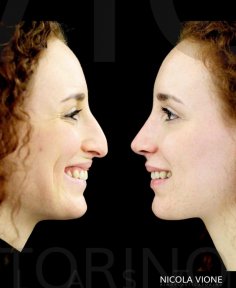
Resultados de rinoplastia antes y después en Santa Caterina da Siena, mejora de la nariz
Nicola Vione

Nicola Vione

29 años de experiencia
Clínica certificada por
Patient choice in Neurology
Best service for patients
Ubicación: Italia, Turín

Miles de cirugías de nariz realizadas con excelentes resultados: el Dr. Vione se especializa en cirugía funcional y estética de la nariz.

  • Más de 20 años de experiencia en Otorrinolaringología
  • Experto en rinoplastia de preservación para resultados naturales
  • Profesor en el Centro de Estudios 'Micheli-Pellegrini', una de las principales escuelas italianas de cirugía facial
  • Miembro de múltiples sociedades científicas nacionales, incluidas AICEFF y AOOI
  • Trabaja en el hospital San Luigi Gonzaga y en clínicas privadas
Cita con el médicoPrecio a consultar

Elegir una clínica en el extranjero puede ser estresante. En Bookimed, con más de 800K pacientes ayudados, entendemos sus preocupaciones. Sabemos cómo encontrar médicos de confianza, las mejores opciones calidad-precio y soluciones incluso para casos complejos. Estamos aquí para guiarle en cada paso de su viaje médico.

Yan Matsiivskiy

Jefe del Equipo de coordinadores médicos

Más de 4300+ acompañamientos de pacientes

3 años en Bookimed

294 pacientes de Italy han encontrado a su médico con nosotros este mes

Cómo obtendrás tu coincidencia de médico perfecta

1

Cuestionario de 2 minutos

Cuéntanos tu objetivo, presupuesto, y tiempo estimado

2

Coincidencia humana + IA

Nuestro algoritmo busca coincidencias, el coordinador verifica la compatibilidad

3

Tus opciones listas

Compara precios, paquetes, fechas. Chatea con tu coordinador

¿Demasiadas opciones?

Tu personal El coordinador de Bookimed te ayuda a encontrar el cirujano perfecto adaptado a tus necesidades

  • Te apoya 24/7 en cada etapa
  • Te ayuda a encontrar al médico adecuado y se encarga de toda la comunicación con las clínicas
  • Coordina tu viaje, alojamiento y traslados

Guiando tu tratamiento

Coordinadores personales con formación médica

Peguy Beaugris
Tetyana Hyrych
Zekra Eldeeb
Victoria Olayinka
Iryna Sydorchuk
Tetiana Ihnatiuk

Cómo elegir el médico y la clínica adecuados: Consejos de expertos

Al elegir un médico o una clínica, tenga en cuenta estos puntos clave:
Revise las credenciales
Verifique las certificaciones de entidades como ISAPS, JCI o los consejos médicos relevantes.
Revise las tasas de éxito
Elija médicos con una amplia experiencia y un historial comprobado en su tratamiento específico.
Lea las reseñas de los pacientes
Reseñas de pacientes reales de Bookimed para conocer su experiencia.
Garantía de comunicación eficaz
Elija clínicas que ofrezcan servicio de traducción para facilitar el tratamiento.
Pregunte sobre los servicios
Confirme si el precio incluye servicios como alojamiento, traslados locales y atención de seguimiento para evitar costos ocultos.

Bookimed Insights: Principales especialistas en Tabique desviado en Italia (2026)

Bookimed ha coordinado 9 solicitudes para el tratamiento de Tabique desviado en Italia, colaborando con 1 especialistas de primer nivel. Los médicos en esta tabla se seleccionan por sus credenciales internacionales, experiencia clínica y resultados de pacientes. La clasificación de 2026 se elabora con datos verificados de casos reales y programas actuales de nuestras clínicas asociadas.
ClasificaciónMédicoexperienciaBuena opción paraQué los distingueUbicación de la clínicaConsulta
#129 años de experienciaCirugía funcional de la narizEspecialista en rinoplastia de preservación, una técnica que respeta la anatomía nasal para obtener resultados naturales. Profesor en el prestigioso Centro de Estudios 'Micheli-Pellegrini' de Italia.
Italia
Precio a consultar

FAQ

Estas preguntas frecuentes provienen de pacientes reales que buscan atención médica a través de Bookimed. Las respuestas son proporcionadas por coordinadores médicos experimentados y representantes autorizados de las clínicas.

Who is a good candidate for septoplasty in Italy?

Good candidates for septoplasty in Italy include adults with chronic nasal obstruction caused by a deviated septum. Qualifying patients typically experience persistent mouth breathing or recurrent sinus infections. Italian specialists require that facial growth is fully complete. This usually occurs by age 16 for girls and 18 for boys.

  • Obstruction severity: Candidates often have over 50% nasal blockage confirmed by imaging scans.
  • Treatment history: Surgery is recommended after 3 to 6 months of unsuccessful medical therapy.
  • Secondary symptoms: Recurring nosebleeds or sleep disturbances like snoring often indicate surgical necessity.
  • Physical health: Ideal candidates are non-smokers to ensure optimal healing of the nasal mucosa.

Bookimed Expert Insight: Italian surgical centers like La Madonnina Clinic and Ospedale San Carlo di Nancy manage high patient volumes. This density allows surgeons like Dr. Nicola Vione to refine specialized preservation techniques. These approaches focus on maintaining nasal structural integrity. This often results in more natural outcomes and faster recovery than traditional methods.

Patient Consensus: Patients emphasize first checking if allergies cause the blockage before committing to surgery. Those with a fully blocked nostril report that private clinics provide much faster relief than the long public wait times.

What surgical technique is routinely used in Italy and are visible scars created?

Italian specialists routinely treat a deviated septum using endoscopic septoplasty. This advanced approach involves internal incisions with no external skin cuts. Most patients experience zero visible scarring. Surgeons use specialized endoscopes to ensure high precision while preserving the nose structural integrity.

  • Surgical approach: Endoscopic techniques allow surgeons to work entirely through the nostrils.
  • Incision placement: Internal placement of stitches ensures any scars remain completely invisible.
  • Functional focuses: Italian centers often combine septoplasty with turbinate reduction for better airflow.
  • Recovery timeline: Internal incisions typically heal fully within approximately 2 weeks.

Bookimed Expert Insight: Italian clinics like La Madonnina in Milan demonstrate a high focus on aesthetic-functional synergy. Doctors like Dr. Nicola Vione emphasize preservation rhinoplasty techniques. This focus ensures that functional repairs do not change the nose shape unless requested. High-volume centers in Rome and Milan provide access to specialists who have performed thousands of these internal procedures.

Patient Consensus: Patients note that choosing an endoscopic approach resulted in no visible marks and a smooth recovery. They highlight the importance of asking if turbinoplasty is bundled, as this is a common practice in Italy.

Are stitches placed inside the nose after surgery and do they need to be removed?

Surgeons place internal stitches during septoplasty to secure the septum and close incisions. Most internal sutures are absorbable and dissolve naturally within 1 to 4 weeks. External stitches used in open procedures require professional removal by a surgeon, typically within 7 days.

  • Absorbable sutures: These internal stitches break down naturally and do not require removal.
  • Dissolving timeframe: Internal material typically disappears within 7 to 28 days of healing.
  • External removal: Non-dissolvable stitches on the columella are usually removed within 1 week.
  • Splint fixation: A single temporary stitch may hold plastic splints until their scheduled removal.

Bookimed Expert Insight: Italian specialists like Dr. Nicola Vione emphasize preservation techniques to shorten recovery and minimize surgical trauma. Leading facilities in Rome and Milan, including Ospedale San Carlo di Nancy and La Madonnina, prioritize these minimally invasive approaches. Patients should note that high-volume centers in Italy often use specific biodegradable materials that reduce post-operative irritation compared to standard sutures.

Patient Consensus: Patients often worry when seeing white or yellowish material inside the nose after surgery. This is typically just the dissolving suture material rather than a sign of infection.

How long do I need to stay in Italy for safe surgery and the first follow-up?

For a deviated septum treatment in Italy, patients typically require a 7 to 10 day stay. This timeframe ensures safety during the first critical days and covers the initial post-operative follow-up. Surgeons usually perform the first check 3 to 7 days after the procedure.

  • Hospital stay: Most patients spend 1 night in the clinic for monitoring.
  • Packing removal: Surgeons typically remove nasal packing 24 to 48 hours after surgery.
  • First follow-up: The primary clinical check occurs between day 3 and day 7.
  • Travel clearance: Patients are generally fit to fly 7 to 10 days post-operation.

Bookimed Expert Insight: Italian clinics like Ospedale San Carlo di Nancy and La Madonnina focus on large-scale patient volumes. Dr. Nicola Vione has performed thousands of nose operations using advanced functional techniques. We see that high-volume Italian specialists often provide flexible remote follow-ups after the first face-to-face visit.

Patient Consensus: Patients note that nasal congestion and swelling peak around day 5. They emphasize staying local for at least a week to manage initial pressure changes before flying home.

When can I resume sport, glasses, and return to work?

Recovery from septoplasty in Italy typically allows a return to desk work within 7 days. Patients should avoid wearing glasses directly on the nasal bridge for 1 to 2 weeks. Aerobic exercise and sports generally require 4 to 6 weeks of rest to ensure stable healing.

  • Return to work: Resume non-physical tasks in 3 to 7 days.
  • Eyewear restrictions: Avoid nasal bridge pressure for 14 days.
  • Physical activity: Light walking is safe after 1 week.
  • Strenuous sports: Wait 4 to 6 weeks for full clearance.

Bookimed Expert Insight: FIFA-accredited facilities like Clinic Villa Stuart specialize in accelerated rehabilitation for elite athletes. While general patients wait 6 weeks for sports, these specialized centers use protocols that may allow light training sooner. Some Italian experts like Dr. Nicola Vione perform thousands of procedures using preservation techniques designed to minimize tissue trauma during recovery.

Patient Consensus: Patients note it is important to tape glasses to your forehead or switch to contacts early on. They warn that rushing back to the gym before 4 weeks can cause bleeding.

Which post-op instructions minimise bleeding and speed recovery?

Post-operative care for a deviated septum includes sleeping at 45 degrees to use gravity against bleeding. Avoid nose blowing for 14 days and refrain from heavy lifting. Italian specialists like Dr. Nicola Vione use preservation techniques to shorten recovery and minimize surgical trauma.

  • Elevation: Propping your head 45–60 degrees reduces blood pressure and bleeding duration.
  • Physical limits: Avoiding items over 5kg and bending prevents sudden nasal pressure spikes.
  • Heat avoidance: Skipping hot showers, saunas, and espresso prevents blood vessel dilation.
  • Hydration: Drinking 3 liters of water daily helps flush anesthesia and clear clots.
  • Saline rinses: Starting rinses after 48 hours helps clear crusting twice as fast.

Bookimed Expert Insight: Italian clinics like La Madonnina and Ospedale San Carlo provide specialized environments for recovery. Specialists in Italy often focus on preservation rhinoplasty protocols. This approach reduces tissue damage compared to traditional methods. Experience matters, as doctors like Dr. Nicola Vione perform thousands of successful nose operations. Seeking specialized surgeons can reduce the standard recovery time to around 10 days.

Patient Consensus: Patients emphasize that sneezing with an open mouth is vital to avoid bleeding. Many find that using a cool-mist humidifier prevents painful nasal crusting during the first week.

What documentation should I bring to Italy and do I need additional certificates if I have travel insurance?

Travelers to Italy for deviated septum treatment must present a valid passport with 3-6 months validity. Essential documentation includes proof of onward travel and clinical accommodation. While travel insurance is proactive, you still need a specific visa letter or confirmation of coverage document from your insurer.

  • Travel authorization: ETIAS pre-travel authorization is expected for visa-exempt citizens by late 2026.
  • Schengen requirements: Visa applicants must prove minimum medical coverage of €30,000 including repatriation fees.
  • Medical necessity: Bring an apostilled doctor's note to confirm the septoplasty is non-cosmetic.
  • Clinical records: Clinics require detailed CT scans and ENT specialist letters beyond insurance summaries.

Bookimed Expert Insight: Italian clinics like La Madonnina or Ospedale San Carlo di Nancy handle high patient volumes. Our data shows that top surgeons like Dr. Nicola Vione often hold academic roles. Patients should prepare physical paper copies of all medical records. Italian facilities frequently prefer physical documents over digital apps for admission and insurance verification.

Patient Consensus: Patients note that email correspondence with the clinic should start 6 weeks early. They emphasize that standard travel insurance rarely covers elective surgery without a specific medical necessity waiver.



