Ir a inicio
820К+ pacientes han recibido asistencia desde 2014
50 países
1,500 clínicas
6K+ reseñas
3K+ médicos calificados

¿Cuál es el precio del diagnóstico y los tratamientos de Tumor de la glándula salival en China? Descubra ahora

El precio se proporciona bajo petición

Sus beneficios y garantías con Bookimed

Precios directos

Bookimed no añade cargos extra a los precios de los tratamientos de Tumor de la glándula salival. Las tarifas proceden de las listas de precios oficiales de las clínicas. Pagará directamente en la clínica por su tratamiento a su llegada al país.

Sólo clínicas y médicos verificados

Bookimed está comprometido con su seguridad. Solo trabajamos con las clínicas que mantienen altos estándares internacionales en el tratamiento de Tumor de la glándula salival y cuentan con las licencias necesarias para atender a pacientes internacionales en todo el mundo.

Asistencia 24/7 gratuita

Bookimed ofrece asistencia experta gratuita. Un coordinador médico personal le apoya antes, durante y después de su tratamiento, resolviendo cualquier problema. Nunca estará solo en su viaje médico de tratamiento de Tumor de la glándula salival.

¿Por qué nosotros?

Su coordinador médico personal de Bookimed

  • Le apoya en cada etapa
  • Ayuda a elegir la clínica y el médico adecuados
  • Asegura un acceso rápido y conveniente a la información

Compartir contenido

Historias en video de pacientes de Bookimed

Dayana
Combiné mis vacaciones en Antalya con un chequeo médico.
Procedimiento: Chequeo femenino
Igor
¡Fue genial! Traslados, alojamiento, tratamiento, todo incluido.
Procedimiento: Implante dental
Clínica: WestDent Clinic
Marina
Bookimed se encargó de todo. No tuve que preocuparme por nada.
Procedimiento: Chequeo femenino
Actualizado: 11/10/2025
Escrito por
Olena Sikoza
Olena Sikoza
Сopywriter en español
Copywriter médica certificada responsable del contenido en español de Bookimed. Más de 7 años de experiencia en redacción sobre salud y turismo médico, con formación académica en edición científica y desarrollo de contenidos.
Fahad Mawlood
Editor médico y Científico de datos
Médico general. Ganador de 4 premios científicos. Sirvió en Asia Occidental. Es el ex jefe del equipo médico que soporta a pacientes de habla árabe. Ahora es responsable del procesamiento de datos y la precisión del contenido médico.
Fahad Mawlood Linkedin
Esta página puede incluir información relacionada con diversas afecciones médicas, tratamientos y servicios de salud disponibles en diferentes países. Tenga en cuenta que el contenido se proporciona sólo con fines informativos y no debe interpretarse como asesoramiento médico o orientación. Por favor consulte con su médico o con un profesional médico calificado antes de comenzar o cambiar el tratamiento médico.

Preguntas frecuentes sobre el tratamiento de Tumor de la glándula salival en China

Estas preguntas frecuentes provienen de pacientes reales que buscan atención médica a través de Bookimed. Las respuestas son proporcionadas por coordinadores médicos experimentados y representantes autorizados de las clínicas.

What is the primary treatment approach for salivary gland tumors in Chinese hospitals?

The primary treatment for salivary gland tumors in China is complete surgical resection. Chinese surgeons determine the surgical scope based on tumor malignancy, size, and anatomical location. Tertiary centers often combine radical excision with advanced radiation techniques like Iodine-125 seed brachytherapy for malignant cases.

  • Surgical modalities: Surgeons perform superficial or total parotidectomies to ensure clear margins.
  • Minimally invasive shifts: Partial superficial parotidectomy is increasingly used to preserve facial nerve function.
  • Brachytherapy usage: Iodine-125 seeds are frequently implanted post-resection to target residual cancer cells.
  • Gland removal: Total extraction is standard for tumors in submandibular or sublingual glands.
  • Nerve protection: High-volume centers focus on functional surgery to prevent permanent facial weakness.

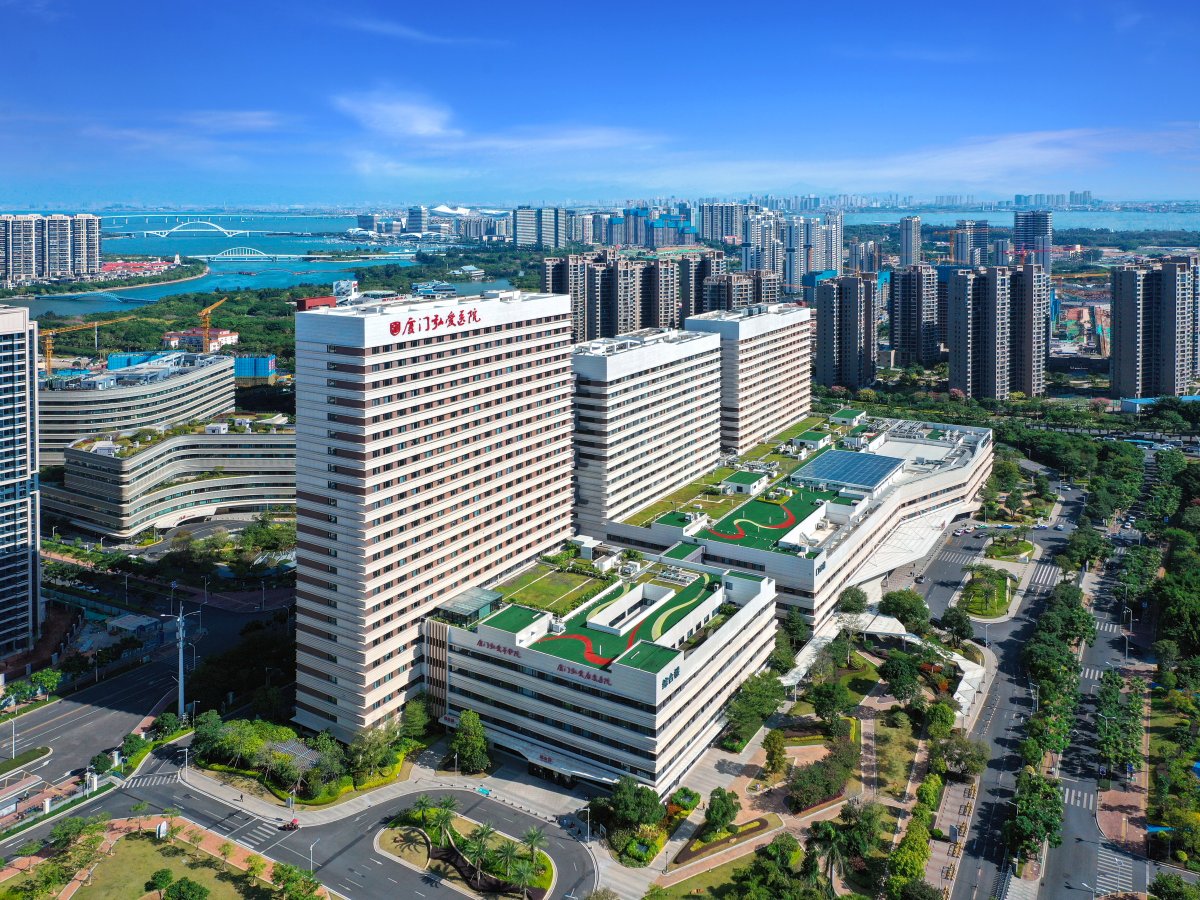
Bookimed Expert Insight: While small clinics focus on general surgery, top Chinese tertiary hospitals like Xiamen Humanity Hospital operate on a massive scale. This hospital serves 1,000,000 patients annually and is accredited for Phase I-IV drug trials. For patients, this high volume translates to surgeons having deeper experience in complex head-and-neck anatomy. This vast clinical experience is crucial for procedures requiring precise facial nerve preservation.

Patient Consensus: Patients often emphasize that the recovery process feels more intense than expected due to facial nerve concerns. Most individuals note that temporary weakness is common, making surgeon experience with head-and-neck anatomy a top priority.

Is advanced particle therapy (Carbon Ion or Proton Therapy) available in China for salivary gland tumors?

China provides advanced particle therapy including Carbon Ion Radiotherapy (CIRT) and Proton Beam Therapy (PBT) for salivary gland tumors. These treatments target radioresistant malignancies like adenoid cystic carcinoma. Specialized centers utilize intensity-modulated particle therapy to spare critical structures like the brain stem and optic nerves.

  • Treatment availability: Facilities in Shanghai and Wuwei provide both proton and carbon ion modalities.
  • Clinical outcomes: Chinese centers report a 91.6% overall survival rate for major salivary gland tumors.
  • Biological effectiveness: Carbon ions cause irreversible DNA breaks in stubborn, radioresistant salivary tumor cells.
  • Tissue sparing: Particle beams stop precisely at tumor edges to prevent chronic dry mouth.
  • Facility accreditation: Leading Chinese particle therapy institutions maintain Joint Commission International (JCI) safety standards.

Bookimed Expert Insight: Patient volume data suggests a massive scale of care in China. Xiamen Humanity Hospital alone manages 1,000,000 patients annually. This high volume often correlates with refined clinical protocols for complex oncology cases. Large Chinese tertiary hospitals frequently integrate clinical trials into standard care. This provides patients access to emerging protocols for rare head and neck pathologies.

Patient Consensus: Patients often choose proton therapy when tumors are located near the skull base. They prioritize these beams for sparing the brainstem and spinal cord when surgery is difficult.

How do leading Chinese surgical teams protect the facial nerve during a parotidectomy?

Leading Chinese surgical teams protect the facial nerve using intraoperative neuro-monitoring (IONM) and high-resolution 3D digital modeling. These systems map nerve branches in real-time. Surgeons employ micro-dissection under magnification to separate the gland from the nerve. This multi-modal strategy maintains facial function.

  • Neuro-monitoring standards: Multi-channel electromyography (EMG) electrodes detect nerve signals during surgery.
  • 3D modeling: High-resolution MRI/CT scans create digital roadmaps of tumor proximity zones.
  • Micro-dissection tools: Surgeons use surgical loupes or microscopes with specialized fine-tip microsurgical scissors.
  • Strategic landmarks: Teams locate the main nerve trunk using the tragal pointer landmark.

Bookimed Expert Insight: Large tertiary centers like Xiamen Humanity Hospital manage 1,000,000 patients annually. This massive volume allows surgical teams to standardize nerve-sparing protocols across 47 specialized departments. High patient throughput typically correlates with refined surgeon judgment in complex deep-lobe tumor cases. We recommend prioritizing hospitals with dedicated oncology and neurosurgery departments to ensure multidisciplinary support.

Patient Consensus: Patients note that temporary facial weakness is a common part of recovery. Many emphasize that a surgeon's experience with branch-by-branch dissection is more vital than monitoring technology alone.

Which hospitals in China are best-known for treating head and neck tumors, including salivary gland cancers?

Shanghai Ninth Peoples Hospital and West China Hospital of Stomatology are the premier Chinese centers for salivary gland cancers. These institutions specialize in complex maxillofacial and head and neck oncology. They manage the highest national patient volumes for parotid and submandibular gland malignancies.

  • Specialized surgical hubs: Shanghai Ninth Peoples Hospital leads Eastern China in oral and maxillofacial oncology.
  • Clinical research centers: West China Hospital of Stomatology serves as the national hub for oral diseases.
  • Advanced radiation technology: Fudan University Shanghai Cancer Center utilizes proton and heavy ion radiation therapy.
  • Multidisciplinary team care: Chinese Academy of Medical Sciences Cancer Hospital provides state-level integrated oncology teams.

Bookimed Expert Insight: Xiamen Humanity Hospital stands out as a high-capacity tertiary center serving 1,000,000 patients annually. While major cancer centers focus on surgery, this hospital is accredited for Phase I-IV drug trials. This makes it a strategic choice for patients seeking access to new head and neck cancer therapies. Its 47 departments ensure 460 doctors can manage complex comorbidities alongside primary tumor treatment.

Patient Consensus: Patients emphasize that the first surgery is critical and should occur at a high-volume center. They prioritize hospitals that provide facial nerve-sparing surgery and have on-site pathology for immediate re-review.

What role does Traditional Chinese Medicine play alongside standard cancer treatments in China?

Traditional Chinese Medicine (TCM) serves as a standardized partner to Western oncology in China. Around 80% of cancer patients use integrated protocols. These include herbal medicine and acupuncture. Doctors use TCM to reduce side effects like nausea or dry mouth from radiotherapy.

  • System integration: TCM is embedded in national guidelines alongside surgery and radiation.
  • Side effect management: Specialized formulas help reduce bone marrow suppression and gastrointestinal distress.
  • Immune support: Fu Zheng therapy uses herbs like Ginseng to stimulate natural killer cells.
  • Symptom relief: Acupuncture manages fatigue, insomnia, and peripheral neuropathy in hospital wards.

Bookimed Expert Insight: Patients should prioritize facilities like Xiamen Humanity Hospital which are accredited for clinical trials. These centers provide a safer environment for integrating TCM with advanced Western care. High-volume tertiary hospitals manage 1,000,000 patients annually and better monitor herb-drug interactions. Seeking care at research-oriented institutions ensures that integrative therapies do not interfere with surgical or radiation protocols.

Patient Consensus: Patients find TCM emotionally reassuring and culturally familiar during the stress of cancer care. Practical reports note that while benefits vary, many feel it improves appetite and manages painful dry mouth after head-and-neck radiation.

How do multidisciplinary teams coordinate cancer care for malignant salivary gland tumors in China?

Multidisciplinary teams in China coordinate salivary cancer care through a centralized, multi-specialty framework. This model integrates surgical oncology, pathology, and radiation planning. Over 80% of Chinese tertiary hospitals use this structure for complex malignancies. It ensures rapid diagnosis and precise treatment sequencing.

  • Diagnostic alignment: Radiologists use MRI and CT to differentiate lesions from nasopharyngeal carcinoma.
  • Intraoperative coordination: Surgeons rely on immediate frozen section pathology to decide surgical escalation.
  • Tumor board formats: Specialists use outpatient, inpatient, and remote formats for treatment consensus.
  • Rehabilitation integration: The SHINE-MDT framework includes nurses and dietitians for post-surgical recovery.

Bookimed Expert Insight: Coordination success depends on clinic volume and research infrastructure. Xiamen Humanity Hospital manages 1,000,000 patients annually and is accredited for phase I-IV drug trials. Hospitals with high patient volumes and clinical trial capabilities often have better-integrated departments compared to smaller facilities. This environment allows for faster transitions between surgical pathology and the start of adjuvant therapies.

Patient Consensus: Patients note it is vital to push for a second pathology review at national centers. They often find themselves hand-carrying records between departments to ensure the radiation oncology plan matches the surgical findings.

What is the typical timeline for international or out-of-province patients undergoing salivary gland tumor surgery in China?

International patients typically face a 10 to 14 day timeline for salivary gland surgery in China. This includes 2 to 4 days for pre-operative imaging and clearance. The hospital stay is usually 3 to 7 days. Patients should arrive with all pathology slides and contrast scans.

  • Pre-arrival phase: Send pathology reports and MRI scans for remote review before traveling.
  • Diagnostic buffer: Hospitals often repeat imaging and bloodwork to confirm surgical boundaries.
  • Hospital stay: Simple excisions require 2 days while complex parotidectomies need 5+ days.
  • Recovery period: Plan for 10 days post-op in-country for drain removal and monitoring.

Bookimed Expert Insight: Xiamen Humanity Hospital serves over 1,000,000 patients annually across 47 departments. This high volume often results in faster surgical booking once a patient is admitted. International patients should prioritize tertiary centers that host drug and device trials. These facilities usually have the most advanced nerve-monitoring equipment for parotid surgeries. This ensures better preservation of facial expressions during complex tumor removals.

Patient Consensus: Patients note that the pre-op review of pathology slides is the main bottleneck. It is vital to bring original biopsy blocks to avoid long delays in scheduling.

Pedir una consulta gratis

Seleccione la mejor manera de contactarle

