Prolapso uterino en Grecia: clínica verificada para su tratamiento


Revisado médicamente por
Fahad Mawlood
¿Cuál es el precio del diagnóstico y los tratamientos de Prolapso uterino en Grecia? Descubra ahora
| España | Turquía | |
|---|---|---|
| Sacrohisteropexia Da Vinci para el prolapso uterino | ≈ $9,500 | de $3,400 |
| Histerectomía con robot DaVinci | de $21,600 | de $11,600 |
Sus beneficios y garantías con Bookimed
Precios directos
Bookimed no añade cargos extra a los precios de los tratamientos de Prolapso uterino. Las tarifas proceden de las listas de precios oficiales de las clínicas. Pagará directamente en la clínica por su tratamiento a su llegada al país.
Sólo clínicas y médicos verificados
Bookimed está comprometido con su seguridad. Solo trabajamos con las clínicas que mantienen altos estándares internacionales en el tratamiento de Prolapso uterino y cuentan con las licencias necesarias para atender a pacientes internacionales en todo el mundo.
Asistencia 24/7 gratuita
Bookimed ofrece asistencia experta gratuita. Un coordinador médico personal le apoya antes, durante y después de su tratamiento, resolviendo cualquier problema. Nunca estará solo en su viaje médico de tratamiento de Prolapso uterino.

Su coordinador médico personal de Bookimed
- Le apoya en cada etapa
- Ayuda a elegir la clínica y el médico adecuados
- Asegura un acceso rápido y conveniente a la información
Descubra las mejores clínicas de tratamiento de Prolapso uterino en Grecia: 1 opciones verificadas y Precios



Obtenga una evaluación médica para Prolapso uterino en Grecia: consulte con doctores experimentados ahora
Ver todos los médicos
Ioannis Kakaidis
Ioannis Kakaidis, Doctor en Medicina, es obstetra-ginecólogo y cirujano endoscópico. Es Director del Departamento de Ginecología de la Clínica IASYS.
Se graduó en la Facultad de Medicina de la Universidad Nacional y Kapodistríaca de Atenas. Completó su formación de especialidad en la Clínica Universitaria del Hospital General Alexandra. Posteriormente se formó en cirugía endoscópica en el Royal Free Hospital, UCL, en la Unidad de Terapia Mínimamente Invasiva y el Centro de Formación en
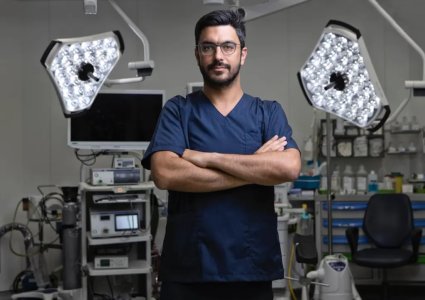
Nikolaos Plevris
Compartir contenido
Historias en video de pacientes de Bookimed
 Olena Sikoza
Preguntas frecuentes sobre el tratamiento de Prolapso uterino en Grecia
¿Qué tratamientos no quirúrgicos están disponibles en Grecia para el prolapso uterino?
Los tratamientos no quirúrgicos para el prolapso uterino en Grecia incluyen pesarios vaginales, fisioterapia del suelo pélvico y estrógenos tópicos. Los especialistas utilizan modificaciones en el estilo de vida para controlar la presión intraabdominal. Estas opciones conservadoras reducen eficazmente los síntomas y estabilizan el prolapso en etapas tempranas. Ginecólogos certificados proporcionan ajustes personalizados para dispositivos de soporte mecánico.
- Pesarios vaginales: Dispositivos de silicona que sostienen físicamente los órganos pélvicos descendentes para aliviar la presión.
- Fisioterapia: Los especialistas utilizan biofeedback para asegurar la activación correcta de los músculos del suelo pélvico.
- Terapia con estrógenos: Cremas o anillos locales que fortalecen los tejidos vaginales en pacientes posmenopáusicas.
- Cambios en el estilo de vida: El control de peso y las dietas ricas en fibra reducen el esfuerzo durante las actividades diarias.
- Control de la presión: Las técnicas de respiración y postura evitan una fuerza excesiva sobre las estructuras pélvicas.
Opinión de expertos de Bookimed: La calidad de la atención conservadora en Grecia depende en gran medida de la clínica. El Centro Médico Europeo Interbalkan en Tesalónica mantiene altos estándares a través de acreditaciones internacionales como Tem
¿Cuáles son las principales opciones quirúrgicas para el prolapso uterino en Grecia?
Las principales opciones quirúrgicas en Grecia incluyen la histerectomía asistida por robot y la sacrohisteropexia. Los centros especializados griegos utilizan la tecnología DaVinci para estos procedimientos. Los cirujanos realizan cirugías reconstructivas para restaurar la anatomía pélvica. Estas opciones tratan eficazmente el prolapso uterino de moderado a grave. Las técnicas mínimamente invasivas aseguran tiempos de recuperación más rápidos para las pacientes.
- Histerectomía robótica: Extirpación precisa del útero utilizando sistemas asistidos por robot DaVinci.
- Sacrohisteropexia: Procedimiento de preservación uterina donde una malla o hilo asegura el órgano al sacro.
- Sacrocolpopexia: Cirugía reconstructiva realizada generalmente para el prolapso de la cúpula vaginal después de una histerectomía.
- Colpocleisis: Cirugía obliterativa que estrecha el canal vaginal para pacientes de edad avanzada con riesgos de salud.
Perspectiva del experto de Bookimed: Los centros médicos griegos como el Interbalkan European Medical Center poseen prestigiosas acreditaciones de Tengo y Global Healthcare. Estas credenciales muestran un fuerte enfoque en los estándares internacionales de seguridad del paciente. Nuestros datos muestran que las unidades especializadas a menudo colaboran con importantes instituciones estadounidenses como la Universidad de Harv
¿Se puede corregir el prolapso uterino sin extirpar el útero en Grecia?
El prolapso uterino puede corregirse sin extirpar el útero en Grecia. Cirujanos especializados utilizan técnicas de preservación uterina como la sacrohisteropexia da Vinci y la pectopexia laparoscópica. Estos procedimientos restauran la posición anatómica de los órganos. Instalaciones de alta tecnología en Atenas y Tesalónica ofrecen estas opciones mínimamente invasivas.
- Sacrohisteropexia robótica: Los brazos robóticos da Vinci permiten una alta precisión durante la suspensión uterina.
- Pectopexia laparoscópica: Esta moderna técnica de mínima invasión asegura el útero utilizando una malla pélvica especializada.
- Suspensión vaginal: Los cirujanos utilizan suturas permanentes para fijar el útero a los ligamentos internos.
- Experiencia del cirujano: El Dr. Ioannis Kakaidis en la Clínica IASYS está especializado en cirugía endoscópica avanzada.
Perspectiva de expertos de Bookimed: El Centro Médico Europeo Interbalkan en Tesalónica se diferencia a través de asociaciones académicas internacionales estratégicas. Su cooperación con la Universidad de Harvard y el Hospital General de Massachusetts garantiza que los especialistas locales sigan protocolos globales. Las pacientes que buscan una cirugía de preservación uterina deben elegir centros que cuenten tanto con la Acreditación Global de Atención Médica como con departamentos de cirugía robótica.
¿Cómo pueden los pacientes internacionales verificar las cualificaciones de un ginecólogo para una cirugía de suelo pélvico en Grecia?
Los pacientes pueden verificar a un ginecólogo en Grecia consultando el Registro Nacional de Médicos a través de Gov.gr. Los cirujanos deben poseer un título de especialidad en Obstetricia y Ginecología. Los especialistas de élite a menudo poseen becas internacionales y certificaciones de organismos globales como la International Urogynecological Association.
- Registro nacional: Confirme la licencia activa a través de la Asociación Médica Panhelénica (PIS).
- Enfoque de subespecialidad: Busque médicos con formación específica en Uroginecología y Reconstrucción del Suelo Pélvico.
- Formación internacional: Los mejores cirujanos a menudo completan becas clínicas en el Reino Unido, Alemania o Bélgica.
- Acreditación de instalaciones: Elija centros con acreditación Global Healthcare Accreditation (GHA) o certificación Temos International.
Perspectiva del experto de Bookimed: Busque centros como el Interbalkan European Medical Center que mantengan vínculos académicos formales con instituciones de EE. UU. Esta colaboración a menudo garantiza que los cirujanos sean competentes en plataformas robóticas como el sistema da Vinci. Nuestros datos muestran que estas instalaciones priorizan la atención multidisciplinaria, combinando la experiencia urológica y ginecológica en un solo equipo quirúrgico.
Consenso de los pacientes: Los p