Hospital Hisar Intercontinental
Turquía, Estambul
Tarik Akar
22 años de experiencia

Clínica certificada por : 





Revisado médicamente por
Fahad Mawlood
El costo total del tratamiento de la hepatitis C en Turquía varía según su plan de tratamiento. Una consulta con un especialista generalmente cuesta alrededor de 95 €. Un plan de diagnóstico integral puede incluir pruebas de HCV-RNA por aproximadamente 485 € y fibroscopia por alrededor de 435 €. Una biopsia hepática transabdominal está disponible por alrededor de 1.380 €. El programa de tratamiento se determina después de una evaluación individual por parte del médico.
El doctor se graduó de la Escuela de Medicina Cerrahpaşa de la Universidad de Estambul en 2000 y completó la residencia en Medicina Interna en la Universidad de Ankara para 2004, obteniendo el título de Internista. Con una prolífica carrera académica, el doctor ha contribuido con 19 artículos internacionales, 6 artículos locales y ha presentado en 25 congresos locales e internacionales. El doctor recibió los premios a la Mejor Presentación Verbal y al Mejor Póster en el 7º Congreso Internacio
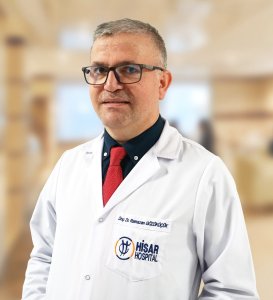
El Dr. Ramazan Gozukucuk ha tratado a más de 900 pacientes con Hepatitis C, aprovechando _doctor_9709_ años de experiencia enfocada en enfermedades infecciosas.

La Dra. Suveyda Gozukucuk se especializa en enfermedades infecciosas con un enfoque en la Hepatitis C en el Hisar Hospital Intercontinental.
 Olena Sikoza
El Anadolu Medical Center y el Memorial Sisli Hospital se encuentran entre los mejores centros acreditados por la JCI para la Hepatitis C. Estos centros ofrecen diagnósticos avanzados como FibroScan y pruebas de PCR. Las terapias antivirales modernas ayudan a lograr tasas de éxito superiores al 95%. Estambul sigue siendo el centro principal para estos servicios especializados de gastroenterología.
Perspectiva del experto de Bookimed: Aunque muchos eligen Turquía por la alta densidad de hospitales acreditados por la JCI, la verdadera ventaja es la afiliación con instituciones estadounidenses. El Anadolu Medical Center opera en afiliación directa con Johns Hopkins Medicine. Esto garantiza que los pacientes reciban protocolos de tratamiento estadounidenses para la hepatitis viral crónica mientra
El tratamiento de la hepatitis C en Turquía arroja tasas de curación de entre el 95% y el 99% utilizando medicamentos antivirales orales modernos. Los especialistas utilizan antivirales de acción directa para lograr una respuesta virológica sostenida en un plazo de 8 a 12 semanas. Estas altas tasas de éxito se aplican a la mayoría de los genotipos virales y a casos complejos como la cirrosis.
Perspectiva de expertos de Bookimed: Los departamentos de gastroenterología y enfermedades infecciosas de Turquía son altamente eficientes y gestionan más de 50,000 solicitudes de pacientes internacionales al año. Los datos del Medipol Mega University Hospital muestran que atienden a más de 1,000 pacientes diarios en múltiples edificios. Este volumen masivo permite a los especia
El tratamiento moderno de la hepatitis C en Turquía mediante antivirales de acción directa es generalmente bien tolerado. Los efectos secundarios leves como fatiga, dolor de cabeza y náuseas ocurren en el 9% al 29% de los pacientes. Las complicaciones graves son excepcionalmente raras. Estas terapias logran una tasa de curación del 95% con una interrupción mínima de la vida diaria.
Perspectiva del experto de Bookimed: Los datos sugieren que elegir el medicamento correcto para su genotipo específico es el paso más crítico para evitar el fracaso del tratamiento. Si bien los medicamentos modernos son altamente efectivos, una falta de coincidencia en el protocolo terapéutico puede conducir a una pérdida financiera significativa y resultados ineficaces. Especialistas experimentados como el Prof. Dr. Ali Inal en el Hospital Universitario Başkent de Estambul enfatizan la detección d
Los trasplantes de hígado son vitales para los pacientes turcos con hepatitis C que presentan cirrosis descompensada o cáncer de hígado. Los centros turcos reportan una tasa de éxito del 99,5 % en estos procedimientos. Los resultados siguen siendo altos, con una supervivencia al año de alrededor del 95,7 %. Las terapias antivirales modernas curan ahora más del 95 % de los casos después del trasplante.
Perspectiva del experto de Bookimed: Los centros de trasplante turcos como el Memorial Sisli se benefician de grandes volúmenes de pacientes y de la acreditación JCI. Los datos muestran que estos hospitales tratan a pacientes de 167 países. Esta experiencia internacional conduce a protocolos especializados para genotipos complejos. Las altas tasas de éxito se deben en parte a los programas de donantes vivos de Turquía, líderes a nivel mundial. Estos programas reducen
Los pacientes internacionales que reciben atención hepática en Turquía suelen experimentar una estancia hospitalaria de 7 a 14 días. Si se requiere un trasplante de donante vivo, los pacientes deben esperar una estancia local de 4 a 6 semanas. Las evaluaciones diagnósticas para la Hepatitis C suelen tomar de 3 a 5 días antes de comenzar los protocolos de medicación.
Perspectiva de expertos de Bookimed: Los datos de las principales clínicas de Estambul muestran un volumen masivo de más de 600,000 pacientes al año en instalaciones como Medipol. Este alto rendimiento en 390 clínicas turcas sugiere que la logística optimizada es el estándar. Para la Hepatitis C, los viajeros deben confirmar la disponibilidad de medicamentos específicos para el genotipo antes de llegar. Algunos centros como Memorial Sisli reportan una tasa de éxito del 90% en procedim
Para acelerar la terapia contra la Hepatitis C en Turquía, los turistas médicos deben traer pruebas cuantitativas recientes de ARN del virus de la Hepatitis C y resultados de genotipos específicos. Proporcione paneles de función hepática e informes de estadificación de fibrosis de los últimos 3 meses. Estos documentos permiten a los especialistas verificar la infección y comenzar el tratamiento antiviral sin repetir los diagnósticos.
Perspectiva de expertos de Bookimed: Instituciones turcas como el Hospital Memorial Sisli y el Centro Médico Anadolu mantienen altas tasas de éxito en la atención relacionada con el hígado. Nuestros datos muestran que las mejores clínicas atienden anualmente a miles de pacientes internacionales de más de 160 países. Para evitar el gasto significativo de una medicación incorrecta, asegúrese de que s
Las clínicas turcas dispensan medicamentos químicamente equivalentes a los de la UE o EE. UU. Estos antivirales de acción directa contienen los mismos ingredientes activos como sofosbuvir y daclatasvir. Los genéricos de alta calidad alcanzan tasas de curación del 95% al 98%. Estos reflejan el éxito de las versiones originales de marca.
Perspectiva del experto de Bookimed: Los especialistas turcos brindan tratamiento basado en genotipos específicos de hepatitis. Por ejemplo, la Dra. Bengisu Ay del Hospital Universitario Medipol Pendik ha publicado investigaciones sobre telaprevir y protocolos de hepatitis C. Elegir una clínica con departamentos de enfermedades infecciosas ayuda a garantizar que el medicamento coincida con su genotipo viral exacto para evitar ciclos de tratamiento ineficaces.
Consenso de los pacientes: Los pacie