Puente dental de porcelana en Turquía: las 62 mejores clínicas y sus precios


Revisado médicamente por
Fahad Mawlood
Cómo funciona
¿Cuál es el precio de Puente dental de porcelana en Turquía? Descubra ahora
De $510. El precio varía según la cantidad de unidades (dientes reemplazados), los materiales utilizados (porcelana fusionada con metal o zirconia), la experiencia del dentista y la ubicación de la clínica. En Estados Unidos, el precio promedio es $4,300 (según la ADA). Esto significa que obtener un puente de porcelana en Turquía puede costar aproximadamente un 88% menos que en EE. UU.
Las clínicas dentales turcas suelen incluir en el precio cotizado la consulta inicial, radiografías digitales o escaneos 3D, preparación dental, puente temporal, puente de porcelana definitivo, anestesia local y ajustes de seguimiento. En EE. UU., el precio listado a menudo cubre solo el puente en sí, mientras que los diagnósticos, la anestesia y los seguimientos se facturan por separado. Siempre confirmar qué está incluido con la clínica elegida.
| Turquía | España | Estados Unidos | |
|---|---|---|---|
| Puente dental de porcelana | de $510 | de $940 | ≈ $3,000 |
Descubra las mejores clínicas de Puente dental de porcelana en Turquía: 62 opciones verificadas y Precios












Hair Clinic






Descripción general de Puente dental de porcelana en Turquía
- Instalación de puentes dentales - de $350Esta terapia reemplaza los dientes perdidos, involucrando el anclaje de un diente artificial a los naturales adyacentes, mejorando la sonrisa y la capacidad de masticación.
- Instalación del puente de Maryland - de $200El procedimiento consiste en asegurar un diente postizo usando alas pegadas a los dientes adyacentes, mejorando la estética de la sonrisa.
- Puente dental para muelas - de $410Esta terapia reemplaza los dientes posteriores faltantes, utilizando coronas en los dientes adyacentes como soporte, mejorando la capacidad de masticación.
- Puente dental metálico - de $480Esta terapia reemplaza los dientes perdidos utilizando una estructura de metal fuerte, que ofrece robustez, durabilidad y un aspecto natural.
- Puente dental de porcelana - de $510La operación crea un diente artificial de aspecto natural para reemplazar los que faltan, utilizando un material duradero pero cosmético.
- Puente dental de zirconio - de $250Esta terapia reemplaza los dientes perdidos utilizando cerámicas fuertes del color de los dientes, lo que brinda un aspecto natural con una función de masticación mejorada.
- Puente dental voladizo (cantiléver) - de $350Esta terapia reemplaza los dientes perdidos usando dientes de anclaje y un diente protésico, brindando firmeza y un aspecto natural.
- Puente unido con resina - de $280Esta terapia reemplaza un diente perdido, utilizando un diente postizo conectado por resina a los dientes vecinos, dejándolos intactos.
Día 1
- Llegada al país e instalación en su alojamiento.
- Visite la clínica dental para la consulta inicial.
- Someterse a un examen dental y radiografías.
- Discutir el plan de tratamiento con el dentista.
Dia 2
- Limpieza dental y preparación para el procedimiento.
- Se toman impresiones de sus dientes para el puente.
Día 3
- Se coloca un puente temporal para proteger sus dientes.
Día 4 a Día 7
- Adaptarse al puente temporal y practicar la higiene bucal.
Día 8
- Eliminación de puente temporal.
- Colocación del puente de porcelana.
- Ajustes realizados para garantizar un ajuste perfecto.
Día 9
- Chequeo y ajustes finales si es necesario.
Semana 2 a Semana 4
- Período de adaptación al nuevo puente de porcelana.
- Cepillado regular y uso de hilo dental.
- Vuelva a los hábitos alimenticios normales gradualmente.
Semana 5
- Regreso al trabajo y actividades normales.
- Cita de seguimiento para un chequeo final.
Nota: La experiencia de cada paciente puede variar según las circunstancias individuales y la salud bucal. Se recomiendan visitas regulares al dentista para mantener el puente de porcelana.
- Depósito de Bookimed: 200 $ o 200 €.
- Depósito de la clínica: Pague un porcentaje fijo por adelantado.
Obtenga una evaluación médica de Puente dental de porcelana en Turquía: haga una consulta con 75 médicos experimentados ahora
Ver todos los médicos
Ertan Etemoglu
32 años especializado en implantes dentales y puentes de porcelana – el Dr. Etemoglu trabaja en una clínica de vanguardia en el centro de Estambul.
- Miembro de la Asociación Dental Americana
- Especializado en cirugía oral, odontología estética e implantología
- Habla inglés y turco con fluidez, cuenta con asistentes multilingües
- Se centra en implantes dentales All-on-4/6 y casos complejos

Maryam Fazeli
Especializado en diseño de sonrisa estética y aplicaciones de Hollywood Smile – El Dr. Fazeli se enfoca en crear puentes de porcelana de aspecto natural en Nifa Dent International.
- Especialista en tratamiento de prótesis dental con _doctor_8235_ años de experiencia
- Completó su especialización en la Universidad Izmir Katip Çelebi
- Habla inglés, persa y azerbaiyano con fluidez para pacientes internacionales
Koray Atik
El Dr. Koray Atik se especializa en odontología estética, con formación internacional en Londres. Ofrece puentes de porcelana, entre otras soluciones dentales avanzadas.
- Graduado de la Facultad de Odontología de la Universidad Hacettepe
- Especializado en odontología estética e implantología dental
- Colabora como columnista en el periódico Milliyet
- Ofrece una amplia gama de procedimientos dentales, incluidos los puentes de porcelana

Mustafa Orkun Ertugrul
Especialista en odontología restauradora con enfoque en tratamientos estéticos como puentes de porcelana en el Hospital Dental İstinye.
- 11 años de experiencia en odontología restauradora
- Formado en tratamientos restauradores directos e indirectos
- Miembro de la Asociación de Odontología Restauradora
- Investigaciones publicadas sobre materiales restauradores estéticos
Historias en video de pacientes de Bookimed
Reseñas
Todas las reseñasCompartir contenido
 Olena Sikoza
Datos сlave sobre Puente dental de porcelana
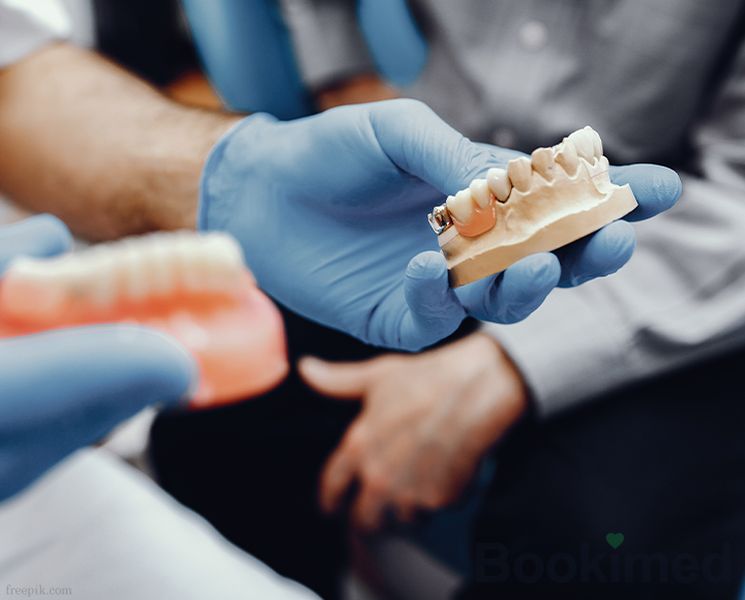
Puente de Porcelana
Un puente de porcelana es una restauración dental que reemplaza dientes faltantes utilizando coronas de porcelana unidas a dientes adyacentes.
Preguntas frecuentes sobre Puente dental de porcelana en Turquía
¿Es seguro ponerse puentes dentales de porcelana en Turquía?
La seguridad de los puentes dentales de porcelana en Turquía es alta cuando se eligen clínicas con acreditación del Ministerio de Salud y certificados de autorización de turismo de salud. La mayoría de las instalaciones siguen protocolos de esterilización internacionales bajo la supervisión de la Asociación Dental Turca. Los principales centros en Estambul y Antalya utilizan diseño asistido por computadora para garantizar un ajuste preciso y una durabilidad a largo plazo.
- Supervisión regulatoria: El Ministerio de Salud realiza auditorías periódicas y licencias obligatorias para todas las clínicas internacionales.
- Experiencia del cirujano: Médicos como Ufuk Zeren en el Centro de Salud Ata tienen más de 30 años de experiencia.
- Calidad del material: Clínicas líderes como WestDent utilizan materiales Straumann y cuentan con certificaciones de estándares internacionales ISO.
- Tasas de éxito: Los centros de alto volumen reportan tasas de éxito de hasta el 99% para restauraciones dentales complejas.
Perspectiva del experto de Bookimed: El éxito a menudo depende de la tecnología interna más que solo de la habilidad del dentista. Clínicas como YEG Clinic y Hospitadent utilizan sus propios laboratorios o técnicas CEREC para crear puentes en 4 días. Esta velocidad reduce el riesgo de falla del puente temporal y garantiza un mejor ajuste inicial par
¿Cuánto tiempo dura un puente de porcelana?
Un puente de porcelana suele durar de 5 a 15 años. Las opciones de porcelana de circonio de alta calidad pueden durar 20 años o más con una higiene adecuada. La vida útil depende del tipo de puente, la durabilidad del material y la salud de los dientes pilares naturales que soportan la prótesis.
- Durabilidad del material: La porcelana de circonio a menudo supera los 15 años, mientras que la porcelana sobre metal básica dura de 10 a 15 años.
- Tipo de soporte: Los puentes soportados por implantes son los más duraderos, durando frecuentemente de 15 a 30 años.
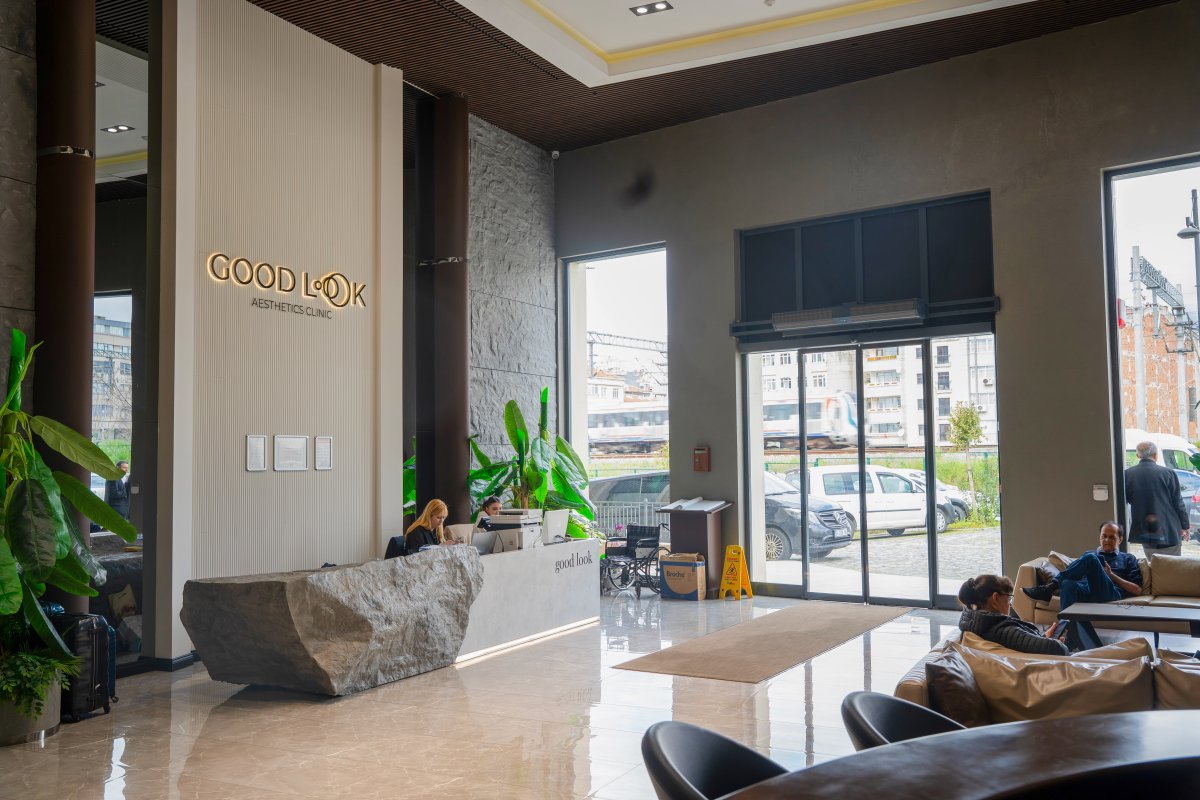
- Garantías clínicas: Algunos centros turcos como Good Look Clinic ofrecen garantías de 20 años en circonio.
- Tasas de éxito: Clínicas líderes como WestDent reportan una tasa de éxito del 99% en restauraciones dentales.
Perspectiva del experto de Bookimed: Aunque la porcelana básica es el estándar, elegir puentes con núcleo de circonio impacta significativamente en el valor a largo plazo. Los datos muestran que las clínicas con laboratorios propios, como YEG Clinic, pueden facilitar ajustes especializados en 4 días. Esta personalización rápida asegura un ajuste preciso, que es el factor principal para prevenir el desprendimiento temprano o las fracturas.
Consenso de los pacientes: Los pacientes enfatizan que invertir en una férula de descarga personalizada es esenci
¿Cuáles son las posibles desventajas de un puente de porcelana?
Las principales desventajas de los puentes de porcelana incluyen la eliminación permanente del esmalte dental sano de los dientes adyacentes y la falta de estimulación del hueso maxilar. A diferencia de los implantes, los puentes no previenen la pérdida ósea, y la porcelana puede astillarse o fracturarse bajo una presión de masticación significativa con el tiempo.
- Preparación dental: Los dientes de soporte requieren una remodelación irreversible para ajustar las coronas, lo que puede debilitar su estructura.
- Reabsorción ósea: La falta de raíces dentales provoca la contracción del hueso maxilar, lo que puede alterar la apariencia facial.
- Mantenimiento de la higiene: Las partículas de comida a menudo quedan atrapadas debajo del puente, lo que requiere herramientas especializadas como irrigadores bucales.
- Durabilidad del material: La porcelana tradicional sobre metal (PFM) puede mostrar líneas oscuras en las encías.
Perspectiva del experto de Bookimed: Aunque la mayoría de las clínicas ofrecen programas de 5 días, elegir un centro con laboratorio propio, como la Clínica YEG, garantiza ajustes de mordida más rápidos. La precisión en la fase de laboratorio es fundamental, ya que incluso una desalineación menor puede aumentar significativamente el riesgo de fractura del diente pilar en un plazo de 12 meses.
Consenso de los paci
¿Cuánto dura el tratamiento de puente de porcelana en Turquía?
El tratamiento de puente de porcelana en Turquía suele requerir de 5 a 10 días para garantizar un ajuste preciso y una estética natural. Los pacientes generalmente asisten a 2 o 3 citas para la preparación dental, impresiones digitales y cementación final en instalaciones acreditadas por la JCI o certificadas por la ISO en Estambul, Esmirna o Antalya.
- Plazo del tratamiento: Los casos estándar toman de 5 a 7 días para la fabricación en laboratorio y el ajuste.
- Densidad de citas: El escaneo digital y los procedimientos en el sillón dental toman aproximadamente de 45 a 60 minutos por visita.
- Estancias prolongadas: Las restauraciones de arco completo o los casos que requieren extracciones pueden extender la estancia a 10 días.
- Tecnología avanzada: Clínicas como WestDent utilizan laboratorios CAD/CAM en el sitio para acelerar el proceso de diseño.
Perspectiva del experto de Bookimed: Los datos de clínicas de primer nivel revelan que una estancia de 7 días es el estándar de oro de seguridad. Aunque algunos proveedores ofrecen una urgencia de 3 días, a menudo omiten ciclos de cocción esenciales en el horno, lo que puede comprometer la durabilidad a largo plazo de la porcelana. Clínicas como YEG Clinic en Estambul equilibran con éxito la velocidad y la calidad al completar diseños de sonrisa digitales en exactamente 4 días.
Conse
¿Cuánto tiempo después de una extracción dental puedo recibir un puente?
Los pacientes suelen esperar de 4 a 12 semanas después de una extracción dental antes de recibir un puente de porcelana permanente. Este período de recuperación permite que el tejido de las encías sane y que el hueso se estabilice. Las extracciones simples requieren de 4 a 6 semanas, mientras que los casos quirúrgicos complejos necesitan de 8 a 12 semanas.
- Tiempo de curación: Las encías requieren de 4 a 12 semanas para estabilizarse antes de la colocación permanente.
- Complejidad de la extracción: Los casos simples sanan en 4 semanas; las extracciones quirúrgicas requieren 12 semanas.
- Costos del puente: Los puentes de porcelana en Turquía cuestan desde de $510.
- Ahorros financieros: Los pacientes ahorran hasta un 88% en comparación con los costos dentales promedio en EE. UU.
Perspectiva del experto de Bookimed: Aunque las clínicas locales podrían ofrecer impresiones para puentes 1 semana después de la extracción, apresurar la colocación aumenta los riesgos de fracaso. Para un ajuste más seguro, elija clínicas como WestDent o YEG Clinic que utilizan laboratorios en el lugar. Esto garantiza que su puente final coincida perfectamente con su línea de encía curada sin necesidad de múltiples viajes de regreso para ajustes.
Consenso de los pacientes: Muchos pacie
¿Qué tipos de puentes de porcelana están disponibles?
Los puentes de porcelana reemplazan los dientes faltantes utilizando diseños tradicionales, en voladizo (cantilever), Maryland o soportados por implantes. Estas estructuras utilizan materiales como metal-cerámica (PFM) para mayor resistencia, circonio totalmente cerámico para mayor durabilidad o disilicato de litio E-max para una estética superior. Los pacientes en Turquía suelen ahorrar 88% en comparación con los costos de EE. UU. de $4,300.
- Puente tradicional: Diseño estándar que utiliza coronas en dos dientes adyacentes para soportar pónticos artificiales.
- Puente en voladizo (cantilever): Anclado a un solo diente natural, ideal para áreas con menor presión de mordida.
- Puente Maryland: Alas de metal o porcelana se adhieren a los dientes adyacentes sin requerir la preparación completa de la corona.
- Puente soportado por implantes: Asegurado mediante implantes dentales en lugar de dientes naturales para restaurar espacios de múltiples dientes.
Perspectiva de expertos de Bookimed: Clínicas como Good Look Clinic ofrecen garantías de 20 años en circonio, lo que sugiere una gran confianza en el material. Si bien el PFM es un estándar económico, elegir circonio o E-max a menudo evita la sombra gris en la línea de las encías, común en los puentes basados en metal. Los centros de alto volumen como WestD