Puente dental de porcelana en España — obtén 3 clínicas con costos


Revisado médicamente por
Fahad Mawlood
¿Cuál es el precio de Puente dental de porcelana en España? Descubra ahora
De $940. Los precios varían según el número de unidades (dientes reemplazados), la clínica y la experiencia del dentista. En Estados Unidos, el costo promedio es de $4,300 (según la ADA). Esto significa que un puente de porcelana en España cuesta aproximadamente un 78% menos que en EE. UU.
Las clínicas dentales españolas suelen incluir la consulta inicial, radiografías digitales, preparación dental, impresiones, el propio puente de porcelana, colocación y visitas de seguimiento. En EE. UU., el precio indicado suele cubrir solo el puente, con cargos adicionales por anestesia, radiografías y cuidados posteriores. Siempre confirmar qué está incluido en el plan de tratamiento con cada clínica.
| España | Estados Unidos | México | |
|---|---|---|---|
| Puente dental de porcelana | de $940 | ≈ $3,000 | de $2,000 |
Sus beneficios y garantías con Bookimed
Precios directos
Bookimed no añade cargos adicionales a los precios de Puente dental de porcelana. Las tarifas proceden de las listas de precios oficiales de las clínicas. Pagará directamente en la clínica por su Puente dental de porcelana a su llegada al país.
Sólo clínicas y médicos verificados
Bookimed está comprometido con su seguridad. Solo trabajamos con las clínicas que mantienen altos estándares internacionales en Puente dental de porcelana y tienen las licencias necesarias para atender a pacientes internacionales en todo el mundo.
Asistencia 24/7 gratuita
Bookimed ofrece asistencia experta gratuita. Un coordinador médico personal le apoya antes, durante y después del tratamiento, resolviendo cualquier problema. Nunca estará solo en su viaje médico de Puente dental de porcelana.

Su coordinador médico personal de Bookimed
- Le apoya en cada etapa
- Ayuda a elegir la clínica y el médico adecuados
- Asegura un acceso rápido y conveniente a la información
Descubra las mejores clínicas de Puente dental de porcelana en España: 2 opciones verificadas y Precios




Descripción general de Puente dental de porcelana en España
- Instalación de puentes dentales - de $490Esta terapia reemplaza los dientes perdidos, involucrando el anclaje de un diente artificial a los naturales adyacentes, mejorando la sonrisa y la capacidad de masticación.
- Instalación del puente de Maryland - de $560El procedimiento consiste en asegurar un diente postizo usando alas pegadas a los dientes adyacentes, mejorando la estética de la sonrisa.
- Puente dental para muelas - de $1,300Esta terapia reemplaza los dientes posteriores faltantes, utilizando coronas en los dientes adyacentes como soporte, mejorando la capacidad de masticación.
- Puente dental metálico - de $1,300Esta terapia reemplaza los dientes perdidos utilizando una estructura de metal fuerte, que ofrece robustez, durabilidad y un aspecto natural.
- Puente dental de porcelana - de $940La operación crea un diente artificial de aspecto natural para reemplazar los que faltan, utilizando un material duradero pero cosmético.
- Puente dental de zirconio - de $1,800Esta terapia reemplaza los dientes perdidos utilizando cerámicas fuertes del color de los dientes, lo que brinda un aspecto natural con una función de masticación mejorada.
- Puente dental voladizo (cantiléver) - de $1,900Esta terapia reemplaza los dientes perdidos usando dientes de anclaje y un diente protésico, brindando firmeza y un aspecto natural.
- Puente unido con resina - de $750Esta terapia reemplaza un diente perdido, utilizando un diente postizo conectado por resina a los dientes vecinos, dejándolos intactos.
Día 1
- Llegada al país e instalación en su alojamiento.
- Visite la clínica dental para la consulta inicial.
- Someterse a un examen dental y radiografías.
- Discutir el plan de tratamiento con el dentista.
Dia 2
- Limpieza dental y preparación para el procedimiento.
- Se toman impresiones de sus dientes para el puente.
Día 3
- Se coloca un puente temporal para proteger sus dientes.
Día 4 a Día 7
- Adaptarse al puente temporal y practicar la higiene bucal.
Día 8
- Eliminación de puente temporal.
- Colocación del puente de porcelana.
- Ajustes realizados para garantizar un ajuste perfecto.
Día 9
- Chequeo y ajustes finales si es necesario.
Semana 2 a Semana 4
- Período de adaptación al nuevo puente de porcelana.
- Cepillado regular y uso de hilo dental.
- Vuelva a los hábitos alimenticios normales gradualmente.
Semana 5
- Regreso al trabajo y actividades normales.
- Cita de seguimiento para un chequeo final.
Nota: La experiencia de cada paciente puede variar según las circunstancias individuales y la salud bucal. Se recomiendan visitas regulares al dentista para mantener el puente de porcelana.
- Depósito de Bookimed: 200 $ o 200 €.
- Depósito de la clínica: Pague un porcentaje fijo por adelantado.
Obtenga una evaluación médica para Puente dental de porcelana en España: Elija su especialista entre los mejores en el campo
Ver todos los médicos
Dr Alaa Ghuzlan
La Dra. Alaa Ghuzlan es odontóloga con más de 10 años de experiencia. Ha tratado a miles de pacientes en varios países. Cuenta con una especialización en implantología dental de la Universidad de Barcelona. Continúa formándose para ofrecer tratamientos actualizados.
Su consulta utiliza radiología 2D y 3D y un escáner intraoral 3D. Estas herramientas mejoran la experiencia del paciente y agilizan los flujos de trabajo. También permiten ofrecer una atención más rápida.
Historias en video de pacientes de Bookimed
Reseñas
Todas las reseñasCompartir contenido
 Olena Sikoza
Datos сlave sobre Puente dental de porcelana
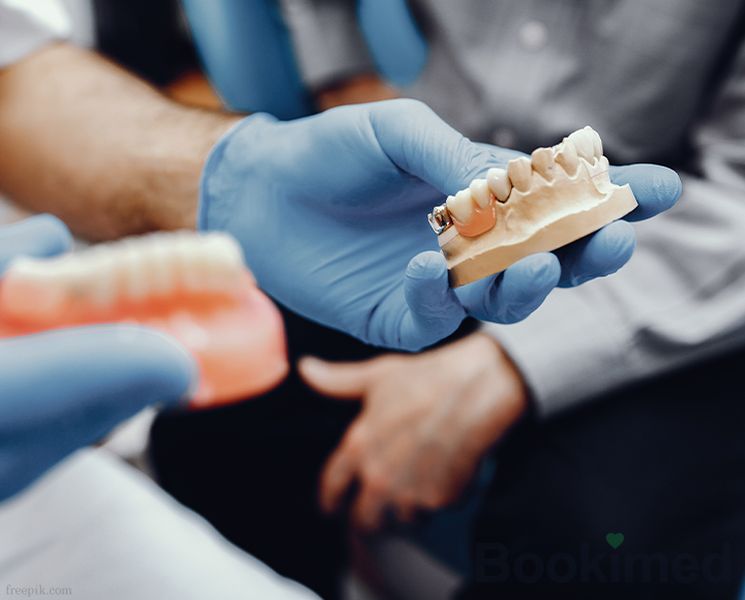
Puente de Porcelana
Un puente de porcelana es una restauración dental que reemplaza dientes faltantes utilizando coronas de porcelana unidas a dientes adyacentes.
Preguntas frecuentes sobre Puente dental de porcelana en España
¿Cuánto tiempo dura un puente dental de porcelana?
Los puentes dentales de porcelana suelen durar de 5 a 15 años, aunque muchos pacientes los mantienen durante más de 20 años con un cuidado riguroso. La longevidad depende de la elección del material, el ajuste preciso de los márgenes y el mantenimiento de la salud de los dientes naturales de soporte mediante una higiene profesional.
- Durabilidad del material: Los puentes tradicionales de porcelana sobre metal (PFM) suelen durar de 10 a 15 años.
- Impacto de la higiene: El uso diario de irrigadores bucales o hilo dental evita la caries en los márgenes del puente.
- Riesgos estructurales: El bruxismo o morder alimentos duros puede causar fracturas en la porcelana o el despegue de la prótesis.
- Precisión diagnóstica: Los especialistas españoles utilizan escáneres intraorales 3D para garantizar un ajuste protésico óptimo.
Perspectiva del experto de Bookimed: Aunque muchos se centran en la porcelana, los datos indican que el fallo del puente suele deberse a la caries en el diente de soporte. Expertos como el Dr. Jose Mate en Cartagena destacan la importancia de las prótesis bioingenieriles y la salud ósea. Elegir una clínica con radiología 3D, como Clinica Dental Raices, asegura un ajuste marginal preciso que evita la infiltración bacteriana subyacente.
Consenso de los pacientes: El éxito depende de herramientas de limpieza
¿Qué pasos implica el tratamiento?
El tratamiento con puente de porcelana en España implica la preparación de los dientes, impresiones digitales mediante escáneres intraorales y la fijación permanente. Especialistas como el Dr. Alaa Ghuzlan en Clinica Dental Raices utilizan escáneres 3D para garantizar la precisión. El proceso suele requerir de 1 a 3 semanas para la fabricación y ajuste de la restauración final.
- Preparación de los dientes: El remodelado de los dientes adyacentes para soportar el puente sirve como base.
- Escaneo digital: Los escáneres 3D capturan la geometría oral precisa sin necesidad de moldes tradicionales incómodos.
- Fabricación del puente: Los laboratorios crean la estructura de porcelana para que coincida con el color natural de los dientes y la mordida.
- Fijación final: Los cirujanos aseguran el puente permanente utilizando adhesivo de grado médico para una estabilidad a largo plazo.
Opinión del experto de Bookimed: Las clínicas dentales españolas destacan por su integración académica e innovación. El Dr. Jose Mate, un profesor con 5,000 procedimientos realizados, posee patentes de biomateriales utilizados en la rehabilitación oral. Este alto nivel de especialización en España a menudo resulta en puentes que superan la vida útil promedio de 15 años.
Consenso de los pacientes: Los pacientes enfatizan que la limpieza diaria debaj
¿Qué cuidados se requieren después de recibir un puente dental?
El cuidado de un puente dental requiere una higiene bucal meticulosa para proteger los dientes de soporte y garantizar una longevidad superior a 10 años. Los pasos clave incluyen la limpieza diaria debajo del póntico utilizando herramientas especializadas, aplicaciones regulares de flúor y revisiones dentales semestrales para controlar la integridad del cemento y prevenir la caries.
- Higiene diaria: Cepíllese dos veces al día y utilice hilo dental especial (super floss) o cepillos interdentales debajo del puente.
- Herramientas especializadas: Utilice un irrigador bucal para eliminar los restos de las zonas de difícil acceso.
- Hábitos dietéticos: Evite morder objetos duros como hielo o frutos secos para evitar fracturas en la porcelana.
- Control profesional: Visite a su dentista dos veces al año para comprobar si hay aflojamiento o fallo del cemento.
Opinión experta de Bookimed: Aunque muchos se centran solo en el diente artificial, los márgenes donde la porcelana se une a la encía natural son las verdaderas zonas de riesgo. Las clínicas españolas avanzadas, como el Hospital Ruber Internacional, enfatizan las técnicas de cepillado a 45 grados en esta zona. El cuidado constante alrededor de estos bordes ayuda a mantener el sellado hermético y previene la caries subyacente.
Consenso de los pacientes: Espere un periodo d
¿Cuál es la diferencia entre los puentes de porcelana pura y los de circonio?
Los puentes de porcelana pura ofrecen una translucidez superior para los dientes frontales, pero son más frágiles. Los puentes de circonio proporcionan una durabilidad extrema y resistencia a la fractura, lo que los hace ideales para los dientes posteriores. La mayoría de las clínicas españolas utilizan ahora circonio estratificado para combinar la estética natural con una resistencia estructural casi inquebrantable.
- Resistencia del material: El circonio soporta 1200 MPa en comparación con los 500 MPa de la cerámica vítrea estándar.
- Calidad estética: La porcelana pura imita el esmalte a la perfección, pero el circonio ofrece una mejor opacidad para cubrir muñones oscuros.
- Estrategia de colocación: La porcelana es adecuada para los incisivos frontales, mientras que el circonio es esencial para las zonas de molares de alta presión.
- Expectativa de vida útil: Los puentes de circonio suelen durar entre 15 y 20 años, mientras que los de porcelana pueden requerir un reemplazo antes.
Opinión del experto de Bookimed: Especialistas españoles como el Dr. Jose Mate utilizan escáneres digitales 3D para garantizar la precisión del puente. Esta tecnología es vital porque la longevidad de los puentes de circonio depende en gran medida del grosor de los conectores. Elegir una clínica con radiología 3D interna reduce significativamente el riesgo de fract
¿Cuánto tiempo lleva obtener un puente de porcelana en España?
Obtener un puente dental de porcelana en España suele llevar de 1 a 2 semanas para los modelos tradicionales soportados por dientes. Este plazo cubre dos visitas clínicas principales. El proceso implica la preparación de los dientes, la fabricación en laboratorio y el ajuste final en instalaciones acreditadas por la JCI o clínicas dentales especializadas en Madrid y Tenerife.
- Primera visita: preparación de los dientes de soporte, toma de impresiones digitales y colocación de un puente temporal.
- Fabricación en laboratorio: los técnicos elaboran el puente de porcelana permanente, lo que suele requerir de 7 a 10 días.
- Colocación final: el dentista ajusta y cementa la prótesis permanente durante la segunda visita.
- Factor de curación: si primero son necesarias extracciones, añada de 4 a 6 semanas para la recuperación de los tejidos.
Opinión del experto de Bookimed: Las clínicas españolas como Clinica Dental Raices utilizan cada vez más escáneres intraorales 3D para eliminar los moldes físicos. Esta tecnología a menudo permite ajustes más precisos al primer intento. Los pacientes deben confirmar si la clínica cuenta con un laboratorio propio para reducir potencialmente el período de espera de 7 días.
Consenso de los pacientes: Muchos pacientes consideran que la estancia de dos semanas es manejable cuando se combina con
¿Qué tipos de puentes de porcelana puedo obtener en España?
Los pacientes en España pueden acceder a puentes de porcelana tradicionales, de circonio, tipo Maryland y soportados por implantes. Estas restauraciones de alta calidad a menudo proporcionan una coincidencia de color del 95% con los dientes naturales. La mayoría de las clínicas privadas en Madrid, Barcelona y Tenerife utilizan tecnología CAD/CAM avanzada para ajustes precisos y resultados rápidos en 3 a 5 días.
- Puente tradicional: Coronas ancladas a dientes naturales aseguran un póntico artificial.
- Puente de circonio: Cerámica fuerte y biocompatible, ideal para restauraciones posteriores y anteriores.
- Puente Maryland: Alas de porcelana unidas con resina que se fijan a los dientes adyacentes con un taladrado mínimo.
- Puente soportado por implantes: Solución duradera para múltiples dientes faltantes utilizando anclajes de titanio.
Perspectiva del experto de Bookimed: Aunque la porcelana tradicional es popular, el circonio es cada vez más el estándar en España para áreas molares de alta tensión. El Dr. Alaa Ghuzlan de Clinica Dental Raices utiliza escáneres 3D intraorales para garantizar que estos puentes encajen perfectamente. Este enfoque digital moderno a menudo elimina la necesidad de impresiones manuales incómodas.
Consenso de los pacientes: El tratamiento debe realizarse a través de clínicas privadas, ya que la