El costo de un trasplante capilar con células madre en Turquía suele oscilar de $3,000 a $5,000. Los precios varían según la clínica, la experiencia del cirujano, la cantidad de injertos y si se utilizan técnicas avanzadas como la microinjertación o el procesamiento de nanograsa. En Estados Unidos, el costo promedio es de $22,500 (según ISHRS). Esto significa que un trasplante capilar con células madre en Turquía cuesta aproximadamente un 82% menos que en EE. UU.
Los paquetes en Turquía suelen incluir la consulta inicial, la evaluación del cuero cabelludo, la extracción de células madre, la implantación de injertos, la anestesia local, los medicamentos postoperatorios y las visitas de seguimiento. A menudo se incluyen también la estancia en hotel y los traslados al aeropuerto. En EE. UU., los costos suelen desglosarse por injerto, y la anestesia, los consumibles y el cuidado posterior se facturan por separado. Siempre confirmar exactamente qué está incluido en la clínica elegida.
| España | Turquía | México | |
| Tratamiento capilar con células madre | de $7,500 | de $3,000 | de $6,000 |
Jefe Médico en la Policlínica Scala con amplia experiencia en procedimientos de trasplante capilar, incluidas las técnicas con células madre.
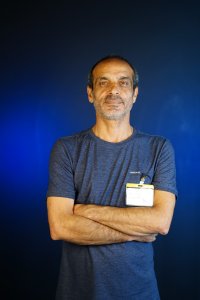
El profesor Cemal Firat se especializa en microcirugía y procedimientos reconstructivos en el Complejo Hospitalario Medical Park Antalya.
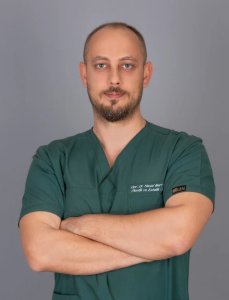
Op. Dr. Hasbi Mert Meral es cirujano plástico, reconstructivo y estético certificado. Tiene más de 10 años de experiencia y ha realizado más de 2.000 cirugías. Está acreditado por la Sociedad Turca de Cirujanos Plásticos, Reconstructivos y Estéticos. Es miembro (Fellow) del European Board of Plastic, Reconstructive and Aesthetic Surgery (EBOPRAS). Posee certificación en microcirugía reconstructiva (2017).
Cargos actuales: Cayra Clinic y Mert Meral Plastic (desde 2023). Anteriormente trabajó en Private Imperial Hospital de Trabzon y en Trabzon Kanuni Training and Research Hospital. Sus especialidades incluyen rinoplastia, rejuvenecimiento facial y blefaroplastia. También realiza cirugía mamaria, abdominoplastia, liposucción y cirugía de remodelación posparto (mommy makeover). Otras áreas de enfoque incluyen transferencia de grasa, contorno corporal, cirugía reconstructiva por cáncer de piel, quemaduras y afecciones de la mano, y revisión de cicatrices.
Especializado en trasplante capilar desde 2011, el Dr. Vedat Tosun tiene una amplia experiencia en técnicas de trasplante capilar FUE y con células madre en los principales hospitales de Estambul.
The ideal candidate for a stem cell hair transplant in Turkey is someone in the early to moderate stages of hair thinning with viable, dormant follicles. This regenerative therapy is most effective for patients with androgenetic alopecia who still possess some natural hair density in thinning areas.
Bookimed Expert Insight: While many seek stem cell therapy as a standalone, Turkish clinics like Renova Style often combine it with their Hybrid M technique. This pairing uses FUE for coverage and stem cells for density. Data shows clinics like Quartz Hospital achieve 98.6% success rates by integrating these biological enhancements into standard DHI procedures.
Patient Consensus: Patients often feel relieved to find a solution that doesn't require `shaving their head` or undergoing a full surgery. Many report that the gradual filling of thinning patches feels more natural than a sudden change in their hairline.
Recovery from a stem cell hair transplant in Turkey typically requires 7 to 14 days of initial downtime. Most patients return to professional work after 10 days, once scabs naturally shed around day 8. Full aesthetic density is generally achieved 12 to 18 months post-procedure.
Bookimed Expert Insight: While standard FUE requires 4 weeks before resuming high-impact exercise, stem cell enhancements often reduce this to 2 weeks. Clinics like Quartz Hospital use regenerative serums that may significantly shorten the visible swelling window compared to traditional methods. This faster cellular repair allows international patients to return to their home routines sooner with less noticeable post-operative signs.
Patient Consensus: Patients frequently note that the shock loss phase at 2 to 4 weeks is surprising but temporary. Many recommend tracking progress with monthly photos to manage expectations while waiting for significant regrowth to appear by month 4.
Visible results after a stem cell hair transplant in Turkey typically emerge between 3 to 6 months. While some patients notice reduced shedding within 4 weeks, full density and mature hair thickness are generally assessed at the 12-month mark following the procedure.
Bookimed Expert Insight: Data from high-volume clinics like Smile Hair Clinic and Quartz Hospital show that stem-cell augmentation provides a 20% to 30% acceleration in growth compared to standard FUE. However, patients shouldn't expect an instant fix, as the biological hair cycle still requires a 12-month commitment for final results.
Patient Consensus: Many experience a temporary shock loss phase around month 3 where hair looks thinner before growing back. Taking monthly photos under consistent lighting is the best way to track the gradual transition to fuller density.
Stem cell hair treatment regenerates existing dormant follicles using bioactive injections, while classic Follicular Unit Extraction (FUE) surgically relocates healthy follicles to bald areas. Stem cell therapy is typically non-invasive, whereas FUE involves micro-incisions to move 3,000 to 5,000 DHT-resistant grafts for permanent coverage.
Bookimed Expert Insight: Many Turkish clinics now market a hybrid approach combining Micro FUE with biologics like exosomes or PRP. Data shows clinics like Quartz Hospital achieve a 98.6% success rate by using these adjuncts to boost graft survival. However, pure stem cell therapy alone cannot create new hair where follicles are entirely absent.
Patient Consensus: Patients often find that while stem cell add-ons are marketed as premium upgrades, the most visible results still come from high-graft FUE. Many advise confirming whether a clinic uses true adipose-derived cells or standard PRP before paying higher fees.
Safe stem cell hair transplants in Turkey require clinics to hold a Turkish Ministry of Health license and a Health Tourism Authorization Certificate. Prioritize facilities with Joint Commission International (JCI) or TEMOS accreditation to ensure global safety protocols, infection control, and licensed surgeon-led procedures.
Bookimed Expert Insight: High-volume clinics like Hisar Hospital Intercontinental, which serves 250,000 patients annually, often maintain more rigorous safety data. While boutique clinics offer personalized care, JCI-accredited hospitals provide superior emergency infrastructure. Always check if your chosen clinic, such as Smile Hair Clinic, is recognized by international medical bodies or global media for its standards.
Patient Consensus: Patients frequently emphasize verifying the actual surgery location to ensure it matches the accredited hospital address. Many recommend confirming that a doctor, rather than just technicians, performs the critical stem cell extraction and implantation steps.
Stem cell hair transplantation works by harvesting adipose-derived stem cells from your own body fat via mini-liposuction. These regenerative cells are concentrated in a centrifuge and micro-injected into the scalp to activate dormant follicles and improve graft survival during standard FUE or DHI procedures.
Bookimed Expert Insight: Turkish clinics often market stem cell therapy as a standalone solution, but data shows it is most effective as a booster. Combining cells with FUE, like the Hybrid M technique at Renova Style Clinic, significantly improves the density of transplanted grafts.
Patient Consensus: Expect the initial shedding phase to last through month two before seeing steady growth. Patients emphasize requesting a verified cell count from the clinic lab to ensure you receive a truly potent treatment.
Most patients require only 1 session for a stem cell hair transplant in Turkey. This single procedure combines traditional grafting with stem cell therapy to stimulate natural growth. Secondary sessions are rare and usually only necessary for patients with extensive, advanced stages of hair loss.
Bookimed Expert Insight: While most clinics focus on a single session, the real differentiator is the technique used to boost follicle survival. For instance, Renova Style Clinic in Antalya uses a custom Hybrid M technique. This combines FUE and DHI to maximize density in just one visit, which is vital for international patients.
Patient Consensus: Patients frequently highlight the convenience of completing the entire process in one day. Many express relief that they do not need to return for multiple follow-up treatments to see significant density improvements.