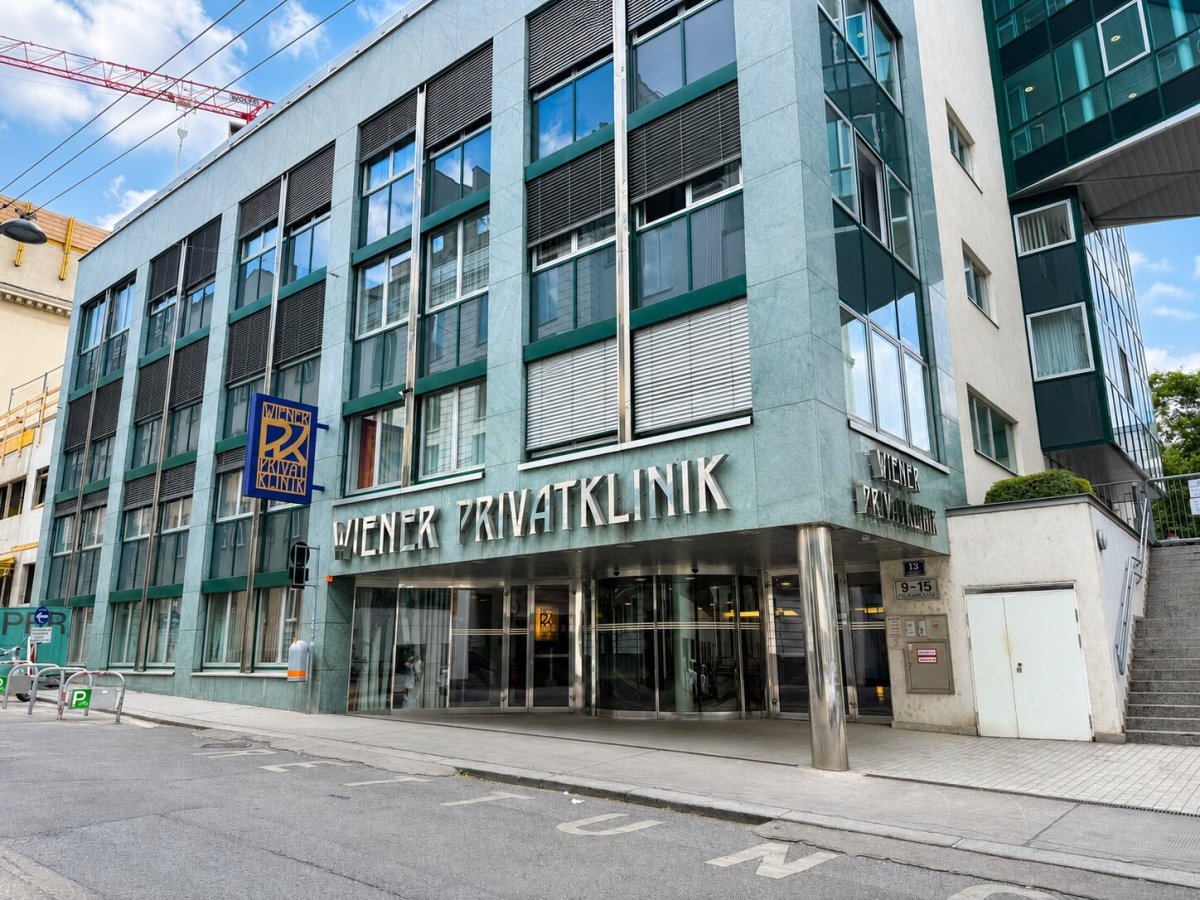
Clínica privada Wiener (Wiener Privatklinik)
Austria, Viena
Camel Kopty
36 años de experiencia

Clínica certificada por : 





Revisado médicamente por
Fahad Mawlood
De $500. Los gastos totales dependen del número de pólipos, los requisitos de biopsia y el nivel de la clínica. Los pacientes a menudo encuentran ahorros del 15-30% en comparación con otros centros privados de Europa Occidental. La atención de alta calidad se concentra principalmente en Viena y Graz.
Costos típicos del tratamiento de pólipos del tracto gastrointestinal en Austria
Perspectiva de expertos de Bookimed: Para casos complejos, elegir especialistas afiliados a universidades proporciona la mayor precisión diagnóstica. El Dr. Camel Kopty en Wiener Privatklinik ha realizado más de 28,000 procedimientos endoscópicos, garantizando una seguridad experta. Los pacientes que buscan atención multidisciplinaria deben considerar el Hospital General de Viena (AKH), que atiende a 595,000 pacientes anualmente. Si bien las clínicas privadas como Döbling ofrecen una comodidad superior, los jefes universitarios como Sebastian Schoppmann son ideales para tumores gastroesofágicos. Los diagnósticos avanzados, incluida la endoscopia por cápsula, están fácilmente disponibles en centros especializados en Graz y Viena.




El Dr. Camel Kopty se especializa en medicina interna y oncología, centrándose en tratamientos avanzados en la Wiener Privatklinik de Viena.
El Dr. Schoppmann dirige la Unidad de Tumores Gastroesofágicos del Hospital General de Viena, un centro de referencia en cirugía gastrointestinal. Es autor de más de 240 artículos especializados.
 Olena Sikoza
En las clínicas austriacas, los pólipos gastrointestinales se tratan mediante técnicas endoscópicas mínimamente invasivas, como la polipectomía o la resección de la mucosa. Los especialistas suelen extirpar los pólipos durante una colonoscopia o gastroscopia de rutina. Estos procedimientos utilizan pinzas o cintas flexibles bajo sedación. Este método permite la extirpación sin necesidad de cirugía abierta.
Opinión experta de Bookimed: Cirujanos viscerales experimentados, como el Dr. Sebastian Schoppmann del Hospital General de Viena, combinan una amplia experiencia universitaria con servicios especializados en cirugía del tracto gastrointestinal superior. Nuestros datos muestran que las principales clínicas austriacas atienden a más de 595 000 pacientes al año. Este elevado volumen permite
La extirpación de pólipos suele ser indolora, ya que los médicos realizan el procedimiento bajo sedación o anestesia durante la endoscopia. La mucosa del tracto gastrointestinal carece de terminaciones nerviosas que detecten sensaciones de corte o ardor. Los pacientes generalmente solo sienten una leve presión o movimiento. La sedación proporciona comodidad o somnolencia durante el procedimiento.
Opinión de expertos de Bookimed: Si bien los pacientes se preocupan por el dolor durante el procedimiento, centros austriacos como el Hospital Privado Döbling reportan tasas de complicaciones significativamente menores a las esperadas. Este alto nivel de seguridad se debe a menudo a las tecnologías avanzadas utilizadas en las clínicas privadas. Cabe destacar que los paquetes para la extirpación de pólipos gástricos en Austria pueden costar entre 5000 y 8000 dólares. Estos paquetes suelen incluir un examen diagnóstico preoperatorio más comp
La polipectomía es generalmente segura, pero conlleva riesgos como el sangrado, que se presenta en el 1,6 % de los casos. La perforación gastrointestinal ocurre en aproximadamente el 0,1-0,3 % de las colonoscopias. El síndrome pospolipectomía también puede causar inflamación y dolor local debido al daño térmico profundo producido por la electrocoagulación.
Opinión experta de Bookimed: Los principales centros austriacos, como el Hospital Privado Döbling, registran tasas de complicaciones significativamente inferiores a la media. Los datos muestran que los grandes centros, como el Hospital General de Viena (AKH), atienden a 595 000 pacientes al año. Este elevado volumen suele correlacionarse con una gestión más eficiente de las cirugías complejas de extirpación de pólipos. La elección de centros con certificación JCI e ISO garantiza el est
La detección de cáncer en un pólipo suele indicar una etapa temprana de la enfermedad, cuando su extirpación por sí sola puede ser curativa. Los resultados dependen del informe de patología, que detalla los bordes del tumor, el grado de malignidad celular y la profundidad de la invasión. Los tumores pequeños y de bajo grado con márgenes libres generalmente solo requieren un seguimiento frecuente mediante colonoscopia.
Opinión de expertos de Bookimed: La coordinación entre patología y cirugía es una de las principales ventajas de Austria. Centros especializados, como el Hospital General de Viena (AKH), integran los institutos de patología directamente en la estructura hospitalaria. Esto garantiza una evaluación rápida de los márgenes tum
En Austria, la frecuencia de las pruebas de seguimiento depende de la categoría de riesgo, de acuerdo con las directrices de la Sociedad Europea de Endoscopia Gastrointestinal (ESGE). Los pacientes de bajo riesgo suelen requerir una prueba cada 10 años. Los pacientes de alto riesgo, cuando se detectan pólipos grandes o múltiples, suelen requerir una colonoscopia de seguimiento cada 3 años.
Opinión de expertos de Bookimed: Si bien muchos esperan revisiones anuales, centros austriacos como el Hospital General de Viena (AKH) y el Hospital Privado de Döbling se adhieren estrictamente a los intervalos establecidos por el departamento de patología. El AKH atiende a aproximadamente 600 000 pacientes al año, utilizando sus propios laboratorios para diagnósticos histológicos rápidos. Este volumen de trabajo garantiza que los planes de seguimiento
Tras la extirpación de pólipos gastrointestinales, los pacientes deben consumir alimentos bajos en grasa, blandos y de fácil digestión durante 24 a 48 horas. Las clínicas austriacas recomiendan una dieta baja en fibra para prevenir la irritación en la zona de la incisión. Para garantizar una recuperación segura de la anestesia y la preparación intestinal, los pacientes deben asegurarse de ingerir suficientes líquidos y consumir comidas pequeñas.
Opinión experta de Bookimed: Los indicadores de calidad en gastroenterología austriaca suelen incluir una alta densidad de especialistas en cada centro médico. El Hospital General de Viena (AKH) cuenta con 1600 médicos en su extensa red clínica. Este volumen de trabajo garantiza que las polipectomías complejas sean realizadas por cirujanos con amplia experiencia en procedimientos del tracto gastrointestinal superior e inferior.
Comentarios de los pacientes
Los pacientes internacionales eligen Austria para el tratamiento de pólipos gastrointestinales debido a sus prácticas endoscópicas especializadas y su seguridad. Las clínicas priorizan las técnicas mínimamente invasivas, como la resección endoscópica de la mucosa y la disección submucosa. Mantienen una baja tasa de perforación (menos del 0,1 %) y el uso de sistemas de imagen de alta resolución garantiza una tasa de éxito del 95 %.
Opinión de expertos de Bookimed: Austria ofrece una infraestructura médica híbrida única que combina un enorme potencial académico con la comodidad de una clínica privada. El Hospital General de Viena (AKH) atiende a aproximadamente 600.000 pacientes al año y cuenta con 42 institutos universitarios a su disposición. Por su parte, las clí