Ir a inicio
820К+ pacientes han recibido asistencia desde 2014
50 países
1,500 clínicas
6K+ reseñas
3K+ médicos calificados

¿Cuál es el precio del diagnóstico y los tratamientos de Cáncer de nasofaringe en China? Descubra ahora

El precio se proporciona bajo petición
ChinaEspañaTurquía
Halcyon--de $5,400
Datos verificados por Bookimed a partir de June 2026, basados en solicitudes de pacientes y cotizaciones oficiales de 90 clínicas en todo el mundo. Los costos medianos se basan en facturas reales (2025–2026) y se actualizan mensualmente. Los precios reales pueden variar.

Sus beneficios y garantías con Bookimed

Precios directos

Bookimed no añade cargos extra a los precios de los tratamientos de Cáncer de nasofaringe. Las tarifas proceden de las listas de precios oficiales de las clínicas. Pagará directamente en la clínica por su tratamiento a su llegada al país.

Sólo clínicas y médicos verificados

Bookimed está comprometido con su seguridad. Solo trabajamos con las clínicas que mantienen altos estándares internacionales en el tratamiento de Cáncer de nasofaringe y cuentan con las licencias necesarias para atender a pacientes internacionales en todo el mundo.

Asistencia 24/7 gratuita

Bookimed ofrece asistencia experta gratuita. Un coordinador médico personal le apoya antes, durante y después de su tratamiento, resolviendo cualquier problema. Nunca estará solo en su viaje médico de tratamiento de Cáncer de nasofaringe.

¿Por qué nosotros?

Su coordinador médico personal de Bookimed

  • Le apoya en cada etapa
  • Ayuda a elegir la clínica y el médico adecuados
  • Asegura un acceso rápido y conveniente a la información

Obtenga una evaluación médica para Cáncer de nasofaringe en China: consulte con doctores experimentados ahora

Ver todos los médicos
verificado

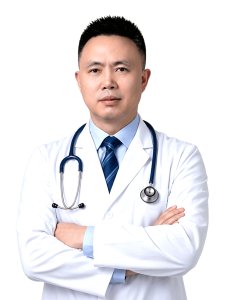
Liu Shi Xin

40 años de experiencia

El profesor Shixin Liu, MD, PhD, es el líder de la disciplina del Centro de Oncología. Fue presidente del Hospital Oncológico Provincial de Jilin y director del Instituto de Investigación en Prevención y Tratamiento del Cáncer. Es profesor de nivel II y tutor de doctorado. Ha recibido la Asignación Especial del Gobierno del Consejo de Estado, el 4.º premio Médico Nacional Famoso (Contribución Sobresaliente) y la distinción Modelo de Ética Médica.

Se especializa en el diagnóstico y tratamiento integrales de tumores malignos. Su enfoque es la radioterapia de precisión para cánceres torácicos y abdominales. Domina IMRT, VMAT y SBRT para cáncer de pulmón, esófago, mama y recto.

Sus cargos de liderazgo incluyen la vicepresidencia de Oncología Radioterápica de la CMA, de Radioterapia de la CACA y de Terapia de Partículas de la CACA. Integra el Comité Permanente de la CSCO y es vicepresidente del Comité de Expertos en Oncología Radioterápica de la CSCO. Es vicepresidente de Oncología Radioterápica de la CPAM y miembro del Comité Permanente de la CSMEA. Preside la sección de Oncología Radioterápica de la Asociación Médica de Jilin. Forma parte de los consejos editoriales del Chinese Journal of Radiation Oncology y del Practical Journal of Cancer.

Compartir contenido

Historias en video de pacientes de Bookimed

Dayana
Combiné mis vacaciones en Antalya con un chequeo médico.
Procedimiento: Chequeo femenino
Igor
¡Fue genial! Traslados, alojamiento, tratamiento, todo incluido.
Procedimiento: Implante dental
Clínica: WestDent Clinic
Marina
Bookimed se encargó de todo. No tuve que preocuparme por nada.
Procedimiento: Chequeo femenino
Actualizado: 05/27/2022
Escrito por
Olena Sikoza
Olena Sikoza
Сopywriter en español
Copywriter médica certificada responsable del contenido en español de Bookimed. Más de 7 años de experiencia en redacción sobre salud y turismo médico, con formación académica en edición científica y desarrollo de contenidos.
Fahad Mawlood
Editor médico y Científico de datos
Médico general. Ganador de 4 premios científicos. Sirvió en Asia Occidental. Es el ex jefe del equipo médico que soporta a pacientes de habla árabe. Ahora es responsable del procesamiento de datos y la precisión del contenido médico.
Fahad Mawlood Linkedin
Esta página puede incluir información relacionada con diversas afecciones médicas, tratamientos y servicios de salud disponibles en diferentes países. Tenga en cuenta que el contenido se proporciona sólo con fines informativos y no debe interpretarse como asesoramiento médico o orientación. Por favor consulte con su médico o con un profesional médico calificado antes de comenzar o cambiar el tratamiento médico.

Preguntas frecuentes sobre el tratamiento de Cáncer de nasofaringe en China

Estas preguntas frecuentes provienen de pacientes reales que buscan atención médica a través de Bookimed. Las respuestas son proporcionadas por coordinadores médicos experimentados y representantes autorizados de las clínicas.

Why do people travel to China for nasopharyngeal cancer treatment?

Patients choose China for nasopharyngeal cancer care due to the country's high case volume and clinical expertise. Chinese oncology centers manage nearly half of global cases annually. This experience allows surgeons and radiation oncologists to implement highly refined, standardized protocols. These specialized facilities often report 5-year survival rates exceeding 80%.

  • Treatment volume: Specialized centers manage 7,000+ nasopharyngeal cases annually for superior procedural proficiency.
  • Advanced technology: Facilities provide Intensity-Modulated Radiation Therapy (IMRT) and precision Volumetric Modulated Arc Therapy (VMAT).
  • Minimally invasive options: Clinics like Fuda Cancer Hospital utilize NanoKnife and cryosurgery for late-stage cases.
  • Expert credentials: Surgeons like Dr. Liu Shi Xin hold elite national distinctions for oncology.

Bookimed Expert Insight: Data shows that centers in Guangzhou and Xiamen offer a significant experience advantage for head-and-neck cancers. Fuda Cancer Hospital has treated over 30,000 international patients using specialized minimally invasive tools. Dr. Liu Shi Xin in Xiamen is a State Council Special Government Allowance recipient. These credentials signal a level of expertise rarely found in regions where nasopharyngeal cancer is rare.

Patient Consensus: Patients emphasize that since this cancer is rare elsewhere, they seek Chinese teams for their routine expertise. Many note it is critical to find a center experienced in sparing salivary glands and cranial nerves during radiation.

How do survival rates in China compare to Western countries?

China reports a 5-year survival rate for nasopharyngeal cancer (NPC) that meets or exceeds Western benchmarks in top-tier centers. Specialized facilities utilize high patient volumes and advanced radiotherapy to achieve these results. Survival outcomes globally depend significantly on early detection and modern radiation workflows.

  • Specialized expertise: High-volume Chinese centers manage more nasopharyngeal cases than most Western hospitals.
  • Clinical infrastructure: JCI-accredited facilities like Fuda Cancer Hospital utilize PET/CT for precision diagnosis.
  • Treatment technologies: Advanced protocols include IMRT and VMAT available at institutions like Xiamen Humanity Hospital.
  • Regional variations: Survival rates in major cities like Beijing and Shanghai often beat international averages.

Bookimed Expert Insight: Patient volume is a major quality signal for this specific cancer. Centers like Fuda Cancer Hospital have served over 30,000 international patients. This high throughput allows surgeons to refine complex techniques like NanoKnife and cryosurgery. Choosing a facility with massive yearly caseloads often leads to better survival outcomes than smaller clinics.

Patient Consensus: Patients note that specializing in head-and-neck oncology is vital for recovery. They often emphasize that centralized referral to high-volume centers helps catch the disease at earlier, more treatable stages.

What is the gold-standard treatment for non-metastatic nasopharyngeal cancer in China?

Definitive Intensity-Modulated Radiotherapy (IMRT) is the gold standard for non-metastatic nasopharyngeal cancer in China. Specialists often combine it with systemic chemotherapy for advanced stages. This radiation-based approach yields 5-year survival rates exceeding 90% for stage I patients within Chinese oncology centers.

  • Radiation technique: IMRT and VMAT provide precision targeting of tumors near critical structures.
  • Stage I protocol: Physicians use IMRT alone to achieve high survival without chemotherapy toxicity.
  • Advanced protocol: Induction chemotherapy with GP or TPF precedes concurrent cisplatin-based chemoradiotherapy.
  • Patient monitoring: Doctors track EBV-DNA levels to guide treatment de-escalation for lower side effects.

Bookimed Expert Insight: While most international protocols focus solely on radiation, Chinese centers like JCI-accredited Fuda Cancer Hospital emphasize specialized expertise in integrating minimally invasive therapies. Our data shows that high-volume providers often favor doctors with specific certifications, such as Dr. Liu Shi Xin, who holds multiple leadership roles in the Chinese Society of Clinical Oncology. This deep specialization in precision radiotherapy is crucial given that Chinese protocols are among the most aggressive globally due to high regional incidence.

Patient Consensus: Patients note that while the aggressive radiation-based approach is effective, prep for taste loss and severe mouth dryness is essential. Many recommend starting nutritional planning early to manage weight loss during the intensive treatment protocol.

What immunotherapies or advanced treatments are available in China?

Advanced treatments for nasopharyngeal cancer in China include PD-1 inhibitors like toripalimab and sintilimab. These immunotherapies are often paired with chemotherapy or precision radiation. JCI-accredited facilities offer next-generation ablation such as NanoKnife and cryosurgery. Chinese oncology centers maintain high 5-year survival rates through these multimodal protocols.

  • Immune inhibitors: Domestic PD-1 agents treat recurrent or metastatic nasopharyngeal malignancies effectively.
  • Minimally invasive: Cryosurgery and NanoKnife destroy localized tumors while preserving surrounding delicate tissue.
  • Precision radiation: Intensive Modulated Radiation Therapy provides highly conformal dosing to head targets.
  • Vascular therapy: Interventional techniques deliver localized chemotherapy directly to the tumor blood supply.

Bookimed Expert Insight: Data shows that Guangzhou hospitals often prioritize combining immunotherapy with microwave hyperthermia or vascular interventional therapy. Fuda Cancer Hospital has treated over 30,000 international patients using these combined minimally invasive methods. This multi-pronged approach is particularly effective for late-stage cases where traditional surgery is not viable. Doctors like Professor Liu Shi Xin also integrate precision radiotherapy to improve outcomes in thoracic and head-and-neck malignancies.

Patient Consensus: Patients emphasize that treatment plans are highly individualized based on EBV DNA markers and tumor response. Many note that advanced radiation delivery is just as critical as immunotherapy for long-term health.

Is minimally invasive surgery an option if the cancer recurs?

Minimally invasive surgery is a viable option for recurrent nasopharyngeal cancer in China. It depends on the tumor location and prior radiation history. Specialists often use endoscopic transnasal approaches to remove small, localized recurrences. This avoids large incisions while preserving vital skull base structures.

  • Endoscopic approach: Surgeons access the nasopharynx through the nose using specialized cameras.
  • Treatment eligibility: Feasibility depends on tumor size and distance from the internal carotid artery.
  • Advanced technologies: JCI-accredited centers in China utilize NanoKnife and cryosurgery for localized recurrences.
  • Surgical goal: Procedures focus on complete tumor removal with clear margins for better survival.

Bookimed Expert Insight: Chinese oncology centers like Fuda Cancer Hospital demonstrate a unique focus on specialized non-drug therapies. They apply over 10 types of minimally invasive treatments, including vascular intervention and microwave hyperthermia. This variety allows doctors to treat advanced cases where standard chemotherapy may have already failed.

Patient Consensus: Patients note that prior radiation often makes tissues fragile. They emphasize that endoscopic skull base surgery is complex and requires highly experienced surgical teams.

How are radiation side-effects being reduced in Chinese centres?

Chinese oncology centers reduce radiation side effects by combining precision radiotherapy with Traditional Chinese Medicine to protect healthy tissue. High-volume facilities utilize Intensity-Modulated Radiotherapy and adaptive planning to sculpt beams around tumors. This approach minimizes damage to salivary glands and nearby vital organs.

  • Precision targeting: Intensity-Modulated Radiotherapy sculpts radiation beams to match complex tumor shapes.
  • Integrated medicine: Herbal formulas reduce severe radiation-induced oral mucositis risk by 33%.
  • Sparing structures: Advanced planning protects salivary glands, eyes, and critical swallowing muscles.
  • Adaptive replanning: Doctors adjust radiation doses if tumor shrinkage or weight loss occurs.

Bookimed Expert Insight: Patient volume serves as a critical quality indicator in Chinese oncology. Fuda Cancer Hospital has served over 30,000 international patients. This high volume allows specialists like Dr. Liu Shi Xin at Xiamen Humanity Hospital to refine immobilization and toxicity tracking. Centers with such extensive experience often maintain more consistent protocols for managing acute side effects.

Patient Consensus: Patients note that while side effects like dry mouth and fatigue still occur, precision techniques make them more manageable. They emphasize that long-term preservation of speech and swallowing function is the primary goal of these advanced protocols.

Pedir una consulta gratis

Seleccione la mejor manera de contactarle