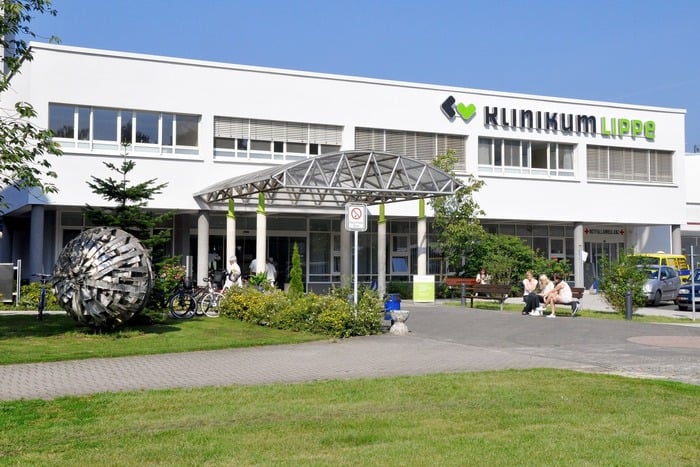
Medical Center in Solingen
Alemania, Solingen
Séverine Iborra
19 años de experiencia

Clínica certificada por : 



Revisado médicamente por
Fahad Mawlood
El costo del tratamiento de la displasia cervical en Alemania está determinado principalmente por la gravedad de la afección y la técnica quirúrgica requerida. De $160. Los gastos totales dependen del nivel de la clínica y del volumen de diagnóstico, siendo Frankfurt am Main, Hamburgo y Solingen las principales ciudades para estos procedimientos.
Costos típicos del tratamiento de la displasia cervical en Alemania
Perspectiva de los expertos de Bookimed: Los pacientes que buscan experiencia oncológica especializada deben considerar centros certificados como el Medical Center en Solingen. Su departamento es reconocido por la Sociedad Alemana del Cáncer para la patología cervical. Para casos complejos, la Clínica Nordwest (Krankenhaus) en Frankfurt ofrece diagnósticos avanzados por ultrasonido 3D. Las redes más grandes como el Hospital Asklepios Barmbek son las mejores para pacientes internacionales, ya que manejan más de 80,000 casos al año y cuentan con la certificación MTQA.
| Alemania | España | Turquía | |
|---|---|---|---|
| Traquelectomía uterina | ≈ $12,000 | ≈ $10,000 | ≈ $2,800 |
| Cryothérapie cervicale | ≈ $230 | ≈ $220 | ≈ $250 |
| Conización del cuello uterino | de $3,000 | ≈ $1,500 | de $900 |
Bookimed no añade cargos extra a los precios de los tratamientos de Displasia cervical. Las tarifas proceden de las listas de precios oficiales de las clínicas. Pagará directamente en la clínica por su tratamiento a su llegada al país.
Bookimed está comprometido con su seguridad. Solo trabajamos con las clínicas que mantienen altos estándares internacionales en el tratamiento de Displasia cervical y cuentan con las licencias necesarias para atender a pacientes internacionales en todo el mundo.
Bookimed ofrece asistencia experta gratuita. Un coordinador médico personal le apoya antes, durante y después de su tratamiento, resolviendo cualquier problema. Nunca estará solo en su viaje médico de tratamiento de Displasia cervical.

La Dra. Séverine Iborra es una especialista líder en ginecología en Alemania y Europa, con certificaciones en diagnóstico y terapia oncológica.
 Olena Sikoza
Alemania trata la displasia cervical utilizando las directrices S3 basadas en evidencia de la Sociedad Alemana de Ginecología y Obstetricia. Los métodos principales incluyen la vigilancia activa para las etapas tempranas y la escisión quirúrgica para lesiones avanzadas. Las clínicas especializadas utilizan herramientas de alta precisión como el sistema robótico da Vinci y la escisión electroquirúrgica con asa.
Perspectiva del experto de Bookimed: Los centros ginecológicos alemanes como el Medical Center en Solingen y el Complejo Clínico de Renania del Norte-Westfalia están reconocidos por la Sociedad Alemana del Cáncer. Esta acreditación garantiza el estricto cumplimiento de los protocolos donde el volumen de pacientes supera los 60,000 anuales. Expertos como la Dra. Séverine Iborra poseen certificaciones específicas en colposcopia y diagnóstico oncológ
Las directrices alemanas exigen que la LEEP o la conización se realicen bajo guía colposcópica y de forma mínimamente invasiva. Los procedimientos siguen los estándares del programa de oncología AWMF. Cada cirugía requiere una verificación previa en una clínica especializada en displasia. Esto garantiza que al menos el 85% de los casos tengan lesiones de alto grado confirmadas antes de la resección.
Perspectiva de expertos de Bookimed: Las clínicas alemanas como el Centro Médico de Solingen y el Complejo Clínico de Renania del Norte-Westfalia suelen estar certificadas por la Sociedad Alemana del Cáncer. Esta certificación impone una regla estricta de seguimiento de 6 meses en lugar de una reintervención inmediata. Nuestros datos muestran que especialistas de primer nivel como la Dra. Séverine Iborra poseen certificaciones AGCPC específicas en colposcopia. Esta profunda experiencia a m
La Terapia Fotodinámica (TFD) está disponible en Alemania para ciertas afecciones oncológicas y dermatológicas. Para la displasia cervical, los centros alemanes suelen priorizar intervenciones quirúrgicas establecidas como la conización. Los hospitales de investigación especializados y las clínicas privadas pueden ofrecer la TFD como una opción de nicho que preserva el tejido para casos específicos de displasia.
Perspectiva del experto de Bookimed: Aunque Alemania es líder en innovación médica, nuestros datos muestran una alta concentración de experiencia en displasia en centros certificados como el Centro Médico de Solingen. La Dra. Séverine Iborra es allí una especialista certificada en patología cervical y colposcopia. Este enfoque especializado es a menudo más crítico para el éxito del tratamiento que la disponibilidad específica de la terapia fotodi
La recuperación después de una LEEP o conización en Alemania toma de 4 a 6 semanas para la cicatrización completa del cuello uterino. Las pacientes generalmente regresan al trabajo de oficina dentro de 3 a 7 días. Las actividades extenuantes y levantar objetos pesados están restringidos durante 2 a 3 semanas para prevenir sangrado. La regeneración completa del tejido requiere ajustes de comportamiento específicos.
Perspectiva de expertos de Bookimed: Las clínicas alemanas como el Centro Médico de Solingen y el Complejo Clínico de Renania del Norte-Westfalia manejan volúmenes masivos, tratando a más de 200,000 pacientes combinados anualmente. Esta alta frecuencia permite a especialistas como la Dra. Séverine Iborra refinar protocolos que minimizan las estancias hospitalarias. Muchos centros alemanes especializados ahora realizan estos procedimientos como cirugías de día, permitiendo el alta poco después de
El cribado posterior al tratamiento de la displasia cervical requiere pruebas semestrales durante un máximo de 30 meses. Las pacientes suelen someterse a pruebas del virus del papiloma humano (VPH) o pruebas combinadas a intervalos de 6, 18 y 30 meses. Los centros oncológicos alemanes mantienen el seguimiento durante al menos 25 años para garantizar el éxito a largo plazo.
Perspectiva del experto de Bookimed: Aunque los centros alemanes como el Centro Médico de Solingen siguen protocolos rigurosos a largo plazo, la profundidad de la experiencia médica es la verdadera red de seguridad. La Dra. Séverine Iborra posee certificaciones especializadas en oncología molecular y colposcopia. Esta combinación de habilidad quirúrgica y profundidad diagnóstica es vital para interpretar con precisión los cambios celulares complejos posteriores al tratamiento.
Consenso de los pacientes: Las pacien
El tratamiento especializado de la displasia cervical en Alemania se obtiene mejor a través de centros certificados por la Sociedad Alemana del Cáncer. Estas instalaciones incluyen unidades de displasia especializadas y centros de cáncer ginecológico. Ofrecen colposcopia avanzada, conización LEEP y tratamientos láser que preservan el tejido en entornos hospitalarios académicos.
Perspectiva del experto de Bookimed: Si bien muchas clínicas alemanas se centran en la ginecología general, los hospitales académicos como Solingen o la Clínica Nordwest brindan una ventaja de seguridad importante. Estas instituciones combinan la investigación activa en oncología molecular con una práctica quirúrgica de alto volumen. Una especialista como la Dra. Séverine Iborra, que ha publicado trabajos en oncología y posee múltiples certificaciones, está mejor equipada para lesiones complejas de alto grado que un médico general.
Las agencias médicas internacionales gestionan la logística de viaje coordinando el transporte, el alojamiento y los requisitos administrativos para tratamientos en el extranjero. Los facilitadores profesionales sincronizan los programas quirúrgicos con los itinerarios de viaje para garantizar una atención sin interrupciones. Centros alemanes como el Medical Center de Solingen tratan a más de 60.000 pacientes al año utilizando estos sistemas de apoyo estructurados.
Opinión de expertos de Bookimed: Las clínicas alemanas a menudo operan como complejos masivos con más de 1.000 camas, lo que dificulta la navegación para los viajeros solitarios. Los datos muestran que clínicas como las de Renania del Norte-Westfalia tratan a 145.000 pacientes al año en múltiples edificios. Utilizar una agencia para la logística garantiza que sea derivado al departamento correcto de inmediato, evitando retrasos cost
Alemania alberga algunos de los departamentos de neurocirugía más prestigiosos del mundo, liderados por la Charité – Universitätsmedizin Berlin y el Hospital Universitario de Heidelberg. Estos centros destacan en el tratamiento de tumores cerebrales complejos y enfermedades cerebrovasculares. Para maximizar la eficacia de sus procedimientos, utilizan tecnologías de vanguardia como la resonancia magnética intraoperatoria y la neuronavegación asistida por computadora.
Opinión experta de Bookimed: Los datos muestran que elegir centros con un alto volumen quirúrgico suele llevar a recomendaciones de tratamiento más conservadoras. En el Centro Médico Solingen, que atiende a más de 60.000 pacientes al año, los cirujanos suelen sugerir fisioterapia en lugar de cirugía
En Alemania, los procedimientos neuroquirúrgicos de alta complejidad demuestran una seguridad excepcional. Las tasas de éxito en las fusiones espinales alcanzan el 99 %. La tasa de supervivencia en las resecciones de tumores cerebrales primarios es del 97 %. La independencia funcional es alta. Más del 82 % de los pacientes reciben el alta inmediatamente después del tratamiento. Los centros alemanes priorizan la preservación de la función neurológica mediante técnicas modernas de mapeo.
Opinión experta de Bookimed: Cirujanos experimentados como el Dr. Uwe Köhler, de la Clínica Asklepios Altona, realizan más de 2000 cirugías al año. Los datos muestran que estos especialistas mantienen tasas de éxito de hasta el 90 %, incluso en los tumores cerebrales más comp
Las clínicas neuroquirúrgicas alemanas incorporan regularmente instrumentos digitales de alta precisión y visualización en tiempo real a la práctica quirúrgica. Entre las tecnologías clave se encuentra la neuronavegación computarizada para cirugías de cerebro y médula espinal. Instituciones como la Clínica Asklepios Nord utilizan la resonancia magnética intraoperatoria para verificar la extirpación de tumores en tiempo real. Estos sistemas proporcionan a los cirujanos navegación GPS 3D.
Opinión experta de Bookimed: Grandes centros como la Charité – Universitätsmedizin de Berlín realizan más de 4000 procedimientos neuroquirúrgicos al año, lo que crea un entorno rico en datos para p