Enlace cruzado corneal (CCL) (un ojo) en Italia — obtén 3 clínicas con costos


Revisado médicamente por
Fahad Mawlood
¿Cuál es el precio de Enlace cruzado corneal (CCL) (un ojo) en Italia? Descubra ahora
El costo del Cross-Linking Corneal (CCL) (un ojo) en Italia suele oscilar entre $1,800 y $3,000. El precio final depende del nivel de la clínica, la ubicación regional y si el centro es privado o está acreditado por el estado. En los EE.
- Tarifas de clínicas privadas: $1,800 a $3,000 para pacientes particulares en centros independientes.
- Clínicas acreditadas por el SSN: Los precios a menudo se alinean con las tasas de reembolso nacionales de aproximadamente $1,450 para residentes elegibles.
- Principales centros médicos: Los costos en Roma y Milán suelen ser entre un 15 y un 20% más altos que en los centros regionales.
- Variaciones regionales: Las instalaciones en regiones del sur como Apulia a menudo ofrecen las tarifas privadas más competitivas.
Perspectiva del experto de Bookimed: Elegir un centro acreditado por el SSN como el Ospedale San Carlo di Nancy ofrece una propuesta de valor equilibrada. Este hospital con sede en Roma combina un alto volumen de pacientes de 15,000 al año con clasificaciones de usuarios de Bookimed de 5 estrellas. Si bien los paquetes privados en Milán pueden costar más, los hospitales acreditados brindan niveles de atención estandarizados. Esto los convierte en una opción confiable para los pacientes que buscan calidad clínica sin los sobreprecios de los servicios privados premium.
Beneficios clave
¿Por qué elegir Italia para el cross-linking corneal (CCL) (un ojo)?
- Clínicas acreditadas: Hospitales certificados por JCI en Italia ofrecen garantía de atención de alta calidad y estándares de seguridad.
- Tecnologías innovadoras: Italia utiliza equipos como el Sistema Avedro KXL y el dispositivo CCL-365. Estos son conocidos por su precisión y efectividad en procedimientos de cross-linking corneal.
- Altas tasas de éxito: El cross-linking corneal (CCL) en Italia presume una tasa de eficacia de hasta 90% en detener la progresión del queratocono.
- Cirujanos expertos: Los principales oftalmólogos en Italia, certificados por el Consejo Europeo de Oftalmología, han realizado miles de procedimientos de CCL. Esto asegura manos experimentadas para tu tratamiento.
Accede a soluciones avanzadas de Cross-Linking Corneal (CCL) (Un ojo) en clínicas de confianza de $1,800.
Sus beneficios y garantías con Bookimed
Precios directos
Bookimed no añade cargos adicionales a los precios de Enlace cruzado corneal (CCL) (un ojo). Las tarifas proceden de las listas de precios oficiales de las clínicas. Pagará directamente en la clínica por su Enlace cruzado corneal (CCL) (un ojo) a su llegada al país.
Sólo clínicas y médicos verificados
Bookimed está comprometido con su seguridad. Solo trabajamos con las clínicas que mantienen altos estándares internacionales en Enlace cruzado corneal (CCL) (un ojo) y tienen las licencias necesarias para atender a pacientes internacionales en todo el mundo.
Asistencia 24/7 gratuita
Bookimed ofrece asistencia experta gratuita. Un coordinador médico personal le apoya antes, durante y después del tratamiento, resolviendo cualquier problema. Nunca estará solo en su viaje médico de Enlace cruzado corneal (CCL) (un ojo).

Su coordinador médico personal de Bookimed
- Le apoya en cada etapa
- Ayuda a elegir la clínica y el médico adecuados
- Asegura un acceso rápido y conveniente a la información
Descubra las mejores clínicas de Enlace cruzado corneal (CCL) (un ojo) en Italia: 2 opciones verificadas y Precios





Descripción general de Enlace cruzado corneal (CCL) (un ojo) en Italia
- Enlace cruzado corneal (CCL) (un ojo) - de $1,800El tratamiento fortalece la córnea a través de luz ultravioleta y riboflavina, previniendo condiciones oculares progresivas.
- Queratoplastia - de $9,000Esta cirugía trasplanta tejido de córnea, mejorando la visión o aliviando el dolor, a menudo con una recuperación rápida y una cicatriz mínima.
- Trasplante de córnea - de $4,800Esta cirugía reemplaza la superficie dañada del ojo con tejido sano de un donante para mejorar la visión o aliviar el dolor.
- Implantación de anillo corneal - de $2,200El procedimiento consiste en colocar pequeños anillos en el ojo para remodelar la córnea, mejorar la visión y la comodidad.
Día 1 - Llegada
- Llegada al país.
- Regístrese en su alojamiento.
Día 2 - Preoperatorio
- Consulta con un oftalmólogo.
- Realice las pruebas oculares necesarias.
- Ultimar los detalles de la operación.
Día 3 - Cross Linking Corneal (CCL)
- El procedimiento comienza con anestesia local.
- El proceso de CCL toma alrededor de 1-2 horas.
- Control postoperatorio por el oftalmólogo.
Día 4 - Postoperatorio
- Permanezca en la clínica para observación.
- Asistir a una consulta postoperatoria.
Semana 1 - Rehabilitación
- Descanse y evite las actividades extenuantes.
- Asistir a las citas de seguimiento si es necesario.
Semana 2
- Regreso gradual a las actividades normales.
- Continúe evitando la actividad física extenuante.
Semana 3 - Resultado Final
- Consulta con el oftalmólogo.
- Ver el resultado final de la operación.
Tenga en cuenta que el proceso puede variar según la condición del individuo y el consejo del médico.
- Depósito de Bookimed: 200 $ o 200 €.
- Depósito de la clínica: Pague un porcentaje fijo por adelantado.
Historias en video de pacientes de Bookimed
Reseñas
Todas las reseñasCompartir contenido
 Olena Sikoza
Datos сlave sobre Enlace cruzado corneal (CCL) (un ojo)
Corneal Cross Linking (CCL) (Un ojo)
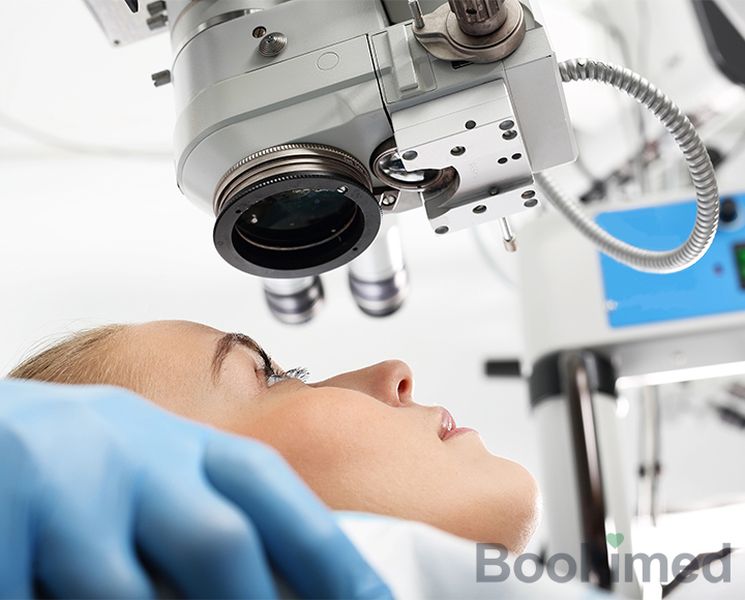
Este procedimiento refuerza la córnea mediante luz ultravioleta y gotas de riboflavina para detener la progresión del queratocono.
Preguntas frecuentes sobre Enlace cruzado corneal (CCL) (un ojo) en Italia
¿Qué debo esperar durante el proceso de recuperación después de un Cross-Linking corneal?
La recuperación después de un cross-linking corneal implica de 3 a 7 días de molestias iniciales y sensibilidad a la luz. Aunque la superficie física suele sanar en 1 semana, la visión se estabiliza gradualmente durante 3 a 12 meses. La mayoría de los pacientes retoman actividades ligeras y el trabajo después de 7 días de descanso.
- Molestias tempranas: Espere una sensación de arenilla o ardor que alcanza su punto máximo alrededor del día 2 o 3.
- Cambios en la visión: La visión permanece borrosa o fluctúa durante 1 a 4 semanas después de la cirugía.
- Lente protectora: Los cirujanos aplican una lente de contacto de vendaje, que generalmente se retira después de 3 a 5 días.
- Protección diaria: Se requieren gafas de sol con protección UV al aire libre para evitar una opacidad corneal permanente.
Perspectiva del experto de Bookimed: Clínicas italianas como el Ospedale San Carlo di Nancy suelen tratar a más de 14.000 pacientes al año. Los hospitales de alta actividad como este a menudo brindan un monitoreo más constante de la curación epitelial. Nuestros datos indican que los centros especializados en Italia a menudo manejan la opacidad postoperatoria de manera más efectiva. Esto resulta en una visión estable que alcanza el objetivo más cerca de la marca de los 6 meses.
Consenso de los pacientes: Muchos pacientes informan
¿Mejorará mi visión inmediatamente después del Cross-Linking corneal?
La visión no mejora inmediatamente después del cross-linking corneal. Los pacientes suelen experimentar una visión significativamente peor, borrosa o nublada durante las primeras 1 a 4 semanas. La claridad generalmente se estabiliza después de 3 a 6 meses a medida que la córnea sana y se completa el proceso de remodelación.
- Pérdida de visión temprana: El empeoramiento temporal ocurre debido a la eliminación del epitelio, la opacidad corneal y la hinchazón de la superficie.
- Lente de contacto de vendaje: Los cirujanos aplican una lente protectora durante 5 a 7 días después del procedimiento.
- Período de estabilización: La mayoría de los pacientes regresan a su nivel visual preoperatorio en un plazo de 1 a 3 meses.
- Objetivo principal: El procedimiento detiene la progresión del queratocono en lugar de eliminar la necesidad de usar gafas.
Perspectiva del experto de Bookimed: Centros italianos como el Ospedale San Carlo di Nancy manejan un gran volumen de casos oftalmológicos complejos. Los datos sugieren que, aunque el cross-linking corneal cuesta aquí entre $1,800 y $3,000, este es a menudo un paso preventivo. Elegir esta intervención a tiempo puede ayudar a los pacientes a evitar trasplantes de córnea mucho más costosos en el futuro.
Consenso de los pacientes: Muchos pacientes describen la pri
¿Existen diferentes técnicas de Cross-Linking disponibles en Italia?
Italia ofrece varias técnicas avanzadas de cross-linking corneal, incluido el protocolo de Dresde, que es el estándar de oro, y métodos no invasivos de epitelio intacto (epi-on). Centros especializados en Milán y Roma utilizan protocolos de UV-A acelerados e iontoforesis para reducir los tiempos de procedimiento y acelerar la recuperación visual de los pacientes con queratocono.
- Protocolo de Dresde: Método estándar de epitelio retirado (epi-off) que proporciona una estabilidad corneal verificada a largo plazo.
- Técnica acelerada: UVA de alta intensidad que reduce el tiempo de exposición a un total de 10–30 minutos.
- Iontoforesis (epi-on): Corrientes eléctricas que introducen riboflavina a través del tejido intacto para reducir las molestias.
- Pulsado personalizado: Aplicación de luz dirigida diseñada para tratar formas específicas de cono corneal.
Perspectiva del experto de Bookimed: Las clínicas italianas a menudo priorizan el protocolo clásico de Dresde sobre las variantes epi-on más nuevas. Esta tendencia se alinea con las directrices nacionales de salud que favorecen los datos de estabilidad establecidos. Aunque los métodos transepiteliales ofrecen una recuperación más rápida, aclare si su cirujano los recomienda para su grosor corneal específico.
Consenso de los pacientes: Los pacientes enfatizan la importancia
¿Qué clínicas en Italia son reconocidas por el Cross-Linking corneal de alta calidad?
Italia es un centro mundial para el Cross-Linking corneal (CXL), especialmente gracias a pioneros como el Dr. Marco Abbondanza, quien introdujo el procedimiento en 2005. La atención de alta calidad se concentra en instalaciones acreditadas por la JCI y centros oftalmológicos especializados que utilizan protocolos avanzados epi-on y el protocolo de Dresde acelerado.
- Ospedale San Carlo di Nancy: Hospital con sede en Roma que trata a 15.000 pacientes al año con tecnología de visión avanzada.
- Humanitas Research Hospital: Instalación acreditada por la JCI en Milán que utiliza fórmulas de riboflavina personalizadas e indoloras.
- Dr. Marco Abbondanza: Especialista de renombre en Roma con 35 años de experiencia en queratocono.
- Centros regionales de alta tecnología: GVM Santa Maria en Bari realiza más de 1.000 procedimientos de estabilización al año.
Perspectiva de expertos de Bookimed: Las clínicas italianas a menudo ofrecen técnicas avanzadas de iontoforesis epi-on que no están disponibles universalmente. Esta tecnología específica reduce significativamente el tiempo de recuperación a 1–2 días en comparación con la semana estándar. Si valora un regreso rápido al trabajo, priorice las clínicas en Florencia o Milán que ofrecen este protocolo.
Consenso de los pacientes: Muchos pacientes encuentran que la sensibilidad a la l