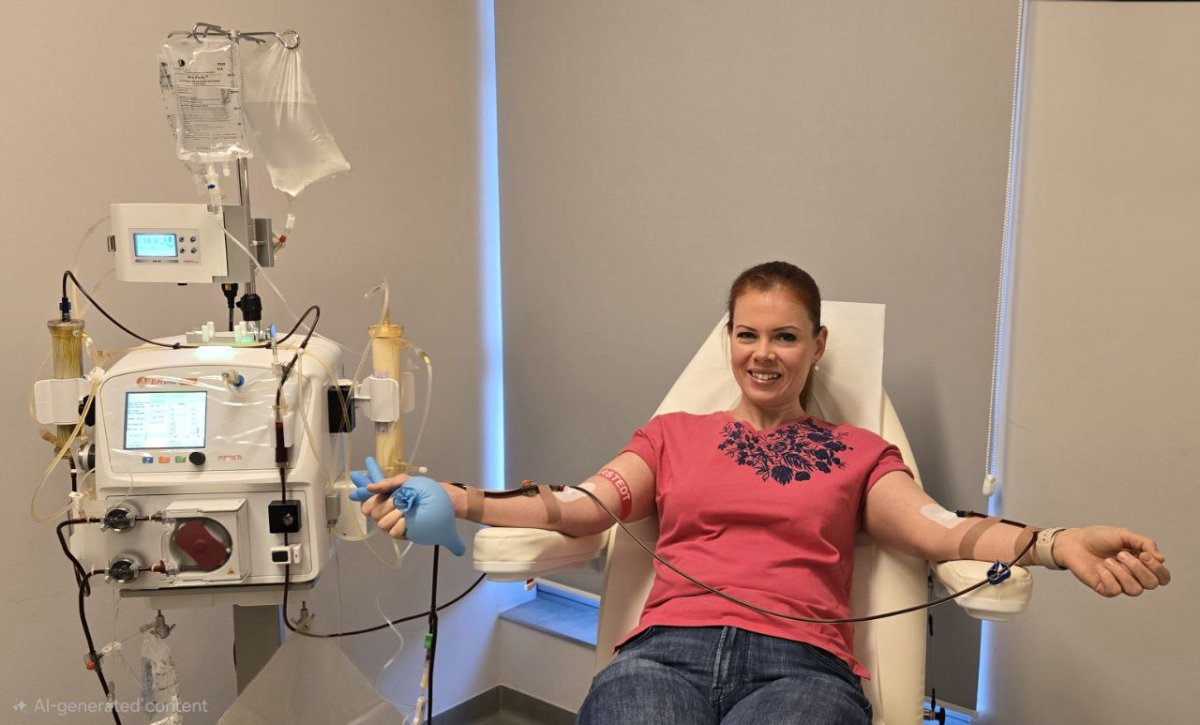
DNTRIPLED Medical Services Centro De Aféresis Terapéutica
Polonia, Varsovia


Revisado médicamente por
Fahad Mawlood
| Polonia | España | Turquía | |
|---|---|---|---|
| Plasmaféresis DFPP | de $3,000 | ≈ $1,100 | ≈ $1,900 |
| Plasmaféresis | de $3,300 | de $12,300 | de $3,200 |
| Intercambio de plasma | ≈ $1,800 | ≈ $2,400 | ≈ $3,900 |

El Dr. Łukasz Maciejewski es especialista en anestesiología y medicina intensiva, y en medicina de emergencias. Se graduó en la Universidad Médica de Pomerania en Szczecin. Realizó formación complementaria en Polonia y Alemania.
Adquirió experiencia clínica en el Hospital Militar 109 de Szczecin. También trabajó en centros alemanes: Vivantes Klinikum im Friedrichshain (Berlín), Kreiskrankenhaus Wolgast gGmbH y Asklepios Klinikum Uckermark (Schwedt/Oder).
Cuenta con certificacion
 Olena Sikoza
Las clínicas polacas utilizan estudios electrofisiológicos como la velocidad de conducción nerviosa (VCN) y la electromiografía (EMG) para diagnosticar la polineuropatía. Estas herramientas diferencian entre daño axonal y desmielinizante. Los especialistas también utilizan ecografía de alta resolución y análisis de sangre para identificar causas subyacentes como la diabetes o las deficiencias vitamínicas.
Perspectiva del experto de Bookimed: La precisión diagnóstica en Polonia a menudo involucra a especialistas como el Dr. Lukasz Maciejewski en Moderne Apherese. Posee certificaciones de la Sociedad Alemana de Ecografía en Medicina (DEGUM). Esta formación específica permite una imagen nerviosa muy detallada. Ayuda a los médicos a identificar atrapamientos nerviosos que los análisis de sangre estándar podrían pasar por alto. Tal experiencia especializad
Varsovia y Cracovia son los centros principales para el tratamiento de la polineuropatía en Polonia. Estas ciudades albergan hospitales académicos y departamentos especializados en enfermedades neuromusculares. Varsovia sirve como centro nacional de referencia. Los centros regionales en Gdansk, Breslavia, Poznan y Lodz ofrecen diagnósticos avanzados como la electromiografía.
Opinión del experto de Bookimed: Varsovia se ha convertido en un líder en purificación sanguínea especializada para neuropatías autoinmunes. El Dr. Lukasz Maciejewski en Moderne Apherese utiliza plasmaféresis de doble filtración con un coste aproximado de 2.900 $. Aunque muchas ciudades ofrecen atención básica, esta tecnología específica se concentra en la región capitalina. Esto hace que Varsovia sea la opción preferida para pacientes con afecciones nerv
Los medicamentos estándar para la polineuropatía son altamente accesibles en las farmacias polacas con una receta válida. Los tratamientos de primera línea como la pregabalina, la gabapentina y la duloxetina se encuentran habitualmente en stock. El seguro público a menudo subvenciona estos medicamentos. El acceso sigue siendo constante en las principales ciudades como Varsovia y Cracovia.
Perspectiva del experto de Bookimed: Si bien los medicamentos básicos son comunes, los pacientes que requieren terapias avanzadas como la plasmaféresis de doble filtración (DFPP) deben buscar en Varsovia. El Dr. Lukasz Maciejewski en Modern Apheresis realiza estos procedimientos especializados. Posee certificaciones DEGUM de la Sociedad Alemana de Ultrasonido en Medicina. Este enfoque de alta tecnología se dirige a la inflamación subyacente en lugar de solo enmascarar los síntomas d
El tratamiento avanzado de la polineuropatía en Polonia se centra en la neuromodulación y las técnicas de purificación de la sangre. Los centros especializados ofrecen plasmaféresis de doble filtración (DFPP) para casos relacionados con enfermedades autoinmunes. Muchos centros también ofrecen estimulación magnética de nervios periféricos (mPNS) y rehabilitación robótica. Estos métodos tienen como objetivo reducir el dolor neuropático y promover la reparación nerviosa.
Perspectiva del experto de Bookimed: El tratamiento avanzado en Polonia suele ser más económico que en Alemania para los mismos procedimientos especializados. Por ejemplo, la plasmaféresis de doble filtración (DFPP) en Moderne Apherese cuesta aproximadamente 2.900 dólares. El Dr. Lukasz Maciejewski posee allí prestigiosas certificaciones alemanas DE
Los pacientes internacionales se comunican eficazmente en Polonia eligiendo clínicas privadas en ciudades importantes como Varsovia. El inglés es el estándar entre los especialistas y neurólogos en redes privadas. La mayoría de los médicos en estos centros han recibido formación internacional. Los coordinadores de pacientes a menudo gestionan la logística y las traducciones para garantizar una atención sin problemas.
Perspectiva del experto de Bookimed: Nuestros datos muestran que los especialistas en Varsovia a menudo poseen certificaciones dobles. Por ejemplo, el Dr. Lukasz Maciejewski de Modern Apheresis posee certificaciones alemanas DEGUM. Los profesionales formados tanto en Polonia como en Alemania superan las barreras lingüísticas de manera efectiva. Esto es vital al discutir la polineuropatía autoinmune compleja y los tratamientos de filtr
La neurocirugía en Polonia ofrece atención de alta calidad en centros con certificación JCI e ISO. Los neurocirujanos polacos se adhieren a estrictos estándares de formación adoptados por la Unión Europea. Muchos han completado becas en Estados Unidos o Alemania. Tecnologías avanzadas, como CyberKnife, Gamma Knife y sistemas robóticos, están ampliamente disponibles en centros privados.
Opinión experta de Bookimed: Los datos muestran una fuerte correlación entre la especialización de una clínica y el origen de sus pacientes. La Clínica KCM atiende a más de 700 pacientes internacionales al año. Se especializa en cirugía de columna mínimamente invasiva. Este volumen de trabajo le permite ofrecer paquetes de servicios especializados, que a menudo incluyen bloques de diagnóstico e implantes específicos, como el DIAM de Medtronic.
Los neurocirujanos polacos son especialistas altamente cualificados que han completado al menos 13 años de rigurosa formación médica. Esto incluye seis años de estudios de medicina, 13 meses de prácticas y seis años de residencia. Deben aprobar el Examen Estatal de Especialización (PES) y suelen estar certificados por la Asociación Europea de Sociedades de Neurocirugía (EANS).
Opinión experta de Bookimed: Los datos muestran que los neurocirujanos polacos suelen especializarse en tecnologías altamente especializadas, como el sistema ApiFix o el sistema de endoscopia lumbar SED-YESS. Especialistas como el Dr. Stanisław Kwek, de la Clínica KCM, combinan la investigación postdoctoral con una práctica quirúrgica activa. Esta combinación de profundos conocimientos académicos y un alto volumen quirúrgico los hace especialmente eficaces en cirugías de columna complejas y mínimamente in
Entre las mejores clínicas neuroquirúrgicas de Polonia se encuentran el Hospital Carolina, la Clínica KCM y centros académicos de primer nivel como el Hospital Universitario de Cracovia. Estas instituciones ofrecen tratamientos de vanguardia para enfermedades de la columna vertebral y el cerebro que cumplen con los estándares de calidad ISO y emplean a especialistas miembros de organizaciones internacionales como AO Spine.
Opinión experta de Bookimed: Si bien muchos buscan los hospitales más grandes, los datos muestran que clínicas como el Hospital Carolina ofrecen mayor eficiencia para cirugías electivas. Con más de 40 médicos especialistas en este centro de 30 camas, la proporción médico-paciente es significativamente mayor que en los centros universitarios públicos. Esto se traduc
En Polonia, la neurocirugía se centra principalmente en cirugías de columna y extirpación de tumores cerebrales. Los hospitales realizan con frecuencia microdiscectomías, fusiones espinales y estimulación cerebral profunda. Centros como el Hospital Carolina y la Clínica KCM utilizan técnicas mínimamente invasivas para tratar hernias discales, lesiones de columna y trastornos neurológicos complejos.
Opinión experta de Bookimed: Polonia se ha convertido en un centro de estabilización espinal especializada. Clínicas como el Hospital Carolina colaboran con equipos deportivos nacionales, lo que refleja su alto nivel de experiencia en el tratamiento de lesiones espinales complejas. Nuestros datos muestran que estas instituciones suelen integrar la rehabilitación directamente en el tratamiento quirúrgico. Esta combinación reduce el riesgo de compl
La rehabilitación neurológica está ampliamente disponible en Polonia a través de centros especializados y hospitales multidisciplinarios. Los programas abarcan la recuperación tras un accidente cerebrovascular, una lesión medular y enfermedades degenerativas. Instituciones como el Hospital Karolina de Varsovia y la Clínica KCM ofrecen terapia supervisada. La mayoría de los programas neuroquirúrgicos incluyen una evaluación inicial de rehabilitación postoperatoria.
Opinión experta de Bookimed: Los datos muestran que las clínicas con una gran afluencia de pacientes internacionales, como la Clínica KCM, suelen incluir rehabilitación básica en sus paquetes quirúrgicos. Esto supone una ventaja significativa, ya que coordinar la neurorrehabilitación de forma independiente en Polonia puede ser complicado. Elegir una clínica con un especialista e