¿Por qué eligen los pacientes España para la reparación de hernias incisionales?
Accede a soluciones avanzadas para la reparación de hernias incisionales en clínicas de confianza .
Día 1 - Llegada
Día 2 - Preoperatorio
Día 3 - Cirugía
Día 4 - Postoperatorio
Día 5 - Alta
Semana 1-2 - Rehabilitación
Semana 3-4 - Regreso a las actividades normales
Semana 6 - Recuperación completa
Tenga en cuenta que el proceso de recuperación de cada paciente puede variar.
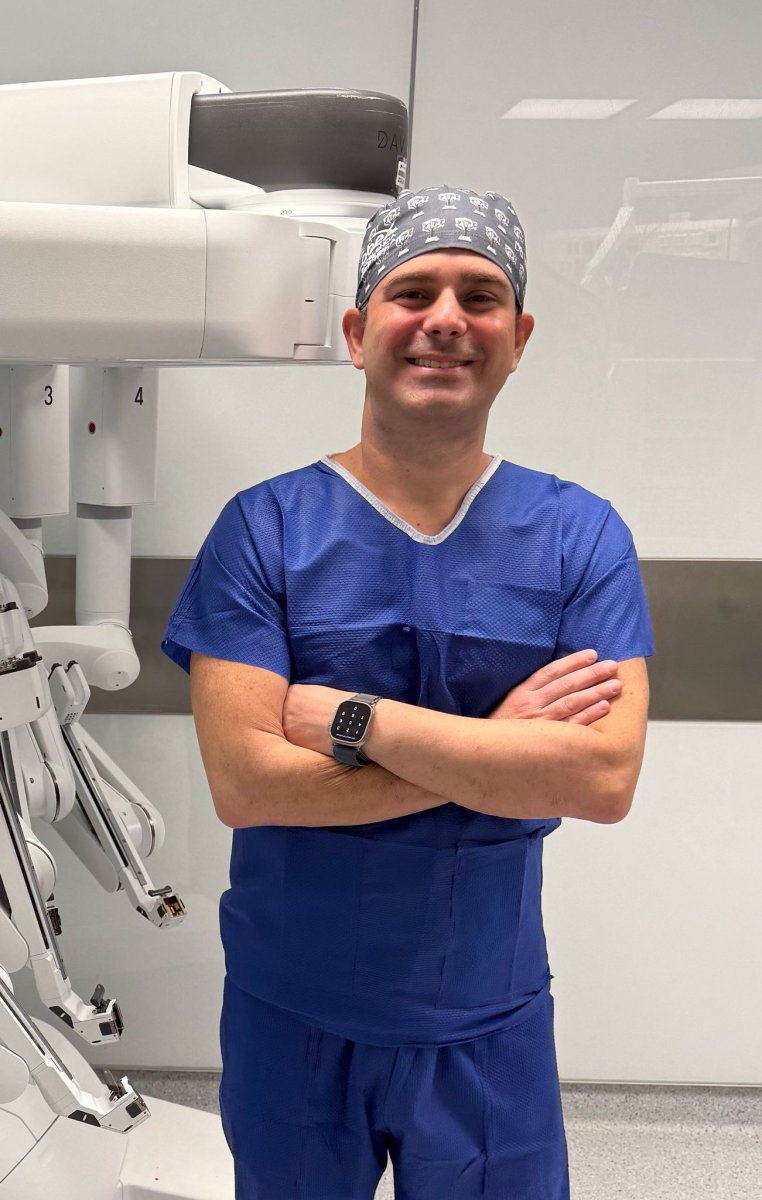
Cirujano general y del aparato digestivo. Enfoque en cirugía colorrectal, proctológica y de pared abdominal mínimamente invasiva. Jefe adjunto, Hospital Universitario Infanta Elena (2021–). Cirujano asociado, Fundación Jiménez Díaz (2013–).
Acreditaciones: Doctor en Cirugía, sobresaliente cum laude (UAM). Certificado en cirugía robótica (Da Vinci X/Xi/5). Formación avanzada en cirugía general laparoscópica (IRCAD, Estrasburgo). Especialista en Cirugía General y del Aparato Digestivo (Fundación Jiménez Díaz).
Logros: Investigador (2013–). Autor de una patente para un sistema de implantación protésica de la pared abdominal (2021). Coautor del modelo de utilidad Obturador Rectal (2021). Revisor por pares, International Journal of Surgery Case Reports (2024–). Tutor de tesis (2023–). Publicaciones en Cirugía Española, Experimental Biology and Medicine, Histology and Histopathology y The American Journal of Surgery. Miembro de AEC, AECP e ICOMEM.
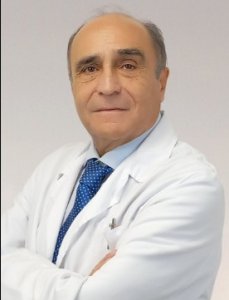
El Dr. Xavier Centeno Fornies se formó en cirugía colorrectal en la prestigiosa Mayo Clinic y ha sido un especialista líder en Centro Médico Teknon desde 1993.
El Dr. César Canales dirige desde 2015 el Servicio de Cirugía General y del Aparato Digestivo y la Unidad de Cirugía Laparoscópica y Robótica del Hospital Ruber Internacional (Madrid). Es cirujano general y del aparato digestivo con más de 30 años de experiencia. Está especializado en cirugía laparoscópica y robótica Da Vinci para casos complejos abdominales, oncológicos y de la pared abdominal.
Doctor en Medicina (cum laude, UAM) y licenciado en Medicina (con honores, UCM). Completó la formación como especialista en el Hospital General Universitario Gregorio Marañón. También está acreditado por el Cuerpo Militar de Sanidad. Autor de más de 70 publicaciones y 12 capítulos de libro, entre ellos el Manual de Cirugía (McGraw-Hill). Ha sido docente en más de 16 cursos. Entre sus reconocimientos figuran Forbes Top 100 Doctors (2024), Top 5 de cirujanos generales y del aparato digestivo en España (2021–2024), La Razón Doctor del Año (2024) y El Confidencial Mejores médicos de España (2025).
El Dr. César Lévano Linares es especialista en cirugía general y del aparato digestivo. Trabaja en el Hospital Universitario Rey Juan Carlos y en el Hospital Universitario Fundación Jiménez Díaz. Es reconocido por su labor en cirugía colorrectal laparoscópica.
Es doctor en Medicina y Cirugía por la Universidad Autónoma de Madrid. Completó un máster en cirugía colorrectal y del suelo pélvico en la Universidad de Zaragoza. Asimismo, posee un diploma en cirugía laparoscópica por la Universidad Louis Pasteur de Estrasburgo. Cuenta con acreditación europea en cirugía laparoscópica (EACCME).
Su investigación abarca el hibernoma retroperitoneal bilateral y la conversión de la cirugía endoscópica endoluminal primaria a bypass gástrico laparoscópico.
Incisional hernia repair is a surgical procedure that fixes a bulge formed through a previous surgical scar. It strengthens the abdominal wall to prevent dangerous complications like intestinal strangulation or obstruction. Surgeons restore tissue placement and often reinforce the area with prosthetic mesh.
Bookimed Expert Insight: Spain’s top surgical centers specialize in complex abdominal wall reconstruction beyond simple mesh placement. Leading doctors like Dr. Alfonso García Fadrique focus on component separation techniques. This approach is vital for large hernias where the muscle layers must be carefully rearranged. Choosing a clinic with JCI accreditation ensures these high-level reconstructive protocols are followed for long-term stability.
Patient Consensus: Patients emphasize that while the first week is physically demanding, moving around early aids recovery. They often report that robotic-assisted options result in less post-operative discomfort than traditional open surgery.
Common risks of incisional hernia surgery include hernia recurrence, mesh-related infections, and chronic pain from nerve involvement. Modern laparoscopic and robotic techniques in Spain significantly reduce complications like hematomas or seromas. Patients must follow strict recovery protocols to ensure long-term abdominal wall stability.
Bookimed Expert Insight: Spain stands out for complex abdominal wall reconstruction using specialized robotic certifications. Dr. Carlos Garcia Vasquez at Centro PAD even holds a patent for prosthetic implantation systems. Choosing a surgeon with doctoral-level research in abdominal wall pathology often bridges the gap between basic repair and successful long-term outcomes.
Patient Consensus: Many patients emphasize that early intervention prevents hernia growth and strangulation risks. They often highlight the importance of starting physical therapy after 3 months to regain core strength.
Ask about the surgical technique, surgeon experience levels, and mesh types before undergoing incisional hernia repair in Spain. Confirming recovery timelines for international travel and verifying certifications from the Spanish Association of Surgeons ensures safe outcomes in JCI-accredited facilities located in Madrid and Barcelona.
Bookimed Expert Insight: Spanish surgical centers like Centro PAD and Hospital Ruber Internacional prioritize robotic-assisted platforms like the Da Vinci Xi. This technology often allows for more precise complex reconstructions than standard laparoscopic tools. Choosing a surgeon with research patents in abdominal wall systems, such as Dr. Carlos Garcia Vasquez, signals a high level of specialized innovation.
Patient Consensus: Patients emphasize verifying experience with large hernia defects to avoid high recurrence rates. Most recommend confirming follow-up costs early to manage the financial reality of potential postoperative monitoring.
Standard recovery for incisional hernia repair in Spain takes 4 to 8 weeks to feel normal. Patients often leave specialized facilities within 24 hours of laparoscopic procedures. Full return to strenuous activity or heavy lifting generally requires a minimum of 6 weeks for complete healing.
Bookimed Expert Insight: Spanish surgeons like Dr. Carlos Garcia Vasquez at Centro PAD utilize patented abdominal wall prosthetic systems and Da Vinci robotic platforms. These advanced technologies often allow for same-day discharge in 19% of cases. Choosing a center with robotic capabilities can significantly reduce initial postoperative pain compared to traditional open methods.
Patient Consensus: Expect significant pain during the first 72 hours, with mobility improving daily thereafter. Patients emphasize avoiding travel or heavy lifting for at least 6 weeks to ensure the surgical site remains stable.
Spain offers high-precision incisional hernia surgery through board-certified specialists using advanced robotic systems. Patients benefit from modern abdominal wall reconstruction techniques, international medical accreditations like JCI and ISO, and cost-effective care that averages $5,000 to $12,000 at top-tier Madrid and Barcelona facilities.
Bookimed Expert Insight: Spain stands out for its academic surgeons who actively innovate in abdominal wall pathology. For instance, Dr. Carlos Garcia Vasquez at Centro PAD holds a 2021 patent for prosthetic implantation systems. This level of specialization ensures that patients receive the most current mesh technology and tension-free repair methods available globally.
Patient Consensus: Success depends heavily on surgeon experience with mesh placement. Many advise waiting 3 months before long-distance travel to avoid complications like swelling or pain after complex abdominal reconstruction.