¿Por qué elegir España para la cirugía de hernia inguinal?
Acceda a soluciones avanzadas para la cirugía de hernia inguinal en clínicas de confianza .
| España | Turquía | México | |
| Cirugía de hernia inguinal | de $1,968 | de $2,700 | de $1,500 |
Día 1 - Llegada
Día 2 - Preoperatorio
Día 3 - Cirugía
Día 4 - Postoperatorio
Día 5 - Día del alta
Semana 1 - Rehabilitación
Semana 2 - 4 Rehabilitación
Tenga en cuenta que la recuperación de cada paciente puede variar y el cronograma proporcionado es una guía general.
Lo que les gusta a los pacientes:
Lo que no les gusta a los pacientes:
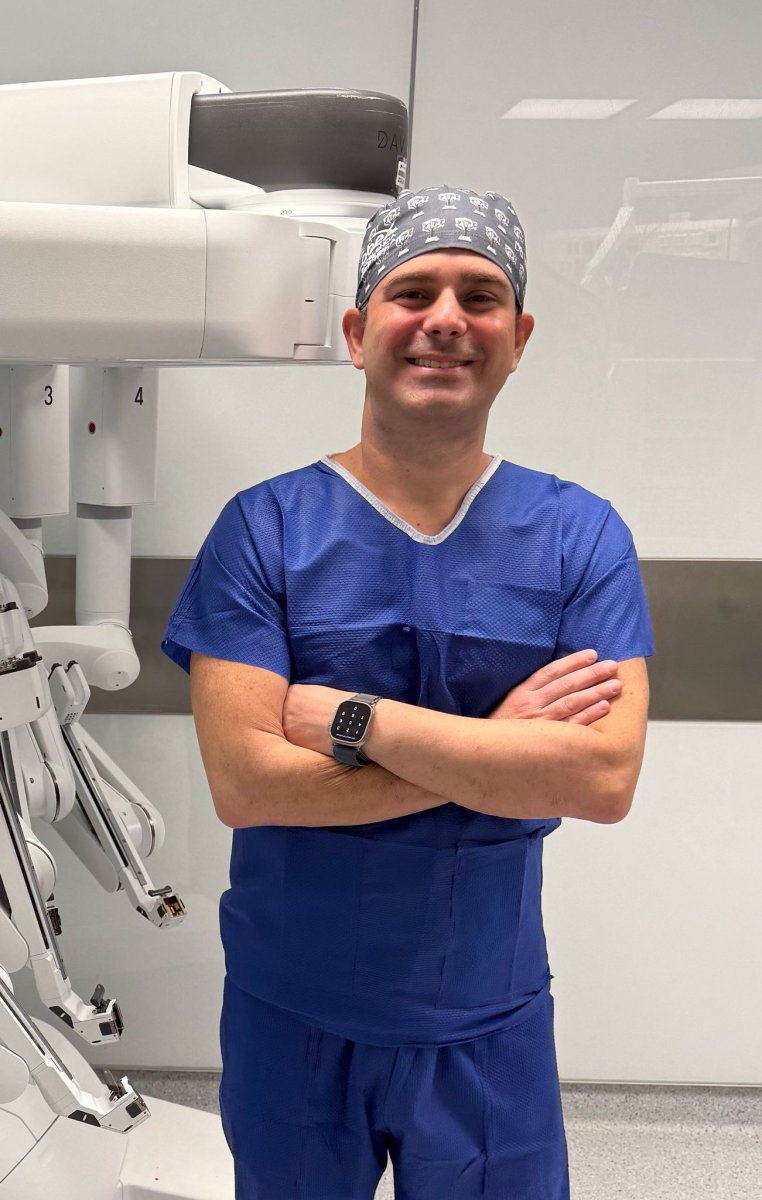
Cirujano general y del aparato digestivo. Enfoque en cirugía colorrectal, proctológica y de pared abdominal mínimamente invasiva. Jefe adjunto, Hospital Universitario Infanta Elena (2021–). Cirujano asociado, Fundación Jiménez Díaz (2013–).
Acreditaciones: Doctor en Cirugía, sobresaliente cum laude (UAM). Certificado en cirugía robótica (Da Vinci X/Xi/5). Formación avanzada en cirugía general laparoscópica (IRCAD, Estrasburgo). Especialista en Cirugía General y del Aparato Digestivo (Fundación Jiménez Díaz).
Logros: Investigador (2013–). Autor de una patente para un sistema de implantación protésica de la pared abdominal (2021). Coautor del modelo de utilidad Obturador Rectal (2021). Revisor por pares, International Journal of Surgery Case Reports (2024–). Tutor de tesis (2023–). Publicaciones en Cirugía Española, Experimental Biology and Medicine, Histology and Histopathology y The American Journal of Surgery. Miembro de AEC, AECP e ICOMEM.
El Dr. Xavier Centeno Fornies se formó en la prestigiosa Mayo Clinic y dirige el departamento de cirugía del Centro Médico Teknon.
El Dr. César Canales dirige desde 2015 el Servicio de Cirugía General y del Aparato Digestivo y la Unidad de Cirugía Laparoscópica y Robótica del Hospital Ruber Internacional (Madrid). Es cirujano general y del aparato digestivo con más de 30 años de experiencia. Está especializado en cirugía laparoscópica y robótica Da Vinci para casos complejos abdominales, oncológicos y de la pared abdominal.
Doctor en Medicina (cum laude, UAM) y licenciado en Medicina (con honores, UCM). Completó la formación como especialista en el Hospital General Universitario Gregorio Marañón. También está acreditado por el Cuerpo Militar de Sanidad. Autor de más de 70 publicaciones y 12 capítulos de libro, entre ellos el Manual de Cirugía (McGraw-Hill). Ha sido docente en más de 16 cursos. Entre sus reconocimientos figuran Forbes Top 100 Doctors (2024), Top 5 de cirujanos generales y del aparato digestivo en España (2021–2024), La Razón Doctor del Año (2024) y El Confidencial Mejores médicos de España (2025).
El Dr. César Lévano Linares es especialista en cirugía general y del aparato digestivo. Trabaja en el Hospital Universitario Rey Juan Carlos y en el Hospital Universitario Fundación Jiménez Díaz. Es reconocido por su labor en cirugía colorrectal laparoscópica.
Es doctor en Medicina y Cirugía por la Universidad Autónoma de Madrid. Completó un máster en cirugía colorrectal y del suelo pélvico en la Universidad de Zaragoza. Asimismo, posee un diploma en cirugía laparoscópica por la Universidad Louis Pasteur de Estrasburgo. Cuenta con acreditación europea en cirugía laparoscópica (EACCME).
Su investigación abarca el hibernoma retroperitoneal bilateral y la conversión de la cirugía endoscópica endoluminal primaria a bypass gástrico laparoscópico.
Este procedimiento consiste en reparar una hernia en la zona inguinal empujando el tejido que sobresale hacia el interior del abdomen y reforzando la pared abdominal.
Top-rated inguinal hernia surgery doctors in Spain are recognized for mastering robotic and laparoscopic techniques. Leading specialists like Dr. Cesar Canales Bedoya and Dr. Xavier Centeno Fornies hold international credentials. They offer advanced repairs at JCI-accredited facilities in Madrid, Barcelona, and Valencia.
Bookimed Expert Insight: Spain stands out because its surgeons often combine high-level academic research with practical innovation. For example, Dr. Carlos Garcia Vasquez and Dr. Cesar Levano Linares both hold PhDs while practicing at clinics recognized as Newsweek's Best Smart Hospitals. This blend of research and technology leads to more precise repairs and updated surgical protocols.
Patient Consensus: Patients note that choosing a surgeon who performs hernia repairs daily is more important than clinic branding. They emphasize that clear talks about chronic pain prevention and mesh use made them feel more confident. Many were surprised by how detailed the post-operative instructions were for managing daily activities.
Qualified Spanish hernia surgeons are specialists in general and digestive surgery with advanced laparoscopic training. They typically hold a PhD and pursue fellowships at world-leading centers like the Mayo Clinic. Many utilize robotic platforms and patented technologies to improve abdominal wall repair results.
Bookimed Expert Insight: Data reveals that top Spanish surgeons often hold patents for surgical innovations. For example, Dr. Carlos Garcia Vasquez at Centro PAD developed a patented system for implanting prosthetic materials. This technical expertise frequently coincides with ERAS-Society accreditation, which focuses on protocols for faster patient recovery after hernia repair.
Patient Consensus: Patients note that their surgeons provide very clear explanations of why specific mesh or laparoscopic techniques fit their case. They value doctors who have high yearly volumes in specialized hospital units. Many feel more confident when they see their surgeon holds a university teaching role.
Spanish hernia specialists offer advanced robotic surgery using the Da Vinci platform for complex repairs. Top surgeons hold PhDs and specific robotic certifications. They practice at JCI-accredited hospitals in Madrid, Barcelona, and Valencia. These experts integrate robotic technology with minimally invasive techniques to improve precision.
Bookimed Expert Insight: Data shows a high concentration of robotic expertise in Madrid and Valencia. While several doctors perform laparoscopic repairs, only a few lead dedicated robotic units. Patients should note that top-rated surgeons, like those at Centro PAD, offer consultations starting around $120. Choosing a surgeon who teaches residents often signals mastery of the latest robotic protocols.
Patient Consensus: Patients emphasize that surgeon specialization matters more than a hospital's technology claims. They often ask if the robotic approach is truly necessary for their specific hernia type. People note that these advanced options are mostly found in large urban private centers.
Top hernia surgeons in Spain practice at accredited private hospitals and specialized units in Madrid, Barcelona, and Valencia. These experts prioritize minimally invasive laparoscopic and robotic techniques. Leading practitioners often hold PhDs and international training from institutions like the Mayo Clinic or IRCAD France.
Bookimed Expert Insight: Data shows a strong trend of international training among Spain's top hernia specialists. Dr. Xavier Centeno Fornies at Centro Médico Teknon trained at the Mayo Clinic. Dr. Carlos Garcia Vasquez at Centro PAD completed advanced laparoscopic training in France. This global exposure often leads to the adoption of enhanced recovery protocols for faster patient discharge.
Patient Consensus: Patients note that surgeons at large tertiary hospitals offer more confidence for recurrent or complex cases. They often feel relieved when doctors explain mesh types and recurrence risks in detail. Many suggest prioritizing surgeons who focus specifically on abdominal wall repairs over general practitioners.
Top hernia surgeons in Spain achieve a 95% success rate for inguinal repairs. Laparoscopic specialists at JCI-accredited clinics report even higher efficacy between 95% and 98%. These experts focus on advanced mesh materials and minimally invasive techniques to keep recurrence risk below 5%.
Bookimed Expert Insight: Success in Spain often stems from a high level of academic involvement among surgical leads. Data shows many top doctors, such as Dr. Alfonso García Fadrique and Dr. Cesar Canales Bedoya, hold PhDs specifically in surgery. This deep research focus into abdominal wall prosthetic systems and surgical techniques directly contributes to the low recurrence rates seen at clinics like Centro Médico Teknon.
Patient Consensus: Patients note that recovery speed is the most practical sign of a successful surgery. Many feel relieved when they can start walking shortly after the procedure. They also appreciate clear explanations regarding mesh use and realistic activity limits during the first few weeks.