







Ir a inicio
820К+ pacientes han recibido asistencia desde 2014
50 países
1,500 clínicas
6K+ reseñas
3K+ médicos calificados

¿Cuál es el precio de procedimientos de Cirugía de la columna en Tailandia? Descubra ahora

Spinal surgery in Thailand generally costs from $14,400 / 532,800฿ to $43,600 / 1,613,200฿. Final prices depend on the complexity of the procedure, hospital location, and the use of specialized technology like robotic assistance or minimally invasive techniques. Patients can expect 30-80% savings compared to the United States.

Typical Spinal Surgery Costs in Thailand

  • MRI of the spine cord: $300 / 11,100฿ – $500 / 18,500฿
  • Herniated disc surgery: $6,200 / 229,400฿ – $12,100 / 447,700฿
  • Surgical treatment of scoliosis: $15,000 / 555,000฿ – $35,000 / 1,295,000฿
  • ApiFix system implantation: $18,000 / 666,000฿ – $26,000 / 962,000฿
  • Discectomy: $6,500 / 240,500฿ – $11,000 / 407,000฿
  • Surgery for syringomyelia: $20,000 / 740,000฿ – $35,000 / 1,295,000฿
  • Laminectomy: $6,000 / 222,000฿ – $10,000 / 370,000฿
  • Anterior Cervical Discectomy and Fusion: $12,500 / 462,500฿ – $19,500 / 721,500฿
  • Kyphoplasty: $6,500 / 240,500฿ – $9,500 / 351,500฿
  • Minimally invasive fusion surgery: $25,000 / 925,000฿ – $40,000 / 1,480,000฿

Most international patients choose JCI-accredited facilities in Bangkok or Phuket. While Bangkok remains the primary hub for complex neurosurgery, facilities in Phuket provide accessible options for elective spine care. Consult with a specialist to get accurate pricing for your specific condition.

TailandiaEspañaTurquía
Tratamiento quirúrgico de la radiculopatíade $8,500 / 314,500฿de $9,000 / 333,000฿de $1,800 / 66,600฿
Tratamiento quirúrgico de la escoliosisde $15,000 / 555,000฿de $30,000 / 1,110,000฿de $19,910 / 736,670฿
Plástico vertebralde $2,600 / 96,200฿de $4,000 / 148,000฿de $3,500 / 129,500฿
Laminectomíade $6,000 / 222,000฿de $8,903 / 329,411฿de $4,300 / 159,100฿
Implantación del sistema ApiFixde $18,000 / 666,000฿de $25,000 / 925,000฿de $13,000 / 481,000฿
Datos verificados por Bookimed a partir de July 2026, basados en solicitudes de pacientes y cotizaciones oficiales de 19 clínicas en todo el mundo. Los costos medianos se basan en facturas reales (2025–2026) y se actualizan mensualmente. Los precios reales pueden variar.

Sus beneficios y garantías con Bookimed

Precios directos

Bookimed no añade cargos extra a los precios de los tratamientos de Cirugía de la columna. Las tarifas proceden de las listas de precios oficiales de las clínicas. Pagará directamente en la clínica por su tratamiento a su llegada al país.

Sólo clínicas y médicos verificados

Bookimed está comprometido con su seguridad. Solo trabajamos con las clínicas que mantienen altos estándares internacionales en el tratamiento de Cirugía de la columna y tienen las licencias necesarias para atender a pacientes internacionales en todo el mundo.

Asistencia 24/7 gratuita

Bookimed ofrece asistencia experta gratuita. Un coordinador médico personal le apoya antes, durante y después del tratamiento, resolviendo cualquier problema. Nunca estará solo en su viaje médico de procedimientos de Cirugía de la columna.

¿Por qué nosotros?

Su coordinador médico personal de Bookimed

  • Le apoya en cada etapa
  • Ayuda a elegir la clínica y el médico adecuados
  • Asegura un acceso rápido y conveniente a la información

Descubra las mejores clínicas de Cirugía de la columna en Tailandia: 19 opciones verificadas y Precios

El ranking de clínicas de Bookimed se basa en algoritmos de data science, ofreciendo una comparación confiable, transparente y objetiva. Tiene en cuenta la demanda de pacientes, las puntuaciones de reseñas (positivas y negativas), la frecuencia de actualización de opciones de tratamiento y precios, la rapidez de respuesta y las certificaciones de las clínicas.
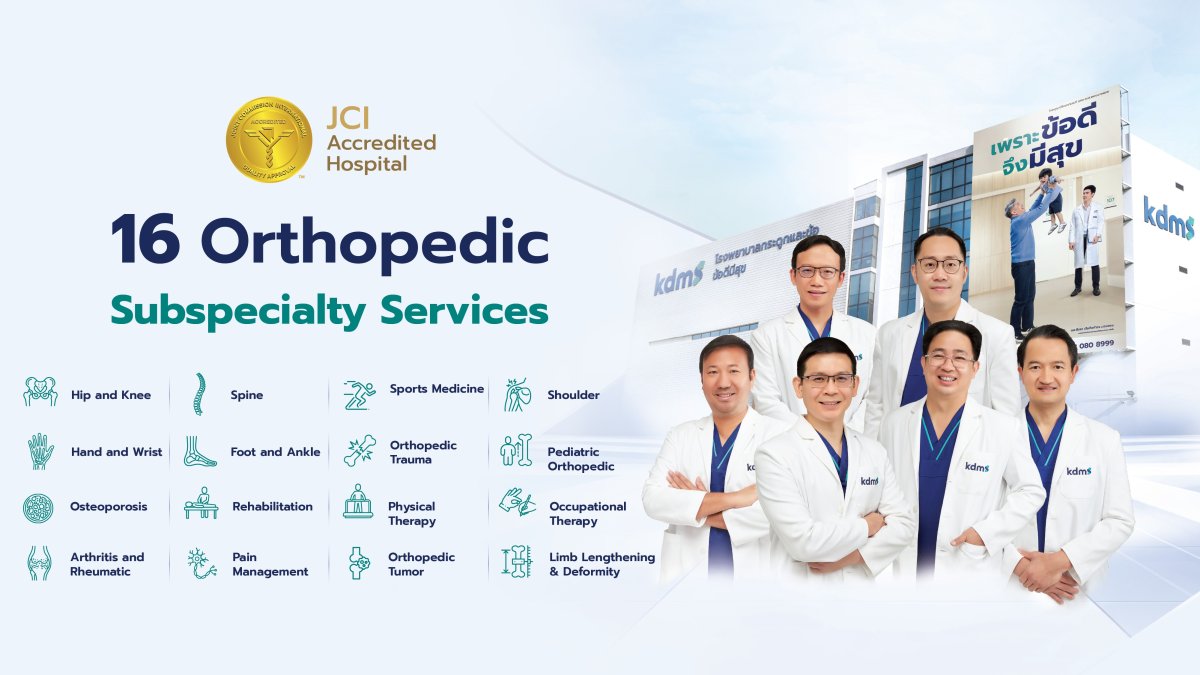
Hospital Ortopédico Especializado KDMS
5.03 reseñas
Precio a consultar
Más información
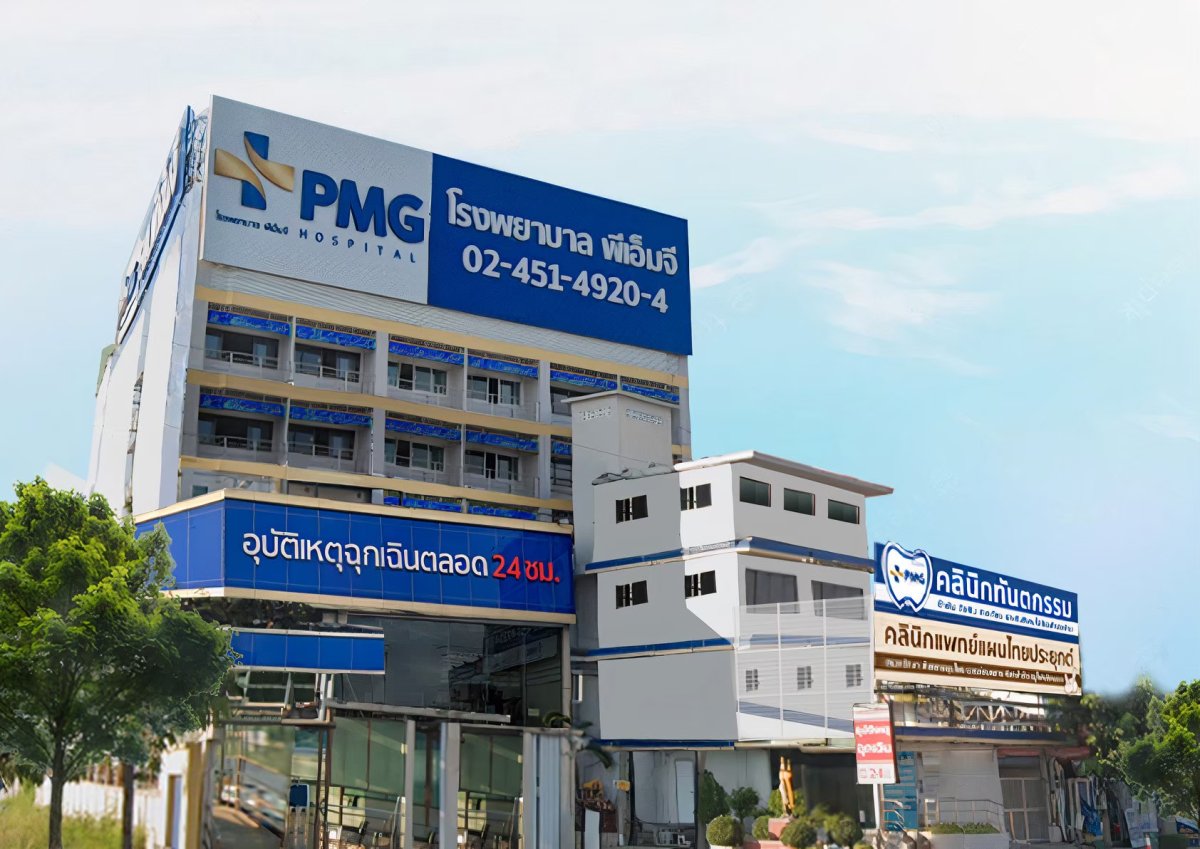
Hospital PMG
4.65 reseñas
Precio a consultar
Más información
Bumrungrad International Hospital
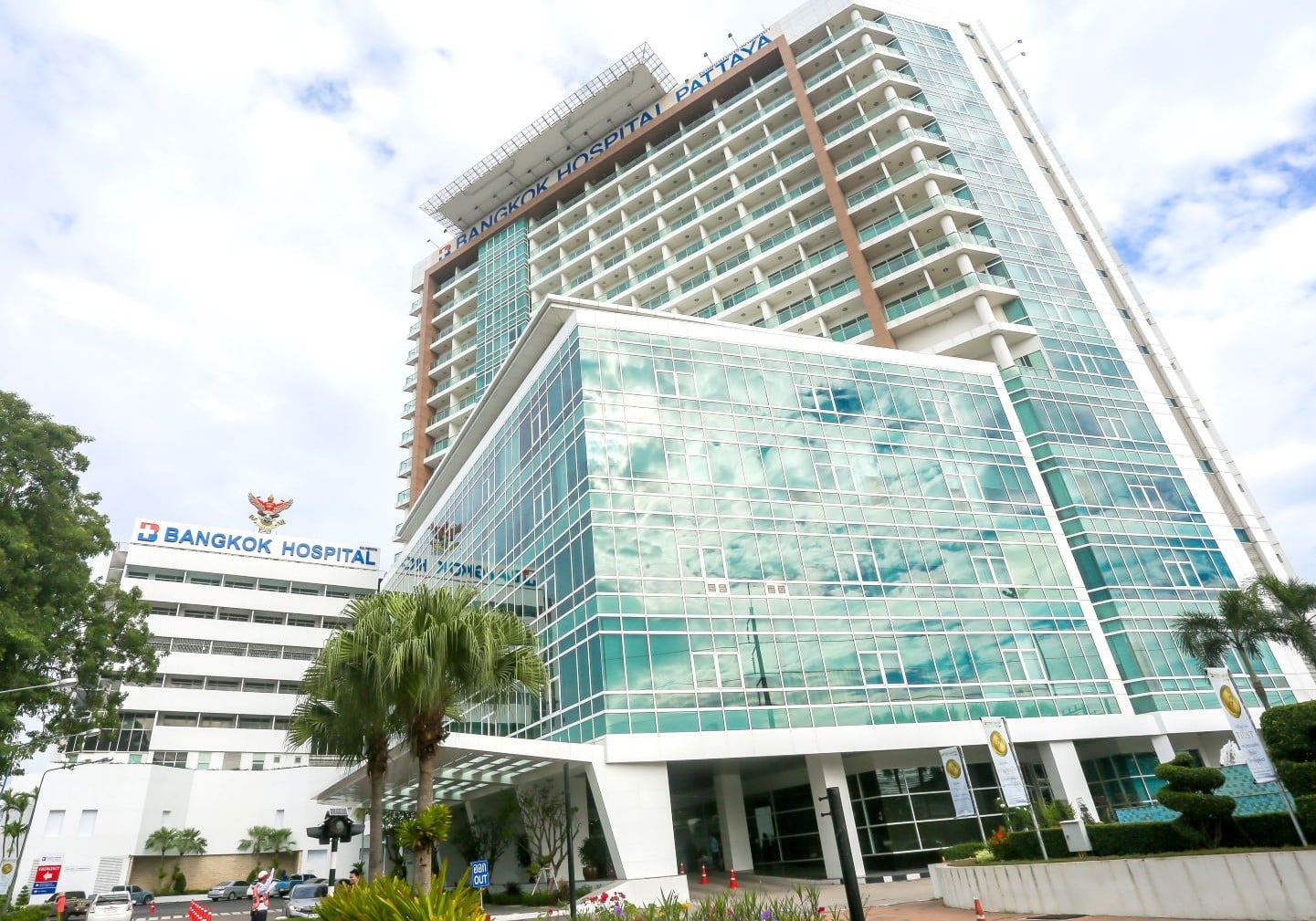
Bangkok Hospital Pattaya
4.05 reseñas
Precio a consultar
Más información
Sikarin Hospital
4.17 reseñas
Precio a consultar
Más información
Ha visto 5 de 19 clínicas

Los mejores centros médicos de Cirugía de la columna en Tailandia

  • Hospital Ortopédico Especializado KDMS, Tailandia
  • Hospital PMG, Tailandia
  • Bumrungrad International Hospital, Tailandia
  • Bangkok Hospital Pattaya, Tailandia
  • Sikarin Hospital, Tailandia

Obtenga una evaluación médica de Cirugía de la columna en Tailandia: haga una consulta con 15 médicos experimentados ahora

Ver todos los médicos
verificado

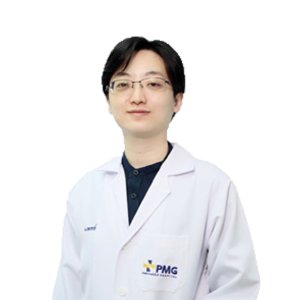
Thanaphat Pomyukon

11 años de experiencia

El Dr. Thanaphat Pomyukon es cirujano general (ศัลยแพทย์ทั่วไป). Licencia médica tailandesa n.º ว.50550. Obtuvo su título de médico (M.D.) en la Facultad de Medicina de la Universidad de Chulalongkorn. También posee el Diploma de la Junta Tailandesa de Cirugía General, obtenido en el Hospital Roi Et del Ministerio de Salud Pública.

Su enfoque clínico incluye hernias y hemorroides. También trata bultos mamarios y cálculos biliares. Atiende enfermedades del aparato digestivo. Realiza endoscopia gastrointestinal, incluida la gastroscopia y la colonoscopia.

Idiomas: tailandés (principal) e inglés (nivel clínico profesional).

verificado

Yosawat Tangtrongchit

11 años de experiencia

El Dr. Yosawat Tangtrongchit es cirujano ortopédico. Tiene subespecialidad en cirugía de columna.

Obtuvo el título de Doctor en Medicina (MD) en la Facultad de Medicina del Hospital Siriraj, Universidad Mahidol (2002–2008). Posee el diploma de la Junta Tailandesa de Cirugía Ortopédica, obtenido en el Hospital Phramongkutklao (2011–2015). Completó una beca clínica en cirugía de columna en el Hospital Conmemorativo King Chulalongkorn (2024–2025).

verificado

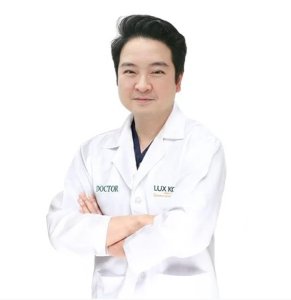
Dr Koravee Wirojskoolchai

12 años de experiencia

El Dr. Koravee Wirojskoolchai obtuvo su título de Médico (MD) en la Universidad de Rangsit, Tailandia. Está certificado en Cirugía General por el Hospital Somdech Phra Pinklao, del Departamento Médico de la Armada Real de Tailandia. También cuenta con certificación en medicina antienvejecimiento o nutricional (institución no especificada).

Su formación incluye Estándares Internacionales de Servicios de Salud y Gestión Hospitalaria (estándares JCI) en la Escuela de Posgrado de la Universidad de Rangsit. Asistió al seminario de terapia de quelación de la Asociación Médica Tailandesa de Quelación. También participó en “El médico de TI de nueva generación para el desarrollo hospitalario” de la Asociación Tailandesa de Informática Médica.

verificado

Natthaphon Srithurawanit

11 años de experiencia

Dr. Natthaphon Srithurawanit is a regenerative medicine specialist at Mali Interdisciplinary Hospital in Bangkok. He integrates conventional and precision medicine to treat chronic non-communicable diseases. Dr. Srithurawanit focuses on reducing healing times through restorative techniques at a GHA-accredited facility.

  • Performs stem cell therapy for tissue repair and anti-aging rejuvenation.
  • Conducts aesthetic procedures including PRP therapy, Botox, and laser treatments.
  • Provides precision medical screenings including basic and premium health check-ups.
  • Works at an AACI-accredited hospital serving 50,000 international patients annually.

Compartir contenido

Historias en video de pacientes de Bookimed

Dayana
Combiné mis vacaciones en Antalya con un chequeo médico.
Procedimiento: Chequeo femenino
Igor
¡Fue genial! Traslados, alojamiento, tratamiento, todo incluido.
Procedimiento: Implante dental
Clínica: WestDent Clinic
Marina
Bookimed se encargó de todo. No tuve que preocuparme por nada.
Procedimiento: Chequeo femenino
Actualizado: 02/27/2026
Escrito por
Olena Sikoza
Olena Sikoza
Сopywriter en español
Copywriter médica certificada responsable del contenido en español de Bookimed. Más de 7 años de experiencia en redacción sobre salud y turismo médico, con formación académica en edición científica y desarrollo de contenidos.
Fahad Mawlood
Editor médico y Científico de datos
Médico general. Ganador de 4 premios científicos. Sirvió en Asia Occidental. Es el ex jefe del equipo médico que soporta a pacientes de habla árabe. Ahora es responsable del procesamiento de datos y la precisión del contenido médico.
Fahad Mawlood Linkedin
Esta página puede incluir información relacionada con diversas afecciones médicas, tratamientos y servicios de salud disponibles en diferentes países. Tenga en cuenta que el contenido se proporciona sólo con fines informativos y no debe interpretarse como asesoramiento médico o orientación. Por favor consulte con su médico o con un profesional médico calificado antes de comenzar o cambiar el tratamiento médico.

Descargo de responsabilidad médica: Este artículo es solo con fines informativos y no constituye asesoramiento médico. Consulte siempre con un proveedor de atención médica calificado antes de tomar decisiones médicas. Los resultados pueden variar. Lea el descargo de responsabilidad completo

What to Know About Surgical Solutions for Spine Conditions

faq image

Designed by Freepik

Spinal surgery is a specialized field focused on treating conditions that affect the spinal column — including herniated discs, spinal stenosis, scoliosis, fractures, and spinal tumors. 

The main goal is to relieve pressure on nerves, restore stability, and reduce chronic back or neck pain when non-surgical treatments no longer help.

👉 In simple terms, the spine acts like a tall, flexible tower of bones protecting the body’s nerve highway — the spinal cord. When one “floor” of this tower collapses or presses on a nerve, surgery restores its shape and balance, so the system can move smoothly again.

Over the past 2 decades, spine surgery has evolved from open procedures with large incisions to minimally invasive and robotic-assisted techniques, allowing surgeons to reach problem areas through small openings with minimal tissue damage.

Is Back Surgery Right for Everyone?

Before recommending spinal surgery, Thai doctors carry out detailed neurological and imaging assessments to ensure the procedure is both safe and beneficial. 

❗Surgery is usually the last step when medications, physiotherapy, or injections no longer relieve pain or restore mobility.

✅ Most suitable candidates

People who typically benefit from spine surgery in Thailand include those who:

  • Have persistent back or neck pain that lasts more than 3–6 months despite non-surgical treatments.

  • Experience nerve compression symptoms — such as numbness, tingling, or weakness in the arms or legs.

  • Have degenerative conditions (herniated discs, spinal stenosis, spondylolisthesis) confirmed by MRI or CT scans.

  • Suffer from spinal deformities such as scoliosis or kyphosis that affect posture or breathing.

  • Have sustained spinal fractures or instability after trauma.

  • Are generally healthy enough for anesthesia and rehabilitation.

🚫 When surgery may not be advised

Spinal surgery might not be suitable for patients who:

  • Have mild pain that can still be managed through physiotherapy or medication.

  • Show widespread arthritis or osteoporosis that could compromise bone healing.

  • Have active infections, severe obesity, or uncontrolled diabetes increasing surgical risk.

  • Present severe cardiovascular or respiratory disease, making anesthesia unsafe.

  • Expect unrealistic results or cannot commit to the required rehabilitation program.

Pre-surgery evaluation

✅The best spine surgery specialists in Thailand conduct a full diagnostic workup — including MRI, X-ray, blood tests, and sometimes electromyography — before confirming candidacy. This ensures that every patient receives the most appropriate and minimally invasive treatment option possible.

Why Choose Thailand for Spine Surgery?

faq image

Designed by Freepik

Thailand has become one of Asia’s most trusted destinations for spinal surgery, attracting patients from Australia, the Middle East, and Europe who seek world-class care at a reasonable price. Patients searching for the best spine surgery hospital in Thailand will find several internationally accredited centers that specialize in advanced spinal care. 

💡The country’s medical tourism sector exceeded several hundred million USD in 2024 and continues to grow steadily toward 2030, supported by strong government investment and modern hospital infrastructure.

High international standards

Thailand leads Asia with over 60 Joint Commission International (JCI)–accredited hospitals, ensuring global benchmarks in patient safety, hygiene, and surgical quality. 

✅ Private hospitals in Bangkok and Phuket follow the same operating protocols used in the U.S. and Europe, with 24-hour intensive care units and advanced diagnostic imaging.

Highly trained spine specialists

Thai orthopedic and neurosurgical spine surgeons are licensed by the Medical Council of Thailand and often trained at global centers in the U.K., Japan, or the U.S.

Many hold memberships in the Asia Pacific Spine Society (APSS), American Academy of Orthopaedic Surgeons (AAOS), or AO Spine International (AOSpine) — ensuring continuous education and experience with complex cases such as scoliosis correction or revision spine surgery.

Advanced technology and equipment

Spine surgery hospitals in Thailand use robotic and navigation-guided systems (MAZOR, ROSA), intraoperative CT scanners, and real-time neuro-monitoring to protect nerves and improve precision.

High-quality implants from Zimmer Biomet, Medtronic, and Stryker are widely available, allowing custom solutions for each patient.

Short waiting times and smooth coordination

Unlike many Western systems, where patients wait weeks or months for surgery, in Thailand procedures can be scheduled within 7–14 days after preoperative evaluation.

Affordable spine surgery cost in Thailand

faq image

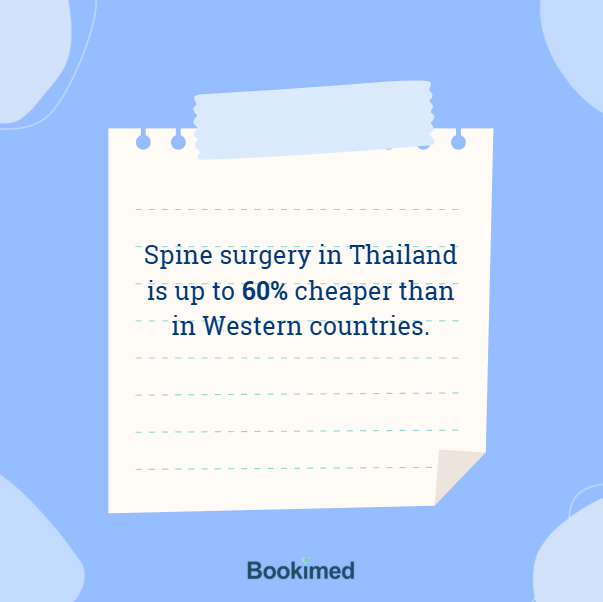
The spine surgery cost in Thailand generally ranges from $8,000 to $18,000, depending on the procedure and technology used, up to 60% cheaper than in the U.S. or Australia.

💚 Packages usually include consultations, surgery, hospital stay, and follow-up appointments.

Recovery in a healing environment

Patients recover comfortably in private, hotel-standard hospital rooms or nearby resorts. Rehabilitation centers in Phuket, Chiang Mai, and Bangkok provide personalized physiotherapy programs to speed recovery and reduce pain in a calm, tropical environment.

💚 Through Bookimed, patients can compare verified spine surgery hospitals, read real reviews, and access exclusive package discounts — often lower than direct clinic prices.

What’s Covered in Spinal Treatment Packages at Thai Clinics

Spine surgery packages in Thailand are structured to make treatment smooth for international patients — from diagnosis to recovery. 

💡While most major hospitals include core services, some add-ons like robotic assistance or extended rehabilitation may vary.

Most Likely Included Must Be Confirmed
Preoperative diagnostics — MRI, CT, X-ray, blood tests, ECG. 3D CT navigation or intraoperative neuro-monitoring availability.
Consultation with the spine surgeon and anesthesiologist. Additional specialist opinions (neurologist, cardiologist).
Surgery under general anesthesia (minimally invasive or open). Robotic or laser-assisted technique surcharge.
Hospital stay (usually 3–7 days, including meals and nursing care). ICU services, private suite upgrades, or prolonged hospitalization.
Use of a standard spinal implant or fixation system. Specific implant brand — Zimmer Biomet, Medtronic, or Stryker.
Medications and pain management during hospital stay. Take-home medicines or long-term prescriptions.
Two postoperative check-ups before discharge. Remote or tele-follow-up after returning home.
Basic physiotherapy and mobility training. Extended rehabilitation or hydrotherapy sessions.
Airport–hospital transfers. Hotel accommodation, city transfers, and recovery assistance.
English-speaking international coordinator. Translators for other languages (available through Bookimed).

💚 Booking through Bookimed gives access to verified partner hospitals offering discounted spine surgery packages, transparent quotes, and personal coordination throughout your medical trip.

Common Back Operations Available at Thai Medical Centers

The country offers a complete range of spinal procedures — from minimally invasive decompression to advanced correction and tumor treatment.

💡Modern hospitals in Bangkok, Phuket, and Chiang Mai use navigation-guided and robotic systems (MAZOR, ROSA) to improve precision and safety, while certified spine surgeons combine neurosurgical and orthopedic expertise.

Hospitals such as those in Bangkok and Phuket are recognized among the best spine surgery hospitals in Thailand, equipped for laser spine surgery procedures and other minimally invasive options.

Clinical research confirms that outcomes in Thailand match global standards. An extensive analysis of minimally invasive spine surgery (MISS) reported fusion success in over 80–98% of patients, with faster recovery and shorter hospital stays — typically 2–4 days less than with open methods.

Other studies show that spinal decompression for lumbar stenosis provides 70–80% pain relief within the first month, while scoliosis correction surgery achieves about 78% curve correction that remains stable for years.

Type of Procedure Purpose / Description Typical Recovery
Minimally Invasive Spine Surgery (MISS) Performed through small incisions using tubular retractors to reduce tissue trauma and blood loss. Common for herniated discs and spinal stenosis. 1–3 days in hospital; return to light activity in 2–4 weeks.
Spinal Decompression Surgery Relieves nerve compression by removing bone or disc fragments (laminectomy or microdiscectomy). 2–5 days in hospital; functional recovery in 3–6 weeks.
Surgical Treatment of Scoliosis Corrects abnormal spinal curvature using rods, screws, and bone grafts for improved alignment and posture. 5–7 days in hospital; full recovery in 6–12 months.
Surgical Treatment of Radiculopathy Removes the source of nerve root compression, easing pain, numbness, or weakness in limbs. 2–4 days in hospital; symptom relief often within days.
Vertebroplasty / Kyphoplasty Stabilizes vertebral fractures caused by osteoporosis or tumors by injecting medical-grade bone cement. Usually outpatient or 1-day stay; pain relief within 24 hours.
Surgery for Syringomyelia Decompresses or drains fluid-filled cysts (syrinx) in the spinal cord to prevent neurological decline. 4–7 days in hospital; follow-up MRI after 3 months.
Spine Tumor Embolization / Resection Reduces tumor blood flow before removal or directly removes spinal tumors to relieve compression and pain. 5–10 days in hospital, depending on tumor type and size.
Spinal Fusion or Disc Replacement Stabilizes or replaces damaged vertebrae/discs with bone grafts or artificial implants. Common for degenerative conditions or instability. 4–6 days in hospital; recovery in 2–3 months.

💡 In Thailand, spine surgeries are performed under strict international safety standards, and postoperative physiotherapy is included in most rehabilitation programs to help patients regain stability and mobility faster.

The Spine Surgery Procedure in Thailand

Spinal surgery in Thailand takes place in internationally accredited hospitals that combine advanced technology with multidisciplinary spine care. 

Stage What Happens
1. Preoperative evaluation MRI, CT, and blood tests help identify spinal disorders such as spinal stenosis, scoliosis, or spinal tumors. Surgeons develop a tailored plan to restore spinal stability and relieve chronic back or neck pain.
2. Anesthesia and positioning General anesthesia is administered. The patient is carefully positioned to allow full access to the affected spinal segment while minimizing tissue pressure — crucial for minimally invasive and endoscopic procedures.
3. Surgical access Small incisions are made for endoscopic spine surgery or transforaminal/anterior lumbar interbody fusion. Standard approaches are used for deformity correction or tumor removal.
4. Core treatment
  • Spine decompression – removes bone or disc material to reduce nerve compression.
  • Spinal fusion – stabilizes vertebrae with bone grafts and metal screws.
  • Surgery for syringomyelia – restores cerebrospinal fluid flow in the spinal canal.
  • Spine tumor embolization – limits tumor blood supply before or during excision.
5. Implant placement High-quality implants from Zimmer Biomet, Medtronic, and Stryker are used to reinforce the spine and restore balance.
6. Closure and recovery monitoring The incision is closed with absorbable sutures. Patients are monitored in specialized recovery or intensive-care units to manage postoperative pain and track neurological function.

Most spine surgery in Thailand lasts 2–5 hours, depending on the complexity.

💚 Through Bookimed, international patients can compare verified clinics, access transparent spine surgery cost in Thailand packages, and receive support throughout treatment and recovery.

Rehabilitation Journey After a Spinal Operation in Thai Hospitals

Recovery is designed to help patients regain mobility quickly and safely. Multidisciplinary teams of spine surgeons, physiotherapists, and pain specialists guide every stage of healing, focusing on reducing pain and restoring function.

Rehabilitation usually starts within 24–48 hours. For minimally invasive spine surgery, the hospital stay is shorter and mobility returns faster compared with traditional open procedures.

Recovery Stage Typical Progress
Day 1–2 Begin gentle movement and assisted walking. Pain managed with medication.
Days 3–5 Discharge with a personalized physical therapy plan and movement precautions.
Week 1–2 Swelling and stiffness lessen; daily stretching and walking encouraged.
Week 4–6 Most patients return to normal routines and light work.
Month 3–6 Full recovery achieved; follow-up (online or in person) confirms spinal stability.

Many hospitals also provide hydrotherapy, muscle-strengthening sessions, and posture correction to support long-term spinal health.

💚 Patients booking through Bookimed can access structured rehabilitation packages, including physiotherapy and follow-up care, at verified hospitals offering international-standard spine treatment.

Are Spine Surgeries in Thailand Safe? 

Spine procedures in Thailand are performed under strict surgical and hygiene protocols comparable to those in Western countries. Operating rooms use real-time imaging, neuro-monitoring, and air-filtration systems to maintain precision and sterility throughout the operation.

Clinical data from long-term follow-ups in Thai hospitals show a 95–98% success rate for spinal fusion and decompression surgeries, with most patients reporting significant pain reduction and restored mobility.

faq image

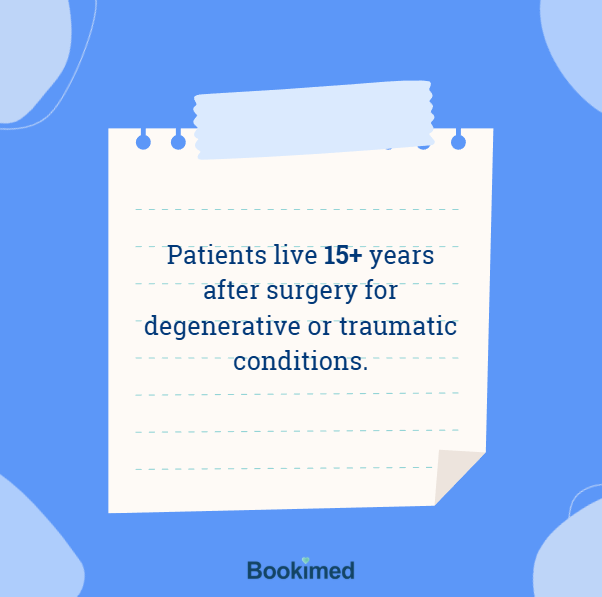
👉Spine surgery for degenerative or traumatic conditions is very safe, with most patients living at least 15 years after the procedure 

Complications are rare but can include:

  • Minor wound infection or bleeding;

  • Short-term numbness or nerve irritation;

  • Implant loosening or revision spine surgery in complex cases.

Thai spine surgeons continuously update their methods through international fellowships and training programs in the U.S., Japan, and Europe — ensuring up-to-date expertise and safe recovery for patients.

💚 Verified hospitals partnered with Bookimed share transparent outcome data and provide dedicated postoperative support for medical tourists seeking advanced spine care in Thailand.

References

  • Thailand Medical Tourism Market Size | Industry Report 2030. Market Research Reports & Consulting | Grand View Research, Inc. URL: https://www.grandviewresearch.com/industry-analysis/thailand-medical-tourism-market-report (date of access: 07.11.2025).
  • 1. Incidence of spine surgery for degenerative and traumatic pathologies in patients with a history of cancer: a nationwide register-based study between 1997 and 2020 from Finland / L. A. Toivonen et al. Acta Orthopaedica. 2025. Vol. 96. P. 506–511. URL: https://doi.org/10.2340/17453674.2025.44247 (date of access: 11.11.2025).
  • Strategies for Optimizing Clinical Outcomes in Minimally Invasive Spine Surgery / C. A. Ikwuegbuenyi et al. Neurosurgery. 2025. Vol. 96, no. 3S. P. S139–S147. URL: https://doi.org/10.1227/neu.0000000000003331 (date of access: 11.11.2025).
  • Tsitsani P., Katsaras G., Soteriades E. S. Barriers to and Facilitators of Providing Care for Adolescents Suffering from Rare Diseases: A Mixed Systematic Review. Pediatric Reports. 2023. Vol. 15, no. 3. P. 462–482. URL: https://doi.org/10.3390/pediatric15030043 (date of access: 11.11.2025).

Preguntas frecuentes sobre Cirugía de la columna en Tailandia

Estas preguntas frecuentes provienen de pacientes reales que buscan atención médica a través de Bookimed. Las respuestas son proporcionadas por coordinadores médicos experimentados y representantes autorizados de las clínicas.

¿Está disponible la cirugía de columna mínimamente invasiva en Tailandia?

La cirugía de columna mínimamente invasiva está ampliamente disponible en Tailandia en instalaciones acreditadas por la JCI. Los cirujanos realizan procedimientos avanzados como la discectomía endoscópica y la fusión asistida por robot. Estas técnicas utilizan pequeñas incisiones para reducir el daño tisular. La mayoría de los pacientes experimentan tiempos de recuperación más rápidos de 1 a 2 semanas en comparación con la cirugía tradicional.

  • Técnicas disponibles: La cirugía endoscópica de columna, MIS TLIF, LLIF y la fijación percutánea con tornillos son comunes.
  • Diagnóstico avanzado: Las clínicas ofrecen resonancias magnéticas de columna y tomografías computarizadas para una planificación precisa.
  • Experiencia especializada: Los cirujanos a menudo poseen becas de instituciones líderes en EE. UU. y Corea del Sur.
  • Cronograma de recuperación: Las estancias postoperatorias típicas duran 2 semanas para una rehabilitación y monitoreo completos.

Perspectiva del experto de Bookimed: Los datos de hospitales de Bangkok como el KDMS Specialized Orthopedic Hospital muestran un cambio hacia la hiperespecialización. Las clínicas mejor calificadas a menudo dedican pisos enteros a patologías específicas de la columna en lugar de a la ortopedia general. Esta concentración de equipos y personal especializado ayuda a los cirujanos a mantener altos volúmenes de procedimientos para casos complejos de MIS.

Consenso de los pacientes: Los pacientes enfatizan la importancia de que las imágenes preoperatorias sean revisadas por múltiples especialistas. Señalan que verificar la experiencia de un cirujano con más de 200 casos de MIS al año conduce a resultados más predecibles.

¿Cuánto tiempo debo permanecer en Tailandia después de la cirugía de columna?

La mayoría de los pacientes deben permanecer en Tailandia de 7 a 21 días después de una cirugía de columna. La duración exacta depende del tipo de procedimiento y del progreso de la recuperación. Los cirujanos en instalaciones acreditadas por JCI, como el Hospital Internacional Bumrungrad, requieren este margen de tiempo para monitorear complicaciones y asegurar la seguridad durante el vuelo.

  • Estancia hospitalaria: Espere de 1 a 7 días de atención como paciente internado, dependiendo de la complejidad quirúrgica.
  • Período de recuperación: La recuperación local normalmente dura de 7 a 10 días después del alta hospitalaria.
  • Procedimientos de fusión: Los casos de fusión espinal a menudo requieren de 14 a 21 días antes de viajes de larga distancia.
  • Retiro de suturas: Los cirujanos usualmente retiran los puntos y proporcionan autorización para viajar alrededor del día 14.

Perspectiva del Experto Bookimed: Los datos muestran que elegir una instalación dedicada, como el Hospital Ortopédico Especializado KDMS, puede agilizar la recuperación. Estos centros especializados a menudo tienen un mayor volumen de pacientes ortopédicos que los hospitales generales. Este enfoque conduce a protocolos postoperatorios más eficientes. Los pacientes deben verificar si su paquete incluye traslados locales para revisiones de las heridas. Este pequeño detalle reduce significativamente el esfuerzo físico durante las primeras dos semanas críticas.

Consenso del Paciente: Los pacientes enfatizan la importancia de reservar un alojamiento flexible cerca del hospital para facilitar el acceso a los controles diarios de las heridas. Muchos sugieren añadir de 3 a 5 días adicionales a su estancia para permitir hinchazones imprevistas antes de volar a casa.

¿Es seguro volar a casa poco después de una cirugía de columna?

Volver a casa en avión poco después de una cirugía de columna suele ser seguro si sigue tiempos clínicos específicos. La mayoría de los cirujanos en Tailandia recomiendan esperar de 4 a 6 semanas para viajes internacionales. Este período permite la curación inicial y reduce riesgos como la trombosis venosa profunda (TVP) o los episodios graves de dolor.

  • Plazo de viaje: Para vuelos de largo recorrido, los pacientes generalmente necesitan 4–6 semanas de recuperación antes de abordar.
  • Seguridad ante coágulos sanguíneos: Utilice medias de compresión y muévase cada hora para prevenir la trombosis venosa profunda.
  • Tipo de cirugía: Los pacientes de fusión a menudo requieren períodos de estabilización más largos que aquellos que se someten a una simple discectomía.
  • Supervisión clínica: Centros acreditados por JCI como el Hospital Internacional Bumrungrad proporcionan protocolos detallados de autorización postoperatoria para viajar.

Perspectiva de Expertos de Bookimed: Los hospitales ortopédicos en Tailandia, como KDMS Specialized Orthopedic Hospital, se enfocan exclusivamente en condiciones óseas y articulares. Esta especialización frecuentemente resulta en ventanas de viaje más conservadoras y centradas en la seguridad. Nuestros datos muestran que clínicas con alto volumen internacional, como Sikarin Hospital, a menudo incluyen monitoreo postoperatorio especializado para asegurar que los pacientes cumplen con los criterios para volar de manera segura.

Opinión de los Pacientes: Los pacientes enfatizan que los cambios en la presión de la cabina pueden causar hinchazón inesperada y molestias en la espalda. Muchos viajeros sugieren reservar asientos en el pasillo para facilitar el levantarse y estirarse durante los vuelos largos a casa.

Are Thai spine surgeons qualified to treat complex cases?

Thai spine surgeons are highly qualified for complex cases. They often hold fellowships from prestigious institutions like Yale or UCLA. Specialists in Bangkok treat intricate conditions such as scoliosis and paediatric spinal deformities. They use robotic-assisted and endoscopic technologies. Many facilities maintain JCI or AACI accreditation to meet international safety standards.

  • Specialised training: Surgeons like Dr Rattalerk Arunakul completed spinal fellowships at Yale and UC San Diego.
  • Clinical volume: Bumrungrad International Hospital treats 1,000,000 patients annually, with 50% arriving from overseas.
  • Advanced technology: Clinics like KDMS use robotic-assisted and computer-navigated systems for precise complex fusions.
  • Inpatient support: Accredited hospitals provide on-site MRI, CT scans, and specialised rehabilitation for spinal recovery.

Bookimed Expert Insight: Our data shows a trend where patient satisfaction for complex cases is highest at dedicated orthopaedic hospitals like KDMS. Unlike general private hospitals, these centres focus entirely on musculoskeletal health. They often have on-site imaging and specialised co-treatment spaces. This speeds up the transition from diagnosis to surgery.

Patient Consensus: For complex spinal disorders in Thailand, patients note it is important to choose specialists with US training. They find top-tier institutions provide more thorough examinations. They also offer options like endoscopic surgery before suggesting extensive fusions.

What is the success rate of spine surgery in Thailand?

Spine surgery in Thailand shows success rates between 80% and 90% for common procedures like microdiscectomy. Leading JCI-accredited facilities in Bangkok report up to 100% accuracy for targeted robotic-assisted surgeries. These outcomes are supported by internationally trained specialists and diagnostic imaging.

  • Surgical accuracy: Top institutes reported 100% accuracy for specific automated procedures in 2021.
  • Microdiscectomy outcomes: Patient data shows over 80% of individuals achieve good to excellent results.
  • Clinical expertise: Surgeons like Dr Gun Keorochana at KDMS have completed fellowships at UCLA.
  • Accreditation standards: Facilities including Bumrungrad International Hospital maintain JCI and GHA global certifications.

Bookimed Expert Insight: Thai spine centres often operate as specialised hubs. KDMS Specialized Orthopedic Hospital focuses solely on musculoskeletal cases. This high concentration of spinal specialists allows for faster same-day diagnostics. On-site MRI and CT scans make this possible. Such efficiency often leads to more precise treatment plans compared to general hospitals.

Patient Consensus: Patients in Thailand often report being pain-free within two days of microdiscectomy surgery. Many note that surgical precision is high. However, success depends on following a robust recovery plan and exhausting physiotherapy options first.

What are the top hospitals for spine surgery in Thailand?

Thailand is a premier destination for spinal surgery. It features high-volume centres such as Bumrungrad International Hospital and KDMS Specialized Orthopedic Hospital. These JCI-accredited facilities specialise in minimally invasive techniques. Surgeons there use robotic assistants and endoscopic tools. They treat complex herniated discs and scoliosis.

  • Bumrungrad International Hospital: Features a dedicated Spine Institute with 150+ interpreters for international patients.
  • KDMS Specialized Orthopedic Hospital: Operates as Thailand's first dedicated orthopaedic-only hospital using robotic assistants.
  • Bangkok Hospital Pattaya: Holds JCI and Temos accreditations with 40% international patient volume.
  • Sikarin Hospital: Provides JCI-accredited care and offers free airport transfers for overseas arrivals.

Bookimed Expert Insight: KDMS Specialized Orthopedic Hospital offers a distinct speed advantage by housing all diagnostics in-house. Patients can complete X-rays, MRI scans, and specialist consultations in just a few hours. This efficiency helps international visitors who need to confirm a surgical plan quickly.

Patient Consensus: Patients say: choose a specific surgeon with international training rather than just a hospital brand. Australians find the facilities excellent. They appreciate that family members can often stay overnight in the hospital rooms.

How long should I stay in Thailand for recovery after spinal surgery?

Patients should plan to stay in Thailand for 10 to 21 days after spinal surgery. The timeframe depends on the procedure complexity. Minimally invasive surgeries require 7 to 10 days locally. Extensive procedures like spinal fusion often require 14 to 21 days before long-haul travel.

  • Hospital discharge: Inpatient care usually lasts 1 to 7 days before moving to local accommodation.
  • Suture removal: Surgeons typically remove stitches and provide final flight clearance around day 14.
  • Initial recovery: The first 3 to 10 days involve the highest post-operative pain levels.
  • Follow-up care: Staying locally allows for wound checks and monitoring before the flight home.

Bookimed Expert Insight: Facilities like KDMS Specialized Orthopedic Hospital are dedicated solely to orthopaedics and hold AACI accreditation. Data shows these specialised centres often provide integrated rehabilitation spaces. This focus helps patients reach walking milestones faster during their initial 2-week stay in Bangkok.

Patient Consensus: Patients report that staying 14 days in Thailand is essential. This time allows them to manage pain and learn to walk safely. They emphasise bringing recovery aids like grabbers and wedge pillows. These help during those first critical weeks in local accommodation.

Can I get a second opinion from a Thai spine surgeon before travelling?

Patients can obtain a second opinion from Thai spine surgeons through remote consultations. Leading facilities like Bumrungrad International Hospital and KDMS Specialized Orthopedic Hospital offer specialised reviews of MRI and CT scans. Surgeons such as Dr Rattalerk Arunakul provide detailed treatment plans before patients travel to Bangkok.

  • Expert review: Specialists like Dr Gun Keorochana review MRI imaging and reports remotely.
  • Doctor credentials: Many surgeons hold fellowships from prestigious institutions like Yale and UCLA.
  • Specialised centres: KDMS is Thailand's first dedicated orthopaedic hospital with AACI accreditation.
  • JCI accreditation: Major centres like Bumrungrad and Sikarin meet international patient safety standards.

Bookimed Expert Insight: Thai spine specialists often use remote consultations to determine if surgery is actually necessary. Doctors at KDMS and Bumrungrad frequently recommend minimally invasive alternatives like endoscopic discectomy after reviewing images. This process can save patients from unnecessary procedures. It also significantly reduces their overall travel and recovery time.

Patient Consensus: Patients in Thailand recommend getting a second opinion. This can verify whether surgery is truly the last resort. They advise bringing clear imaging. This helps compare surgical plans with non-operative options such as physiotherapy or pain management.

Todo el contenido médico de esta página está elaborado por autores con formación médica especializada y revisado por médicos certificados en el campo correspondiente. Revisión médica por Fahad Mawlood, Editor médico y Científico de datos.

Última actualización: July, 2026.

  • Estadísticas: Las cifras se basan en la base de datos interna de Bookimed de July 2026, que incluye el análisis de solicitudes de 12,450 pacientes en 19 clínicas acreditadas en Tailandia.
  • Precios: La información sobre los costes es proporcionada directamente por las clínicas asociadas de Bookimed y se actualiza regularmente para reflejar las condiciones actuales del mercado en 2026. Los gastos reales pueden variar según la complejidad del caso, la experiencia del cirujano y la ubicación de la clínica.
  • Datos clínicos: Los resultados de los tratamientos y los índices de satisfacción de los pacientes se recopilan de la base de datos verificada de clínicas de Bookimed y se respaldan con datos de fuentes médicas revisadas por pares como PubMed, The Lancet, JAMA y NEJM (2023–2026).

Todos los datos se proporcionan sólo con fines informativos generales y pueden no reflejar resultados o experiencias individuales.

Pedir una consulta gratis

Seleccione la mejor manera de contactarle