Dunyagoz Eye Hospital Istanbul Altunizade
Turquía, Estambul
Hamdi Er
29 años de experiencia

Clínica certificada por : 



Revisado médicamente por
Fahad Mawlood
De $800. Los gastos totales dependen de la técnica utilizada, la tecnología especializada de la clínica y la experiencia del cirujano. Los pacientes a menudo encuentran ahorros del 50-77% en comparación con los EE. UU. Estambul y Antalya siguen siendo las principales ciudades para estos procedimientos.
Costos típicos del tratamiento del glaucoma en Turquía
Perspectiva del experto de Bookimed: Los casos complejos que requieren experiencia quirúrgica avanzada son mejor tratados por profesores con becas internacionales. El Dr. Osman Sevki Arslan en el Hospital Istanbul Florence Nightingale ofrece experiencia especializada en MIGS e implantes seton. Para los pacientes que buscan entornos clínicos de gran volumen, el Hospital Oftalmológico Dunyagoz Istanbul Etiler trata a 66,000 pacientes al año. Las instalaciones acreditadas por la JCI, como el Hospital Intercontinental Hisar, brindan seguridad y valor combinados para los pacientes internacionales.
| España | Turquía | México | |
|---|---|---|---|
| Trabeculotomía | de $5,600 | de $2,100 | ≈ $2,600 |
| Trabeculoplastia láser | de $2,800 | de $800 | ≈ $600 |





El doctor es un especialista en enfermedades oculares muy respetado con un enfoque en la oftalmología. Con una sólida base académica, el doctor ha completado becas en instituciones prestigiosas, incluyendo Moorfields Eye Hospital, University of California San Diego, Baylor College of Medicine y Doheny Eye Institute. <\/p>
El doctor es miembro activo de varias sociedades profesionales, como la Sociedad Turca de Oftalmología, la Sociedad Americana de Especialistas en Retina, la Acad

El Dr. Muhammet Derda Ozer es profesor asociado y oftalmólogo en su clínica acreditada por la JCI en Estambul. Completó una subespecialización en vítreo-retina en la Facultad de Medicina de la Universidad de Kansas. El Dr. Ozer ha realizado más de 25,000 procedimientos quirúrgicos durante su práctica clínica. Posee el certificado de Examen Avanzado del Consejo Internacional de Oftalmología.
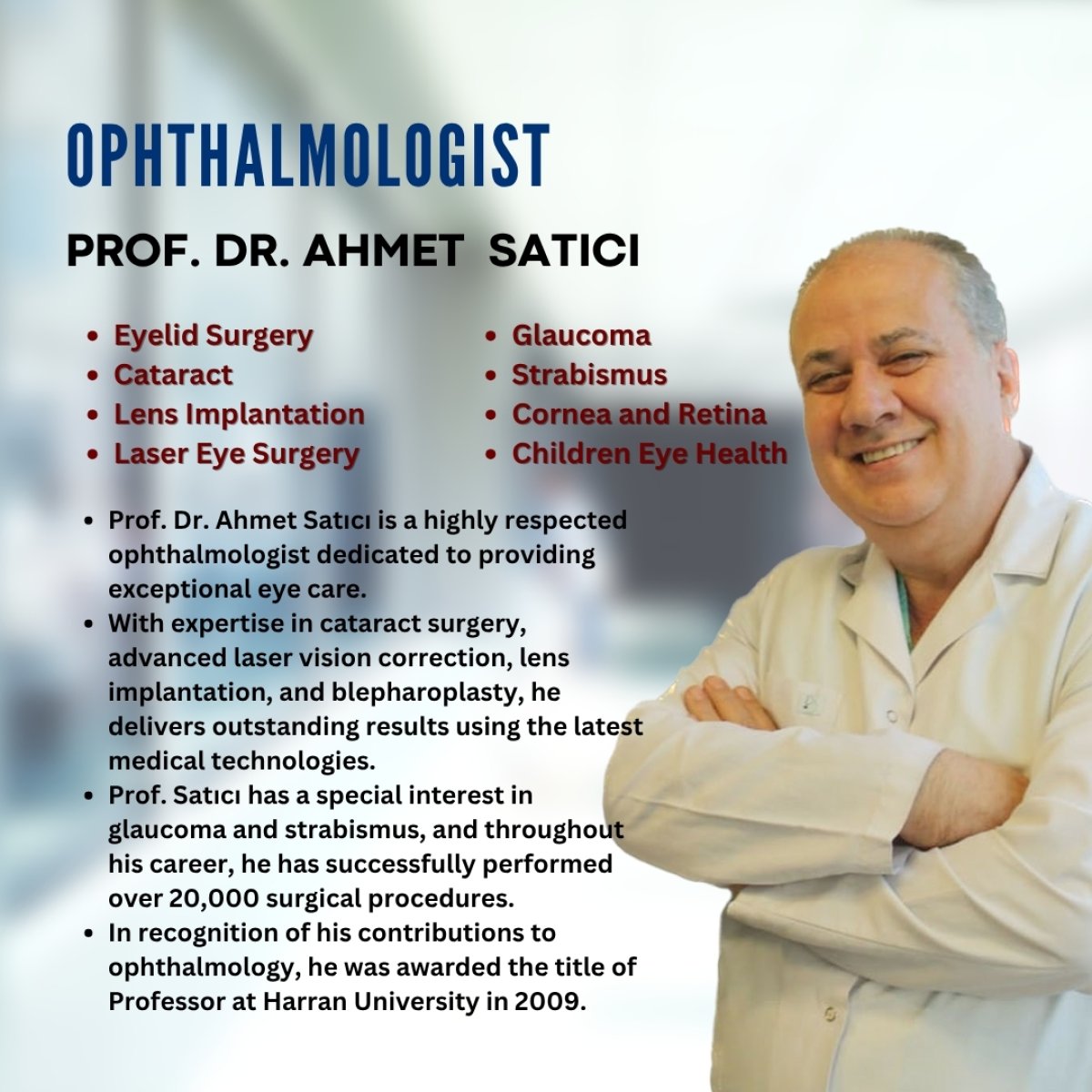
El Prof. Dr. Ahmet Satici ha realizado más de 20.000 cirugías oculares; es uno de los especialistas en glaucoma con más experiencia de Turquía.

El doctor es especialista en enfermedades oculares con amplia experiencia en exámenes generales de los ojos, tratamientos de retina y diversas cirugías oculares, incluyendo cirugía de cataratas con reemplazo de LIO, cirugía de cataratas (un ojo), cirugía de cataratas con implante de lente multifocal, cirugía ocular LASIK, implantación de LIO, trasplante de retina, cirugía ocular ReLEx SMILE, cirugía ocular LASEK y cirugía ocular con láser.<\/p>
Reconocido por su trabajo innovador,
 Olena Sikoza
Las clínicas oftalmológicas turcas son seguras para pacientes internacionales. La mayoría de las instalaciones cuentan con acreditación JCI y siguen estrictos protocolos internacionales de higiene. Los centros especializados en Estambul tratan a más de 60.000 pacientes al año. Los cirujanos suelen poseer más de 30 años de experiencia. Muchos realizan 1.000 cirugías cada año.
Opinión del experto de Bookimed: La calidad varía entre los hospitales multidisciplinarios y las redes de especialidad única. Mientras que los grandes grupos hospitalarios como Memorial ofrecen atención con estándares JCI, las redes especializadas como Dunyagoz brindan cobertura de emergencia oftalmológica 24/7. Para el glaucoma complejo, elegir una instalación que tenga capacidad de implantación de tubo de glaucoma retrógrado indica una mayor sofisticación quirúrgica.
Consenso de los pacientes: Los pacientes señalan que es im
Las clínicas turcas reportan una tasa de éxito en la cirugía de glaucoma de entre el 85 % y el 90 % para la estabilización de la presión intraocular. Los centros especializados utilizan protocolos acreditados por la JCI para prevenir daños en el nervio óptico. Los cirujanos líderes en Estambul a menudo mantienen un éxito a largo plazo del 78 % al 90 % en un periodo de cinco años para casos complejos.
Opinión del experto de Bookimed: El éxito en Turquía está vinculado al enorme volumen quirúrgico de sus profesores. Por ejemplo, el Dr. Muhammet Derda Ozer ha realizado más de 25 000 cirugías. Esta alta frecuencia permite a los cirujanos perfeccionar técnicas como la implantación de tubo retrógrado de Arslan. Los pacientes deben priorizar a los cirujanos que realizan al menos 1 000 procedimientos al año para obtener los
Los oftalmólogos turcos tienen una gran experiencia en el manejo del glaucoma avanzado mediante procedimientos quirúrgicos y láser modernos. Los especialistas a menudo cuentan con la certificación del European Board of Ophthalmology (FEBO). Las clínicas líderes en Estambul utilizan técnicas avanzadas como la trabeculectomía y la cirugía de glaucoma mínimamente invasiva (MIGS) para controlar eficazmente la presión intraocular.
Perspectiva del experto de Bookimed: La atención del glaucoma en Turquía destaca porque varios de los mejores cirujanos son, de hecho, inventores médicos. El Dr. Osman Sevki Arslan desarrolló la técnica del tubo de glaucoma retrógrado específicamente para casos complejos. Elegir a un médico que haya publicado investigaciones o desarrollado protocolos quirúrgicos a menudo garantiza el acceso a una mayor precisión
El tratamiento del glaucoma en Turquía incluye medicamentos, terapia láser y cirugías avanzadas para reducir la presión ocular. Los centros especializados ofrecen trabeculectomía, implantes de válvula de Ahmed y cirugía de glaucoma mínimamente invasiva (MIGS). Los mejores oftalmólogos cuentan con acreditación JCI y realizan más de 1.000 procedimientos oculares al año utilizando tecnologías como la tomografía de coherencia óptica.
Perspectiva de expertos de Bookimed: Los datos sobre el volumen de pacientes sugieren una brecha de experiencia significativa entre la oftalmología general y la atención especializada del glaucoma. El Prof. Dr. Ahmet Satici trata a 8.000 pacientes al año, mientras que el profesor asociado M. Derda Ozer atiende a 20.000. Este alto volumen permite a los especialistas turcos ge
Los pacientes suelen permanecer en Turquía entre 2 y 7 días para el tratamiento del glaucoma. Los procedimientos láser a menudo permiten el alta el mismo día. Las opciones quirúrgicas como la trabeculectomía requieren más tiempo para el control de la presión. La mayoría de los viajeros permanecen 5 días para asegurar una presión ocular estable antes de volar de forma segura.
Opinión de los expertos de Bookimed: Los datos de los pacientes muestran que elegir paquetes con estancia en hotel incluida, como los del Profesor Asociado M. Derda Ozer, suele alinearse mejor con plazos de recuperación seguros. Su paquete de 5 días garantiza que usted permanezca bajo supervisión local durante el período más crítico para los picos de presión. Esto es más seguro que reservar estancias hospitalarias de 1 noche que podrían dejarle navegando la recuperación solo en un hotel separado.
Consenso de lo
El tratamiento del glaucoma en Turquía destaca por contar con cirujanos especializados que han realizado más de 20 000 casos cada uno. Los centros utilizan Tomografía de Coherencia Óptica (OCT) avanzada para una monitorización precisa del nervio óptico. Los oftalmólogos turcos ofrecen procedimientos innovadores como la implantación de tubos de drenaje retrógrados y la Cirugía de Glaucoma Mínimamente Invasiva (MIGS) para controlar eficazmente la presión ocular.
Perspectiva del experto de Bookimed: El cuidado del glaucoma en Turquía se aleja de las clínicas estándar hacia redes especializadas en oftalmología como Dunyagoz. Estas redes atienden hasta a 62 000 pacientes al año y operan las 24 horas del día, los 7 días de la semana. Este alto volumen permite a los cirujanos mantener una experiencia poco común en casos complejos como el glaucoma congénito o imp