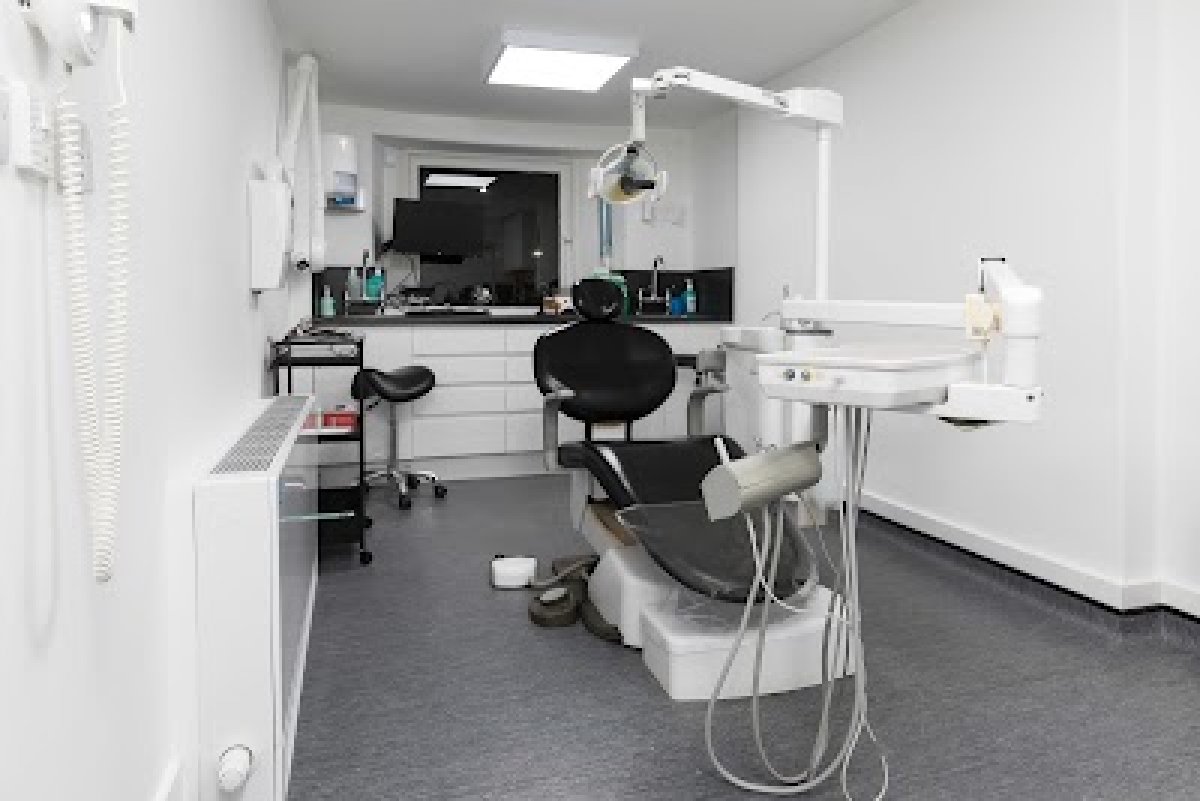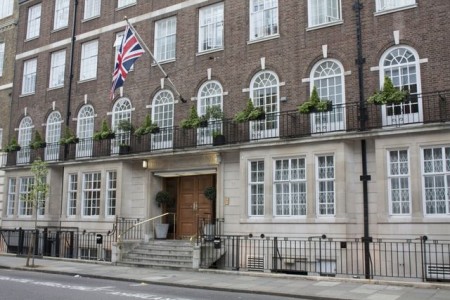
Harley Street Clinic
Reino Unido, Londres

Revisado médicamente por
Hasim Ustunsoy
La cirugía cardíaca en el Reino Unido suele costar entre $30,900 y $63,000. Los costes médicos privados dependen de la complejidad quirúrgica, el hospital específico elegido y la duración de la recuperación en cuidados intensivos necesaria. Los pacientes que optan por la atención privada a menudo lo hacen para evitar las largas listas de espera para procedimientos no urgentes que son comunes en el sector público.
Costes típicos de la cirugía cardíaca en el Reino Unido
Los principales centros cardiovasculares se encuentran en Londres, Manchester y Birmingham. Los costes en Londres suelen ser más elevados que en las ciudades del norte debido a los gastos generales de las instalaciones. Sugerimos una consulta con un especialista para obtener un presupuesto preciso para su caso específico.
| Reino Unido | España | Turquía | |
|---|---|---|---|
| Reemplazo de válvula cardíaca | ≈ $41,000 | de $44,800 | de $15,000 |
| Instalación de marcapasos cardíaco | ≈ $13,000 | de $33,600 | de $6,500 |
| Crioablación del corazón | ≈ $24,000 | de $20,200 | de $8,100 |
| Colocación de stent coronario | ≈ $9,800 | de $19,500 | de $2,800 |
| Cirugía de revascularización coronaria | ≈ $30,000 | de $44,800 | de $8,200 |
Bookimed no añade cargos extra a los precios de los tratamientos de Cirugía cardíaca. Las tarifas proceden de las listas de precios oficiales de las clínicas. Pagará directamente en la clínica por su tratamiento a su llegada al país.
Bookimed está comprometido con su seguridad. Solo trabajamos con las clínicas que mantienen altos estándares internacionales en el tratamiento de Cirugía cardíaca y tienen las licencias necesarias para atender a pacientes internacionales en todo el mundo.
Bookimed ofrece asistencia experta gratuita. Un coordinador médico personal le apoya antes, durante y después del tratamiento, resolviendo cualquier problema. Nunca estará solo en su viaje médico de procedimientos de Cirugía cardíaca.


Escrito por Veronika Kazina
 Olena Sikoza
La cirugía cardíaca en el Reino Unido implica principalmente el bypass aortocoronario (CABG) para tratar enfermedades cardíacas. Los cirujanos también realizan reparaciones de válvulas, implantación transcatéter de válvula aórtica (TAVI) y cirugía de aneurisma aórtico. Los centros avanzados ofrecen trasplantes de corazón e implantes de corazón artificial para casos complejos de insuficiencia cardíaca.
Opinión de expertos de Bookimed: Los centros de Londres muestran un fuerte enfoque en la atención especializada de alto volumen. El Royal Brompton and Harefield NHS Foundation Trust realiza más de 1.200 cirugías a corazón abierto al año. Este alto volumen permite a las clínicas ofrecer tecnologías avanzadas como robots controlados a distancia para el mapeo 3
La mayoría de los pacientes vuelven a sus actividades normales entre 6 y 12 semanas después de una cirugía cardíaca. La recuperación inicial dura de 2 a 4 semanas y se centra en controlar la fatiga y el dolor. La curación interna completa y el retorno a la resistencia previa a la cirugía suelen requerir de 6 a 12 meses.
Perspectiva de expertos de Bookimed: Los centros británicos como el Royal Brompton and Harefield NHS Foundation Trust gestionan volúmenes masivos, atendiendo a 240,000 pacientes al año. Esta alta intensidad se traduce en protocolos de recuperación estructurados. Por ejemplo, clínicas como el London Bridge Hospital utilizan la reparación de la válvula mitral mínimamente invasiva, lo que a menudo conduce a estancias hospitalarias más cortas y transiciones más rápidas al hogar en comparación con la cirugía abierta tradicional.
Consenso de los pacientes:
Los pacientes en el Reino Unido suelen permanecer en el hospital de 5 a 7 días después de una cirugía a corazón abierto. Este plazo se aplica a las operaciones rutinarias de bypass coronario o sustitución de válvulas cardíacas. El alta se produce una vez que los pacientes pueden caminar de forma independiente y gestionar su propio cuidado personal.
Opinión de los expertos de Bookimed: Centros especializados como el Royal Brompton and Harefield NHS Foundation Trust gestionan un gran volumen de 40.000 pacientes hospitalizados al año. Este alto nivel de actividad suele dar lugar a protocolos de recuperación más optimizados. Los pacientes de estos grandes centros pueden beneficiarse de un acceso más rápido a laboratorios de análisis de sangre avanzados para controlar la estabilidad.
Consenso de los pacientes: Los pacien
La cirugía cardíaca en el NHS ofrece excelencia clínica gratuita en el punto de atención. La cirugía privada proporciona un acceso significativamente más rápido y la elección personalizada del consultor. Ambos sectores utilizan los mismos cirujanos senior. La atención privada se centra en la rapidez de las cirugías electivas. El NHS gestiona los casos de emergencia complejos.
Perspectiva de expertos de Bookimed: Elegir entre sectores implica un equilibrio entre velocidad e infraestructura especializada. El Royal Brompton and Harefield NHS Foundation Trust gestiona 240,000 pacientes al año con el laboratorio de sangre m
El regreso seguro a la conducción o a los viajes después de una cirugía cardíaca depende del tipo de procedimiento y del progreso de la curación. La mayoría de los pacientes reanudan la conducción de 4 a 6 semanas después de una cirugía tradicional a corazón abierto. Los viajes aéreos suelen permitirse en un plazo de 2 a 3 semanas para vuelos cortos una vez que el estado es estable.
Perspectiva del experto de Bookimed: Los centros cardíacos del Reino Unido, como el Royal Brompton and Harefield NHS Foundation Trust, gestionan un volumen masivo de pacientes. Este entorno de alta frecuencia significa que los equipos clínicos a menudo proporcionan protocolos de recuperación estandarizados. Los pacientes deben priorizar las clínicas con laboratorios de sangre en el lugar para obtener autorizaciones de viaje previa
La rehabilitación cardíaca se ofrece de forma rutinaria y es altamente recomendada después de una cirugía de corazón en el Reino Unido. La mayoría de los pacientes reciben una derivación automática a los programas del NHS. Estos servicios incluyen ejercicio supervisado, orientación nutricional y apoyo psicológico. Los programas generalmente duran de 6 a 12 semanas para garantizar una recuperación segura.
Perspectiva del experto de Bookimed: Centros de primer nivel como el Royal Brompton and Harefield NHS Foundation Trust atienden a más de 200,000 pacientes ambulatorios al año. Este alto volumen permite realizar vías de rehabilitación especializadas. Los pacientes deben confirmar si su clínica utiliza mapeo 3D o sistemas robóticos. Estas tecnologías a menudo conducen a una recuperación más rápida y a un inicio temprano de la rehabilitación.
Consenso de los pacientes: