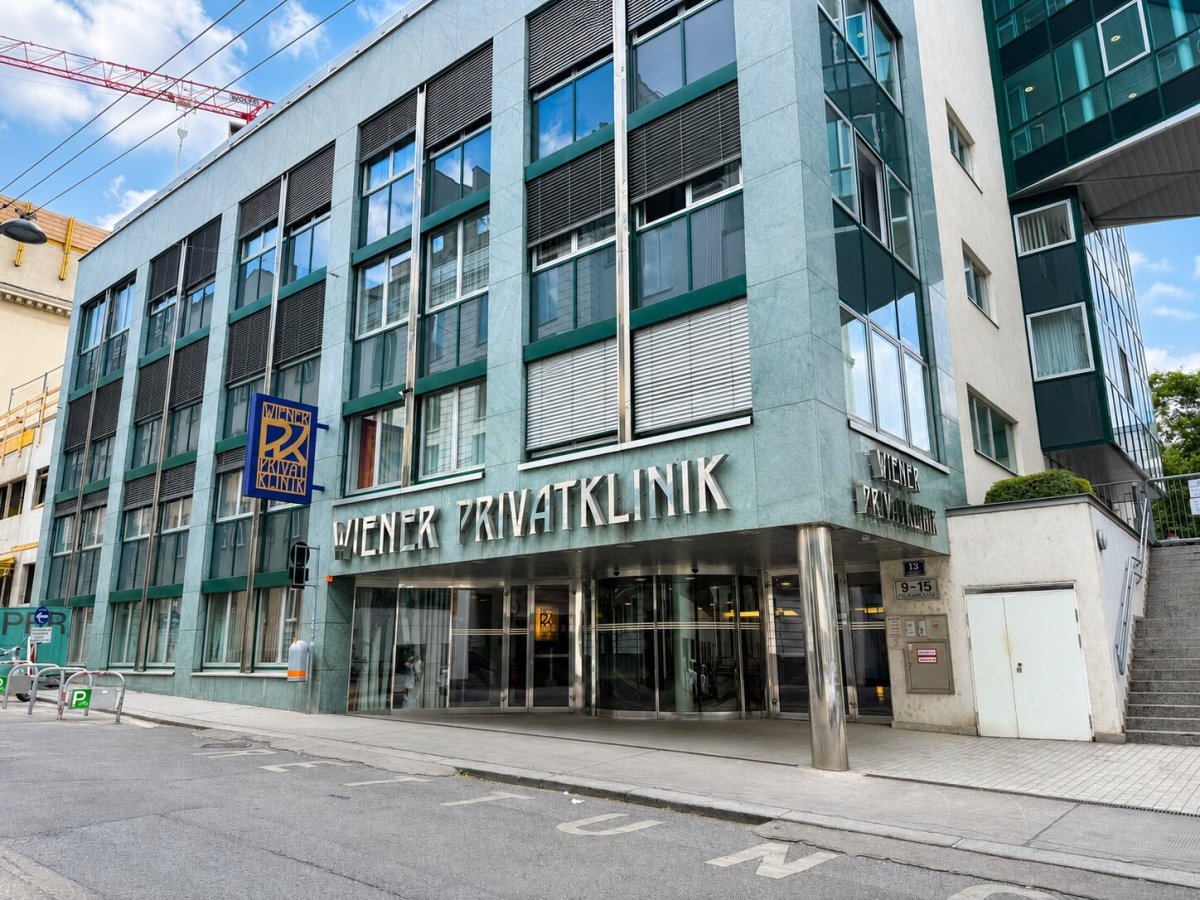
Clínica privada Wiener (Wiener Privatklinik)
Austria, Viena
Wilfried Lang
35 años de experiencia

Clínica certificada por : 





Revisado médicamente por
Fahad Mawlood
Bookimed no añade cargos extra a los precios de los tratamientos de Complicaciones del accidente cerebrovascular. Las tarifas proceden de las listas de precios oficiales de las clínicas. Pagará directamente en la clínica por su tratamiento a su llegada al país.
Bookimed está comprometido con su seguridad. Solo trabajamos con las clínicas que mantienen altos estándares internacionales en el tratamiento de Complicaciones del accidente cerebrovascular y cuentan con las licencias necesarias para atender a pacientes internacionales en todo el mundo.
Bookimed ofrece asistencia experta gratuita. Un coordinador médico personal le apoya antes, durante y después de su tratamiento, resolviendo cualquier problema. Nunca estará solo en su viaje médico de tratamiento de Complicaciones del accidente cerebrovascular.

El Prof. Wilfried Lang fue pionero en nuevos enfoques para el tratamiento del ictus agudo y ha dado forma a la neurología moderna en Austria durante tres décadas.
 Olena Sikoza
En Austria, la transición de la atención del ictus agudo al tratamiento de sus complicaciones se realiza a través de unidades especializadas. Estas unidades combinan intervenciones altamente eficaces con el manejo inmediato de las complicaciones. El seguimiento de datos en tiempo real mediante el Registro Austriaco de Unidades de Ictus garantiza que el 91 % de los pacientes eviten complicaciones médicas precoces gracias a protocolos estandarizados.
Opinión de expertos de Bookimed: En Austria, la experiencia clínica se concentra principalmente en el ámbito académico. Por ejemplo, el profesor Wilfried Lang, del Hospital Privado de Viena, contribuyó a la creación de un registro nacional de accidentes cerebrovas
Las clínicas austriacas ofrecen neuromodulación y procedimientos neuroquirúrgicos avanzados para restaurar la movilidad y aliviar la tensión muscular. Entre las opciones clave se incluyen las interfaces cerebro-computadora (ICC) implantables, la estimulación del nervio vago (ENV) y las bombas intratecales de baclofeno. Los especialistas utilizan estas tecnologías para sortear las redes neuronales dañadas y mejorar el control muscular voluntario.
Opinión experta de Bookimed: Austria destaca en neurorrehabilitación gracias a neurólogos líderes como el Dr. Wilfried Lang de la Clínica Privada Wiener, que integra la neurofisiología diagnóstica con el tratamiento hospitalario. Nuestros datos muestran que los centros austriacos suelen co
En Austria, la rehabilitación tras un ictus se centra en abordar las alteraciones del habla y cognitivas mediante protocolos interdisciplinarios inmediatos. Equipos especializados utilizan terapia del habla basada en la neuroplasticidad y la evaluación neuropsicológica. El tratamiento comienza en la fase aguda y se lleva a cabo de acuerdo con las recomendaciones de la Sociedad Austriaca de Ictus en instituciones acreditadas para lograr la máxima recuperación.
Opinión de expertos de Bookimed: El liderazgo clínico suele ser determinante para la calidad de la rehabilitación en Viena. El Dr. Wilfried Lang, del Hospital Privado de Viena, contribuyó a la creación del registro nacional de accidentes cerebrovasculares. Su doble especialización en cuidados intensivos y geriatría garantiza que la
Los programas regionales austriacos ofrecen atención ambulatoria integral para la recuperación tras un ictus. La integración comienza incluso antes del alta. Las redes sanitarias locales coordinan la neurofisiología clínica y la rehabilitación neurológica. Estos sistemas previenen los reingresos hospitalarios al facilitar la conexión entre el tratamiento hospitalario y la recuperación en el hogar. Los registros regionales de ictus garantizan un seguimiento estandarizado en todas las provincias.
Opinión de expertos de Bookimed: La fortaleza de Austria reside en su sistema sanitario, centrado en la investigación académica. La mayoría de los neurólogos más cualificados del país, como el Dr. Wilfried Lang, son profesores de la Universidad Médica de Viena. Estos especialistas suelen di
En Austria, un centro de rehabilitación para pacientes con ictus integra la salud mental mediante protocolos especializados de rehabilitación neurológica. Equipos multidisciplinarios tratan la depresión y la ansiedad tras un ictus utilizando terapia cognitivo-conductual y psicoterapia de apoyo. Neurólogos como el Dr. Wilfried Lang, de la Clínica Privada Wiener, supervisan estos planes integrales de tratamiento neurológico y psiquiátrico.
Opinión de expertos de Bookimed: Los datos clínicos demuestran que la atención a los pacientes con ictus en Austria está excepcionalmente centralizada gracias al registro nacional. Este sistema garantiza que especialistas como el Dr. Wilfried Lang, quien contribuyó a su creación, realicen evaluaciones psiquiátricas estandarizadas al inicio de la recuperación. Los pacientes deben a