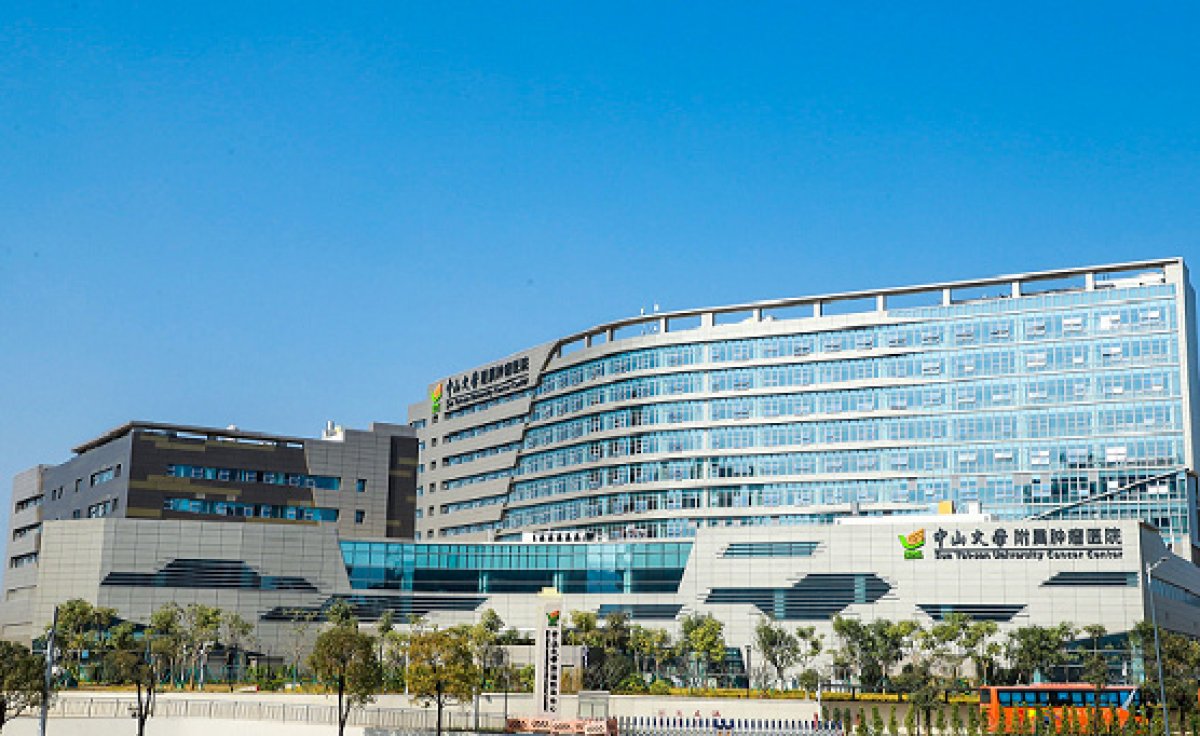
Fuda Cancer Hospital
China, Cantón


Revisado médicamente por
Fahad Mawlood
El costo del tratamiento del cáncer de cuello uterino en China suele oscilar entre Precio a consultar y Precio a consultar para terapias sistémicas, mientras que las intervenciones quirúrgicas como la histerectomía van desde $6,500 hasta $11,500. Los gastos totales dependen de la etapa clínica, la acreditación del centro y el uso de tecnologías avanzadas. Los pacientes a menudo ahorran aproximadamente entre un 40% y un 70% en comparación con los precios de la atención médica en EE. UU. Los principales centros médicos incluyen Pekín y Guangzhou.
Costos típicos del tratamiento del cáncer de cuello uterino en China
Perspectiva de los expertos de Bookimed: Los pacientes en etapas avanzadas encuentran la mejor relación calidad-precio en centros oncológicos especializados en Guangzhou. El Fuda Cancer Hospital es el primer centro acreditado por la JCI en China. Se especializan en casos de etapa avanzada utilizando tecnologías únicas como NanoKnife y criocirugía. Líderes clínicos como el profesor Liu Shi Xin ofrecen protocolos expertos en oncología radioterápica. Esta experiencia es vital para los pacientes que requieren planes de atención complejos y multidisciplinarios.
| China | España | Turquía | |
|---|---|---|---|
| Traquelectomía (cervicectomía) | ≈ $8,500 | de $13,400 | de $5,800 |
| Tomoterapia | ≈ $17,500 | ≈ $7,500 | de $6,700 |
| La operación Wertheim-Meigs | ≈ $7,500 | de $28,000 | de $8,000 |
| Histerectomía con robot DaVinci | ≈ $9,500 | de $21,600 | de $11,600 |
| Histerectomía (extirpación del útero) | ≈ $6,500 | de $9,500 | de $3,500 |

Médico jefe y profesor. Experto de nivel 1 en el Centro Oncológico del West China Hospital, Sichuan University (clasificado n.º 2 en China). Completó un posdoctorado en radiología intervencionista en el Chinese PLA General Hospital. Dirige equipos multidisciplinarios (MDT) para tumores complejos. Experto en oncología intervencionista mínimamente invasiva para cánceres de hígado, pulmón y páncreas.
Acreditaciones: Miembro del consejo, WATA. Miembro de los comités de CACA y CMDA sobre in

El Dr. He Weibing es pionero de la crioablación con argón‑helio en China, con más de 20 años de práctica en primera línea. Fue miembro fundador del Hospital Oncológico Fuda (Guangzhou). Cofundó su Centro de Tratamiento Tumoral Mínimamente Invasivo y fue subdirector ejecutivo. También ayudó a crear el Grupo de Ablación de la Asociación China contra el Cáncer. Ha sido operador principal en más de 10.000 procedimientos.
Se especializa en crioablación tumoral y domina la braquiterapia con

El profesor Luo Xiaoping es un radiólogo intervencionista reconocido a nivel nacional y una autoridad destacada en el oeste de China. Comenzó a realizar intervenciones vasculares pioneras a principios de la década de 1990. Ayudó a fundar el Grupo de Intervencionismo del Segundo Hospital Afiliado de la Universidad Médica de Chongqing.
Ha realizado más de 100 000 procedimientos intervencionistas, incluidos unos 4 000 casos complejos. Sus competencias clave incluyen TACE para el carcinoma

El profesor Xiao Yueyong es médico jefe del Departamento de Radiodiagnóstico del Hospital General del EPL de China. Es un experto líder en oncología intervencionista mínimamente invasiva. Es el primer presidente de WATA (2025–). Preside la Sociedad Internacional (2020–) y la Sociedad Asiática (2012–) de Crioterapia. También es subjefe del Grupo de Expertos de la NHC sobre regulaciones de ablación tumoral (2009–).
Ha realizado más de 100 000 procedimientos mínimamente invasivos guiados

Escrito por Вероника Казина

Escrito por Veronika Kazina

Escrito por Veronika Kazina

Escrito por Veronika Kazina

Escrito por Veronika Kazina
 Olena Sikoza
En China, se utiliza un enfoque multimodal que combina cirugía, radioterapia y quimioterapia para tratar el cáncer de cuello uterino invasivo. Las pacientes en etapas tempranas suelen someterse a histerectomía radical o traquelectomía con preservación de la fertilidad. En casos de cáncer localmente avanzado, generalmente se administra quimiorradioterapia concomitante. Los centros oncológicos especializados también integran la medicina tradicional con tecnologías mínimamente invasivas como la criocirugía y el NanoKnife.
Opinión de un experto de Bookimed: Los centros oncológicos chinos suelen preferir los tratamientos locales mínimamente invasivos a la quimioterapia sistémica en etapas avanzadas de la enfermedad. Por ejemplo, el Hospital Oncológico Fuda ofrece más de 10 tipos de terapias locales. Esto permite a los médicos tratar a más de 30 000 pacient
China ofrece tratamientos no invasivos de vanguardia para el cáncer de cuello uterino, incluyendo ultrasonido focalizado de alta intensidad (HIFU) y terapia fotodinámica APL-1702. Centros especializados, como el Hospital Oncológico Fuda, utilizan nanocirugía y criocirugía para tratar las etapas avanzadas de la enfermedad. Estas tecnologías atacan los tumores preservando la integridad estructural del cuello uterino.
Opinión de expertos de Bookimed: Los pacientes que buscan opciones de tratamiento no invasivas deben tener en cuenta que Guangzhou es un centro líder en oncología especializada. El Hospital Oncológico Fuda ha tratado a más de 30 000 pacientes internacionales mediante técnicas mínimamente invasivas. Las clínicas locales suelen combinar tratamientos tradicionales con tecnologías innovadoras,
China alberga instituciones médicas especializadas acreditadas por la JCI que priorizan a pacientes internacionales para el tratamiento del cáncer de cuello uterino. Centros líderes, como el Hospital Oncológico Fuda, utilizan tecnologías mínimamente invasivas. Los grupos oncológicos chinos también ofrecen radiocirugía estereotáctica avanzada para el tratamiento de tumores cervicales. Estas instituciones aceptan pacientes de más de 100 países, incluyendo aquellos con enfermedad avanzada.
Opinión de expertos de Bookimed: Si bien los grandes centros académicos públicos lideran la investigación, los hospitales privados acreditados por la JCI ofrecen mejores opciones logísticas. Por ejemplo, un paquete de radiocirugía CyberKnife M6 en el Hospital Jinshazhou cuesta aproximadamente 7700 dólares e incluye el transporte. Estas instituciones p
La medicina tradicional china (MTC) se está integrando en el tratamiento del cáncer de cuello uterino como terapia complementaria para reducir los efectos secundarios y fortalecer el sistema inmunitario. Los centros oncológicos chinos combinan fitoterapia, acupuntura y terapia dietética con cirugía o radioterapia. Este enfoque integral busca mejorar la supervivencia general y la calidad de vida de las pacientes.
Opinión de expertos de Bookimed: Los principales centros chinos, como el Hospital Jinshazhou de la Universidad de Medicina Tradicional China de Guangzhou, emplean directamente a especialistas en medicina tradicional china (MTC) en sus departamentos de oncología. Si bien muchas clínicas
China es un lugar seguro para el tratamiento del cáncer de cuello uterino si las pacientes eligen centros médicos acreditados por la Joint Commission International en las principales ciudades. Los mejores hospitales utilizan tecnología de vanguardia, como el CyberKnife M6 y el robot DaVinci. Estos centros cumplen con estrictos protocolos de seguridad bajo la supervisión de la Comisión Nacional de Salud.
Opinión de expertos de Bookimed: Si bien muchos países se centran en la quimioterapia tradicional, los centros oncológicos chinos, como el Hospital Oncológico Fuda, se especializan en más de 10 tipos de terapias mínimamente invasivas. Entre ellas se incluyen la criocirugía y el NanoKnife. Este enfoque resulta muy eficaz para pacientes con enfermedad avanzada que no toleran los rigores físicos de los tratam