Deformidad del tórax en embudo Tratamiento en Alemania — Costos 2026


Revisado médicamente por
Fahad Mawlood
¿Cuál es el precio del diagnóstico y los tratamientos de Deformidad del tórax en embudo en Alemania? Descubra ahora
De $330
Costos típicos del tratamiento de la deformidad de tórax en embudo en Alemania
- Consulta con un ortopedista: de $330
- Consulta con un ortopedista (traumatólogo): de $330
- ECG: $50 – $60
Perspectiva de los expertos de Bookimed: Los pacientes que buscan atención innovadora deben priorizar los centros con altos volúmenes quirúrgicos e integración de investigación. La Clínica Nordwest en Fráncfort es una opción líder en innovación, que cuenta con la acreditación TÜV y clasificaciones en el Top 10 de Focus. Para casos pediátricos o con afectación maxilofacial compleja, la Clínica Asklepios Nord en Hamburgo ofrece experiencia especializada. Los complejos universitarios más grandes, como el Hospital Universitario de Essen, son los mejores para pacientes de alto riesgo que necesitan imágenes digitales avanzadas y apoyo multidisciplinario.
Sus beneficios y garantías con Bookimed
Precios directos
Bookimed no añade cargos extra a los precios de los tratamientos de Deformidad del tórax en embudo. Las tarifas proceden de las listas de precios oficiales de las clínicas. Pagará directamente en la clínica por su tratamiento a su llegada al país.
Sólo clínicas y médicos verificados
Bookimed está comprometido con su seguridad. Solo trabajamos con las clínicas que mantienen altos estándares internacionales en el tratamiento de Deformidad del tórax en embudo y cuentan con las licencias necesarias para atender a pacientes internacionales en todo el mundo.
Asistencia 24/7 gratuita
Bookimed ofrece asistencia experta gratuita. Un coordinador médico personal le apoya antes, durante y después de su tratamiento, resolviendo cualquier problema. Nunca estará solo en su viaje médico de tratamiento de Deformidad del tórax en embudo.

Su coordinador médico personal de Bookimed
- Le apoya en cada etapa
- Ayuda a elegir la clínica y el médico adecuados
- Asegura un acceso rápido y conveniente a la información
Descubra las mejores clínicas de tratamiento de Deformidad del tórax en embudo en Alemania: 10 opciones verificadas y Precios



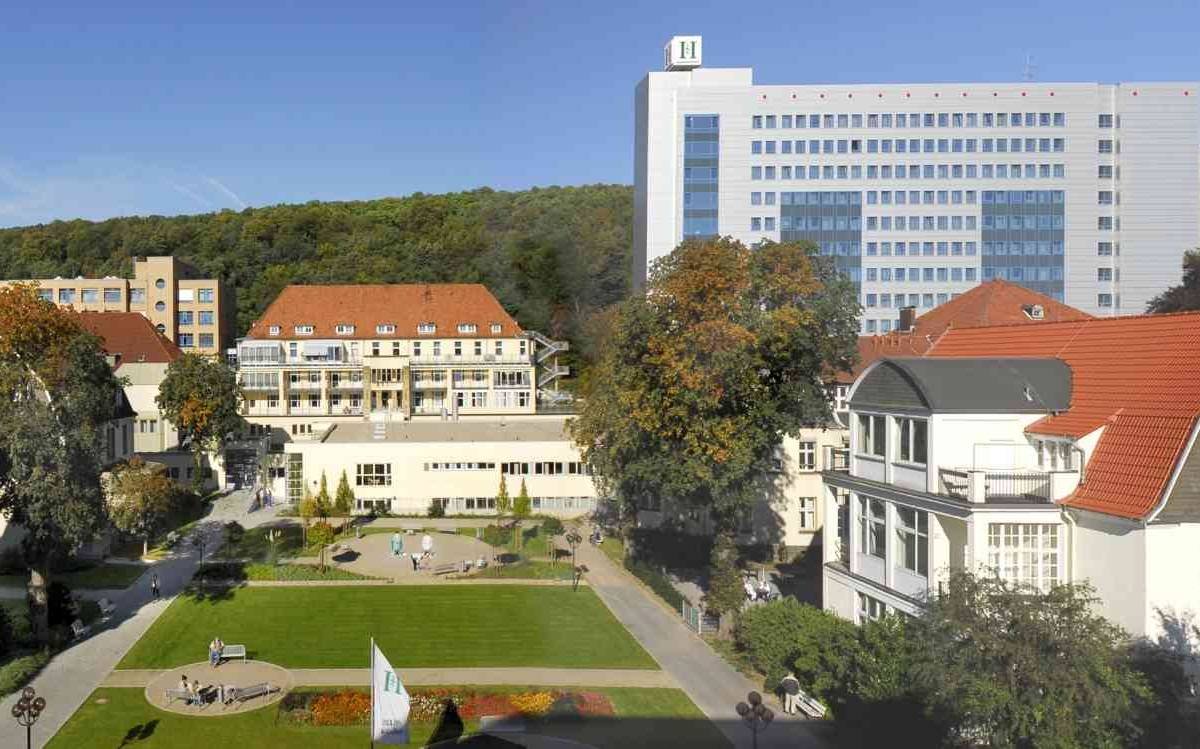

University Hospital in Haydelberge

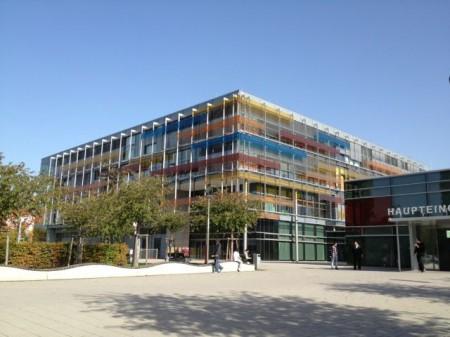
Hannover Medical School







Lippe Detmold Clinic
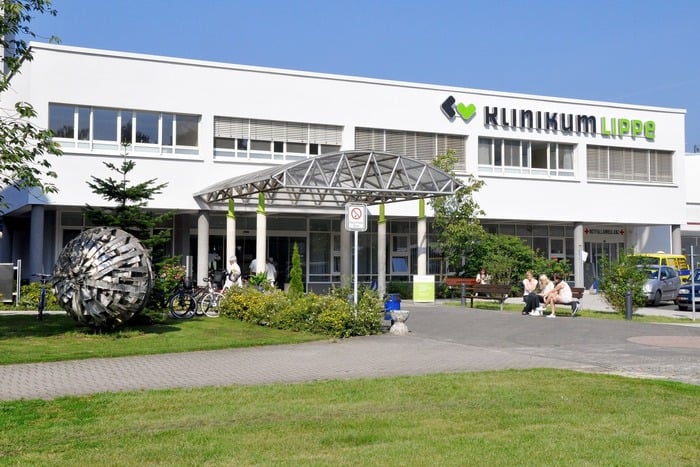
Lippe Lemgo Clinic

Compartir contenido
Historias en video de pacientes de Bookimed
 Olena Sikoza
Preguntas frecuentes sobre el tratamiento de Deformidad del tórax en embudo en Alemania
¿Qué clínicas y cirujanos alemanes son los más respetados para la corrección del tórax en embudo?
Alemania es un destino principal para la corrección del tórax en embudo (pectus excavatum). Centros respetados como la Clínica Nordwest y la Thoraxklinik Heidelberg se especializan en la técnica mínimamente invasiva de Nuss y los procedimientos de Ravitch. Estas instalaciones cuentan con certificaciones de la revista Focus y Newsweek. Ofrecen altas tasas de éxito y una planificación quirúrgica 3D avanzada.
- Cirujanos expertos: La Dra. Stefanie Veit ha realizado más de 1.100 procedimientos de tórax en embudo.
- Técnicas especializadas: Las clínicas ofrecen métodos de Nuss, Ravitch y Abramson para todas las edades.
- Alto volumen: La Thoraxklinik Heidelberg realiza más de 1.750 procedimientos torácicos cada año.
- Acreditación de instalaciones: Los mejores centros mantienen certificaciones de gestión de calidad TÜV y JCI.
Perspectiva de expertos de Bookimed: El volumen de pacientes es el predictor más fiable del éxito de este procedimiento. El complejo clínico de Renania del Norte-Westfalia atiende a 145.000 pacientes al año. Esta escala masiva a menudo se correlaciona con una atención perioperatoria refinada. Elegir un hospital universitario garantiza el acceso a equipos multidisciplinarios. Estos equipos manejan casos complejos de adultos que las clínicas privadas más pequeñas pueden evitar.
Consenso de los pacientes: L
¿Qué opciones quirúrgicas y no quirúrgicas se ofrecen en Alemania?
Alemania ofrece tratamientos especializados para el pecho hundido (pectus excavatum), incluyendo el procedimiento de Nuss mínimamente invasivo y la terapia con campana de vacío no quirúrgica. Centros de alto volumen como el Complejo Clínico de Renania del Norte-Westfalia y la Clínica Nordwest brindan atención ortopédica integral. Las opciones van desde la colocación de barras personalizadas hasta el uso de aparatos ortopédicos estructurales según la edad del paciente.
- Reparación mínimamente invasiva: El procedimiento de Nuss sigue siendo el estándar de oro para el pectus excavatum.
- Terapia con campana de vacío: El tratamiento no quirúrgico es altamente efectivo para pacientes menores de 16 años.
- Retención con barra personalizada: Las barras quirúrgicas generalmente permanecen en el pecho durante 3 años.
- Diagnóstico avanzado: Las clínicas utilizan ECG y ecografía 3D para una evaluación torácica precisa.
Perspectiva del experto de Bookimed: El volumen de pacientes sirve como un indicador de calidad crítico en Alemania. Instituciones como la Escuela de Medicina de Hannover y el Hospital Universitario de Heidelberg atienden a más de 300,000 pacientes al año. Esta alta frecuencia permite a los cirujanos perfeccionar técnicas para deformidades torácicas complejas. Elegir clínicas con más de 50 departamentos especializados a menudo garantiza u
¿Cuánto dura la recuperación y cuándo se pueden reanudar las actividades normales?
La recuperación después de una cirugía de tórax en embudo (pectus excavatum) en Alemania generalmente toma de 4 a 6 semanas para la movilidad básica. Los pacientes pueden reanudar sus actividades normales y el trabajo de oficina generalmente dentro de 4 a 6 semanas. La participación completa en deportes de contacto o entrenamiento intenso en el gimnasio requiere aproximadamente de 3 a 6 meses para garantizar la estabilidad interna.
- Estancia hospitalaria: Los pacientes generalmente permanecen en el hospital de 3 a 7 días después de la cirugía.
- Movilidad diaria: Caminar suavemente generalmente comienza el día 1 para acelerar el proceso de curación.
- Regreso profesional: La mayoría de los pacientes regresan al trabajo de oficina sedentario o a la escuela en la semana 4.
- Actividad física: Se permite cardio ligero a las 6 semanas mientras se evita levantar objetos pesados.
- Deportes extenuantes: Los deportes de contacto son seguros después de 3 a 6 meses para evitar el desplazamiento de la barra.
Perspectiva del experto de Bookimed: Las clínicas alemanas como Nordwest y Asklepios enfatizan la experiencia quirúrgica de alto volumen para agilizar la recuperación. Si bien centros como la Escuela de Medicina de Hannover y el Hospital Universitario de Essen atienden a más de 300,000 pacientes al año, este alto volumen a me
¿Quién es un buen candidato para la terapia no quirúrgica con Vacuum-Bell?
Los candidatos ideales para la terapia no quirúrgica con Vacuum-Bell son niños y adolescentes menores de 12 años cuyo tórax permanece flexible. Este tratamiento es adecuado para pacientes con deformidades leves y simétricas de pecho hundido con una profundidad inferior a 1,8 cm. Un índice de masa corporal bajo y una alta adherencia diaria son esenciales para el éxito.
- Rango de edad: Los niños menores de 12 años responden mejor debido a la gran flexibilidad de las estructuras de la pared torácica.
- Profundidad de la deformidad: Los resultados óptimos se obtienen cuando la hendidura esternal es inferior a 1,8 cm.
- Simetría: El éxito es más común cuando la depresión torácica está centrada y es uniforme.
- Salud física: Los candidatos no deben presentar trastornos esqueléticos, problemas de coagulación ni afecciones cardíacas graves.
Perspectiva del experto de Bookimed: Los hospitales universitarios alemanes como los de Essen y Heidelberg atienden a más de 300.000 pacientes al año. Este gran volumen permite a los especialistas en ortopedia evaluar con precisión la flexibilidad de la pared torácica antes de iniciar la terapia. Nuestros datos muestran que los principales centros alemanes suelen utilizar el Vacuum-Bell como paso prequirúrgico para ablandar los tejidos rígidos. Este enfoque puede mejorar potencialmente los resultados si finalmente
¿Quedarán cicatrices visibles después de la cirugía de tórax en embudo?
La cirugía de tórax en embudo (pectus excavatum) en Alemania produce cicatrices que varían según la técnica. El procedimiento mínimamente invasivo de Nuss deja pequeñas incisiones de 1 a 2 cm en los costados del pecho. Los métodos abiertos crean una marca visible más grande. Las clínicas alemanas se centran en una colocación estética para asegurar que las cicatrices se mezclen con los pliegues naturales de la piel.
- Procedimiento de Nuss: Crea dos pequeñas incisiones de 1 a 2 cm, generalmente ocultas bajo las axilas.
- Técnica de Ravitch: Deja una cicatriz de 7 a 8 cm en la parte frontal del pecho.
- Implantes de silicona: Requiere una incisión vertical de aproximadamente 7 cm en el esternón.
- Maduración de la cicatriz: La mayoría de las marcas quirúrgicas se desvanecen de rosa a blanco en un plazo de 1 a 3 años.
Perspectiva del experto de Bookimed: Los hospitales universitarios alemanes, como el Hospital Universitario de Essen, procesan 370.000 pacientes al año utilizando imágenes digitales avanzadas e IA. Este alto volumen permite a los cirujanos perfeccionar técnicas endoscópicas que limitan las incisiones a pequeños portales. Los pacientes que eligen estos centros académicos a menudo se benefician de protocolos de seguimiento especializados que priorizan los resultados estéticos a largo plazo junto con la corrección física.
¿Qué pruebas o imágenes preoperatorias requieren las clínicas alemanas?
Las clínicas alemanas requieren pruebas diagnósticas especializadas para evaluar la gravedad del tórax en embudo (pectus excavatum) y la preparación quirúrgica. Los requisitos fundamentales incluyen una tomografía computarizada (TC) 3D o de baja dosis para calcular el índice de Haller. Los pacientes también se someten a pruebas de función pulmonar y ecocardiogramas para evaluar la compresión cardíaca y pulmonar antes del procedimiento.
- Estándares de imagen: Las tomografías 3D de alta resolución proporcionan mediciones precisas para el índice de Haller.
- Planificación quirúrgica: Las reconstrucciones 3D se utilizan a menudo para optimizar la colocación de la barra metálica durante la cirugía.
- Evaluación cardíaca: Un ecocardiograma descarta la compresión cardíaca y garantiza una administración segura de la anestesia.
- Pruebas respiratorias: Las pruebas de función pulmonar, como la espirometría, confirman si la deformidad restringe la capacidad pulmonar.
Perspectiva de expertos de Bookimed: Los datos de centros alemanes líderes, como la Clínica Nordwest y el Hospital Universitario de Essen, muestran un gran énfasis en el cribado multidisciplinario. Si bien los laboratorios estándar son rutinarios, estas instituciones académicas priorizan la imagenología digital avanzada y la ecografía 3D para minimizar los riesgos quirúrgicos. Elegir una clí
¿Qué hospitales en Alemania tienen las calificaciones más altas en neurocirugía?
Alemania alberga algunos de los departamentos de neurocirugía más prestigiosos del mundo, liderados por la Charité – Universitätsmedizin Berlin y el Hospital Universitario de Heidelberg. Estos centros destacan en el tratamiento de tumores cerebrales complejos y enfermedades cerebrovasculares. Para maximizar la eficacia de sus procedimientos, utilizan tecnologías de vanguardia como la resonancia magnética intraoperatoria y la neuronavegación asistida por computadora.
- Charité Berlín: Realiza más de 5000 cirugías al año. La clínica está dirigida por el reconocido neurocirujano Dr. Peter Vaikoczy.
- Centro Médico Solingen: El Dr. Ralf Buhl ha realizado más de 4.000 cirugías, incluidas cirugías de columna mínimamente invasivas.
- Clínica Asklepios Nord: equipada con el único sistema de resonancia magnética intraoperatoria bilateral de Alemania para garantizar precisión quirúrgica en tiempo real durante la extirpación del tumor.
- Clínica Nordwest: reconocida por la revista Newsweek como un hospital líder por su innovación en tecnología de ultrasonido 3D.
Opinión experta de Bookimed: Los datos muestran que elegir centros con un alto volumen quirúrgico suele llevar a recomendaciones de tratamiento más conservadoras. En el Centro Médico Solingen, que atiende a más de 60.000 pacientes al año, los cirujanos suelen sugerir fisioterapia en lugar de cirugía
¿Cuáles son las tasas de éxito de los procedimientos neuroquirúrgicos complejos en Alemania?
En Alemania, los procedimientos neuroquirúrgicos de alta complejidad demuestran una seguridad excepcional. Las tasas de éxito en las fusiones espinales alcanzan el 99 %. La tasa de supervivencia en las resecciones de tumores cerebrales primarios es del 97 %. La independencia funcional es alta. Más del 82 % de los pacientes reciben el alta inmediatamente después del tratamiento. Los centros alemanes priorizan la preservación de la función neurológica mediante técnicas modernas de mapeo.
- Resección de tumores: los cirujanos logran una resección tumoral completa en el 87,2% de los casos de metástasis cerebrales.
- Éxito en el tratamiento de enfermedades vasculares: los hospitales alemanes informan de una tasa de supervivencia del 98,7% para aneurismas no rotos.
- Mejora del estado neurológico: casi el 43% de los pacientes experimentan una mejora de los parámetros funcionales después de resecciones complejas.
- Seguridad de las intervenciones quirúrgicas: En grandes centros quirúrgicos, las tasas de supervivencia de los pacientes después de la cirugía de columna son del 98-99%.
Opinión experta de Bookimed: Cirujanos experimentados como el Dr. Uwe Köhler, de la Clínica Asklepios Altona, realizan más de 2000 cirugías al año. Los datos muestran que estos especialistas mantienen tasas de éxito de hasta el 90 %, incluso en los tumores cerebrales más comp
¿Qué tecnologías avanzadas suelen estar disponibles en las clínicas neuroquirúrgicas alemanas?
Las clínicas neuroquirúrgicas alemanas incorporan regularmente instrumentos digitales de alta precisión y visualización en tiempo real a la práctica quirúrgica. Entre las tecnologías clave se encuentra la neuronavegación computarizada para cirugías de cerebro y médula espinal. Instituciones como la Clínica Asklepios Nord utilizan la resonancia magnética intraoperatoria para verificar la extirpación de tumores en tiempo real. Estos sistemas proporcionan a los cirujanos navegación GPS 3D.
- Neuronavegación: proporciona visualización 3D y seguimiento de instrumentos en tiempo real para lograr precisión quirúrgica hasta el nivel submilimétrico.
- Imágenes intraoperatorias: sistemas como iMRI y O-arm CT permiten la confirmación inmediata de una resección exitosa.
- Neuromonitorización: Monitorea las funciones motoras y sensoriales durante la cirugía para proteger el sistema nervioso.
- Diagnóstico de fluorescencia: se utiliza el colorante 5-ALA para resaltar los bordes del tumor para una eliminación más completa.
- Asistencia robótica: Sistemas como el Da Vinci mejoran la precisión en procedimientos complejos y mínimamente invasivos.
Opinión experta de Bookimed: Grandes centros como la Charité – Universitätsmedizin de Berlín realizan más de 4000 procedimientos neuroquirúrgicos al año, lo que crea un entorno rico en datos para p
¿Qué formación especializada reciben los neurocirujanos en ejercicio en Alemania?
En Alemania, los neurocirujanos deben completar una residencia especializada de seis años tras graduarse de la facultad de medicina. Este programa estructurado incluye cuidados intensivos, práctica clínica y una revista quirúrgica obligatoria. Posteriormente, los candidatos aprueban un examen estatal para obtener el título de residente (Facharzt für Neurochirurgie).
- Residencia clínica: requiere de 48 a 72 meses de práctica neuroquirúrgica especializada.
- Cuidados intensivos: incluye una pasantía obligatoria de 6 meses en una unidad de cuidados intensivos neuroquirúrgicos.
- Revista quirúrgica: los cirujanos documentan cientos de cirugías, incluidas craneotomías y cirugías de columna.
- Examen de licencia: Los solicitantes deben aprobar un examen médico oral y práctico administrado por el estado.
Opinión experta de Bookimed: La formación neuroquirúrgica alemana se centra en una amplia experiencia quirúrgica. Por ejemplo, el Dr. Ralf Buhl, del Centro Médico Solingen, ha realizado más de 4000 cirugías. El Dr. Jürgen Kiwit, del Hospital Meoklinik, cuenta con más de 25 años de experiencia. Este riguroso sistema garantiza que los especialistas de los principales centros aborden casos complejos con una precisión demostrada.
Comentarios de los pacientes: Los pacientes se sienten seguros al saber que sus médicos han recibido año